Loading...
George Washington vs Wanyan Aguda
George Washington leads by 13.4 pts · 2 figures compared
…
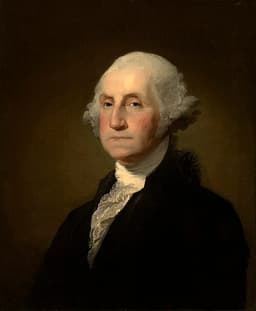
George Washington
Politician · Modern
76.8Total
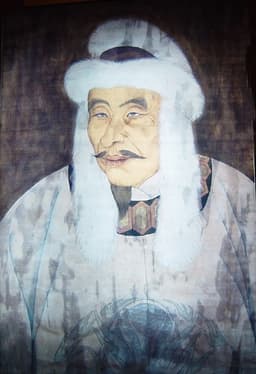
Wanyan Aguda
Emperor · Medieval
63.4Total
Basic Information
Born
1732
1068
Died
1799
1123
Era
Modern
Medieval
Nationality
United States
China
Occupation
Politician
Emperor
Civilization
Western
Eastern
Score Comparison
Military (10%)
75.0
82.0
Political (20%)
82.0
59.3
Influence (20%)
75.0
55.0
Legacy (20%)
80.0
52.0
Leadership (15%)
85.0
85.0
Strategy (15%)
55.0
68.0
TOTAL
76.8
63.4
George Washington — Complete Timeline
1775 AD
Appointed Commander-in-Chief of the Continental ArmyOther◆ Major
The Second Continental Congress appointed Washington as commander-in-chief of the Continental Army on June 15, 1775. He accepted the position without pay, taking command of the forces besieging Boston at the start of the American Revolutionary War.
American RevolutionMilitary Leadership
Impact: national
1776 AD
Crossed the Delaware RiverOther◆ Major
On the night of December 25-26, 1776, Washington led 2,400 troops across the ice-choked Delaware River. The surprise attack on Hessian forces at Trenton resulted in a decisive American victory, capturing nearly 1,000 prisoners and reviving Patriot morale after a series of defeats.
American RevolutionBattleTurning Point
Impact: nationalconstructive
1787 AD
Presided over the Constitutional ConventionPolitical Action◆ Major
Washington served as president of the Constitutional Convention in Philadelphia from May to September 1787. His presence lent legitimacy to the proceedings, and he formally signed the final draft of the U.S. Constitution, though he contributed little to the debates.
ConstitutionFounding Father
Impact: national
1789 AD
Inaugurated as First President of the United StatesPolitical Action◆ Major
Washington was unanimously elected by the Electoral College and inaugurated on April 30, 1789, at Federal Hall in New York City. He established numerous executive branch precedents, including the cabinet system, the inaugural address, and the title 'Mr. President'.
PresidencyFounding Father
Impact: national
1793 AD
Issued the Proclamation of NeutralityOther◆ Major
Washington issued the Proclamation of Neutrality on April 22, 1793, declaring the United States neutral in the conflict between France and Great Britain. This decision established the precedent of American isolationism and avoided entanglement in European wars.
Foreign PolicyNeutrality
Impact: national
1796 AD
Delivered the Farewell AddressOther◆ Major
Washington published his Farewell Address on September 19, 1796, announcing his decision not to seek a third term. The address warned against political factionalism, permanent foreign alliances, and the influence of the military in government, shaping American political culture.
PresidencyLegacy
Impact: national
Wanyan Aguda — Complete Timeline
1114 AD
Battle of HubudagangWar◆ Major
Aguda's Jurchen forces defeated a Liao army at Hubudagang, marking the first major victory of the rebellion. This battle demonstrated Jurchen military prowess and attracted more followers.
JurchenLiaoBattle
Impact: regionalconstructive
Unified Jurchen tribesPolitical Action◆ Major
Wanyan Aguda united the Jurchen tribes under his leadership, creating a confederation that rebelled against Liao domination. He organized a disciplined army and began the Jurchen revolt.
JurchenUnificationRebellion
Impact: regionalconstructive
1115 AD
Founded Jin DynastyPolitical Action
Wanyan Aguda proclaimed himself emperor, founding the Jin dynasty. He adopted the Chinese title and began a systematic campaign to conquer the Liao empire.
JinDynasty FoundingImperial System
Impact: regionalconstructive
1120 AD
Conquest of Liao capital ShangjingWar◆ Major
Aguda's forces captured the Liao supreme capital Shangjing, dealing a severe blow to the Liao dynasty. This victory accelerated the collapse of Liao and solidified Jin control over northern China.
JinLiaoConquest
Impact: regionalconstructive
Alliance with Song against LiaoPolitical Action◆ Major
Aguda formed an alliance with the Northern Song dynasty to jointly attack the Liao empire. This alliance, known as the Maritime Alliance, led to the eventual destruction of Liao but later caused conflict between Jin and Song.
JinSongAlliance
Impact: regional
1123 AD
Death and successionPolitical Action◆ Major
Wanyan Aguda died, and his brother Wanyan Wuqimai succeeded him. Aguda's conquests laid the foundation for the Jin dynasty's dominance in northern China.
JinDeathSuccession
Impact: regional
Expert Analysis
Wanyan Aguda vs George Washington
# The Reluctant Founder and the Furious Conqueror
On a bitter winter morning in 1776, George Washington stood on the banks of the Delaware River, contemplating a gamble that could end the American Revolution. Half a world away and six centuries earlier, a Jurchen chieftain named Wanyan Aguda watched his outnumbered warriors charge into a Liao army ten times their size. Both men faced impossible odds. Both would change history. Yet one became the father of a democratic republic, the other the founder of an imperial dynasty. What drove these two leaders down such divergent paths?
Origins
Washington was born into Virginia’s planter aristocracy in 1732, a man of the Enlightenment who measured his words as carefully as he measured his land. His world was one of parliamentary debates, property rights, and the slow-burning resentment of colonial rule. He learned leadership not from war cries but from surveying expeditions and the discipline of managing a plantation.
Aguda emerged from a very different world. Born in 1068 among the forests and rivers of Manchuria, he was a Jurchen chieftain in a tribal society crushed under Liao domination. His people paid tribute in horses and furs, their very identity threatened by the sophisticated but oppressive Khitan empire. Aguda’s education came from the hunt, the war band, and the shaman’s fire. Where Washington inherited a world of order and law, Aguda inherited one of survival and fury.
Rise to Power
Washington’s ascent was gradual and reluctant. He served in the French and Indian War, learned the bitter lessons of defeat at Fort Necessity, and returned to Virginia a respected but not yet legendary figure. When the Continental Congress needed a commander, they chose him not for brilliance but for character—his patience, his dignity, his ability to hold together a fractious army.
Aguda’s rise was violent and swift. In 1114, he united the Jurchen tribes under his leadership, a political act that itself was a declaration of war. At the Battle of Hubudagang that same year, his small force shattered a Liao army, and the rebellion became a revolution. Within months, he had proclaimed himself emperor, founding the Jin dynasty in 1115. Where Washington waited for history to call him, Aguda seized history by the throat.
Leadership & Governance
Washington commanded through presence. His military score of 70 reflects a general who lost more battles than he won but never lost his army. He held together starving men at Valley Forge, outlasted British generals, and understood that the revolution’s survival depended not on brilliant tactics but on unwavering endurance. Politically, his score of 80 captures his genius for restraint: he refused a crown, established the cabinet system, and voluntarily stepped down after two terms.
Aguda led through sheer force. His leadership score of 88 and military score of 79 reflect a commander who personally led charges, who understood the psychology of tribal warriors, and who could turn a confederation of hunters into a conquering army. He captured the Liao supreme capital Shangjing in 1120, a victory that shattered an empire. Yet his political wisdom was equally sharp: he adopted Chinese administrative practices, formed a strategic alliance with the Song dynasty, and began the systematic transformation of Jurchen rule into a Chinese-style bureaucracy.
Triumph & Tragedy
Washington’s greatest triumph was not a battle but a resignation. When he surrendered his commission to Congress in 1783, he did what no victorious general in history had done: he gave power back. His tragedy was the slow death of slavery at his own plantation, a moral failing he recognized but could not resolve.
Aguda’s triumph was the conquest of an empire. In just nine years, he rose from tribal chieftain to ruler of northern China. His tragedy came with his death in 1123 at age 55, just as his dynasty was taking shape. He never saw the Jin dynasty’s full flowering, nor its eventual destruction by the Mongols. His alliance with the Song, intended to destroy the Liao, would eventually lead to war and the Jin conquest of northern China—a double-edged legacy.
Character & Destiny
Washington’s personality was shaped by self-control. He was aloof, careful, almost painfully aware of his place in history. He wrote constantly, revised his words endlessly, and cultivated an image of disinterested virtue. This caution made him a mediocre general but an indispensable statesman. He understood that the revolution needed a symbol more than a warrior.
Aguda was fire incarnate. He was impulsive, charismatic, and ruthless. He led from the front, shared his soldiers’ hardships, and inspired a loyalty that bordered on worship. His personality suited a conqueror: he needed to break the Liao, not build a republic. Where Washington built institutions, Aguda built a dynasty on the bones of an empire.
Legacy
Washington’s legacy is the United States itself. His face is on the dollar bill, his name on the capital city, his precedent in every presidential transition. He is remembered as the man who could have been king but chose to be citizen. His legacy score of 78 reflects not a perfect man but a foundational one—the indispensable figure who made democracy possible.
Aguda’s legacy is more complex. He is revered as the founder of the Jin dynasty, a state that ruled northern China for a century and shaped the course of Chinese history. Yet his name is less known in the West, his story overshadowed by the Mongol conquest that followed. His legacy score of 70 captures a great conqueror whose empire, however brilliant, was eventually consumed by an even greater one.
Conclusion
Standing on opposite sides of history, Washington and Aguda embody two archetypes of leadership. One built a nation by giving power away; the other built an empire by taking it. One is remembered for what he refused; the other for what he seized. Yet both understood the same truth: that history belongs to those who act when others hesitate. Washington acted with restraint; Aguda with abandon. The world needed both—the founder and the conqueror—to shape the civilizations that followed.
Rankings
🥇
George WashingtonLeader
Mil: 75.0Pol: 82.0Inf: 75.0
76.8
🥈
Wanyan Aguda
Mil: 82.0Pol: 59.3Inf: 55.0
63.4
+13.4 behind
How This Comparison Works
Algorithm
Each figure is scored on 6 dimensions (0—100 scale) based on structured historical data: Military (10%), Political (20%), Influence (20%), Legacy (20%), Leadership (15%), Strategy (15%). The weighted total produces the final ranking.
Data Sources
Scores are computed from structured sub-indicators in the database. Scale factors adjust for era (Ancient ×0.85, Modern ×1.0) and civilization size (Eastern ×1.05, Other ×0.80) to account for differences in population and military scale.
Maximum 3 Figures
Comparisons are limited to 2—3 figures to ensure readability and statistical meaningfulness.
Error Margins
±5 points per dimension — Sub-scores are derived from historical records with inherent uncertainty. Two figures within 5 points on a dimension should be considered roughly equivalent in that area.
Total Score Accuracy
±3 points overall — The weighted combination of 6 dimensions produces a total score with approximately ±3 points of uncertainty. Differences of less than 3 points are not statistically significant— the figures are effectively tied.
Known Limitations
- Historical records are incomplete and uneven across civilizations
- Figures from oral-tradition societies may be underrepresented
- Occupation labels can misclassify multi-role figures
- Scores measure capability and impact, not moral character
- Quantitative scoring is a comparison tool, not absolute truth
Capability Radar
Military (10%) — Battles & Warfare
Battles
75
85
Win Rate
70
90
Expansion
60
85
Political (20%) — Governance & Reform
Reform
90
75
Diplomacy
85
70
Economy
65
65
Influence (20%) — Cultural & Global Reach
Cultural
85
60
Global
85
50
Legacy (20%) — Historical Impact
Historical
95
70
Longevity
90
55
Leadership (15%) — Power & Stability
Tenure
70
70
Stability
85
60
Strategy (15%) — Tactics & Innovation
Strategy
80
85
Tactics
65
80
Reform
85
75
Similar Comparisons
Comments & Discussion
ValleyForgeVeteran6/16/2026
Washington’s Delaware crossing wasn’t genius—it was desperation from a man who lost New York and nearly his army. Aguda crushed a 100,000-strong Liao force at Hubu River with tribal hunters on horseback. One was a reluctant planter fumbling toward democracy; the other was a conqueror who built an empire from blood and ice. Washington won a war of attrition; Aguda won annihilation. I’ll take the man who never lost a battle over the one who barely survived his first winter.
数据深挖者6/16/2026
说Aguda和华盛顿都是军事天才?太扯了。Aguda的“以少胜多”靠的是辽朝内部分裂和天灾,他那点骑兵根本没史书吹的那么神;华盛顿则靠法国舰队和英国后勤失误捡了胜仗。两位都是时势造英雄,别把运气包装成战略。要论硬实力,Aguda的部队连火绳枪都没有,华盛顿至少懂现代补给线。数据说话:两人赢的战役,敌人内部崩溃占七成。
ShamanOfTheSteppe6/16/2026
Forget Washington’s powdered wig—Aguda was the real revolutionary. In 1114, he rallied Jurchen clans with nothing but blood oaths and shamanic visions, breaking Liao’s iron tax system in a single campaign. Washington fought for a constitutional republic; Aguda fought to free his people from a tribute empire that demanded their children as slaves. History whitewashes Aguda as a “conqueror,” but he was a liberator who gave Manchuria its first unified identity. Democracy isn’t the only path to free
史海钓沉6/16/2026
比较这俩人就像拿苹果比大象。华盛顿的“建国”是十八世纪启蒙运动的产物——有宪法、有议会、有妥协;Aguda的“建国”是部落联盟的野性爆发——靠的是战利品分赃和血亲复仇。你非说谁更伟大?那得问你是要费城那个连任都怕的总统,还是上京那个砍人头颅当酒杯的可汗。我选华盛顿,因为他的遗产还能读,Aguda的金朝早被蒙古铁蹄踏成灰了。
FrontierForged6/16/2026
Both men were forged by their environments, but only one adapted to build something new. Washington surveyed his land and knew every inch of it—that’s why he understood guerilla warfare. Aguda hunted the forests and knew every trail—that’s why his ambushes worked. But Washington’s revolution created a nation where ideas mattered; Aguda’s just swapped one dynasty for another. Give me the man who resigned his sword over the one who hoarded it.