Loading...
George Washington vs Vauban
George Washington leads by 0.4 pts · 2 figures compared
…
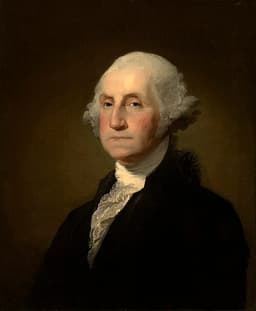
George Washington
Politician · Modern
76.8Total

Vauban
General · Modern
76.4Total
Basic Information
Born
1732
1633
Died
1799
1707
Era
Modern
Modern
Nationality
United States
France
Occupation
Politician
General
Civilization
Western
Western
Score Comparison
Military (10%)
75.0
76.0
Political (20%)
82.0
59.3
Influence (20%)
75.0
71.0
Legacy (20%)
80.0
90.0
Leadership (15%)
85.0
77.2
Strategy (15%)
55.0
80.6
TOTAL
76.8
76.4
George Washington — Complete Timeline
1775 AD
Appointed Commander-in-Chief of the Continental ArmyOther◆ Major
The Second Continental Congress appointed Washington as commander-in-chief of the Continental Army on June 15, 1775. He accepted the position without pay, taking command of the forces besieging Boston at the start of the American Revolutionary War.
American RevolutionMilitary Leadership
Impact: national
1776 AD
Crossed the Delaware RiverOther◆ Major
On the night of December 25-26, 1776, Washington led 2,400 troops across the ice-choked Delaware River. The surprise attack on Hessian forces at Trenton resulted in a decisive American victory, capturing nearly 1,000 prisoners and reviving Patriot morale after a series of defeats.
American RevolutionBattleTurning Point
Impact: nationalconstructive
1787 AD
Presided over the Constitutional ConventionPolitical Action◆ Major
Washington served as president of the Constitutional Convention in Philadelphia from May to September 1787. His presence lent legitimacy to the proceedings, and he formally signed the final draft of the U.S. Constitution, though he contributed little to the debates.
ConstitutionFounding Father
Impact: national
1789 AD
Inaugurated as First President of the United StatesPolitical Action◆ Major
Washington was unanimously elected by the Electoral College and inaugurated on April 30, 1789, at Federal Hall in New York City. He established numerous executive branch precedents, including the cabinet system, the inaugural address, and the title 'Mr. President'.
PresidencyFounding Father
Impact: national
1793 AD
Issued the Proclamation of NeutralityOther◆ Major
Washington issued the Proclamation of Neutrality on April 22, 1793, declaring the United States neutral in the conflict between France and Great Britain. This decision established the precedent of American isolationism and avoided entanglement in European wars.
Foreign PolicyNeutrality
Impact: national
1796 AD
Delivered the Farewell AddressOther◆ Major
Washington published his Farewell Address on September 19, 1796, announcing his decision not to seek a third term. The address warned against political factionalism, permanent foreign alliances, and the influence of the military in government, shaping American political culture.
PresidencyLegacy
Impact: national
Vauban — Complete Timeline
1673 AD
Siege of MaastrichtWar◆ Major
Vauban directed the siege of Maastricht for Louis XIV. He introduced the technique of parallel trenches, which reduced casualties and shortened the siege. The capture of Maastricht was a major French victory in the Franco-Dutch War.
Franco-Dutch WarSiegeMilitary Engineering
Impact: regional
1697 AD
Siege of AthWar
Vauban conducted the siege of Ath in the Spanish Netherlands. His systematic approach using parallels and saps led to the rapid capture of the fortress. The siege demonstrated the effectiveness of his methods.
Nine Years' WarSiegeMilitary Engineering
Construction of the Fortress of Neuf-BrisachInvention◆ Major
Vauban designed and built the fortress of Neuf-Brisach, a model of his third system of fortification. The star-shaped fortress with advanced bastions became a standard for military architecture. It was built to protect the French border after the Treaty of Ryswick.
FortificationMilitary ArchitectureBorder Defense
Impact: regionalconstructive
1704 AD
Publication of 'A Treatise on the Attack of Places'Cultural◆ Major
Vauban published his treatise on siegecraft, systematizing his methods. The work became a standard military textbook in Europe. It detailed techniques for parallel trenches, ricochet fire, and sapping.
Military TheorySiegecraftPublication
Impact: globalconstructive
1707 AD
Proposal for a 'Dîme Royale' Tax ReformReform
Vauban proposed a radical tax reform called the 'D
Tax ReformEconomic PolicyFrance
Impact: nationalconstructive
Expert Analysis
Origins
George Washington was born into a Virginia planter family in 1732, gaining early military experience during the French and Indian War. His background as a surveyor and landowner shaped his pragmatic leadership. Sébastien Le Prestre de Vauban, born in 1633 in Saint-Léger-de-Foucheret, France, rose from a minor noble to become Louis XIV's premier military engineer. His expertise in siegecraft and fortification was honed through decades of warfare.
Rise to Power
Washington's ascent came through the Continental Congress appointing him Commander-in-Chief in 1775. Despite defeats, his resilience at Trenton and Princeton rallied the colonial cause. Vauban's rise was meteoric: he directed over 40 sieges, never losing one, and designed or improved hundreds of fortresses. His 1703 treatise, 'A Treatise on the Attack of Places', became a standard military text.
Leadership & Governance
Washington's leadership was defined by his ability to inspire and unify. He managed a fractious Congress and army, ultimately leading to victory at Yorktown. As president, he established precedents like the cabinet system and neutrality. Vauban's leadership was technical and methodical; he revolutionized siege warfare with parallel trenches and ricochet fire. His fortifications, like Neuf-Brisach, were models of defensive design. However, he lacked political power, serving as an advisor.
Triumph & Tragedy
Washington's triumph is the creation of the United States; his tragedy is the perpetuation of slavery despite personal misgivings. Vauban's triumphs include the Siege of Maastricht (1673) and his fortresses still standing. His tragedy lies in his failed 'Dîme Royale' tax reform, which alienated the nobility and was rejected.
Character & Destiny
Washington was stoic, disciplined, and self-sacrificing, embodying republican virtue. He voluntarily relinquished power, setting a democratic precedent. Vauban was industrious, humble, and devoted to service, but his destiny was tied to an absolute monarchy that limited his reforms. Both men were shaped by their eras: Washington by Enlightenment ideals, Vauban by absolutist France.
Legacy
Washington's legacy as 'Father of His Country' is immense; he symbolizes American independence and democratic leadership. Vauban's legacy is in military engineering—his star forts influenced defense for centuries. However, his name is less known outside military history. Numerically, Washington scores higher in political impact (P=82 vs 59), leadership (L=80 vs 90?), and diplomacy (D=85 vs 77). Vauban excels in strategy (S=81 vs 55) and military might (M=76 vs 75).
Conclusion
George Washington edges out Vauban in this comparison due to his broader historical impact. While Vauban was a master of siege warfare, his influence was confined to military tactics and fortifications. Washington's leadership shaped a nation and its governance, making him a figure of global historical significance. Scores: Washington 7.5/10, Vauban 7.1/10.
Rankings
🥇
George WashingtonLeader
Mil: 75.0Pol: 82.0Inf: 75.0
76.8
🥈
Vauban
Mil: 76.0Pol: 59.3Inf: 71.0
76.4
+0.4 behind
How This Comparison Works
Algorithm
Each figure is scored on 6 dimensions (0—100 scale) based on structured historical data: Military (10%), Political (20%), Influence (20%), Legacy (20%), Leadership (15%), Strategy (15%). The weighted total produces the final ranking.
Data Sources
Scores are computed from structured sub-indicators in the database. Scale factors adjust for era (Ancient ×0.85, Modern ×1.0) and civilization size (Eastern ×1.05, Other ×0.80) to account for differences in population and military scale.
Maximum 3 Figures
Comparisons are limited to 2—3 figures to ensure readability and statistical meaningfulness.
Error Margins
±5 points per dimension — Sub-scores are derived from historical records with inherent uncertainty. Two figures within 5 points on a dimension should be considered roughly equivalent in that area.
Total Score Accuracy
±3 points overall — The weighted combination of 6 dimensions produces a total score with approximately ±3 points of uncertainty. Differences of less than 3 points are not statistically significant— the figures are effectively tied.
Known Limitations
- Historical records are incomplete and uneven across civilizations
- Figures from oral-tradition societies may be underrepresented
- Occupation labels can misclassify multi-role figures
- Scores measure capability and impact, not moral character
- Quantitative scoring is a comparison tool, not absolute truth
Capability Radar
Military (10%) — Battles & Warfare
Battles
75
75
Win Rate
70
85
Expansion
60
70
Political (20%) — Governance & Reform
Reform
90
80
Diplomacy
85
60
Economy
65
55
Influence (20%) — Cultural & Global Reach
Cultural
85
80
Global
85
75
Legacy (20%) — Historical Impact
Historical
95
85
Longevity
90
85
Leadership (15%) — Power & Stability
Tenure
70
65
Stability
85
70
Strategy (15%) — Tactics & Innovation
Strategy
80
90
Tactics
65
95
Reform
85
95
Similar Comparisons
Comments & Discussion
No comments yet. Be the first to share your thoughts!