Loading...
George Washington vs Toyotomi Hideyoshi
Toyotomi Hideyoshi leads by 5.2 pts · 2 figures compared
…
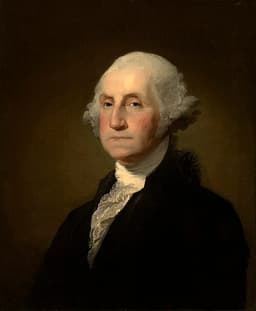
George Washington
Politician · Modern
76.8Total
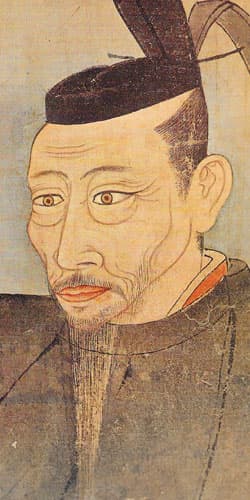
Toyotomi Hideyoshi
General · Modern
82.0Total
Basic Information
Born
1732
1537
Died
1799
1598
Era
Modern
Modern
Nationality
United States
Japan
Occupation
Politician
General
Civilization
Western
Eastern
Score Comparison
Military (10%)
75.0
79.9
Political (20%)
82.0
78.0
Influence (20%)
75.0
88.0
Legacy (20%)
80.0
80.0
Leadership (15%)
85.0
82.0
Strategy (15%)
55.0
80.4
TOTAL
76.8
82.0
George Washington — Complete Timeline
1775 AD
Appointed Commander-in-Chief of the Continental ArmyOther◆ Major
The Second Continental Congress appointed Washington as commander-in-chief of the Continental Army on June 15, 1775. He accepted the position without pay, taking command of the forces besieging Boston at the start of the American Revolutionary War.
American RevolutionMilitary Leadership
Impact: national
1776 AD
Crossed the Delaware RiverOther◆ Major
On the night of December 25-26, 1776, Washington led 2,400 troops across the ice-choked Delaware River. The surprise attack on Hessian forces at Trenton resulted in a decisive American victory, capturing nearly 1,000 prisoners and reviving Patriot morale after a series of defeats.
American RevolutionBattleTurning Point
Impact: nationalconstructive
1787 AD
Presided over the Constitutional ConventionPolitical Action◆ Major
Washington served as president of the Constitutional Convention in Philadelphia from May to September 1787. His presence lent legitimacy to the proceedings, and he formally signed the final draft of the U.S. Constitution, though he contributed little to the debates.
ConstitutionFounding Father
Impact: national
1789 AD
Inaugurated as First President of the United StatesPolitical Action◆ Major
Washington was unanimously elected by the Electoral College and inaugurated on April 30, 1789, at Federal Hall in New York City. He established numerous executive branch precedents, including the cabinet system, the inaugural address, and the title 'Mr. President'.
PresidencyFounding Father
Impact: national
1793 AD
Issued the Proclamation of NeutralityOther◆ Major
Washington issued the Proclamation of Neutrality on April 22, 1793, declaring the United States neutral in the conflict between France and Great Britain. This decision established the precedent of American isolationism and avoided entanglement in European wars.
Foreign PolicyNeutrality
Impact: national
1796 AD
Delivered the Farewell AddressOther◆ Major
Washington published his Farewell Address on September 19, 1796, announcing his decision not to seek a third term. The address warned against political factionalism, permanent foreign alliances, and the influence of the military in government, shaping American political culture.
PresidencyLegacy
Impact: national
Toyotomi Hideyoshi — Complete Timeline
1583 AD
Battle of ShizugatakeWar◆ Major
Hideyoshi defeated his rival Shibata Katsuie at the Battle of Shizugatake, solidifying his control over central Japan. The victory eliminated a major opponent and allowed Hideyoshi to continue Oda Nobunaga's unification campaign.
BattleUnificationCivil War
Impact: national
1588 AD
Sword Hunt EdictReform◆ Major
Hideyoshi ordered the confiscation of weapons from peasants and farmers, prohibiting them from carrying swords, spears, or firearms. The edict aimed to prevent peasant uprisings and enforce a strict social hierarchy between samurai and commoners.
Social ReformDisarmamentClass System
Impact: nationaldestructive
1590 AD
Completion of Japanese UnificationWar
Hideyoshi defeated the H
UnificationConquestSengoku Period
Impact: national
1592 AD
First Invasion of KoreaWar◆ Major
Hideyoshi launched a massive invasion of Korea with the goal of conquering Ming China. Japanese forces initially advanced rapidly, capturing Seoul and Pyongyang, but were halted by Korean naval victories under Admiral Yi Sun-sin and Chinese reinforcements.
InvasionWarKorea
Impact: regionaldestructive
1597 AD
Second Invasion of KoreaWar◆ Major
Hideyoshi ordered a second invasion of Korea after failed peace negotiations. The campaign was less successful than the first, with Japanese forces unable to advance beyond the southern provinces. The invasion ended with Hideyoshi's death in 1598.
InvasionWarKorea
Impact: regionaldestructive
Expert Analysis
Origins
Toyotomi Hideyoshi was born in 1537 in Nakamura, Owari Province, to a peasant family. His father, a foot soldier, died when Hideyoshi was young. He rose from obscurity by joining the Oda clan, eventually becoming a trusted general under Oda Nobunaga. His humble origins shaped his pragmatic and ambitious nature. George Washington was born in 1732 in Westmoreland County, Virginia, into a moderately prosperous planter family. He inherited Mount Vernon and gained experience as a surveyor and military officer during the French and Indian War. His upbringing in Virginia's gentry class instilled a sense of duty and honor. Both men overcame personal and societal limitations, but Hideyoshi's rise from peasantry is more dramatic.
Rise to Power
Hideyoshi's rise began under Nobunaga, who he served as a sandal-bearer and later as a general. After Nobunaga's death in 1582, Hideyoshi avenged him by defeating Akechi Mitsuhide at the Battle of Shizugatake, solidifying his position as Nobunaga's successor. Through a series of military campaigns and strategic alliances, he unified Japan by 1590. Washington's rise to power was more gradual. He gained fame as a commander in the French and Indian War, then became a delegate to the Continental Congress. In 1775, he was appointed Commander-in-Chief of the Continental Army, leading the American Revolutionary War. His leadership during the war, including the crossing of the Delaware River, made him a national hero. Hideyoshi's rise was more meteoric and ruthless, while Washington's was steady and consensual.
Leadership & Governance
Hideyoshi ruled Japan as Kampaku (regent) and later as Taiko (retired regent). He implemented the Sword Hunt Edict, disarming peasants to prevent rebellion, and conducted land surveys to centralize control. He also promoted trade and cultural activities, like the tea ceremony. However, his governance was autocratic and militaristic. Washington, as President, established many precedents, including the cabinet system and the Proclamation of Neutrality, which kept the U.S. out of European conflicts. He presided over the Constitutional Convention, shaping the U.S. Constitution. His leadership emphasized republican values, civilian control of the military, and a strong central government. Hideyoshi's governance was more centralized and feudal, while Washington's was constitutional and democratic.
Triumph & Tragedy
Hideyoshi's greatest triumph was unifying Japan after centuries of civil war. His tragedy came from his ambitious invasions of Korea (1592-1598), which ended in failure and heavy losses. The invasions drained Japan's resources and sowed seeds for future conflict. Washington's triumph was winning the Revolutionary War and establishing the United States. His tragedy was his inability to fully realize his vision for a strong federal government, as the early republic struggled with factionalism and slavery. Both faced personal tragedies: Hideyoshi's son died young, and Washington had no biological children. Hideyoshi's invasions were a catastrophic overreach; Washington's political challenges were more manageable.
Character & Destiny
Hideyoshi was ambitious, cunning, and ruthless, but also charismatic and culturally refined. He was known for his strategic brilliance and ability to inspire loyalty. His destiny was to rise from nothing and rule Japan, but his later megalomania led to overreach. Washington was reserved, dignified, and principled. He prioritized duty over personal ambition, famously resigning his commission after the war. His destiny was to lead a new nation, embodying its ideals of liberty and republicanism. Hideyoshi's character reflects a warrior ethos; Washington's reflects an Enlightenment statesman. Both were decisive leaders, but Washington's self-restraint contrasts with Hideyoshi's ambition.
Legacy
Hideyoshi's legacy is mixed: he unified Japan and left a lasting impact on its social structure, but his Korean invasions damaged relations with Korea and China. He is remembered as a brilliant strategist and unifier. Washington's legacy is overwhelmingly positive: he is the 'Father of His Country,' revered for his leadership, integrity, and role in founding the United States. His Farewell Address warned against factionalism and foreign entanglements, influencing U.S. policy for centuries. Hideyoshi's legacy is more complex, while Washington's is iconic and foundational.
Conclusion
Toyotomi Hideyoshi (Overall Score: 82) and George Washington (Overall Score: 77) were both transformative leaders. Hideyoshi's unification of Japan was a monumental military achievement, but his authoritarian rule and failed invasions detract from his legacy. Washington's leadership was less dramatic but more enduring, establishing a democratic republic. Hideyoshi's higher score reflects his greater impact on Japan's trajectory, but Washington's legacy is more universally admired. Ultimately, Washington's commitment to democratic principles and his role in creating a lasting political system give him a moral edge, but Hideyoshi's sheer ambition and success in unifying Japan cannot be denied. The choice depends on whether one values military unification or democratic foundation.
Rankings
🥇
Toyotomi HideyoshiLeader
Mil: 79.9Pol: 78.0Inf: 88.0
82.0
🥈
George Washington
Mil: 75.0Pol: 82.0Inf: 75.0
76.8
+5.2 behind
How This Comparison Works
Algorithm
Each figure is scored on 6 dimensions (0—100 scale) based on structured historical data: Military (10%), Political (20%), Influence (20%), Legacy (20%), Leadership (15%), Strategy (15%). The weighted total produces the final ranking.
Data Sources
Scores are computed from structured sub-indicators in the database. Scale factors adjust for era (Ancient ×0.85, Modern ×1.0) and civilization size (Eastern ×1.05, Other ×0.80) to account for differences in population and military scale.
Maximum 3 Figures
Comparisons are limited to 2—3 figures to ensure readability and statistical meaningfulness.
Error Margins
±5 points per dimension — Sub-scores are derived from historical records with inherent uncertainty. Two figures within 5 points on a dimension should be considered roughly equivalent in that area.
Total Score Accuracy
±3 points overall — The weighted combination of 6 dimensions produces a total score with approximately ±3 points of uncertainty. Differences of less than 3 points are not statistically significant— the figures are effectively tied.
Known Limitations
- Historical records are incomplete and uneven across civilizations
- Figures from oral-tradition societies may be underrepresented
- Occupation labels can misclassify multi-role figures
- Scores measure capability and impact, not moral character
- Quantitative scoring is a comparison tool, not absolute truth
Capability Radar
Military (10%) — Battles & Warfare
Battles
75
85
Win Rate
70
88
Expansion
60
80
Political (20%) — Governance & Reform
Reform
90
95
Diplomacy
85
80
Economy
65
90
Influence (20%) — Cultural & Global Reach
Cultural
85
85
Global
85
70
Legacy (20%) — Historical Impact
Historical
95
90
Longevity
90
85
Leadership (15%) — Power & Stability
Tenure
70
85
Stability
85
75
Strategy (15%) — Tactics & Innovation
Strategy
80
92
Tactics
65
90
Reform
85
95
Similar Comparisons
Comments & Discussion
No comments yet. Be the first to share your thoughts!