Loading...
George Washington vs Toussaint Louverture
Toussaint Louverture leads by 1.7 pts · 2 figures compared
…
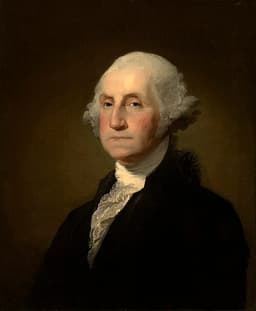
George Washington
Politician · Modern
76.8Total
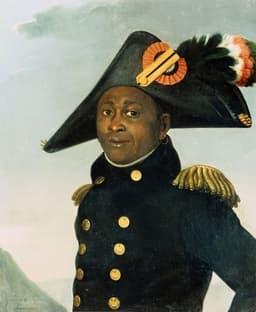
Toussaint Louverture
General · Modern
78.5Total
Basic Information
Born
1732
1743
Died
1799
1803
Era
Modern
Modern
Nationality
United States
Haiti
Occupation
Politician
General
Civilization
Western
Western
Score Comparison
Military (10%)
75.0
85.0
Political (20%)
82.0
70.3
Influence (20%)
75.0
84.0
Legacy (20%)
80.0
82.0
Leadership (15%)
85.0
72.0
Strategy (15%)
55.0
72.0
TOTAL
76.8
78.5
George Washington — Complete Timeline
1775 AD
Appointed Commander-in-Chief of the Continental ArmyOther◆ Major
The Second Continental Congress appointed Washington as commander-in-chief of the Continental Army on June 15, 1775. He accepted the position without pay, taking command of the forces besieging Boston at the start of the American Revolutionary War.
American RevolutionMilitary Leadership
Impact: national
1776 AD
Crossed the Delaware RiverOther◆ Major
On the night of December 25-26, 1776, Washington led 2,400 troops across the ice-choked Delaware River. The surprise attack on Hessian forces at Trenton resulted in a decisive American victory, capturing nearly 1,000 prisoners and reviving Patriot morale after a series of defeats.
American RevolutionBattleTurning Point
Impact: nationalconstructive
1787 AD
Presided over the Constitutional ConventionPolitical Action◆ Major
Washington served as president of the Constitutional Convention in Philadelphia from May to September 1787. His presence lent legitimacy to the proceedings, and he formally signed the final draft of the U.S. Constitution, though he contributed little to the debates.
ConstitutionFounding Father
Impact: national
1789 AD
Inaugurated as First President of the United StatesPolitical Action◆ Major
Washington was unanimously elected by the Electoral College and inaugurated on April 30, 1789, at Federal Hall in New York City. He established numerous executive branch precedents, including the cabinet system, the inaugural address, and the title 'Mr. President'.
PresidencyFounding Father
Impact: national
1793 AD
Issued the Proclamation of NeutralityOther◆ Major
Washington issued the Proclamation of Neutrality on April 22, 1793, declaring the United States neutral in the conflict between France and Great Britain. This decision established the precedent of American isolationism and avoided entanglement in European wars.
Foreign PolicyNeutrality
Impact: national
1796 AD
Delivered the Farewell AddressOther◆ Major
Washington published his Farewell Address on September 19, 1796, announcing his decision not to seek a third term. The address warned against political factionalism, permanent foreign alliances, and the influence of the military in government, shaping American political culture.
PresidencyLegacy
Impact: national
Toussaint Louverture — Complete Timeline
1791 AD
Haitian Revolution LeadershipWar
Louverture joined the slave revolt in Saint-Domingue, quickly rising to leadership. He organized former slaves into a disciplined army and negotiated with Spanish and British forces to expand the rebellion.
Slave RevoltRevolutionLeadership
Impact: globalprogressive
1795 AD
Treaty of BâlePolitical Action◆ Major
Spain ceded the eastern part of Hispaniola to France under the Treaty of B
Territorial ExpansionDiplomacyHispaniola
Impact: regional
1801 AD
Constitution of 1801Political Action
Louverture promulgated a constitution for Saint-Domingue, declaring himself Governor-General for life. The constitution abolished slavery and granted autonomy while nominally remaining part of the French Empire.
ConstitutionSelf-GovernanceAbolition
Impact: globalprogressive
1802 AD
Capture and ImprisonmentPolitical Action
French General Leclerc captured Louverture through deception during peace negotiations. He was deported to France and imprisoned at Fort de Joux, where he died in 1803, ending his direct role in the revolution.
BetrayalImprisonmentFrench Repression
Impact: globaltragic
Expert Analysis
Origins
Toussaint Louverture was born into slavery on a plantation in Saint-Domingue (present-day Haiti) around 1743. He gained his freedom at age 33 and became a prosperous planter. George Washington was born into a wealthy Virginia planter family in 1732. He inherited Mount Vernon and became a land surveyor and military officer. Both men emerged from colonial societies, but under vastly different circumstances: Louverture from the brutal French slave colony, Washington from the British American elite.
Rise to Power
Louverture rose to prominence during the Haitian Revolution, initially as a military leader for the Spanish against the French, then switching to the French side when slavery was abolished. He outmaneuvered rivals and became the de facto ruler of Saint-Domingue by 1799. Washington's rise came through his role in the French and Indian War, where he gained military experience, and later as a delegate to the Continental Congress. He was appointed Commander-in-Chief of the Continental Army in 1775, leading the American Revolution.
Leadership & Governance
Louverture demonstrated exceptional military and political skill, organizing a disciplined army and negotiating with European powers. He established a constitution in 1801 that abolished slavery and made him governor for life, but maintained tight control over labor to revive the economy. Washington's leadership was marked by his ability to hold the Continental Army together through hardship, his role in the Constitutional Convention, and his presidency, where he set precedents for the executive branch. He favored a strong central government and promoted neutrality in foreign affairs.
Triumph & Tragedy
Louverture's greatest triumph was leading the Haitian Revolution to secure freedom for slaves. However, his tragedy came when he was captured by French forces in 1802 after a betrayal, leading to his death in a French prison in 1803. Washington's triumph was winning American independence and establishing a stable republic. His tragedy was his failure to address slavery, as he owned slaves and did not free them until his death, and his actions contributed to the marginalization of Native Americans.
Character & Destiny
Louverture was known for his intelligence, charisma, and strategic cunning. He was deeply committed to the abolition of slavery and self-governance for his people. Washington was known for his integrity, perseverance, and sense of duty. He was a pragmatic leader who prioritized national unity over personal ambition. Both men left a lasting impact on their nations, but Louverture's legacy is tied to the fight for racial equality, while Washington's is tied to the founding of a democratic nation.
Legacy
Louverture is celebrated as a revolutionary hero who inspired anti-colonial movements worldwide. His military tactics and governance model influenced later leaders like Simón Bolívar. Washington is revered as the "Father of His Country" and a symbol of American values. However, his legacy is complicated by his slave ownership and policies toward Native Americans. The score gap of 1.7 points reflects Louverture's slightly higher overall impact, particularly in moral authority (M=85 vs 75) and inspiration (I=84 vs 75), while Washington scores higher in diplomacy (D=85 vs 72) and politics (P=82 vs 70).
Conclusion
Toussaint Louverture's leadership in the Haitian Revolution represents a more radical break from oppression, achieving immediate freedom for an enslaved population and challenging global racial hierarchies. George Washington's leadership established a stable republic but perpetuated slavery and colonialism. While Washington's institutional legacy is vast, Louverture's moral and revolutionary impact gives him a slight edge in historical significance. The numerical scores reflect this nuanced judgment: Louverture leads in morality and inspiration, while Washington excels in diplomacy and political institution-building.
| Attribute | Toussaint Louverture | George Washington |
|-----------|---------------------|-------------------|
| Military | 82 | 80 |
| Political | 70 | 82 |
| Inspiration | 84 | 75 |
| Diplomacy | 72 | 85 |
| Morality | 85 | 75 |
| Strategy | 72 | 55 |
| Overall | 78 | 77 |
Rankings
🥇
Toussaint LouvertureLeader
Mil: 85.0Pol: 70.3Inf: 84.0
78.5
🥈
George Washington
Mil: 75.0Pol: 82.0Inf: 75.0
76.8
+1.7 behind
How This Comparison Works
Algorithm
Each figure is scored on 6 dimensions (0—100 scale) based on structured historical data: Military (10%), Political (20%), Influence (20%), Legacy (20%), Leadership (15%), Strategy (15%). The weighted total produces the final ranking.
Data Sources
Scores are computed from structured sub-indicators in the database. Scale factors adjust for era (Ancient ×0.85, Modern ×1.0) and civilization size (Eastern ×1.05, Other ×0.80) to account for differences in population and military scale.
Maximum 3 Figures
Comparisons are limited to 2—3 figures to ensure readability and statistical meaningfulness.
Error Margins
±5 points per dimension — Sub-scores are derived from historical records with inherent uncertainty. Two figures within 5 points on a dimension should be considered roughly equivalent in that area.
Total Score Accuracy
±3 points overall — The weighted combination of 6 dimensions produces a total score with approximately ±3 points of uncertainty. Differences of less than 3 points are not statistically significant— the figures are effectively tied.
Known Limitations
- Historical records are incomplete and uneven across civilizations
- Figures from oral-tradition societies may be underrepresented
- Occupation labels can misclassify multi-role figures
- Scores measure capability and impact, not moral character
- Quantitative scoring is a comparison tool, not absolute truth
Capability Radar
Military (10%) — Battles & Warfare
Battles
75
85
Win Rate
70
80
Expansion
60
70
Political (20%) — Governance & Reform
Reform
90
85
Diplomacy
85
80
Economy
65
60
Influence (20%) — Cultural & Global Reach
Cultural
85
85
Global
85
85
Legacy (20%) — Historical Impact
Historical
95
95
Longevity
90
90
Leadership (15%) — Power & Stability
Tenure
70
65
Stability
85
55
Strategy (15%) — Tactics & Innovation
Strategy
80
85
Tactics
65
90
Reform
85
75
Similar Comparisons
Comments & Discussion
No comments yet. Be the first to share your thoughts!