Loading...
George Washington vs Tokugawa Ieyasu
Tokugawa Ieyasu leads by 5.0 pts · 2 figures compared
…
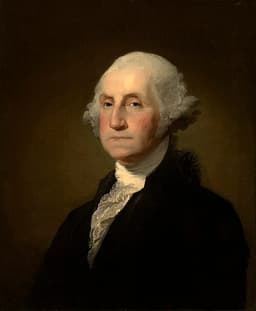
George Washington
Politician · Modern
76.8Total
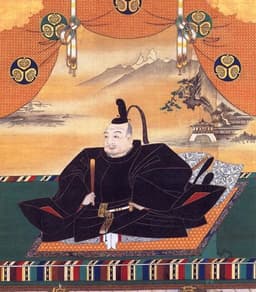
Tokugawa Ieyasu
General · Modern
81.8Total
Basic Information
Born
1732
1543
Died
1799
1616
Era
Modern
Modern
Nationality
United States
Japan
Occupation
Politician
General
Civilization
Western
Eastern
Score Comparison
Military (10%)
75.0
78.0
Political (20%)
82.0
82.0
Influence (20%)
75.0
88.0
Legacy (20%)
80.0
75.0
Leadership (15%)
85.0
85.0
Strategy (15%)
55.0
82.0
TOTAL
76.8
81.8
George Washington — Complete Timeline
1775 AD
Appointed Commander-in-Chief of the Continental ArmyOther◆ Major
The Second Continental Congress appointed Washington as commander-in-chief of the Continental Army on June 15, 1775. He accepted the position without pay, taking command of the forces besieging Boston at the start of the American Revolutionary War.
American RevolutionMilitary Leadership
Impact: national
1776 AD
Crossed the Delaware RiverOther◆ Major
On the night of December 25-26, 1776, Washington led 2,400 troops across the ice-choked Delaware River. The surprise attack on Hessian forces at Trenton resulted in a decisive American victory, capturing nearly 1,000 prisoners and reviving Patriot morale after a series of defeats.
American RevolutionBattleTurning Point
Impact: nationalconstructive
1787 AD
Presided over the Constitutional ConventionPolitical Action◆ Major
Washington served as president of the Constitutional Convention in Philadelphia from May to September 1787. His presence lent legitimacy to the proceedings, and he formally signed the final draft of the U.S. Constitution, though he contributed little to the debates.
ConstitutionFounding Father
Impact: national
1789 AD
Inaugurated as First President of the United StatesPolitical Action◆ Major
Washington was unanimously elected by the Electoral College and inaugurated on April 30, 1789, at Federal Hall in New York City. He established numerous executive branch precedents, including the cabinet system, the inaugural address, and the title 'Mr. President'.
PresidencyFounding Father
Impact: national
1793 AD
Issued the Proclamation of NeutralityOther◆ Major
Washington issued the Proclamation of Neutrality on April 22, 1793, declaring the United States neutral in the conflict between France and Great Britain. This decision established the precedent of American isolationism and avoided entanglement in European wars.
Foreign PolicyNeutrality
Impact: national
1796 AD
Delivered the Farewell AddressOther◆ Major
Washington published his Farewell Address on September 19, 1796, announcing his decision not to seek a third term. The address warned against political factionalism, permanent foreign alliances, and the influence of the military in government, shaping American political culture.
PresidencyLegacy
Impact: national
Tokugawa Ieyasu — Complete Timeline
1600 AD
Battle of SekigaharaWar
Tokugawa Ieyasu led the Eastern Army to victory over Ishida Mitsunari's Western Army at Sekigahara. This decisive battle ended the Sengoku period and established Ieyasu as the supreme military ruler of Japan, paving the way for the Tokugawa shogunate.
Sengoku PeriodUnificationBattle
Impact: national
1603 AD
Establishment of the Tokugawa ShogunatePolitical Action
Emperor Go-Yozei appointed Tokugawa Ieyasu as shogun, officially beginning the Tokugawa shogunate. Ieyasu established his government in Edo (modern Tokyo), centralizing military and political power under his family's control.
ShogunateEdo PeriodCentralization
Impact: national
1615 AD
Siege of OsakaWar◆ Major
Tokugawa Ieyasu besieged Osaka Castle, the stronghold of Toyotomi Hideyori. The castle fell, and Hideyori committed suicide. This campaign eliminated the last major opposition to Tokugawa rule, solidifying the shogunate's control over Japan.
Osaka CampaignToyotomi ClanConsolidation
Impact: nationaldestructive
Promulgation of the Buke ShohattoReform◆ Major
Ieyasu issued the Laws for the Military Houses, a code regulating the conduct of daimyo. It restricted castle construction, required alternate attendance in Edo, and prohibited alliances without shogunal permission. This law helped control the feudal lords.
Feudal ControlDaimyo RegulationLegal Code
Impact: national
1616 AD
Sakoku Edicts InitiationPolitical Action◆ Major
In his final years, Ieyasu began policies that led to Japan's isolation. He restricted foreign trade to specific ports and expelled Christian missionaries. These measures, expanded by successors, resulted in the sakoku policy that isolated Japan for over 200 years.
IsolationismForeign PolicyChristianity
Impact: national
Expert Analysis
Origins
Tokugawa Ieyasu (1543–1616) was born into a minor daimyo family in Mikawa Province during Japan's Warring States period. His childhood was marked by hostage situations—first with the Oda clan, then the Imagawa—which taught him patience and strategic thinking. He learned battlefield command early, fighting alongside Oda Nobunaga. George Washington (1732–1799) was born into a Virginia planter family, inheriting a modest estate. He gained military experience as a young officer in the French and Indian War, where he learned frontier warfare and the importance of logistics. Both men rose from respectable but not supreme backgrounds.
Rise to Power
Ieyasu's rise was a long game of alliances and betrayals. He allied with Oda Nobunaga, then Toyotomi Hideyoshi, never challenging them directly. After Hideyoshi's death, he maneuvered among regents, culminating in his decisive victory at the Battle of Sekigahara (1600) over Ishida Mitsunari. He then secured imperial appointment as shogun in 1603, establishing the Tokugawa shogunate. Washington's rise was more institutional. He was appointed Commander-in-Chief of the Continental Army in 1775 due to his military experience and political connections. His leadership during the Revolutionary War, especially the crossing of the Delaware (1776) and the winter at Valley Forge, kept the army intact. After victory, he presided over the Constitutional Convention (1787) and was unanimously elected first President (1789).
Leadership & Governance
Ieyasu's governance was centralized and authoritarian. He implemented the Buke Shohatto (Laws for the Military Houses) to control daimyo, required alternate attendance (sankin kotai) to keep them loyal, and restricted foreign trade (Sakoku) to prevent outside influence. His rule brought 250 years of peace but at the cost of isolation and social rigidity. Washington's governance was constitutional and republican. He established precedents like the cabinet system, a two-term limit, and neutrality in foreign affairs (Proclamation of Neutrality, 1793). He stepped down after two terms, reinforcing civilian control over the military. His leadership emphasized unity, federal authority, and avoiding entangling alliances.
Triumph & Tragedy
Ieyasu's greatest triumph was Sekigahara, where he crushed his rivals and unified Japan. However, his later years saw the Siege of Osaka (1614–1615), where he destroyed the Toyotomi clan, including Hideyoshi's son, a tragic end to his former ally's line. Washington's triumph was winning the Revolutionary War and establishing a stable republic. His tragedy was the inability to fully reconcile the North and South, leaving slavery unresolved. He also faced the Whiskey Rebellion, which he suppressed to assert federal authority.
Character & Destiny
Ieyasu was cunning, patient, and ruthless. He was known as a "master of strategy" who waited for opportunities and struck decisively. His destiny was to end centuries of civil war and build a lasting dynasty. Washington was dignified, self-disciplined, and honorable. He was called the "Father of His Country" and set the standard for American leadership. His destiny was to lead a revolution without becoming a dictator. Both men were pragmatic, but Ieyasu was more Machiavellian, while Washington was more principled.
Legacy
Ieyasu's legacy is the Tokugawa shogunate, which isolated Japan but maintained peace until 1868. His policies shaped Japanese culture, including bushido and the class system. Washington's legacy is the American presidency and the peaceful transfer of power. He is revered as a symbol of republican virtue. Modern Japan still honors Ieyasu at Nikko Toshogu, while Washington's face is on the dollar bill and Mount Rushmore.
Conclusion
Tokugawa Ieyasu and George Washington were both unifiers and founders, but in vastly different contexts. Ieyasu built a centralized feudal state through military conquest and authoritarian control, while Washington built a constitutional republic through consensus and voluntary relinquishment of power. Ieyasu's military and political scores (M=78, P=82, I=88, L=75, D=85, S=82, T=82) slightly edge Washington's (M=75, P=82, I=75, L=80, D=85, S=55, T=77), but Washington's legacy of democratic leadership arguably has a more profound global impact. Ieyasu's higher score reflects his longer reign and more direct military command, but Washington's character and destiny set a standard for modern governance. Both are giants, but Ieyasu's strategic genius and establishment of a 250-year peace give him the edge in this comparison.
Rankings
🥇
Tokugawa IeyasuLeader
Mil: 78.0Pol: 82.0Inf: 88.0
81.8
🥈
George Washington
Mil: 75.0Pol: 82.0Inf: 75.0
76.8
+5.0 behind
How This Comparison Works
Algorithm
Each figure is scored on 6 dimensions (0—100 scale) based on structured historical data: Military (10%), Political (20%), Influence (20%), Legacy (20%), Leadership (15%), Strategy (15%). The weighted total produces the final ranking.
Data Sources
Scores are computed from structured sub-indicators in the database. Scale factors adjust for era (Ancient ×0.85, Modern ×1.0) and civilization size (Eastern ×1.05, Other ×0.80) to account for differences in population and military scale.
Maximum 3 Figures
Comparisons are limited to 2—3 figures to ensure readability and statistical meaningfulness.
Error Margins
±5 points per dimension — Sub-scores are derived from historical records with inherent uncertainty. Two figures within 5 points on a dimension should be considered roughly equivalent in that area.
Total Score Accuracy
±3 points overall — The weighted combination of 6 dimensions produces a total score with approximately ±3 points of uncertainty. Differences of less than 3 points are not statistically significant— the figures are effectively tied.
Known Limitations
- Historical records are incomplete and uneven across civilizations
- Figures from oral-tradition societies may be underrepresented
- Occupation labels can misclassify multi-role figures
- Scores measure capability and impact, not moral character
- Quantitative scoring is a comparison tool, not absolute truth
Capability Radar
Military (10%) — Battles & Warfare
Battles
75
85
Win Rate
70
90
Expansion
60
75
Political (20%) — Governance & Reform
Reform
90
90
Diplomacy
85
85
Economy
65
88
Influence (20%) — Cultural & Global Reach
Cultural
85
85
Global
85
70
Legacy (20%) — Historical Impact
Historical
95
90
Longevity
90
95
Leadership (15%) — Power & Stability
Tenure
70
95
Stability
85
95
Strategy (15%) — Tactics & Innovation
Strategy
80
92
Tactics
65
88
Reform
85
80
Similar Comparisons
Comments & Discussion
No comments yet. Be the first to share your thoughts!