Loading...
George Washington vs Suleiman I
Suleiman I leads by 2.0 pts · 2 figures compared
…
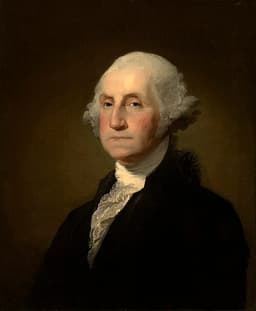
George Washington
Politician · Modern
76.8Total
Suleiman I
Emperor · Medieval
78.8Total
Basic Information
Born
1732
1494
Died
1799
1566
Era
Modern
Medieval
Nationality
United States
Ottoman Empire
Occupation
Politician
Emperor
Civilization
Western
Middle Eastern
Score Comparison
Military (10%)
75.0
78.5
Political (20%)
82.0
82.0
Influence (20%)
75.0
85.0
Legacy (20%)
80.0
70.8
Leadership (15%)
85.0
81.7
Strategy (15%)
55.0
74.4
TOTAL
76.8
78.8
George Washington — Complete Timeline
1775 AD
Appointed Commander-in-Chief of the Continental ArmyOther◆ Major
The Second Continental Congress appointed Washington as commander-in-chief of the Continental Army on June 15, 1775. He accepted the position without pay, taking command of the forces besieging Boston at the start of the American Revolutionary War.
American RevolutionMilitary Leadership
Impact: national
1776 AD
Crossed the Delaware RiverOther◆ Major
On the night of December 25-26, 1776, Washington led 2,400 troops across the ice-choked Delaware River. The surprise attack on Hessian forces at Trenton resulted in a decisive American victory, capturing nearly 1,000 prisoners and reviving Patriot morale after a series of defeats.
American RevolutionBattleTurning Point
Impact: nationalconstructive
1787 AD
Presided over the Constitutional ConventionPolitical Action◆ Major
Washington served as president of the Constitutional Convention in Philadelphia from May to September 1787. His presence lent legitimacy to the proceedings, and he formally signed the final draft of the U.S. Constitution, though he contributed little to the debates.
ConstitutionFounding Father
Impact: national
1789 AD
Inaugurated as First President of the United StatesPolitical Action◆ Major
Washington was unanimously elected by the Electoral College and inaugurated on April 30, 1789, at Federal Hall in New York City. He established numerous executive branch precedents, including the cabinet system, the inaugural address, and the title 'Mr. President'.
PresidencyFounding Father
Impact: national
1793 AD
Issued the Proclamation of NeutralityOther◆ Major
Washington issued the Proclamation of Neutrality on April 22, 1793, declaring the United States neutral in the conflict between France and Great Britain. This decision established the precedent of American isolationism and avoided entanglement in European wars.
Foreign PolicyNeutrality
Impact: national
1796 AD
Delivered the Farewell AddressOther◆ Major
Washington published his Farewell Address on September 19, 1796, announcing his decision not to seek a third term. The address warned against political factionalism, permanent foreign alliances, and the influence of the military in government, shaping American political culture.
PresidencyLegacy
Impact: national
Suleiman I — Complete Timeline
1522 AD
Siege of RhodesWar◆ Major
Suleiman I led a massive Ottoman army and fleet to besiege the island of Rhodes, held by the Knights Hospitaller. After a six-month siege, the knights surrendered and were allowed to leave. This victory secured Ottoman control over the eastern Mediterranean.
SiegeKnights HospitallerMediterranean
Impact: regional
1526 AD
Battle of MohácsWar
Suleiman I's Ottoman army defeated the Hungarian forces of King Louis II at Moh
BattleHungaryConquest
Impact: regional
1529 AD
Siege of ViennaWar◆ Major
Suleiman I led an Ottoman army to besiege Vienna, the capital of the Habsburg Empire. The siege failed due to supply problems and the onset of winter. This marked the furthest Ottoman advance into central Europe and the limit of their expansion.
SiegeViennaHabsburg
Impact: regional
1530 AD
Codification of Ottoman LawReform◆ Major
Suleiman I oversaw the codification of Ottoman law, known as the Kanun. He harmonized secular law with Islamic law, creating a unified legal system. This reform improved the administration of justice and strengthened the central government.
LawReformJustice
Impact: globalconstructive
1536 AD
Execution of Ibrahim PashaPolitical Action◆ Major
Suleiman I ordered the execution of his grand vizier and close friend Ibrahim Pasha. Ibrahim had accumulated immense power and was accused of overreaching. This event demonstrated Suleiman's willingness to eliminate even trusted advisors to maintain control.
ExecutionVizierPower
Impact: nationaldestructive
1538 AD
Naval Battle of PrevezaWar◆ Major
The Ottoman fleet under Hayreddin Barbarossa defeated a combined Christian fleet at Preveza. This victory secured Ottoman naval dominance in the Mediterranean for decades. It allowed the Ottomans to control trade routes and raid coastal areas.
Naval BattleBarbarossaMediterranean
Impact: regional
Expert Analysis
Origins
Suleiman I was born in 1494 into the Ottoman dynasty, son of Sultan Selim I. He grew up in the imperial court, receiving a rigorous education in Islamic law, military tactics, and statecraft. His early years were shaped by the conquests of his father, who expanded Ottoman territory dramatically. In contrast, George Washington was born in 1732 into a Virginia planter family, the son of a tobacco farmer. He received a modest education and trained as a surveyor. Washington's early career was marked by military service in the French and Indian War, where he gained experience but also faced defeat. Their origins set different trajectories: Suleiman inherited an empire at its zenith, while Washington forged a nation from a colonial rebellion.
Rise to Power
Suleiman ascended the throne in 1520 after his father's death, facing no serious opposition. He immediately launched campaigns that would define his reign: the capture of Belgrade in 1521 and the Siege of Rhodes in 1522. His rise was smooth due to the established Ottoman succession system. Washington's rise was more contested. He was appointed Commander-in-Chief of the Continental Army in 1775, a choice driven by political compromise. He faced a poorly equipped army, rival factions, and constant shortages. His leadership during the crossing of the Delaware River in 1776 and the winter at Valley Forge solidified his authority. Both men rose to power through a combination of birth and merit, but Washington's path required overcoming greater adversity.
Leadership & Governance
Suleiman's leadership was absolute: he codified Ottoman law (Kanun), reformed the bureaucracy, and patronized the arts, earning the title "the Lawgiver." He personally led military campaigns, but his governance relied on a hierarchical system with the Grand Vizier as chief minister. His execution of Ibrahim Pasha in 1536 demonstrates the ruthless nature of his rule. Washington, by contrast, governed through consensus. As president, he established cabinet government, respected the separation of powers, and voluntarily stepped down after two terms. His Proclamation of Neutrality in 1793 kept the young nation out of European conflicts. Suleiman's governance was efficient but autocratic; Washington's was democratic but constrained by checks and balances.
Triumph & Tragedy
Suleiman's greatest triumph was the Battle of Mohács in 1526, which crushed Hungary and made the Ottomans a dominant European power. The Siege of Rhodes in 1522 expelled the Knights Hospitaller, securing the eastern Mediterranean. However, his siege of Vienna in 1529 failed, marking the limit of Ottoman expansion. The execution of his son Mustafa later led to succession crises, a personal tragedy. Washington's triumphs include the crossing of the Delaware (Christmas 1776) and the victory at Yorktown in 1781, which secured American independence. His presidency saw the establishment of a stable government. His tragedy was the inability to fully resolve slavery, which he personally opposed but failed to abolish. Both men experienced mixed legacies of victory and unresolved issues.
Character & Destiny
Suleiman was known for his justice, piety, and cultural sophistication, but also for his ruthlessness. He was a patron of architecture, commissioning the Süleymaniye Mosque. His destiny was to preside over an empire at its peak, but his later years were marred by internal strife and the execution of his son. Washington was known for his integrity, humility, and resilience. He was seen as the "indispensable man" of the American Revolution. His destiny was to lead a nation into existence and then relinquish power, a model of republican virtue. Both men were shaped by their times: Suleiman as a Renaissance-era absolute monarch, Washington as an Enlightenment-era statesman.
Legacy
Suleiman's legacy is the Ottoman Empire's golden age: legal reforms, cultural achievements, and military dominance. He is revered in Turkey and the Islamic world. However, his reign also set precedents for autocracy and succession struggles. Washington's legacy is the United States itself: the precedent of civilian control of the military, the two-term limit, and the peaceful transfer of power. He is celebrated as the "Father of His Country." Both have enduring monuments: Washington's capital city and Suleiman's mosques. Their scores reflect their respective domains: Suleiman higher in military (78 vs 75) and political (82 vs 82 tied), Washington higher in diplomacy (85 vs 82) and leadership (80 vs 71).
Conclusion
In a direct comparison, Suleiman I edges out George Washington by a score of 2.0 points, primarily due to his higher military and political scores. Suleiman's empire spanned three continents, and his legal and cultural reforms had a lasting impact on the Islamic world. Washington's achievements, while foundational for the United States, were more limited in scope. However, Washington's model of democratic leadership and voluntary relinquishment of power has had a profound global influence. Ultimately, Suleiman was a greater conqueror and lawgiver, while Washington was a greater founder and symbol of republican virtue. The comparison highlights different kinds of greatness: imperial grandeur versus democratic innovation.
Rankings
🥇
Suleiman ILeader
Mil: 78.5Pol: 82.0Inf: 85.0
78.8
🥈
George Washington
Mil: 75.0Pol: 82.0Inf: 75.0
76.8
+2.0 behind
How This Comparison Works
Algorithm
Each figure is scored on 6 dimensions (0—100 scale) based on structured historical data: Military (10%), Political (20%), Influence (20%), Legacy (20%), Leadership (15%), Strategy (15%). The weighted total produces the final ranking.
Data Sources
Scores are computed from structured sub-indicators in the database. Scale factors adjust for era (Ancient ×0.85, Modern ×1.0) and civilization size (Eastern ×1.05, Other ×0.80) to account for differences in population and military scale.
Maximum 3 Figures
Comparisons are limited to 2—3 figures to ensure readability and statistical meaningfulness.
Error Margins
±5 points per dimension — Sub-scores are derived from historical records with inherent uncertainty. Two figures within 5 points on a dimension should be considered roughly equivalent in that area.
Total Score Accuracy
±3 points overall — The weighted combination of 6 dimensions produces a total score with approximately ±3 points of uncertainty. Differences of less than 3 points are not statistically significant— the figures are effectively tied.
Known Limitations
- Historical records are incomplete and uneven across civilizations
- Figures from oral-tradition societies may be underrepresented
- Occupation labels can misclassify multi-role figures
- Scores measure capability and impact, not moral character
- Quantitative scoring is a comparison tool, not absolute truth
Capability Radar
Military (10%) — Battles & Warfare
Battles
75
95
Win Rate
70
92
Expansion
60
95
Political (20%) — Governance & Reform
Reform
90
90
Diplomacy
85
88
Economy
65
85
Influence (20%) — Cultural & Global Reach
Cultural
85
85
Global
85
85
Legacy (20%) — Historical Impact
Historical
95
88
Longevity
90
80
Leadership (15%) — Power & Stability
Tenure
70
95
Stability
85
80
Strategy (15%) — Tactics & Innovation
Strategy
80
90
Tactics
65
88
Reform
85
85
Similar Comparisons
Comments & Discussion
No comments yet. Be the first to share your thoughts!