Loading...
George Washington vs Rajendra Chola I
Rajendra Chola I leads by 5.4 pts · 2 figures compared
…
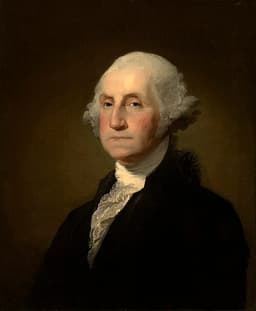
George Washington
Politician · Modern
76.8Total
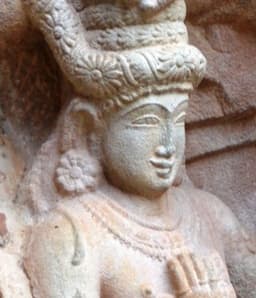
Rajendra Chola I
Emperor · Medieval
82.2Total
Basic Information
Born
1732
971
Died
1799
1044
Era
Modern
Medieval
Nationality
United States
India
Occupation
Politician
Emperor
Civilization
Western
Indian
Score Comparison
Military (10%)
75.0
84.7
Political (20%)
82.0
82.0
Influence (20%)
75.0
84.0
Legacy (20%)
80.0
84.0
Leadership (15%)
85.0
78.0
Strategy (15%)
55.0
77.6
TOTAL
76.8
82.2
George Washington — Complete Timeline
1775 AD
Appointed Commander-in-Chief of the Continental ArmyOther◆ Major
The Second Continental Congress appointed Washington as commander-in-chief of the Continental Army on June 15, 1775. He accepted the position without pay, taking command of the forces besieging Boston at the start of the American Revolutionary War.
American RevolutionMilitary Leadership
Impact: national
1776 AD
Crossed the Delaware RiverOther◆ Major
On the night of December 25-26, 1776, Washington led 2,400 troops across the ice-choked Delaware River. The surprise attack on Hessian forces at Trenton resulted in a decisive American victory, capturing nearly 1,000 prisoners and reviving Patriot morale after a series of defeats.
American RevolutionBattleTurning Point
Impact: nationalconstructive
1787 AD
Presided over the Constitutional ConventionPolitical Action◆ Major
Washington served as president of the Constitutional Convention in Philadelphia from May to September 1787. His presence lent legitimacy to the proceedings, and he formally signed the final draft of the U.S. Constitution, though he contributed little to the debates.
ConstitutionFounding Father
Impact: national
1789 AD
Inaugurated as First President of the United StatesPolitical Action◆ Major
Washington was unanimously elected by the Electoral College and inaugurated on April 30, 1789, at Federal Hall in New York City. He established numerous executive branch precedents, including the cabinet system, the inaugural address, and the title 'Mr. President'.
PresidencyFounding Father
Impact: national
1793 AD
Issued the Proclamation of NeutralityOther◆ Major
Washington issued the Proclamation of Neutrality on April 22, 1793, declaring the United States neutral in the conflict between France and Great Britain. This decision established the precedent of American isolationism and avoided entanglement in European wars.
Foreign PolicyNeutrality
Impact: national
1796 AD
Delivered the Farewell AddressOther◆ Major
Washington published his Farewell Address on September 19, 1796, announcing his decision not to seek a third term. The address warned against political factionalism, permanent foreign alliances, and the influence of the military in government, shaping American political culture.
PresidencyLegacy
Impact: national
Rajendra Chola I — Complete Timeline
1014 AD
Accession to the Chola ThronePolitical Action
Rajendra Chola I succeeded his father Raja Raja Chola I as emperor of the Chola Empire. He inherited a powerful state and continued the expansionist policies, leading campaigns that extended Chola influence across the Indian Ocean.
Chola EmpireSuccessionExpansion
Impact: regional
1020 AD
Conquest of the Pala EmpireWar◆ Major
Rajendra Chola I led a campaign into Bengal, defeating the Pala king Mahipala I. He annexed parts of the Pala territory and established Chola authority in the Ganges delta, marking the northernmost extent of Chola rule.
Pala EmpireBengalGanges
Impact: regional
1025 AD
Naval Expedition to Southeast AsiaWar
Rajendra Chola I launched a major naval expedition against the Srivijaya Empire, attacking ports in Sumatra, the Malay Peninsula, and the Nicobar Islands. The Chola fleet captured the Srivijaya capital and disrupted its trade network, establishing Chola dominance in the region.
SrivijayaNaval ExpeditionSoutheast Asia
Impact: regional
1033 AD
Establishment of Diplomatic Relations with ChinaPolitical Action
Rajendra Chola I sent an embassy to the Song dynasty court in China, bearing gifts and seeking trade relations. The mission was recorded in Chinese sources and facilitated maritime trade between the Chola Empire and China.
ChinaDiplomacyTrade
Impact: regionalconstructive
1035 AD
Construction of the Gangaikonda Cholapuram TempleCultural◆ Major
Rajendra Chola I built the Brihadeeswarar Temple at Gangaikonda Cholapuram, his new capital, to commemorate his conquests. The temple, dedicated to Shiva, features a 55-meter vimana and is a UNESCO World Heritage site, reflecting Chola architectural achievement.
Gangaikonda CholapuramTempleChola Architecture
Impact: regionalconstructive
Expert Analysis
Origins
Rajendra Chola I was born into the Chola dynasty, one of the longest-ruling families in South India, around 1014 CE. His father, Rajaraja Chola I, had already transformed the Chola kingdom into a formidable empire through military conquests and administrative reforms. Rajendra grew up in a court steeped in military tradition and Tamil culture, with access to a powerful army and navy. In contrast, George Washington was born in 1732 into a moderately prosperous Virginia planter family. His early life was marked by the death of his father when he was 11, and he received a basic education in surveying and land management. Washington's rise came through his work as a surveyor, his military service in the French and Indian War, and his marriage to Martha Custis, which brought him wealth and social status. While Rajendra inherited a ready-made empire, Washington built his reputation from modest beginnings.
Rise to Power
Rajendra Chola I ascended the throne around 1014 CE after his father's death, inheriting a powerful empire. He immediately embarked on a series of campaigns to expand Chola influence. His most notable achievement was the naval expedition to Southeast Asia, where he conquered the Srivijaya Empire and established Chola dominance in the region. This unprecedented maritime campaign demonstrated his strategic vision and naval prowess. Washington's rise to power was more gradual and political. He was appointed Commander-in-Chief of the Continental Army in 1775 due to his military experience and political connections. His leadership during the Revolutionary War, including the famous crossing of the Delaware River and the victory at Yorktown, made him a national hero. After the war, he presided over the Constitutional Convention and was unanimously elected the first President of the United States. Both men rose to supreme power, but Rajendra's path was one of inheritance and conquest, while Washington's was one of revolution and democratic election.
Leadership & Governance
Rajendra Chola I was an absolute monarch who ruled over a vast, multi-ethnic empire. He centralized administration, built a network of local governance, and promoted Tamil culture and Hinduism. His construction of the Gangaikonda Cholapuram Temple symbolized his power and devotion. He also established diplomatic relations with China, showcasing his diplomatic acumen. Washington, as the first U.S. President, set many precedents for the office. He established a cabinet, maintained neutrality in foreign affairs (Proclamation of Neutrality), and stepped down after two terms, reinforcing democratic principles. While Rajendra ruled by divine right and military force, Washington led by consensus and constitutional authority. Rajendra's governance was more autocratic and expansive, while Washington's was constrained by checks and balances.
Triumph & Tragedy
Rajendra's greatest triumph was his naval expedition to Southeast Asia, which extended Chola influence far beyond the Indian subcontinent. He also conquered the Pala Empire in Bengal and built the magnificent Gangaikonda Cholapuram. His tragedies include the eventual decline of the Chola empire after his death, partly due to overextension. Washington's triumphs include leading the Continental Army to victory against the British, presiding over the Constitutional Convention, and establishing a stable presidency. His tragedies were more personal: he faced criticism during the war, struggled with the institution of slavery (owning slaves himself), and died without leaving biological children. Both men achieved monumental successes but faced challenges that tempered their legacies.
Character & Destiny
Rajendra Chola I was ambitious, strategic, and deeply religious. His destiny was tied to the expansion of the Chola empire and Tamil culture. He was a conqueror who sought glory through military might and monumental architecture. Washington was reserved, disciplined, and principled. He is often called the "Father of His Country" for his role in founding the United States. His destiny was to lead a revolution and establish a democratic republic. While Rajendra's character was shaped by imperial ambition, Washington's was shaped by republican virtue and self-sacrifice.
Legacy
Rajendra Chola I's legacy is the expansion of Chola power and culture across South and Southeast Asia. His naval campaigns influenced trade and diplomacy in the Indian Ocean for centuries. He is remembered as one of India's greatest emperors. Washington's legacy is the founding of the United States and the establishment of democratic norms. He is revered as a symbol of American independence and leadership. Both men left indelible marks on history, but Rajendra's legacy is more regional and imperial, while Washington's is global and democratic.
Conclusion
Rajendra Chola I (overall score: 82) and George Washington (overall score: 76.6) both excelled in their respective domains. Rajendra's military conquests and administrative innovations were exceptional, earning him higher scores in military (85 vs 75) and political (82 vs 82, tie) power. Washington's legacy in establishing democratic governance is unparalleled, but his smaller scale of operation and lower military score (75) reduce his overall. Rajendra Chola I emerges as the more impactful historical figure in terms of territorial expansion and cultural influence, while Washington's contribution to democratic ideals is unique. Given the score gap of 5.4, Rajendra Chola I is the stronger historical figure.
Rankings
🥇
Rajendra Chola ILeader
Mil: 84.7Pol: 82.0Inf: 84.0
82.2
🥈
George Washington
Mil: 75.0Pol: 82.0Inf: 75.0
76.8
+5.4 behind
How This Comparison Works
Algorithm
Each figure is scored on 6 dimensions (0—100 scale) based on structured historical data: Military (10%), Political (20%), Influence (20%), Legacy (20%), Leadership (15%), Strategy (15%). The weighted total produces the final ranking.
Data Sources
Scores are computed from structured sub-indicators in the database. Scale factors adjust for era (Ancient ×0.85, Modern ×1.0) and civilization size (Eastern ×1.05, Other ×0.80) to account for differences in population and military scale.
Maximum 3 Figures
Comparisons are limited to 2—3 figures to ensure readability and statistical meaningfulness.
Error Margins
±5 points per dimension — Sub-scores are derived from historical records with inherent uncertainty. Two figures within 5 points on a dimension should be considered roughly equivalent in that area.
Total Score Accuracy
±3 points overall — The weighted combination of 6 dimensions produces a total score with approximately ±3 points of uncertainty. Differences of less than 3 points are not statistically significant— the figures are effectively tied.
Known Limitations
- Historical records are incomplete and uneven across civilizations
- Figures from oral-tradition societies may be underrepresented
- Occupation labels can misclassify multi-role figures
- Scores measure capability and impact, not moral character
- Quantitative scoring is a comparison tool, not absolute truth
Capability Radar
Military (10%) — Battles & Warfare
Battles
75
95
Win Rate
70
98
Expansion
60
95
Political (20%) — Governance & Reform
Reform
90
88
Diplomacy
85
85
Economy
65
92
Influence (20%) — Cultural & Global Reach
Cultural
85
85
Global
85
85
Legacy (20%) — Historical Impact
Historical
95
88
Longevity
90
80
Leadership (15%) — Power & Stability
Tenure
70
90
Stability
85
90
Strategy (15%) — Tactics & Innovation
Strategy
80
92
Tactics
65
90
Reform
85
85
Similar Comparisons
Comments & Discussion
No comments yet. Be the first to share your thoughts!