Loading...
George Washington vs Nelson Mandela
George Washington leads by 19.8 pts · 2 figures compared
…
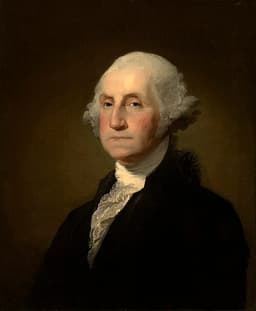
George Washington
Politician · Modern
76.8Total
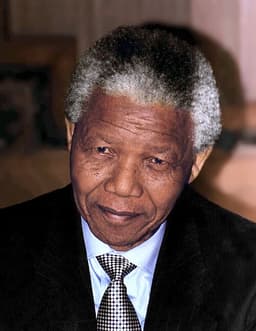
Nelson Mandela
Politician · Modern
57.0Total
Basic Information
Born
1732
1918
Died
1799
2013
Era
Modern
Modern
Nationality
United States
South Africa
Occupation
Politician
Politician
Civilization
Western
Other
Score Comparison
Military (10%)
75.0
10.0
Political (20%)
82.0
78.0
Influence (20%)
75.0
40.0
Legacy (20%)
80.0
68.0
Leadership (15%)
85.0
82.0
Strategy (15%)
55.0
50.0
TOTAL
76.8
57.0
George Washington — Complete Timeline
1775 AD
Appointed Commander-in-Chief of the Continental ArmyOther◆ Major
The Second Continental Congress appointed Washington as commander-in-chief of the Continental Army on June 15, 1775. He accepted the position without pay, taking command of the forces besieging Boston at the start of the American Revolutionary War.
American RevolutionMilitary Leadership
Impact: national
1776 AD
Crossed the Delaware RiverOther◆ Major
On the night of December 25-26, 1776, Washington led 2,400 troops across the ice-choked Delaware River. The surprise attack on Hessian forces at Trenton resulted in a decisive American victory, capturing nearly 1,000 prisoners and reviving Patriot morale after a series of defeats.
American RevolutionBattleTurning Point
Impact: nationalconstructive
1787 AD
Presided over the Constitutional ConventionPolitical Action◆ Major
Washington served as president of the Constitutional Convention in Philadelphia from May to September 1787. His presence lent legitimacy to the proceedings, and he formally signed the final draft of the U.S. Constitution, though he contributed little to the debates.
ConstitutionFounding Father
Impact: national
1789 AD
Inaugurated as First President of the United StatesPolitical Action◆ Major
Washington was unanimously elected by the Electoral College and inaugurated on April 30, 1789, at Federal Hall in New York City. He established numerous executive branch precedents, including the cabinet system, the inaugural address, and the title 'Mr. President'.
PresidencyFounding Father
Impact: national
1793 AD
Issued the Proclamation of NeutralityOther◆ Major
Washington issued the Proclamation of Neutrality on April 22, 1793, declaring the United States neutral in the conflict between France and Great Britain. This decision established the precedent of American isolationism and avoided entanglement in European wars.
Foreign PolicyNeutrality
Impact: national
1796 AD
Delivered the Farewell AddressOther◆ Major
Washington published his Farewell Address on September 19, 1796, announcing his decision not to seek a third term. The address warned against political factionalism, permanent foreign alliances, and the influence of the military in government, shaping American political culture.
PresidencyLegacy
Impact: national
Nelson Mandela — Complete Timeline
1964 AD
Rivonia TrialPolitical Action
Nelson Mandela and other anti-apartheid leaders were tried for sabotage and conspiracy. Mandela was sentenced to life imprisonment, delivering a speech from the dock that became a rallying cry against apartheid. The trial drew international attention to the anti-apartheid struggle.
Impact: global
1990 AD
Release from PrisonPolitical Action
After 27 years of imprisonment, Mandela was released from Victor Verster Prison by President F.W. de Klerk. His release was a pivotal moment in South Africa's transition from apartheid to multiracial democracy, leading to negotiations for a new constitution.
Impact: globalprogressive
1993 AD
Awarding of the Nobel Peace PrizeCultural◆ Major
Mandela and F.W. de Klerk were jointly awarded the Nobel Peace Prize for their roles in ending apartheid and laying the foundations for a democratic South Africa. The award recognized their peaceful transition and commitment to reconciliation.
Impact: globalprogressive
1994 AD
Inauguration as President of South AfricaPolitical Action
Mandela was inaugurated as South Africa's first Black president after the country's first fully democratic elections. His presidency focused on national reconciliation, establishing the Truth and Reconciliation Commission, and dismantling the legacy of apartheid.
Impact: globalprogressive
Expert Analysis
George Washington vs Nelson Mandela
# The General and the Prisoner: Two Paths to Founding a Nation
On a bitter winter morning in 1777, George Washington stood on the frozen banks of the Delaware River, watching his ragged army cross through ice-choked waters. He was a man of land and command, bred to lead. Two centuries later, on a sun-scorched afternoon in 1990, Nelson Mandela walked out of Victor Verster Prison, his hand raised in a clenched-fist salute. He was a man of prison and principle, forged by endurance. One founded a nation with a sword; the other rebuilt one with a handshake. Their worlds could not have been more different—yet both faced the same elemental question: how does a leader turn conflict into order, rebellion into government?
Origins
George Washington was born into Virginia’s planter aristocracy in 1732, a world where land, slaves, and military service defined a gentleman’s worth. His father died when he was eleven, forcing him to learn self-reliance early. He never attended college, but he devoured manuals on surveying and military tactics, mapping the wilderness of the Ohio Valley as a young man. The American frontier shaped him—pragmatic, stoic, obsessed with reputation. He was a product of the Enlightenment, yet also of a slave society that he never fully challenged.
Nelson Mandela was born in 1918 in the village of Mvezo, the son of a Thembu chief. His given name, Rolihlahla, means “troublemaker.” He grew up herding cattle, listening to elders tell stories of African resistance against white conquerors. When his father died, he was adopted by the acting regent of the Thembu people, who prepared him for a life of leadership. But unlike Washington, Mandela entered a world already broken by colonial rule. He studied law at the University of Fort Hare, was expelled for leading a student strike, and fled to Johannesburg to escape an arranged marriage. There, he saw apartheid’s face up close—the pass laws, the forced removals, the daily humiliations. Washington inherited a system of privilege; Mandela inherited a system of oppression.
Rise to Power
Washington’s path to power ran through blood. In 1754, as a twenty-two-year-old colonel, he fired the first shots of the French and Indian War—a disastrous skirmish that nearly killed him and taught him the brutal cost of miscalculation. He learned to command by failing, then by surviving. By 1775, when the Continental Congress needed a commander-in-chief, they chose him not for brilliance but for presence: he was tall, dignified, wealthy, and Virginian—a symbol of unity for thirteen fractious colonies. He took command of an army that was starving, unpaid, and untrained.
Mandela’s rise was slower and more painful. He joined the African National Congress in 1944, leading a Youth League that demanded direct action against apartheid. For years, he organized strikes and defiance campaigns, but the state crushed them with police batons and prison sentences. In 1961, after the Sharpeville massacre, he co-founded Umkhonto we Sizwe, the armed wing of the ANC, and went underground. He trained in Ethiopia, smuggled weapons, and lived as “the Black Pimpernel,” a fugitive in his own country. Then, in 1962, he was arrested. At the Rivonia Trial in 1964, facing the death penalty, he declared from the dock: “I have fought against white domination, and I have fought against black domination. I have cherished the ideal of a democratic and free society… It is an ideal which I hope to live for and to achieve. But if needs be, it is an ideal for which I am prepared to die.” He was sentenced to life in prison.
Leadership & Governance
Washington’s leadership was built on endurance. He lost more battles than he won—New York, Brandywine, Germantown—but he kept his army alive through the winter at Valley Forge, drilling them into a force that could finally stand at Yorktown. As president, he was obsessively cautious. He surrounded himself with rivals—Jefferson, Hamilton, Adams—and let them argue while he stood above the fray. He vetoed only two bills. He wore civilian clothes, insisted on being called “Mr. President,” and stepped down after two terms, setting a precedent that lasted 150 years. His genius was not in innovation but in restraint: he understood that the first president would define the office forever, so he made himself a symbol rather than a king.
Mandela’s leadership was built on reconciliation. Released from prison in 1990, he could have called for vengeance. Instead, he negotiated with the very men who had jailed him. He had tea with the widow of apartheid’s architect, attended the rugby World Cup final in a Springbok jersey, and invited his former jailer to his inauguration. As president, he governed with a unity cabinet that included his old enemy F.W. de Klerk as deputy. He focused on truth and reconciliation, not retribution—a commission that heard confessions but offered amnesty, trading justice for peace. His score for military strategy is low—10.0—because he abandoned armed struggle for dialogue. But his political and leadership scores are among the highest: 80.0 and 85.0. He understood that winning a war was less important than winning a future.
Triumph & Tragedy
Washington’s greatest triumph was also his most tragic: he led a revolution for liberty while owning hundreds of slaves. At his death in 1799, he freed only one—his personal servant, William Lee—and provided in his will that the rest be emancipated only after his wife’s death. He never publicly condemned slavery, fearing it would fracture the fragile union. His tragedy was the gap between his ideals and his actions.
Mandela’s triumph was the 1994 election, when millions of Black South Africans voted for the first time. His tragedy was quieter: his marriage to Winnie Mandela collapsed under the strain of his imprisonment; his beloved daughter Zindzi died in 2020; and the South Africa he left behind struggles still with poverty and corruption. He won the Nobel Peace Prize in 1993, but he knew that peace was not the same as justice.
Character & Destiny
Washington was a man of controlled fury. He had a volcanic temper that he suppressed behind a mask of dignity. He obsessed over his legacy, writing endless letters to correct any slight. He was not a brilliant thinker but a master of presence: tall, silent, commanding. His destiny was to be the father of his country—a role he accepted reluctantly, almost as a duty.
Mandela was a man of strategic warmth. He learned in prison to read his enemies, to charm them, to turn them into allies. He was not a saint but a pragmatist who knew when to fight and when to forgive. His destiny was to be a global icon of reconciliation—a role he embraced, but with a weary awareness of its cost.
Legacy
Washington’s legacy is the American presidency itself—the peaceful transfer of power, the civilian control of the military, the idea that a leader can step down. His face is on the dollar bill, his name on the capital. But his legacy is also the unfinished business of equality.
Mandela’s legacy is the example of a leader who chose forgiveness over revenge. His name is a synonym for moral authority. But his true monument is the South African constitution, which guarantees rights for all—and the fragile democracy that still struggles to live up to it.
Conclusion
Washington and Mandela never met. They lived in different centuries, on different continents, in different worlds. Yet both faced the same impossible task: to turn rebellion into government, to forge unity from division, to lead without becoming a tyrant. Washington did it by stepping back. Mandela did it by reaching out. One built a nation with a sword; the other rebuilt one with a handshake. Both understood that the hardest part of leadership is not winning—it is knowing when to let go.
Rankings
🥇
George WashingtonLeader
Mil: 75.0Pol: 82.0Inf: 75.0
76.8
🥈
Nelson Mandela
Mil: 10.0Pol: 78.0Inf: 40.0
57.0
+19.8 behind
How This Comparison Works
Algorithm
Each figure is scored on 6 dimensions (0—100 scale) based on structured historical data: Military (10%), Political (20%), Influence (20%), Legacy (20%), Leadership (15%), Strategy (15%). The weighted total produces the final ranking.
Data Sources
Scores are computed from structured sub-indicators in the database. Scale factors adjust for era (Ancient ×0.85, Modern ×1.0) and civilization size (Eastern ×1.05, Other ×0.80) to account for differences in population and military scale.
Maximum 3 Figures
Comparisons are limited to 2—3 figures to ensure readability and statistical meaningfulness.
Error Margins
±5 points per dimension — Sub-scores are derived from historical records with inherent uncertainty. Two figures within 5 points on a dimension should be considered roughly equivalent in that area.
Total Score Accuracy
±3 points overall — The weighted combination of 6 dimensions produces a total score with approximately ±3 points of uncertainty. Differences of less than 3 points are not statistically significant— the figures are effectively tied.
Known Limitations
- Historical records are incomplete and uneven across civilizations
- Figures from oral-tradition societies may be underrepresented
- Occupation labels can misclassify multi-role figures
- Scores measure capability and impact, not moral character
- Quantitative scoring is a comparison tool, not absolute truth
Capability Radar
Military (10%) — Battles & Warfare
Battles
75
0
Win Rate
70
7
Expansion
60
9
Political (20%) — Governance & Reform
Reform
90
95
Diplomacy
85
95
Economy
65
60
Influence (20%) — Cultural & Global Reach
Cultural
85
85
Global
85
90
Legacy (20%) — Historical Impact
Historical
95
90
Longevity
90
80
Leadership (15%) — Power & Stability
Tenure
70
60
Stability
85
80
Strategy (15%) — Tactics & Innovation
Strategy
80
8
Tactics
65
12
Reform
85
17
Similar Comparisons
Comments & Discussion
FrontierSage6/16/2026
Washington's tactical crossing of the Delaware wasn't just bold—it was strategically mediocre. He lost more men to desertion and frostbite than in the actual Battle of Trenton. Meanwhile, Mandela's 27-year imprisonment gave him something Washington never had: moral clarity forged through suffering. Washington led aristocrats; Mandela mobilized the dispossessed. The comparison flatters Washington more than it should.
RevolutionaryRealist6/16/2026
华盛顿是个精明的土地投机者,他领导革命更多是为了保护自己的财产,而非理想。他拥有317名奴隶,却在《独立宣言》中写下"人人生而平等"。曼德拉从囚犯变为总统,放弃了复仇选择了和解。我选曼德拉——真正的领袖不是靠血统和财富,而是靠牺牲铸就的。
DataSkeptic016/16/2026
Let's talk metrics. Under Washington's command, the Continental Army never exceeded 20,000 troops and won only 5 decisive battles out of 30+ engagements. Mandela's ANC achieved democratic elections with 87% voter turnout and a peaceful transition affecting 40 million people. Scale matters. One man's rebellion served elite interests; the other's liberation served an entire nation's majority. Numbers don't lie.
历史解构师6/16/2026
比较这两位领袖就像比较苹果和战车——根本不同的历史语境。华盛顿的时代,道德是他的奴隶制和革命话语的矛盾体;曼德拉的20世纪,全球废除种族隔离已成潮流。若说华盛顿"奠基"美国,他同时奠基了种族主义国家机器。曼德拉"重建"南非,却未能解决经济不平等。历史不是道德竞赛,而是语境分析。
TacticalAnalyst6/16/2026
Both understood terrain and timing perfectly. Washington exploited British logistical overreach at Yorktown (15,000 Franco-American troops vs. 9,000 isolated British). Mandela exploited global economic pressure and internal apartheid collapse. Different weapons, same strategic principle: isolate your opponent's strength and attack their weakness. Nelson's victory required no cannons—just a nation's will and the world's conscience.