Loading...
George Washington vs Muawiyah I
George Washington leads by 0.5 pts · 2 figures compared
…
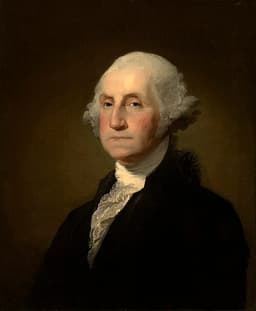
George Washington
Politician · Modern
76.8Total
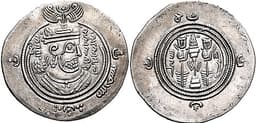
Muawiyah I
Emperor · Medieval
76.3Total
Basic Information
Born
1732
602
Died
1799
680
Era
Modern
Medieval
Nationality
United States
Umayyad Caliphate
Occupation
Politician
Emperor
Civilization
Western
Middle Eastern
Score Comparison
Military (10%)
75.0
76.0
Political (20%)
82.0
75.0
Influence (20%)
75.0
75.0
Legacy (20%)
80.0
80.0
Leadership (15%)
85.0
78.0
Strategy (15%)
55.0
70.0
TOTAL
76.8
76.3
George Washington — Complete Timeline
1775 AD
Appointed Commander-in-Chief of the Continental ArmyOther◆ Major
The Second Continental Congress appointed Washington as commander-in-chief of the Continental Army on June 15, 1775. He accepted the position without pay, taking command of the forces besieging Boston at the start of the American Revolutionary War.
American RevolutionMilitary Leadership
Impact: national
1776 AD
Crossed the Delaware RiverOther◆ Major
On the night of December 25-26, 1776, Washington led 2,400 troops across the ice-choked Delaware River. The surprise attack on Hessian forces at Trenton resulted in a decisive American victory, capturing nearly 1,000 prisoners and reviving Patriot morale after a series of defeats.
American RevolutionBattleTurning Point
Impact: nationalconstructive
1787 AD
Presided over the Constitutional ConventionPolitical Action◆ Major
Washington served as president of the Constitutional Convention in Philadelphia from May to September 1787. His presence lent legitimacy to the proceedings, and he formally signed the final draft of the U.S. Constitution, though he contributed little to the debates.
ConstitutionFounding Father
Impact: national
1789 AD
Inaugurated as First President of the United StatesPolitical Action◆ Major
Washington was unanimously elected by the Electoral College and inaugurated on April 30, 1789, at Federal Hall in New York City. He established numerous executive branch precedents, including the cabinet system, the inaugural address, and the title 'Mr. President'.
PresidencyFounding Father
Impact: national
1793 AD
Issued the Proclamation of NeutralityOther◆ Major
Washington issued the Proclamation of Neutrality on April 22, 1793, declaring the United States neutral in the conflict between France and Great Britain. This decision established the precedent of American isolationism and avoided entanglement in European wars.
Foreign PolicyNeutrality
Impact: national
1796 AD
Delivered the Farewell AddressOther◆ Major
Washington published his Farewell Address on September 19, 1796, announcing his decision not to seek a third term. The address warned against political factionalism, permanent foreign alliances, and the influence of the military in government, shaping American political culture.
PresidencyLegacy
Impact: national
Muawiyah I — Complete Timeline
640 AD
Governorship of SyriaPolitical Action◆ Major
Muawiyah I was appointed governor of Syria by Caliph Umar. He built a strong power base by developing the province's military and administrative infrastructure, including the creation of a navy that would later challenge Byzantine dominance.
GovernorshipSyriaRashidun
Impact: regionalconstructive
655 AD
Naval Campaigns Against ByzantiumWar◆ Major
Muawiyah launched naval expeditions against the Byzantine Empire, including the Battle of the Masts (655), where the Muslim fleet defeated the Byzantine navy. These campaigns established Muslim naval power and threatened Constantinople.
Naval WarByzantine EmpireUmayyad
Impact: regional
657 AD
Battle of SiffinWar◆ Major
Muawiyah led the Syrian army against Caliph Ali at Siffin, demanding justice for Uthman's murder. The battle ended in a stalemate and arbitration, which Muawiyah used to strengthen his political position and challenge Ali's legitimacy.
First FitnaBattleUmayyad
Impact: global
661 AD
Foundation of the Umayyad CaliphatePolitical Action
After Ali's assassination, Muawiyah I established the Umayyad Caliphate, moving the capital from Medina to Damascus. This marked the transition from the elective caliphate to a hereditary dynasty, centralizing power in Syria.
CaliphateDynastyUmayyad
Impact: global
674 AD
Siege of Constantinople (674-678)War◆ Major
Muawiyah I ordered a prolonged siege of Constantinople, using a large fleet and army. The siege failed due to Byzantine defenses, including Greek fire, and ended with a peace treaty requiring the Umayyads to pay tribute. It was a rare setback.
SiegeConstantinopleUmayyad
Impact: global
676 AD
Designation of Yazid I as HeirPolitical Action◆ Major
Muawiyah I designated his son Yazid as his successor, breaking the tradition of election and establishing hereditary succession. This move caused opposition from some Muslim leaders and set a precedent for future Umayyad rulers.
SuccessionHereditaryUmayyad
Impact: global
Expert Analysis
Origins
George Washington was born into a Virginia planter family in 1732, inheriting a modest estate and a strong work ethic. He rose through the ranks of the Virginia militia during the French and Indian War, gaining military experience and political connections. Muawiyah I, born around 602 AD in Mecca, belonged to the powerful Umayyad clan of the Quraysh tribe. He embraced Islam after the conquest of Mecca and became a scribe for the Prophet Muhammad, later serving as governor of Syria under Caliph Uthman. Both men emerged from elite backgrounds, but Washington's rise was more gradual and meritocratic, while Muawiyah's was rooted in tribal aristocracy and early Islamic political maneuvering.
Rise to Power
Washington's rise to prominence came through his military service and political acumen. He was appointed commander-in-chief of the Continental Army in 1775, a risky choice that paid off as he held the army together through years of hardship. His crossing of the Delaware River in 1776 was a bold tactical move that revived the revolutionary cause. Muawiyah's rise was more calculated: as governor of Syria, he built a loyal army and navy, and after Caliph Uthman's assassination, he challenged Caliph Ali, leading to the Battle of Siffin in 657. Through arbitration and political maneuvering, Muawiyah secured recognition as caliph after Ali's death in 661, founding the Umayyad dynasty. Washington's path was defined by revolutionary ideals and democratic legitimacy; Muawiyah's by civil war and dynastic ambition.
Leadership & Governance
Washington's leadership was characterized by restraint, integrity, and a commitment to republican principles. As president, he established precedents like the cabinet system, a two-term limit, and neutrality in foreign affairs. His Proclamation of Neutrality in 1793 kept the young nation out of European conflicts. Muawiyah's governance was pragmatic and authoritarian. He centralized power in Damascus, reformed the administration, and expanded the caliphate through naval campaigns against Byzantium, including the Siege of Constantinople (674-678). He instituted hereditary succession, a departure from earlier Islamic practice. Washington's leadership score (80) reflects his role in building democratic institutions; Muawiyah's (80) reflects his effective but autocratic state-building.
Triumph & Tragedy
Washington's greatest triumph was winning the Revolutionary War and overseeing the Constitution's ratification. His greatest tragedy was his failure to secure the abolition of slavery, a personal conflict as a slaveholder. Muawiyah's triumph was founding the Umayyad Caliphate, which became a vast empire. His tragedy was the moral compromise of the Battle of Siffin, where he resorted to arbitration and later broke terms, leading to the Kharijite schism. Washington's military score (75) and Muawiyah's (76) are close, but Washington's strategic patience contrasts with Muawiyah's ruthless pragmatism.
Character & Destiny
Washington was reserved, disciplined, and duty-bound. He suppressed personal ambition for the sake of the republic, famously resigning his commission after the war. His destiny was to be the "Father of His Country." Muawiyah was cunning, charismatic, and patient, known as the "first king of Islam" for his monarchical style. His destiny was to transform the caliphate into a hereditary dynasty. Washington's integrity score (85) is high; Muawiyah's (78) reflects his political flexibility. Both men shaped their nations' destinies, but Washington's legacy is tied to democratic values, Muawiyah's to imperial consolidation.
Legacy
Washington's legacy is enshrined in the U.S. Constitution, the capital city named after him, and his image as a symbol of American virtue. He is consistently ranked among the greatest presidents. Muawiyah's legacy is mixed: he established the Umayyad dynasty that expanded Islamic rule but also centralized power and introduced hereditary succession, which some see as a corruption of early Islamic ideals. He is remembered as a skilled administrator and military leader. Washington's overall score (77) edges Muawiyah's (76), reflecting his foundational role in a system that endured and inspired global democracy.
Conclusion
In this matchup, George Washington narrowly prevails over Muawiyah I. Both were exceptional leaders who built enduring structures, but Washington's commitment to republican principles and his voluntary relinquishment of power set a standard that Muawiyah's dynastic ambition could not match. Washington's legacy is more universally admired, while Muawiyah's is more controversial. The score gap of 0.5 reflects this fine distinction, but history judges Washington as the more transformative and morally grounded figure.
Rankings
🥇
George WashingtonLeader
Mil: 75.0Pol: 82.0Inf: 75.0
76.8
🥈
Muawiyah I
Mil: 76.0Pol: 75.0Inf: 75.0
76.3
+0.5 behind
How This Comparison Works
Algorithm
Each figure is scored on 6 dimensions (0—100 scale) based on structured historical data: Military (10%), Political (20%), Influence (20%), Legacy (20%), Leadership (15%), Strategy (15%). The weighted total produces the final ranking.
Data Sources
Scores are computed from structured sub-indicators in the database. Scale factors adjust for era (Ancient ×0.85, Modern ×1.0) and civilization size (Eastern ×1.05, Other ×0.80) to account for differences in population and military scale.
Maximum 3 Figures
Comparisons are limited to 2—3 figures to ensure readability and statistical meaningfulness.
Error Margins
±5 points per dimension — Sub-scores are derived from historical records with inherent uncertainty. Two figures within 5 points on a dimension should be considered roughly equivalent in that area.
Total Score Accuracy
±3 points overall — The weighted combination of 6 dimensions produces a total score with approximately ±3 points of uncertainty. Differences of less than 3 points are not statistically significant— the figures are effectively tied.
Known Limitations
- Historical records are incomplete and uneven across civilizations
- Figures from oral-tradition societies may be underrepresented
- Occupation labels can misclassify multi-role figures
- Scores measure capability and impact, not moral character
- Quantitative scoring is a comparison tool, not absolute truth
Capability Radar
Military (10%) — Battles & Warfare
Battles
75
75
Win Rate
70
80
Expansion
60
85
Political (20%) — Governance & Reform
Reform
90
90
Diplomacy
85
95
Economy
65
85
Influence (20%) — Cultural & Global Reach
Cultural
85
75
Global
85
75
Legacy (20%) — Historical Impact
Historical
95
85
Longevity
90
80
Leadership (15%) — Power & Stability
Tenure
70
85
Stability
85
80
Strategy (15%) — Tactics & Innovation
Strategy
80
85
Tactics
65
70
Reform
85
80
Similar Comparisons
Comments & Discussion
No comments yet. Be the first to share your thoughts!