Loading...
George Washington vs Mahatma Gandhi
George Washington leads by 8.1 pts · 2 figures compared
…
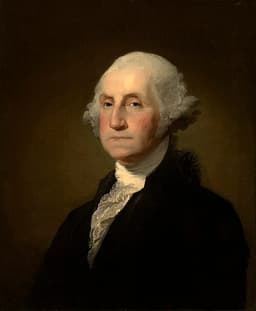
George Washington
Politician · Modern
76.8Total
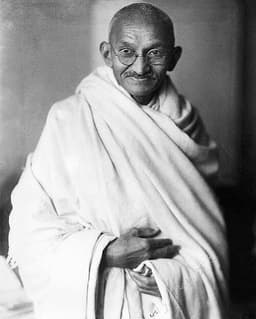
Mahatma Gandhi
Politician · Modern
68.7Total
Basic Information
Born
1732
1869
Died
1799
1948
Era
Modern
Modern
Nationality
United States
India
Occupation
Politician
Politician
Civilization
Western
Indian
Score Comparison
Military (10%)
75.0
42.3
Political (20%)
82.0
65.0
Influence (20%)
75.0
80.0
Legacy (20%)
80.0
75.0
Leadership (15%)
85.0
70.0
Strategy (15%)
55.0
55.0
TOTAL
76.8
68.7
George Washington — Complete Timeline
1775 AD
Appointed Commander-in-Chief of the Continental ArmyOther◆ Major
The Second Continental Congress appointed Washington as commander-in-chief of the Continental Army on June 15, 1775. He accepted the position without pay, taking command of the forces besieging Boston at the start of the American Revolutionary War.
American RevolutionMilitary Leadership
Impact: national
1776 AD
Crossed the Delaware RiverOther◆ Major
On the night of December 25-26, 1776, Washington led 2,400 troops across the ice-choked Delaware River. The surprise attack on Hessian forces at Trenton resulted in a decisive American victory, capturing nearly 1,000 prisoners and reviving Patriot morale after a series of defeats.
American RevolutionBattleTurning Point
Impact: nationalconstructive
1787 AD
Presided over the Constitutional ConventionPolitical Action◆ Major
Washington served as president of the Constitutional Convention in Philadelphia from May to September 1787. His presence lent legitimacy to the proceedings, and he formally signed the final draft of the U.S. Constitution, though he contributed little to the debates.
ConstitutionFounding Father
Impact: national
1789 AD
Inaugurated as First President of the United StatesPolitical Action◆ Major
Washington was unanimously elected by the Electoral College and inaugurated on April 30, 1789, at Federal Hall in New York City. He established numerous executive branch precedents, including the cabinet system, the inaugural address, and the title 'Mr. President'.
PresidencyFounding Father
Impact: national
1793 AD
Issued the Proclamation of NeutralityOther◆ Major
Washington issued the Proclamation of Neutrality on April 22, 1793, declaring the United States neutral in the conflict between France and Great Britain. This decision established the precedent of American isolationism and avoided entanglement in European wars.
Foreign PolicyNeutrality
Impact: national
1796 AD
Delivered the Farewell AddressOther◆ Major
Washington published his Farewell Address on September 19, 1796, announcing his decision not to seek a third term. The address warned against political factionalism, permanent foreign alliances, and the influence of the military in government, shaping American political culture.
PresidencyLegacy
Impact: national
Mahatma Gandhi — Complete Timeline
1917 AD
Champaran SatyagrahaPolitical Action
Gandhi led his first nonviolent protest in India, supporting indigo farmers in Champaran, Bihar, against exploitative British planters. He organized a campaign of civil disobedience and negotiations, resulting in the abolition of the oppressive tinkathia system.
Civil disobedienceFarmers' rightsBritish Raj
Impact: nationalprogressive
1919 AD
Jallianwala Bagh massacre aftermathPolitical Action◆ Major
After British troops killed hundreds of unarmed civilians in Amritsar, Gandhi organized a nationwide hartal (strike) and nonviolent protests. He returned his medals and launched the Rowlatt Satyagraha, marking a shift from cooperation to non-cooperation with British rule.
ProtestBritish RajMassacre
Impact: nationaltragic
1930 AD
Salt MarchPolitical Action
Gandhi led a 240-mile march from Sabarmati to Dandi, Gujarat, to defy the British salt monopoly. Thousands joined him, making salt from seawater. This act of civil disobedience sparked mass protests across India and drew global attention to the independence movement.
Civil disobedienceSalt taxIndependence movement
Impact: globalprogressive
1942 AD
Quit India Movement launchPolitical Action◆ Major
Gandhi launched the Quit India Movement, calling for an end to British rule with the slogan 'Do or Die'. The British arrested him and other leaders, but the movement led to widespread protests and repression, accelerating the end of colonial rule.
IndependenceCivil disobedienceBritish Raj
Impact: nationalprogressive
1948 AD
AssassinationPolitical Action
Gandhi was shot and killed by Nathuram Godse, a Hindu nationalist, during a prayer meeting in New Delhi. His assassination shocked the world and led to a wave of grief and violence, but also reinforced his legacy as a martyr for nonviolence.
AssassinationMartyrdomNonviolence
Impact: globaltragic
Expert Analysis
George Washington vs Mahatma Gandhi
# The General and the Saint
On a winter morning in 1776, George Washington crossed the icy Delaware River under cover of darkness, leading a ragged army toward a desperate gamble that would save the American Revolution. A century and a half later, on a sunbaked coastal road in western India, Mahatma Gandhi walked barefoot for 240 miles, his frail figure drawing millions toward a different kind of revolution—one waged without a single musket. These two men, born worlds apart in time and circumstance, each reshaped the destiny of nations. Yet their paths to power, their methods of leadership, and the legacies they left behind could hardly be more different. What drove these divergent outcomes? The answer lies not merely in their choices, but in the very fabric of the eras that produced them.
Origins
George Washington was born in 1732 into Virginia’s plantation aristocracy, a world of measured privilege and rigid hierarchy. His father died when he was eleven, forcing him to learn self-reliance early. He never attended university, instead absorbing the practical arts of surveying and land management. The frontier—raw, dangerous, and vast—shaped his temperament: stoic, disciplined, and acutely aware of the gap between ambition and reality. Washington’s America was a colonial society straining against imperial control, where a gentleman’s honor was his currency and military service the surest path to distinction.
Mohandas Gandhi entered the world in 1869 in Porbandar, a coastal town in western India, into a family of merchants and administrators. His father was a chief minister in a small princely state, but the Gandhis were not aristocrats. Young Mohandas was an indifferent student, painfully shy, and terrified of speaking in public. He sailed to London at nineteen to study law, then spent two decades in South Africa, where he faced racial discrimination firsthand. That experience—being thrown off a train for refusing to leave a first-class compartment, being beaten for walking near a white man’s house—forged his understanding of injustice. India under British rule was a civilization of ancient traditions humiliated by foreign domination, a wound that Gandhi would spend his life healing.
Rise to Power
Washington’s ascent was built on war. At twenty-two, he was a major in the Virginia militia, leading a disastrous skirmish that sparked the French and Indian War. He learned hard lessons: the chaos of battle, the treachery of allies, the indifference of British commanders. When the American Revolution erupted in 1775, the Continental Congress appointed him commander-in-chief—not because he was the most brilliant strategist, but because he was a Virginian who could unite the fractious colonies. His military score of 70 reflects competence rather than genius, but his leadership score of 78 captures something deeper: the ability to hold an army together through eight years of starvation, betrayal, and defeat.
Gandhi’s rise was radically different. He returned to India in 1915 at age forty-six, already famous for his South African campaigns. He did not command armies; he built movements. In 1917, he led the Champaran Satyagraha, a protest by indigo farmers against British exploitation. It was a small affair by later standards, but it established his method: nonviolent resistance grounded in moral authority. The Jallianwala Bagh massacre of 1919, where British troops killed hundreds of unarmed civilians, transformed Gandhi from a regional leader into a national symbol. He called for a nationwide strike, and millions responded. His political score of 70 is modest, but his influence score of 85 captures his true power: he could mobilize people without weapons, without money, without even a formal position.
Leadership & Governance
Washington governed as he commanded: with deliberate restraint. As the first U.S. President from 1789 to 1797, he understood that every action set a precedent. He refused a crown, limited himself to two terms, and insisted on a cabinet system that checked executive power. His strategy score of 65 reflects a man who thought in decades, not battles. He crushed the Whiskey Rebellion to demonstrate federal authority, then pardoned the rebels to show mercy. He warned against foreign entanglements and political factions, knowing that the fragile republic could be torn apart by passion. His wisdom was institutional: he built structures that would outlast him.
Gandhi’s governance was moral rather than institutional. He never held political office; his authority came from his willingness to suffer. The Salt March of 1930 was a masterpiece of political theater: 240 miles, 24 days, thousands joining him to defy the British monopoly on salt. When he picked up a pinch of salt from the beach at Dandi, he broke the law and captured the world’s imagination. His strategy score of 60 is lower than Washington’s, but it misses the point. Gandhi’s genius was not in tactics but in transforming politics into a spiritual drama. He fasted to stop communal violence, spun his own cloth to reject British textiles, and lived in ashrams to embody his ideals. He was less a ruler than a prophet.
Triumph & Tragedy
Washington’s greatest moment came not on a battlefield but in a room. In December 1783, after the Treaty of Paris secured American independence, he resigned his commission before the Continental Congress. It was an act of breathtaking self-restraint—a general with an adoring army voluntarily surrendering power. King George III reportedly said that if Washington did this, he would be “the greatest man in the world.” He did, and he was.
Gandhi’s triumph was India’s independence in 1947. But it was also his tragedy. The nation he had dreamed of—united, peaceful, just—was partitioned into India and Pakistan, and millions died in the violence that followed. On January 30, 1948, as he walked to a prayer meeting in New Delhi, a Hindu nationalist named Nathuram Godse shot him three times. Gandhi’s last words were “Hey Ram”—“Oh God.” The saint who had taught nonviolence was killed by one of his own.
Character & Destiny
Washington’s character was forged in the crucible of command. He was aloof, formal, and fiercely protective of his reputation. He wept when he said farewell to his officers, but he rarely showed emotion in public. His destiny was to be a founder—to create a nation and then step aside. He died in 1799, at sixty-seven, of a throat infection, having lived long enough to see his creation survive its infancy.
Gandhi’s character was shaped by relentless self-examination. He was humble to the point of self-abnegation, yet iron-willed. He slept in the same room as his grandnieces to test his celibacy, a decision that baffled and alienated many followers. His destiny was to be a martyr—to die for his principles, leaving a legacy that would be debated, distorted, and revered for generations.
Legacy
Washington’s legacy is the American presidency itself. Every president who limits his power, who respects civilian control of the military, who steps down after two terms, walks in Washington’s shadow. His influence score of 72 and legacy score of 78 reflect a man whose achievements are so foundational they have become invisible—the air we breathe.
Gandhi’s legacy is the idea that the powerless can defeat the powerful through moral force. His influence score of 85 and legacy score of 80 capture his global reach: Martin Luther King Jr. in the American South, Nelson Mandela in South Africa, Aung San Suu Kyi in Burma—all drew from his well. Yet his legacy is also contested. Critics point to his failings—his complex relationship with caste, his sometimes contradictory views on modernity—but the core of his message endures.
Conclusion
Two men, two revolutions, two ways of changing the world. Washington built a nation by mastering the art of power; Gandhi transformed one by renouncing it. Washington’s path required armies, constitutions, and institutions; Gandhi’s required faith, suffering, and millions of ordinary people willing to march. Neither was perfect. Washington owned slaves; Gandhi had blind spots. Yet both understood something essential: that history is not made by the strong alone, but by those who know what they stand for—and when to stand aside. In the end, they remind us that leadership is not a single path but a thousand choices, and that the greatest leaders are those who make themselves unnecessary.
Rankings
🥇
George WashingtonLeader
Mil: 75.0Pol: 82.0Inf: 75.0
76.8
🥈
Mahatma Gandhi
Mil: 42.3Pol: 65.0Inf: 80.0
68.7
+8.1 behind
How This Comparison Works
Algorithm
Each figure is scored on 6 dimensions (0—100 scale) based on structured historical data: Military (10%), Political (20%), Influence (20%), Legacy (20%), Leadership (15%), Strategy (15%). The weighted total produces the final ranking.
Data Sources
Scores are computed from structured sub-indicators in the database. Scale factors adjust for era (Ancient ×0.85, Modern ×1.0) and civilization size (Eastern ×1.05, Other ×0.80) to account for differences in population and military scale.
Maximum 3 Figures
Comparisons are limited to 2—3 figures to ensure readability and statistical meaningfulness.
Error Margins
±5 points per dimension — Sub-scores are derived from historical records with inherent uncertainty. Two figures within 5 points on a dimension should be considered roughly equivalent in that area.
Total Score Accuracy
±3 points overall — The weighted combination of 6 dimensions produces a total score with approximately ±3 points of uncertainty. Differences of less than 3 points are not statistically significant— the figures are effectively tied.
Known Limitations
- Historical records are incomplete and uneven across civilizations
- Figures from oral-tradition societies may be underrepresented
- Occupation labels can misclassify multi-role figures
- Scores measure capability and impact, not moral character
- Quantitative scoring is a comparison tool, not absolute truth
Capability Radar
Military (10%) — Battles & Warfare
Battles
75
45
Win Rate
70
46
Expansion
60
51
Political (20%) — Governance & Reform
Reform
90
85
Diplomacy
85
80
Economy
65
40
Influence (20%) — Cultural & Global Reach
Cultural
85
85
Global
85
90
Legacy (20%) — Historical Impact
Historical
95
90
Longevity
90
85
Leadership (15%) — Power & Stability
Tenure
70
60
Stability
85
55
Strategy (15%) — Tactics & Innovation
Strategy
80
52
Tactics
65
56
Reform
85
55
Similar Comparisons
Comments & Discussion
FrontierFox6/16/2026
Washington crossing the Delaware wasn't just iconic, it was a logistical masterstroke. As a military historian, I'd argue that gamble paid off precisely because he understood his men's breaking point—wait any longer and the army dissolves. Gandhi never grasped that grim calculus; his nonviolence worked in a Britain exhausted by world wars, not against a determined empire. Washington faced real bullets from an organized foe, not moral qualms from a colonizer on its last legs. Apples and howitzers
统计狂魔6/16/2026
什么“战争英雄”对上“和平圣雄”,都是后人贴的金标签。数据不会说谎:华盛顿的个人财富在战后翻了三倍,靠的是吞并退伍军人土地券;甘地搞的“纺车运动”压根没动摇英国纺织工业——当时英国从印度进口的棉布占比不到5%。别瞎吹道德神话了,这两人都是精明的现实主义者,只不过包装风格不同罢了。
StoicSteward6/16/2026
As a classics scholar, I see Washington as Cincinnatus reborn—the farmer called to save the republic, then returning to his plow. That's the Roman ideal of civic virtue: power earned through service, not ambition. Gandhi, by contrast, channels Socrates and Diogenes, that wandering philosopher who challenged the Athenians from outside their system. Socrates never built a nation; he nudged souls. Gandhi's strength was moral witness, not governance. Different virtues for different crises. I'd follo
睡狮觉醒6/16/2026
Revisionist take:两人都不干净。华盛顿嘴里喊着自由,家里拴着317个黑奴;甘地年轻时在南非给帝国当律师,晚年对穆斯林的分治要求装聋作哑。真正的历史不是印在邮票上的圣像,而是钱权交易的细节。华盛顿的遗产是枪杆子里的美国优先,甘地留下的是一团乱麻的印巴分治。拿这两人做比较,本身就是西方中心的思维霸权——把人硬塞进“伟人”的棺材里。
HistoryBites6/16/2026
Here's what gets lost: Washington was a spymaster who ran agent networks and once executed a traitor by firing squad. Gandhi kept detailed diaries obsessing over his bowel movements and conducted "sleeping experiments" with naked women to test his celibacy. Both were odd ducks who used their weirdness as leverage—Washington hid behind a mask of marble, Gandhi weaponized transparency. The deli cleaner got your order right? That's real greatness.