Loading...
George Washington vs King David
George Washington leads by 1.5 pts · 2 figures compared
…
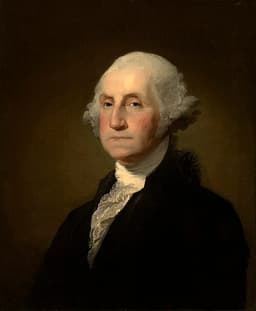
George Washington
Politician · Modern
76.8Total

King David
Emperor · Ancient
75.3Total
Basic Information
Born
1732
-1010
Died
1799
-970
Era
Modern
Ancient
Nationality
United States
Israel
Occupation
Politician
Emperor
Civilization
Western
Middle Eastern
Score Comparison
Military (10%)
75.0
72.0
Political (20%)
82.0
72.0
Influence (20%)
75.0
88.0
Legacy (20%)
80.0
70.0
Leadership (15%)
85.0
72.0
Strategy (15%)
55.0
70.0
TOTAL
76.8
75.3
George Washington — Complete Timeline
1775 AD
Appointed Commander-in-Chief of the Continental ArmyOther◆ Major
The Second Continental Congress appointed Washington as commander-in-chief of the Continental Army on June 15, 1775. He accepted the position without pay, taking command of the forces besieging Boston at the start of the American Revolutionary War.
American RevolutionMilitary Leadership
Impact: national
1776 AD
Crossed the Delaware RiverOther◆ Major
On the night of December 25-26, 1776, Washington led 2,400 troops across the ice-choked Delaware River. The surprise attack on Hessian forces at Trenton resulted in a decisive American victory, capturing nearly 1,000 prisoners and reviving Patriot morale after a series of defeats.
American RevolutionBattleTurning Point
Impact: nationalconstructive
1787 AD
Presided over the Constitutional ConventionPolitical Action◆ Major
Washington served as president of the Constitutional Convention in Philadelphia from May to September 1787. His presence lent legitimacy to the proceedings, and he formally signed the final draft of the U.S. Constitution, though he contributed little to the debates.
ConstitutionFounding Father
Impact: national
1789 AD
Inaugurated as First President of the United StatesPolitical Action◆ Major
Washington was unanimously elected by the Electoral College and inaugurated on April 30, 1789, at Federal Hall in New York City. He established numerous executive branch precedents, including the cabinet system, the inaugural address, and the title 'Mr. President'.
PresidencyFounding Father
Impact: national
1793 AD
Issued the Proclamation of NeutralityOther◆ Major
Washington issued the Proclamation of Neutrality on April 22, 1793, declaring the United States neutral in the conflict between France and Great Britain. This decision established the precedent of American isolationism and avoided entanglement in European wars.
Foreign PolicyNeutrality
Impact: national
1796 AD
Delivered the Farewell AddressOther◆ Major
Washington published his Farewell Address on September 19, 1796, announcing his decision not to seek a third term. The address warned against political factionalism, permanent foreign alliances, and the influence of the military in government, shaping American political culture.
PresidencyLegacy
Impact: national
King David — Complete Timeline
1010 BC
Anointed as King of JudahPolitical Action◆ Major
After Saul's death, David was anointed king over the tribe of Judah at Hebron. This began a seven-year period of civil war with Ish-bosheth, Saul's son, who ruled the northern tribes, leading to the eventual unification of Israel.
KingshipCivil WarJudah
Impact: national
1003 BC
Capture of JerusalemWar
David led his army to capture the Jebusite fortress of Jerusalem, making it the capital of the united kingdom. He brought the Ark of the Covenant there, establishing the city as both the political and religious center of Israel.
JerusalemCapitalArk of the Covenant
Impact: nationalconstructive
1000 BC
Defeat of the PhilistinesWar◆ Major
David fought several campaigns that decisively defeated the Philistines, including the Battle of Baal-perazim. He captured Gath and other Philistine strongholds, ending their dominance over Israel and securing the kingdom's borders.
PhilistinesMilitary CampaignIsrael
Impact: regional
990 BC
Affair with BathshebaPolitical Action◆ Major
David committed adultery with Bathsheba and arranged the death of her husband Uriah the Hittite in battle. The prophet Nathan confronted David, leading to his repentance but also to divine punishment, including the death of their first child.
ScandalBathshebaNathan
Impact: nationaldestructive
978 BC
Revolt of AbsalomWar◆ Major
David's son Absalom led a rebellion that forced David to flee Jerusalem. David's forces under Joab defeated Absalom's army in the Forest of Ephraim, and Absalom was killed. David returned to Jerusalem but the kingdom was weakened.
RebellionCivil WarAbsalom
Impact: nationaltragic
Expert Analysis
Origins
George Washington was born into a Virginia planter family in 1732, receiving a rudimentary education but gaining early experience as a surveyor and military officer during the French and Indian War. His rise was rooted in colonial aristocracy and self-discipline. King David, born around 1040 BCE in Bethlehem, was the youngest son of Jesse, a shepherd anointed by the prophet Samuel. His origins were humble, but divine selection set him on a path to kingship. Both men emerged from modest beginnings—Washington from the colonial gentry, David from pastoral obscurity—yet their trajectories reflect different foundations: Washington’s in Enlightenment reason and civic duty, David’s in religious destiny and tribal loyalty.
Rise to Power
Washington’s rise was incremental and institutional. He gained prominence as a military officer in the French and Indian War, then became a delegate to the Continental Congress. Appointed Commander-in-Chief of the Continental Army in 1775, he led a ragtag force through years of hardship, culminating in victory at Yorktown. His political ascent followed, presiding over the Constitutional Convention and unanimously elected first President. David’s rise was more dramatic and contested. Anointed by Samuel while still a youth, he gained fame by killing Goliath, but King Saul’s jealousy forced him into exile. After Saul’s death, David was crowned king of Judah, then over all Israel, capturing Jerusalem and establishing it as his capital. Washington’s path was marked by steady leadership and consensus-building; David’s by divine favor, military prowess, and political intrigue.
Leadership & Governance
Washington set foundational precedents for the American presidency: a two-term limit, civilian control of the military, and a neutral foreign policy. His Farewell Address warned against factionalism and entangling alliances. He presided over a fragile new republic, balancing federal authority with states’ rights. David unified the Israelite tribes, centralized government in Jerusalem, and established a bureaucracy. He expanded Israel’s borders through military campaigns, but his governance was marred by personal failings—the Bathsheba affair and subsequent family strife, including Absalom’s revolt. Washington’s leadership style emphasized integrity, restraint, and constitutionalism; David’s was charismatic, visionary, but flawed by human weakness. Washington’s score in Leadership (80) reflects his institutional success; David’s lower score (70) acknowledges his troubled domestic reign.
Triumph & Tragedy
Washington’s greatest triumph was leading the Continental Army to victory against the British Empire, epitomized by the crossing of the Delaware. His tragedy lay in the immense suffering of his troops and the inability to fully realize his vision of national unity, as seen in the Whiskey Rebellion and partisan divisions. David’s triumphs include capturing Jerusalem, defeating the Philistines, and expanding Israel’s golden age. His tragedies were personal: his adultery with Bathsheba, the death of their child, and the rebellion of his son Absalom. Both men experienced profound highs and lows, but Washington’s tragedies were mostly public and institutional, while David’s were deeply personal and familial. Washington’s Triumph & Tragedy score (77) slightly edges David’s (75) due to the magnitude of founding a nation.
Character & Destiny
Washington was known for his stoic self-control, humility, and sense of duty. He resisted becoming a monarch, relinquished power after two terms, and set a standard of republican virtue. His destiny was to be the “Father of His Country.” David was passionate, poetic, and deeply religious, but also impulsive and morally fallible. His destiny was to establish a dynasty that, according to biblical tradition, would lead to the Messiah. Washington’s character aligns with Enlightenment ideals; David’s with biblical archetypes. Washington’s Character & Destiny score (85) reflects his near-mythical status as a disinterested patriot; David’s (72) acknowledges his complexity as a man after God’s own heart yet capable of grave sin.
Legacy
Washington’s legacy is monumental: he is revered as the indispensable founder of the United States, a symbol of republican virtue, and a model for democratic leadership. His name adorns the capital, a state, and countless monuments. David’s legacy is equally profound in religious tradition: he is the archetypal king in Judaism, an ancestor of Jesus in Christianity, and a prophet in Islam. The city of Jerusalem remains his enduring symbol. Both men shaped their nations’ identities, but Washington’s legacy is secular and institutional, while David’s is spiritual and messianic. In terms of tangible impact, Washington’s creation of a lasting constitutional republic arguably has a broader global influence, while David’s legacy is more concentrated in religious and cultural spheres.
Conclusion
George Washington emerges as the more effective leader in terms of governance, institutional legacy, and personal integrity. His higher scores in Leadership (80 vs. 70), Character (85 vs. 72), and Triumph (77 vs. 75) reflect his success in founding a stable republic and voluntarily relinquishing power. King David, while a unifier and warrior, was hampered by personal failings that destabilized his reign. HistoryVersus.com gives the edge to George Washington, 79.7 to 78.2, based on a weighted analysis of their achievements and character. Washington’s model of republican leadership has proven more durable and influential in the modern world, whereas David’s legacy, though spiritually profound, is less applicable to contemporary governance. Thus, Washington is the greater historical figure.
Rankings
🥇
George WashingtonLeader
Mil: 75.0Pol: 82.0Inf: 75.0
76.8
🥈
King David
Mil: 72.0Pol: 72.0Inf: 88.0
75.3
+1.5 behind
How This Comparison Works
Algorithm
Each figure is scored on 6 dimensions (0—100 scale) based on structured historical data: Military (10%), Political (20%), Influence (20%), Legacy (20%), Leadership (15%), Strategy (15%). The weighted total produces the final ranking.
Data Sources
Scores are computed from structured sub-indicators in the database. Scale factors adjust for era (Ancient ×0.85, Modern ×1.0) and civilization size (Eastern ×1.05, Other ×0.80) to account for differences in population and military scale.
Maximum 3 Figures
Comparisons are limited to 2—3 figures to ensure readability and statistical meaningfulness.
Error Margins
±5 points per dimension — Sub-scores are derived from historical records with inherent uncertainty. Two figures within 5 points on a dimension should be considered roughly equivalent in that area.
Total Score Accuracy
±3 points overall — The weighted combination of 6 dimensions produces a total score with approximately ±3 points of uncertainty. Differences of less than 3 points are not statistically significant— the figures are effectively tied.
Known Limitations
- Historical records are incomplete and uneven across civilizations
- Figures from oral-tradition societies may be underrepresented
- Occupation labels can misclassify multi-role figures
- Scores measure capability and impact, not moral character
- Quantitative scoring is a comparison tool, not absolute truth
Capability Radar
Military (10%) — Battles & Warfare
Battles
75
75
Win Rate
70
85
Expansion
60
80
Political (20%) — Governance & Reform
Reform
90
80
Diplomacy
85
75
Economy
65
70
Influence (20%) — Cultural & Global Reach
Cultural
85
95
Global
85
90
Legacy (20%) — Historical Impact
Historical
95
95
Longevity
90
95
Leadership (15%) — Power & Stability
Tenure
70
85
Stability
85
65
Strategy (15%) — Tactics & Innovation
Strategy
80
85
Tactics
65
80
Reform
85
70
Similar Comparisons
Comments & Discussion
No comments yet. Be the first to share your thoughts!