Loading...
George Washington vs John A. Macdonald
George Washington leads by 13.1 pts · 2 figures compared
…
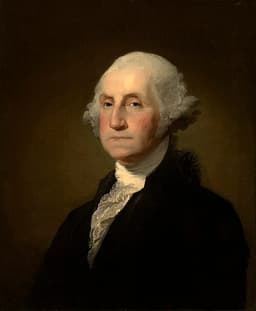
George Washington
Politician · Modern
76.8Total

John A. Macdonald
Politician · Modern
63.7Total
Basic Information
Born
1732
1815
Died
1799
1891
Era
Modern
Modern
Nationality
United States
Canada
Occupation
Politician
Politician
Civilization
Western
Western
Score Comparison
Military (10%)
75.0
45.0
Political (20%)
82.0
62.7
Influence (20%)
75.0
82.0
Legacy (20%)
80.0
55.0
Leadership (15%)
85.0
78.0
Strategy (15%)
55.0
38.6
TOTAL
76.8
63.7
George Washington — Complete Timeline
1775 AD
Appointed Commander-in-Chief of the Continental ArmyOther◆ Major
The Second Continental Congress appointed Washington as commander-in-chief of the Continental Army on June 15, 1775. He accepted the position without pay, taking command of the forces besieging Boston at the start of the American Revolutionary War.
American RevolutionMilitary Leadership
Impact: national
1776 AD
Crossed the Delaware RiverOther◆ Major
On the night of December 25-26, 1776, Washington led 2,400 troops across the ice-choked Delaware River. The surprise attack on Hessian forces at Trenton resulted in a decisive American victory, capturing nearly 1,000 prisoners and reviving Patriot morale after a series of defeats.
American RevolutionBattleTurning Point
Impact: nationalconstructive
1787 AD
Presided over the Constitutional ConventionPolitical Action◆ Major
Washington served as president of the Constitutional Convention in Philadelphia from May to September 1787. His presence lent legitimacy to the proceedings, and he formally signed the final draft of the U.S. Constitution, though he contributed little to the debates.
ConstitutionFounding Father
Impact: national
1789 AD
Inaugurated as First President of the United StatesPolitical Action◆ Major
Washington was unanimously elected by the Electoral College and inaugurated on April 30, 1789, at Federal Hall in New York City. He established numerous executive branch precedents, including the cabinet system, the inaugural address, and the title 'Mr. President'.
PresidencyFounding Father
Impact: national
1793 AD
Issued the Proclamation of NeutralityOther◆ Major
Washington issued the Proclamation of Neutrality on April 22, 1793, declaring the United States neutral in the conflict between France and Great Britain. This decision established the precedent of American isolationism and avoided entanglement in European wars.
Foreign PolicyNeutrality
Impact: national
1796 AD
Delivered the Farewell AddressOther◆ Major
Washington published his Farewell Address on September 19, 1796, announcing his decision not to seek a third term. The address warned against political factionalism, permanent foreign alliances, and the influence of the military in government, shaping American political culture.
PresidencyLegacy
Impact: national
John A. Macdonald — Complete Timeline
1864 AD
Attended Charlottetown ConferencePolitical Action◆ Major
Macdonald attended the Charlottetown Conference as a leading figure from the Province of Canada. He helped persuade Maritime delegates to support a federal union of British North American colonies, laying the groundwork for Confederation.
ConfederationNegotiationFederalism
Impact: nationalconstructive
1867 AD
Became first Prime Minister of CanadaPolitical Action
Macdonald was appointed the first Prime Minister of the Dominion of Canada following Confederation on July 1, 1867. He led a Conservative government and oversaw the expansion of the new nation from four provinces to a transcontinental dominion.
Government FormationConfederationLeadership
Impact: nationalconstructive
1879 AD
Implemented the National PolicyReform◆ Major
Macdonald introduced the National Policy, a system of protective tariffs on manufactured goods to shield Canadian industry from American competition. The policy also promoted western settlement through the railway and immigration.
Economic PolicyTariffsProtectionism
Impact: nationalconstructive
1880 AD
Approved construction of the Canadian Pacific RailwayPolitical Action◆ Major
Macdonald's government approved the contract to build the Canadian Pacific Railway, a transcontinental railway linking Eastern Canada to British Columbia. The project was completed in 1885, fulfilling a key condition for British Columbia's entry into Confederation.
InfrastructureExpansionRailway
Impact: nationalconstructive
1885 AD
Suppressed the North-West RebellionWar◆ Major
Macdonald's government sent troops to suppress the North-West Rebellion led by Louis Riel in present-day Saskatchewan. The rebellion was crushed, and Riel was executed for treason, a decision that deepened French-English tensions in Canada.
RebellionMilitaryRiel
Impact: nationaldestructive
Expert Analysis
Origins
George Washington was born in 1732 into a Virginia planter family. His formal education was limited, but he gained practical experience as a surveyor. After his father's death, Washington inherited Mount Vernon and managed the estate. He served in the Virginia militia during the French and Indian War, gaining military experience.
John A. Macdonald was born in 1815 in Glasgow, Scotland, and emigrated to Canada as a child. His family settled in Kingston, Upper Canada. Macdonald studied law, apprenticed under a local lawyer, and was called to the bar in 1836. He built a successful law practice and entered politics in 1843.
Rise to Power
Washington's rise began with his military service. He was appointed commander-in-chief of the Continental Army in 1775, a role he accepted without pay. His leadership during the Revolutionary War, including the crossing of the Delaware in 1776 and the victory at Yorktown in 1781, made him a national hero. After the war, he presided over the Constitutional Convention in 1787, lending his prestige to the new government. He was unanimously elected first President in 1789.
Macdonald rose through Canadian politics. He was a key figure in the Charlottetown and Quebec Conferences in 1864, which led to Confederation. In 1867, he became the first Prime Minister of the Dominion of Canada. His political skill and coalition-building were essential to uniting the provinces.
Leadership & Governance
Washington set precedents as president. He established a cabinet system, respected the separation of powers, and voluntarily stepped down after two terms. His Proclamation of Neutrality in 1793 kept the young US out of European conflicts. Washington scored 85.0 in leadership, reflecting his ability to unify a fledgling nation.
Macdonald's governance focused on nation-building. He introduced the National Policy in 1879, protective tariffs to foster Canadian industry. He approved the Canadian Pacific Railway, completed in 1885, linking Canada coast to coast. His political score of 62.7 shows effective but controversial leadership, including the suppression of the North-West Rebellion and the hanging of Louis Riel.
Triumph & Tragedy
Washington's triumphs include winning the Revolutionary War and establishing the US presidency. His greatest failure was his inability to prevent the rise of political factions, and he owned slaves, a contradiction with the nation's ideals.
Macdonald's triumphs include Confederation and the CPR. His failures include the Pacific Scandal of 1873, where his government accepted bribes from railway contractors, and his handling of the North-West Rebellion, which deepened tensions with Indigenous peoples and Métis.
Character & Destiny
Washington was reserved, disciplined, and focused on duty. He was known for his integrity and self-control, which shaped his leadership style. His character helped him maintain the army's loyalty and the nation's trust.
Macdonald was charismatic, pragmatic, and sometimes unscrupulous. He was a skilled debater and coalition-builder, but his drinking and political manipulation were weaknesses. His character allowed him to navigate complex politics but also led to scandals.
Legacy
Washington's legacy is foundational: he is the 'Father of His Country.' His precedents shaped the US presidency and government. His influence score is 75.0, but his impact on democratic institutions is immeasurable.
Macdonald's legacy is mixed. He is celebrated as a nation-builder but criticized for his policies toward Indigenous peoples. His influence score of 82.0 reflects his role in creating modern Canada, but his legacy score is only 55.0 due to controversies.
Conclusion
While both were founding figures, Washington's total score of 76.8 exceeds Macdonald's 63.7 by 13.1 points. Washington's impact on the United States and the model of republican government is more significant globally. His leadership during war and peace set standards that endure. Macdonald's achievements were important for Canada, but his methods and outcomes were more limited. Therefore, George Washington had greater historical impact.
Rankings
🥇
George WashingtonLeader
Mil: 75.0Pol: 82.0Inf: 75.0
76.8
🥈
John A. Macdonald
Mil: 45.0Pol: 62.7Inf: 82.0
63.7
+13.1 behind
How This Comparison Works
Algorithm
Each figure is scored on 6 dimensions (0—100 scale) based on structured historical data: Military (10%), Political (20%), Influence (20%), Legacy (20%), Leadership (15%), Strategy (15%). The weighted total produces the final ranking.
Data Sources
Scores are computed from structured sub-indicators in the database. Scale factors adjust for era (Ancient ×0.85, Modern ×1.0) and civilization size (Eastern ×1.05, Other ×0.80) to account for differences in population and military scale.
Maximum 3 Figures
Comparisons are limited to 2—3 figures to ensure readability and statistical meaningfulness.
Error Margins
±5 points per dimension — Sub-scores are derived from historical records with inherent uncertainty. Two figures within 5 points on a dimension should be considered roughly equivalent in that area.
Total Score Accuracy
±3 points overall — The weighted combination of 6 dimensions produces a total score with approximately ±3 points of uncertainty. Differences of less than 3 points are not statistically significant— the figures are effectively tied.
Known Limitations
- Historical records are incomplete and uneven across civilizations
- Figures from oral-tradition societies may be underrepresented
- Occupation labels can misclassify multi-role figures
- Scores measure capability and impact, not moral character
- Quantitative scoring is a comparison tool, not absolute truth
Capability Radar
Military (10%) — Battles & Warfare
Battles
75
0
Win Rate
70
0
Expansion
60
15
Political (20%) — Governance & Reform
Reform
90
75
Diplomacy
85
80
Economy
65
65
Influence (20%) — Cultural & Global Reach
Cultural
85
55
Global
85
55
Legacy (20%) — Historical Impact
Historical
95
65
Longevity
90
60
Leadership (15%) — Power & Stability
Tenure
70
70
Stability
85
70
Strategy (15%) — Tactics & Innovation
Strategy
80
0
Tactics
65
0
Reform
85
5
Similar Comparisons
Comments & Discussion
No comments yet. Be the first to share your thoughts!