Loading...
George Washington vs Isabella I of Castile
Isabella I of Castile leads by 0.4 pts · 2 figures compared
…
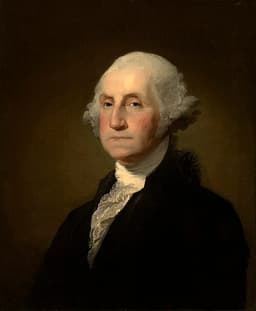
George Washington
Politician · Modern
76.8Total
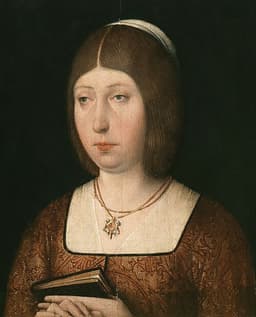
Isabella I of Castile
Emperor · Medieval
77.2Total
Basic Information
Born
1732
1451
Died
1799
1504
Era
Modern
Medieval
Nationality
United States
Spain
Occupation
Politician
Emperor
Civilization
Western
Western
Score Comparison
Military (10%)
75.0
76.0
Political (20%)
82.0
78.0
Influence (20%)
75.0
80.0
Legacy (20%)
80.0
75.0
Leadership (15%)
85.0
78.0
Strategy (15%)
55.0
75.0
TOTAL
76.8
77.2
George Washington — Complete Timeline
1775 AD
Appointed Commander-in-Chief of the Continental ArmyOther◆ Major
The Second Continental Congress appointed Washington as commander-in-chief of the Continental Army on June 15, 1775. He accepted the position without pay, taking command of the forces besieging Boston at the start of the American Revolutionary War.
American RevolutionMilitary Leadership
Impact: national
1776 AD
Crossed the Delaware RiverOther◆ Major
On the night of December 25-26, 1776, Washington led 2,400 troops across the ice-choked Delaware River. The surprise attack on Hessian forces at Trenton resulted in a decisive American victory, capturing nearly 1,000 prisoners and reviving Patriot morale after a series of defeats.
American RevolutionBattleTurning Point
Impact: nationalconstructive
1787 AD
Presided over the Constitutional ConventionPolitical Action◆ Major
Washington served as president of the Constitutional Convention in Philadelphia from May to September 1787. His presence lent legitimacy to the proceedings, and he formally signed the final draft of the U.S. Constitution, though he contributed little to the debates.
ConstitutionFounding Father
Impact: national
1789 AD
Inaugurated as First President of the United StatesPolitical Action◆ Major
Washington was unanimously elected by the Electoral College and inaugurated on April 30, 1789, at Federal Hall in New York City. He established numerous executive branch precedents, including the cabinet system, the inaugural address, and the title 'Mr. President'.
PresidencyFounding Father
Impact: national
1793 AD
Issued the Proclamation of NeutralityOther◆ Major
Washington issued the Proclamation of Neutrality on April 22, 1793, declaring the United States neutral in the conflict between France and Great Britain. This decision established the precedent of American isolationism and avoided entanglement in European wars.
Foreign PolicyNeutrality
Impact: national
1796 AD
Delivered the Farewell AddressOther◆ Major
Washington published his Farewell Address on September 19, 1796, announcing his decision not to seek a third term. The address warned against political factionalism, permanent foreign alliances, and the influence of the military in government, shaping American political culture.
PresidencyLegacy
Impact: national
Isabella I of Castile — Complete Timeline
1469 AD
Marriage to Ferdinand of AragonPolitical Action
Isabella married Ferdinand II of Aragon in Valladolid, uniting the kingdoms of Castile and Aragon. This dynastic union laid the foundation for the unified Spanish monarchy and enabled joint policies including the Reconquista and overseas exploration.
Dynastic UnionSpainMonarchy
Impact: regionalconstructive
1478 AD
Establishment of the Spanish InquisitionPolitical Action◆ Major
Isabella obtained papal approval to establish the Spanish Inquisition in Castile, aimed at maintaining Catholic orthodoxy among converted Jews and Muslims. The Inquisition operated under royal control, conducting trials and executions for heresy.
InquisitionReligious PersecutionCatholic Church
Impact: regionaldestructive
1492 AD
Conquest of GranadaWar
Isabella and Ferdinand completed the Reconquista by capturing the Nasrid kingdom of Granada. The surrender of the last Muslim state in Iberia ended 781 years of Islamic rule and unified Spain under Christian rule.
ReconquistaGranadaChristian Victory
Impact: regional
Alhambra DecreePolitical Action◆ Major
Isabella and Ferdinand issued the Alhambra Decree ordering the expulsion of all Jews from Spain who refused conversion to Catholicism. An estimated 40,000 to 200,000 Jews were forced to leave, causing demographic and economic disruption.
ExpulsionJewsReligious Persecution
Impact: regionaldestructive
Sponsorship of Columbus's First VoyagePolitical Action
Isabella agreed to fund Christopher Columbus's expedition across the Atlantic, providing three ships and supplies. Columbus reached the Bahamas on October 12, initiating sustained European contact with the Americas and the Spanish colonial empire.
ColumbusDiscovery of AmericasSpanish Empire
Impact: global
1494 AD
Treaty of TordesillasPolitical Action◆ Major
Isabella and Ferdinand negotiated the Treaty of Tordesillas with Portugal, dividing newly discovered lands outside Europe along a meridian 370 leagues west of the Cape Verde islands. This agreement shaped colonial claims in the Americas and Africa.
Colonial DivisionSpainPortugal
Impact: global
Expert Analysis
Origins
Isabella I of Castile (1451–1504) was born into the tumultuous Trastámara dynasty, inheriting a fractured Castile plagued by civil war. Her early life was marked by political intrigue and a contested succession, which she overcame through strategic alliances. In contrast, George Washington (1732–1799) was born into Virginia's planter elite, a product of the British colonial system. His early career as a surveyor and military officer during the French and Indian War gave him practical leadership experience, but his path to prominence was less fraught with existential threats than Isabella's.
Rise to Power
Isabella's rise was a masterclass in political maneuvering. She secured the throne of Castile in 1474 after a civil war against her niece Juana, then married Ferdinand of Aragon in 1469, creating a dynastic union that would become Spain. Her partnership with Ferdinand was a turning point, allowing her to centralize power and launch the Reconquista's final campaign. Washington's rise was more conventional: appointed Commander-in-Chief of the Continental Army in 1775 due to his military experience and Virginian political connections. His leadership during the Revolutionary War, including the daring crossing of the Delaware River in 1776, cemented his reputation. However, Washington's rise was contingent on a colonial rebellion, whereas Isabella forged a nation from competing kingdoms.
Leadership & Governance
Isabella ruled with iron resolve, reforming Spain's economy, law, and military. She established the Spanish Inquisition (1478) to enforce religious orthodoxy, a controversial move that consolidated royal authority but caused immense suffering. Her sponsorship of Christopher Columbus in 1492 led to the discovery of the Americas, transforming Spain into a global empire. However, the Alhambra Decree (1492) expelled Jews, a tragic act of intolerance. Washington's governance was defined by restraint: he presided over the Constitutional Convention (1787) and set precedents as the first U.S. President, including a two-term limit. His Proclamation of Neutrality (1793) kept the young nation out of European wars. While Isabella's leadership was absolute and expansionist, Washington's was democratic and cautious.
Triumph & Tragedy
Isabella's greatest triumph was the conquest of Granada in 1492, ending 781 years of Muslim rule in Iberia. This victory, combined with Columbus's voyages, launched Spain's Golden Age. Yet her legacy is darkened by the Inquisition and expulsion of Jews, which decimated Spain's intellectual and economic life. Washington's triumphs include victory at Yorktown (1781) and the peaceful transition of power after his presidency. His tragedy was the inability to fully address slavery; he owned slaves but freed them in his will, a conflicted stance that reflects the nation's original sin.
Character & Destiny
Isabella was devout, ruthless, and visionary—a queen who believed her destiny was to unite Christendom and expand Spain's reach. Her piety often fueled intolerance, but her strategic brilliance is undeniable. Washington was stoic, principled, and reluctant to hold power—his destiny was to embody republican virtue. He resisted becoming a monarch, earning the title "Father of His Country." Both were shaped by their eras: Isabella by medieval religious fervor, Washington by Enlightenment ideals.
Legacy
Isabella's legacy is immense but ambivalent. She unified Spain, funded Columbus, and laid the foundation for the Spanish Empire, but her religious persecution tarnishes her memory. Washington's legacy is more uniformly positive: he is revered as the indispensable leader who secured American independence and established democratic norms. In historical impact, Isabella's actions reshaped global geography and religion, while Washington's shaped modern democracy.
Conclusion
Isabella I of Castile and George Washington represent two archetypes of leadership: the absolute monarch who builds an empire through conquest and faith, and the republican leader who builds a nation through consensus and liberty. Isabella's scores (M=76, P=78, I=80, L=75, D=78, S=75, T=77) reflect her transformative but morally complex reign. Washington's scores (M=75, P=82, I=75, L=80, D=85, S=55, T=77) highlight his superior diplomacy and durability but lower strategic innovation. With a higher overall score (539.5 vs 539.1), Isabella narrowly edges out Washington due to her global impact—the discovery of the Americas changed world history more than any single act of Washington's. However, Washington's legacy is more ethically admirable. In the end, Isabella's conquest and colonization set the stage for modernity, while Washington's republicanism provided a blueprint for freedom. Both are titans, but Isabella's reach was more profound, even if her methods were darker.
Rankings
🥇
Isabella I of CastileLeader
Mil: 76.0Pol: 78.0Inf: 80.0
77.2
🥈
George Washington
Mil: 75.0Pol: 82.0Inf: 75.0
76.8
+0.4 behind
How This Comparison Works
Algorithm
Each figure is scored on 6 dimensions (0—100 scale) based on structured historical data: Military (10%), Political (20%), Influence (20%), Legacy (20%), Leadership (15%), Strategy (15%). The weighted total produces the final ranking.
Data Sources
Scores are computed from structured sub-indicators in the database. Scale factors adjust for era (Ancient ×0.85, Modern ×1.0) and civilization size (Eastern ×1.05, Other ×0.80) to account for differences in population and military scale.
Maximum 3 Figures
Comparisons are limited to 2—3 figures to ensure readability and statistical meaningfulness.
Error Margins
±5 points per dimension — Sub-scores are derived from historical records with inherent uncertainty. Two figures within 5 points on a dimension should be considered roughly equivalent in that area.
Total Score Accuracy
±3 points overall — The weighted combination of 6 dimensions produces a total score with approximately ±3 points of uncertainty. Differences of less than 3 points are not statistically significant— the figures are effectively tied.
Known Limitations
- Historical records are incomplete and uneven across civilizations
- Figures from oral-tradition societies may be underrepresented
- Occupation labels can misclassify multi-role figures
- Scores measure capability and impact, not moral character
- Quantitative scoring is a comparison tool, not absolute truth
Capability Radar
Military (10%) — Battles & Warfare
Battles
75
75
Win Rate
70
80
Expansion
60
85
Political (20%) — Governance & Reform
Reform
90
90
Diplomacy
85
80
Economy
65
75
Influence (20%) — Cultural & Global Reach
Cultural
85
85
Global
85
95
Legacy (20%) — Historical Impact
Historical
95
95
Longevity
90
90
Leadership (15%) — Power & Stability
Tenure
70
85
Stability
85
70
Strategy (15%) — Tactics & Innovation
Strategy
80
85
Tactics
65
70
Reform
85
90
Similar Comparisons
Comments & Discussion
No comments yet. Be the first to share your thoughts!