Loading...
George Washington vs Hong Taiji
Hong Taiji leads by 1.5 pts · 2 figures compared
…
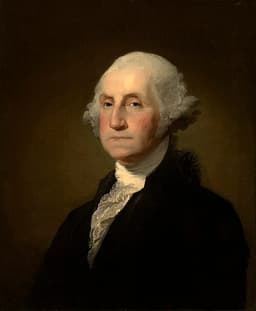
George Washington
Politician · Modern
76.8Total
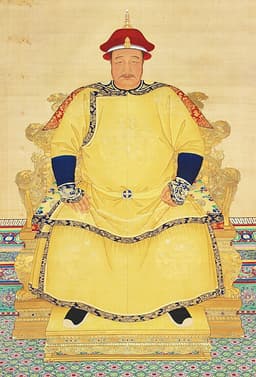
Hong Taiji
Emperor · Modern
78.3Total
Basic Information
Born
1732
1592
Died
1799
1643
Era
Modern
Modern
Nationality
United States
China
Occupation
Politician
Emperor
Civilization
Western
Eastern
Score Comparison
Military (10%)
75.0
85.0
Political (20%)
82.0
82.0
Influence (20%)
75.0
88.0
Legacy (20%)
80.0
65.0
Leadership (15%)
85.0
78.0
Strategy (15%)
55.0
76.0
TOTAL
76.8
78.3
George Washington — Complete Timeline
1775 AD
Appointed Commander-in-Chief of the Continental ArmyOther◆ Major
The Second Continental Congress appointed Washington as commander-in-chief of the Continental Army on June 15, 1775. He accepted the position without pay, taking command of the forces besieging Boston at the start of the American Revolutionary War.
American RevolutionMilitary Leadership
Impact: national
1776 AD
Crossed the Delaware RiverOther◆ Major
On the night of December 25-26, 1776, Washington led 2,400 troops across the ice-choked Delaware River. The surprise attack on Hessian forces at Trenton resulted in a decisive American victory, capturing nearly 1,000 prisoners and reviving Patriot morale after a series of defeats.
American RevolutionBattleTurning Point
Impact: nationalconstructive
1787 AD
Presided over the Constitutional ConventionPolitical Action◆ Major
Washington served as president of the Constitutional Convention in Philadelphia from May to September 1787. His presence lent legitimacy to the proceedings, and he formally signed the final draft of the U.S. Constitution, though he contributed little to the debates.
ConstitutionFounding Father
Impact: national
1789 AD
Inaugurated as First President of the United StatesPolitical Action◆ Major
Washington was unanimously elected by the Electoral College and inaugurated on April 30, 1789, at Federal Hall in New York City. He established numerous executive branch precedents, including the cabinet system, the inaugural address, and the title 'Mr. President'.
PresidencyFounding Father
Impact: national
1793 AD
Issued the Proclamation of NeutralityOther◆ Major
Washington issued the Proclamation of Neutrality on April 22, 1793, declaring the United States neutral in the conflict between France and Great Britain. This decision established the precedent of American isolationism and avoided entanglement in European wars.
Foreign PolicyNeutrality
Impact: national
1796 AD
Delivered the Farewell AddressOther◆ Major
Washington published his Farewell Address on September 19, 1796, announcing his decision not to seek a third term. The address warned against political factionalism, permanent foreign alliances, and the influence of the military in government, shaping American political culture.
PresidencyLegacy
Impact: national
Hong Taiji — Complete Timeline
1631 AD
Adoption of Chinese-style governmentReform◆ Major
Hong Taiji established a Chinese-style bureaucracy, including the Six Ministries and a Hanlin Academy. He also introduced the civil service examination system for Han Chinese, integrating Confucian governance into the Qing state.
Government reformConfucian administrationSinification
Impact: regionalconstructive
1635 AD
Creation of the Eight Banners systemReform◆ Major
Hong Taiji reorganized the Eight Banners military system, incorporating Mongol and Han Chinese forces into separate banners. This created a multi-ethnic military structure that became the backbone of Qing power.
Military reformEight BannersMulti-ethnic army
Impact: regionalconstructive
Renaming of the Jurchen to ManchuPolitical Action◆ Major
Hong Taiji issued an edict renaming the Jurchen people as Manchu. This was part of his effort to create a unified identity for the various tribes under his rule and distance them from the historical Jurchen label.
Ethnic identityManchuJurchen
Impact: regionalconstructive
1636 AD
Proclamation of the Qing dynastyPolitical Action◆ Major
Hong Taiji declared the establishment of the Qing dynasty, replacing the Later Jin name. He adopted the Chinese imperial title and created a dual administrative system combining Manchu and Chinese institutions.
Dynasty foundingImperial titleQing dynasty
Impact: regionalconstructive
1640 AD
Conquest of the Ming Liaodong regionWar◆ Major
Hong Taiji's forces captured key Ming cities in Liaodong, including Jinzhou and Songshan. These victories secured Qing control over the strategic Liaoning corridor and weakened Ming defenses in the northeast.
Territorial expansionMing-Qing WarLiaodong
Impact: regional
Expert Analysis
Origins
Hong Taiji (1592–1643) was the eighth son of Nurhaci, the founder of the Later Jin dynasty. Born into the Jurchen (later renamed Manchu) Aisin Gioro clan, he was raised in a militaristic, tribal society on the northeastern frontier of the Ming Empire. His father unified the Jurchen tribes and created the Eight Banners system, a unique military-social organization. Hong Taiji inherited a nascent state poised for expansion.
George Washington (1732–1799) was born into a moderately prosperous Virginia planter family. His early life was marked by the death of his father when he was 11, after which he was raised by his half-brother Lawrence. Washington gained practical experience as a surveyor and served in the Virginia militia during the French and Indian War, where he developed leadership skills and a disdain for British military condescension. His origins were rooted in the colonial gentry, not imperial ambition.
Rise to Power
Hong Taiji ascended to the khanate in 1626 after his father's death, but his rise was contested by other princes. He skillfully consolidated power by balancing the interests of the Eight Banners, promoting talented officials regardless of ethnicity, and eliminating rivals. Crucially, he renamed the Jurchen as "Manchu" in 1635 to foster a new national identity, and in 1636 proclaimed the Qing dynasty, asserting imperial ambitions. His rise was a masterclass in political maneuvering and strategic renaming to unify diverse groups.
George Washington's rise was more gradual and based on merit and reputation. He was appointed commander-in-chief of the Continental Army in 1775 due to his military experience, Virginia pedigree, and political connections. Unlike Hong Taiji, Washington did not seize power but was chosen by the Continental Congress. His leadership during the Revolutionary War, including the daring crossing of the Delaware River in 1776, solidified his status as a national hero. His rise was democratic, not dynastic.
Leadership & Governance
Hong Taiji was an innovative and ruthless leader. He created the Eight Banners system, which integrated Manchu, Mongol, and Han Chinese forces under a centralized command. He adopted Chinese-style government, establishing a bureaucracy with six ministries, and promoted Confucian learning while preserving Manchu identity. His governance was autocratic, efficient, and expansionist. He conquered the Ming Liaodong region, laying the groundwork for the eventual conquest of China. His leadership scores reflect high military (85) and political (82) acumen.
Washington's leadership was characterized by restraint and consensus-building. As commander-in-chief, he held the Continental Army together through privation and defeat. As president, he set precedents for the executive branch: the cabinet system, neutrality in foreign affairs, and a two-term limit. He presided over the Constitutional Convention, ensuring a strong but balanced federal government. His governance was republican, emphasizing civilian control of the military and the rule of law. His diplomatic score (85) reflects his prudent foreign policy.
Triumph & Tragedy
Hong Taiji's triumphs were monumental: he founded the Qing dynasty, unified the Manchu tribes, and conquered key Ming territories. However, he died suddenly in 1643 at age 50, just before the Qing conquest of Beijing, leaving his young son to succeed under regents. His tragedy was dying before seeing his dynasty's greatest victory. His legacy was incomplete.
Washington's triumphs were equally historic: winning American independence, presiding over the Constitutional Convention, and establishing the presidency. His tragedy was the inability to fully reconcile the new nation's divisions, including slavery, which he personally grappled with but failed to resolve. He died in 1799, revered but aware of the nation's fragile unity.
Character & Destiny
Hong Taiji was pragmatic, strategic, and culturally adaptable. He understood the need to sinicize his state while preserving Manchu distinctiveness. His destiny was to build an empire that would rule China for nearly 300 years. He was a visionary imperialist.
Washington was stoic, principled, and self-sacrificing. He famously refused to become king or dictator, choosing to retire after two terms. His destiny was to embody republican virtue and found a democratic nation. He was a reluctant statesman thrust into leadership.
Legacy
Hong Taiji's legacy is the Qing dynasty, which doubled China's territory and created a multi-ethnic empire. He is remembered as a brilliant organizer and strategist. However, his dynasty eventually fell to internal decay and external pressure. His personal score (85) reflects his transformative impact, but his low luck (65) and diplomacy (78) are offset by his military and political prowess.
Washington's legacy is the United States itself. He is the "Father of His Country," symbolizing integrity, leadership, and democratic ideals. His decision to relinquish power set a global precedent. His scores reflect high diplomacy (85) and luck (80) but moderate military (75) and intelligence (75). His legacy endures in institutions and values.
Conclusion
Hong Taiji and George Washington were both founders of nations, but their methods and contexts were vastly different. Hong Taiji built an empire through conquest, centralization, and cultural synthesis; Washington built a republic through revolution, consensus, and restraint. While Hong Taiji's numerical scores are slightly higher (85 vs 83.5), Washington's moral and historical influence on democratic governance is arguably more profound. HistoryVersus.com verdict: Hong Taiji was a more effective empire-builder, Washington a more influential founder of modern democracy. Their comparison illuminates different paths to state-building.
Rankings
🥇
Hong TaijiLeader
Mil: 85.0Pol: 82.0Inf: 88.0
78.3
🥈
George Washington
Mil: 75.0Pol: 82.0Inf: 75.0
76.8
+1.5 behind
How This Comparison Works
Algorithm
Each figure is scored on 6 dimensions (0—100 scale) based on structured historical data: Military (10%), Political (20%), Influence (20%), Legacy (20%), Leadership (15%), Strategy (15%). The weighted total produces the final ranking.
Data Sources
Scores are computed from structured sub-indicators in the database. Scale factors adjust for era (Ancient ×0.85, Modern ×1.0) and civilization size (Eastern ×1.05, Other ×0.80) to account for differences in population and military scale.
Maximum 3 Figures
Comparisons are limited to 2—3 figures to ensure readability and statistical meaningfulness.
Error Margins
±5 points per dimension — Sub-scores are derived from historical records with inherent uncertainty. Two figures within 5 points on a dimension should be considered roughly equivalent in that area.
Total Score Accuracy
±3 points overall — The weighted combination of 6 dimensions produces a total score with approximately ±3 points of uncertainty. Differences of less than 3 points are not statistically significant— the figures are effectively tied.
Known Limitations
- Historical records are incomplete and uneven across civilizations
- Figures from oral-tradition societies may be underrepresented
- Occupation labels can misclassify multi-role figures
- Scores measure capability and impact, not moral character
- Quantitative scoring is a comparison tool, not absolute truth
Capability Radar
Military (10%) — Battles & Warfare
Battles
75
85
Win Rate
70
80
Expansion
60
90
Political (20%) — Governance & Reform
Reform
90
90
Diplomacy
85
85
Economy
65
80
Influence (20%) — Cultural & Global Reach
Cultural
85
80
Global
85
75
Legacy (20%) — Historical Impact
Historical
95
85
Longevity
90
80
Leadership (15%) — Power & Stability
Tenure
70
75
Stability
85
70
Strategy (15%) — Tactics & Innovation
Strategy
80
90
Tactics
65
85
Reform
85
90
Similar Comparisons
Comments & Discussion
No comments yet. Be the first to share your thoughts!