Loading...
George Washington vs Henry the Fowler
George Washington leads by 15.9 pts · 2 figures compared
…
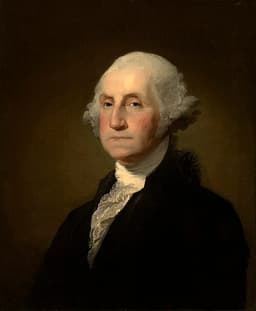
George Washington
Politician · Modern
76.8Total
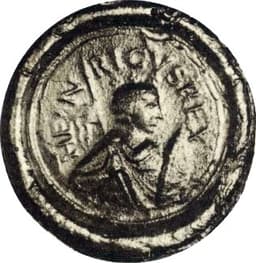
Henry the Fowler
Emperor · Medieval
60.9Total
Basic Information
Born
1732
876
Died
1799
936
Era
Modern
Medieval
Nationality
United States
East Francia
Occupation
Politician
Emperor
Civilization
Western
Western
Score Comparison
Military (10%)
75.0
70.0
Political (20%)
82.0
59.3
Influence (20%)
75.0
55.0
Legacy (20%)
80.0
52.0
Leadership (15%)
85.0
85.0
Strategy (15%)
55.0
55.0
TOTAL
76.8
60.9
George Washington — Complete Timeline
1775 AD
Appointed Commander-in-Chief of the Continental ArmyOther◆ Major
The Second Continental Congress appointed Washington as commander-in-chief of the Continental Army on June 15, 1775. He accepted the position without pay, taking command of the forces besieging Boston at the start of the American Revolutionary War.
American RevolutionMilitary Leadership
Impact: national
1776 AD
Crossed the Delaware RiverOther◆ Major
On the night of December 25-26, 1776, Washington led 2,400 troops across the ice-choked Delaware River. The surprise attack on Hessian forces at Trenton resulted in a decisive American victory, capturing nearly 1,000 prisoners and reviving Patriot morale after a series of defeats.
American RevolutionBattleTurning Point
Impact: nationalconstructive
1787 AD
Presided over the Constitutional ConventionPolitical Action◆ Major
Washington served as president of the Constitutional Convention in Philadelphia from May to September 1787. His presence lent legitimacy to the proceedings, and he formally signed the final draft of the U.S. Constitution, though he contributed little to the debates.
ConstitutionFounding Father
Impact: national
1789 AD
Inaugurated as First President of the United StatesPolitical Action◆ Major
Washington was unanimously elected by the Electoral College and inaugurated on April 30, 1789, at Federal Hall in New York City. He established numerous executive branch precedents, including the cabinet system, the inaugural address, and the title 'Mr. President'.
PresidencyFounding Father
Impact: national
1793 AD
Issued the Proclamation of NeutralityOther◆ Major
Washington issued the Proclamation of Neutrality on April 22, 1793, declaring the United States neutral in the conflict between France and Great Britain. This decision established the precedent of American isolationism and avoided entanglement in European wars.
Foreign PolicyNeutrality
Impact: national
1796 AD
Delivered the Farewell AddressOther◆ Major
Washington published his Farewell Address on September 19, 1796, announcing his decision not to seek a third term. The address warned against political factionalism, permanent foreign alliances, and the influence of the military in government, shaping American political culture.
PresidencyLegacy
Impact: national
Henry the Fowler — Complete Timeline
919 AD
Election as King of East FranciaPolitical Action
Henry the Fowler was elected King of East Francia by the Saxon and Frankish nobles at Fritzlar on May 6, 919. He was the first Saxon king, marking the transition from Carolingian to Ottonian rule. His election was contested by other dukes but he prevailed.
ElectionAccessionOttonian Dynasty
Impact: regionalconstructive
921 AD
Treaty of Bonn (921)Political Action◆ Major
Henry the Fowler signed the Treaty of Bonn with Charles the Simple of West Francia, recognizing each other's royal titles and establishing peaceful relations. This treaty ended Carolingian claims over East Francia and solidified Henry's legitimacy as an independent king.
TreatyRecognitionDiplomacy
Impact: regionalconstructive
924 AD
Nine-Year Truce with the MagyarsPolitical Action◆ Major
Henry the Fowler negotiated a nine-year truce with the Magyars, agreeing to pay tribute in exchange for a halt to their raids. He used this period to fortify towns, reorganize the army, and train cavalry. This strategic pause was crucial for his later military reforms.
TruceMagyarsMilitary Reform
Impact: regionalconstructive
929 AD
Battle of Lenzen (929)War◆ Major
Henry the Fowler's forces defeated a Slavic army at the Battle of Lenzen, securing the eastern frontier of East Francia. This victory allowed Henry to consolidate control over the Elbe region and establish the March of Brandenburg, a key step in German eastward expansion.
BattleSlavic WarsEastern Expansion
Impact: regionalconstructive
933 AD
Battle of Riade (933)War
After the truce with the Magyars expired, Henry the Fowler led a German army to victory at the Battle of Riade (near Merseburg). The defeat of the Magyar cavalry ended their raids into East Francia for a generation and established Henry's reputation as a defender of Christendom.
BattleMagyarsVictory
Impact: regionalconstructive
936 AD
Death of Henry the FowlerOther◆ Major
Henry the Fowler died on July 2, 936, at Memleben. He was succeeded by his son, Otto I, who would become Holy Roman Emperor. Henry's reign laid the foundations for the Ottonian dynasty and the medieval German kingdom.
DeathSuccessionOttonian
Impact: regional
Expert Analysis
Henry the Fowler vs George Washington
### The Founders of Nations
In the spring of 919, on the windswept plains of Fritzlar, a Saxon duke named Henry was offered a crown he did not initially want. The nobles of East Francia, weary of chaos, raised him on a shield and declared him king. Over a century later, in the winter of 1783, a Virginia planter named George Washington stood before the Continental Congress in Annapolis and resigned his commission, an act so unprecedented that King George III is said to have called it "the greatest thing in the world." One man built a kingdom from the ashes of a dying empire; the other forged a republic from the fire of revolution. What separates a king who founds a dynasty from a general who founds a democracy? The answer lies not just in their deeds, but in the deep, unspoken assumptions of their ages.
### Origins
Henry the Fowler was born in 876, a time when the Carolingian Empire had splintered into warring fragments. The world he knew was one of blood and soil, where power was personal and survival depended on the loyalty of armed retainers. His father, Otto the Illustrious, was a Saxon duke, and Henry grew up in the shadow of fortresses, learning that a ruler’s first duty was to defend his people from the Magyars, who swept out of the east like a plague. There was no nation, only tribes and fiefs. There was no constitution, only custom and the sword.
George Washington, born in 1732, inhabited a different universe. The British colonies in America were a world of Enlightenment ideas, of John Locke and parliamentary debate. His father died when he was eleven, and Washington grew up not as a warrior prince but as a surveyor, mapping the wilderness of Virginia. He learned geometry, not genealogy; property rights, not bloodlines. Where Henry saw a world of chaos to be tamed, Washington saw a world of order to be built.
### Rise to Power
Henry’s rise was a matter of noble election. When King Conrad I died in 918, he urged his brother to crown Henry, the former rival, as his successor. The nobles of Saxony and Franconia gathered at Fritzlar in May of 919 and offered Henry the crown. He was reluctant, or at least he feigned reluctance—a ritual of medieval kingship. He accepted only when the Archbishop of Mainz refused to anoint him. Henry wanted to be a king of warriors, not a priest’s puppet. His power came from the sword, not the chrism.
Washington’s rise was a matter of reputation and appointment. He was not born to rule. He earned command through a combination of ambition and disaster. His early military career in the French and Indian War was marked by a humiliating surrender at Fort Necessity in 1754, a defeat that taught him the cost of impetuousness. By the time the Second Continental Congress needed a commander-in-chief in 1775, Washington was chosen not for his brilliance but for his character. He was a Virginian who could unite the colonies, a man of wealth who would fight for liberty. He accepted the role with a quiet gravity, refusing a salary.
### Leadership & Governance
Henry the Fowler governed as a king of the early Middle Ages. His genius was strategic patience. In 924, facing the relentless Magyars, he negotiated a nine-year truce, paying tribute to buy time. He used that time to build fortified towns (*burgen*) across Saxony, training a new kind of cavalry that could fight on horseback. When the truce expired in 933, he met the Magyar army at Riade and crushed them. This was not a battle of liberation; it was a battle of survival. Henry also signed the Treaty of Bonn in 921 with Charles the Simple of West Francia, a diplomatic recognition that East Francia was its own kingdom. He was a builder of institutions, but those institutions were walls, armies, and dynastic alliances.
Washington’s governance was a radical departure. As commander-in-chief, he held the Continental Army together through eight years of privation, mutiny, and betrayal. At Valley Forge in the winter of 1777–78, he did not build walls but morale. He wrote letters to Congress, begged for supplies, and stood with his men. His military strategy was not one of great victories—he lost more battles than he won—but of survival. He understood that the revolution would be won not by defeating the British army but by outlasting it. As president, he set precedents that shaped the office: the cabinet system, the two-term limit, and a foreign policy of neutrality. He was acutely aware that every action he took would become a model for future leaders.
### Triumph & Tragedy
Henry’s greatest triumph was the Battle of Riade in 933. It was a turning point. The Magyars, who had terrorized Germany for decades, were broken. Henry also secured the eastern frontier with his victory at Lenzen in 929, subduing the Slavic tribes. His tragedy is that he did not live to see his son Otto crowned Holy Roman Emperor. He died in 936 at Memleben, having unified the German tribes into a kingdom that would become the Holy Roman Empire. But he also left a legacy of feudalism, of power rooted in land and loyalty, not law.
Washington’s greatest triumph was not a battle but an act of renunciation. After the war, when some officers urged him to become king, he refused. In 1783, he resigned his commission to Congress, a gesture that electrified the world. His tragedy was the failure of his vision. He dreamed of a nation without factions, without parties, but by the end of his presidency, the Federalists and Democratic-Republicans were already at each other’s throats. His farewell address warned against "the baneful effects of the spirit of party," a warning that went unheeded.
### Character & Destiny
Henry the Fowler was a pragmatist. He accepted tribute, built forts, and waited. He was not a visionary but a consolidator. He understood that power in the Middle Ages was personal, and he cultivated loyalty through generosity and strength. His destiny was to create a kingdom that would endure for a thousand years.
Washington was a stoic. He was reserved, almost cold, but his self-control was his greatest weapon. He understood that his power came not from his sword but from his example. His destiny was to create a republic that would endure for centuries, but only by refusing to become a king.
### Legacy
Henry the Fowler is remembered as the founder of the Ottonian dynasty, the first German king to unite the tribes. His legacy is the Holy Roman Empire, a structure that would dominate European politics for centuries. But he is a shadowy figure, known mainly to historians.
Washington is remembered as the father of his country, a man who could have been king but chose to be a citizen. His legacy is the American presidency, the peaceful transfer of power, and the idea that a leader is a servant, not a master. His face is on the dollar bill, his name on the capital city.
### Conclusion
One founded a kingdom; the other founded a republic. One built walls; the other built institutions. Henry the Fowler lived in a world where power was a thing to be seized and held; George Washington lived in a world where power was a thing to be surrendered and shared. The difference between them is the difference between a medieval king and a modern statesman. But both understood the same truth: that a nation is not built in a day, and that a leader’s greatest gift is not his ambition but his restraint.
Rankings
🥇
George WashingtonLeader
Mil: 75.0Pol: 82.0Inf: 75.0
76.8
🥈
Henry the Fowler
Mil: 70.0Pol: 59.3Inf: 55.0
60.9
+15.9 behind
How This Comparison Works
Algorithm
Each figure is scored on 6 dimensions (0—100 scale) based on structured historical data: Military (10%), Political (20%), Influence (20%), Legacy (20%), Leadership (15%), Strategy (15%). The weighted total produces the final ranking.
Data Sources
Scores are computed from structured sub-indicators in the database. Scale factors adjust for era (Ancient ×0.85, Modern ×1.0) and civilization size (Eastern ×1.05, Other ×0.80) to account for differences in population and military scale.
Maximum 3 Figures
Comparisons are limited to 2—3 figures to ensure readability and statistical meaningfulness.
Error Margins
±5 points per dimension — Sub-scores are derived from historical records with inherent uncertainty. Two figures within 5 points on a dimension should be considered roughly equivalent in that area.
Total Score Accuracy
±3 points overall — The weighted combination of 6 dimensions produces a total score with approximately ±3 points of uncertainty. Differences of less than 3 points are not statistically significant— the figures are effectively tied.
Known Limitations
- Historical records are incomplete and uneven across civilizations
- Figures from oral-tradition societies may be underrepresented
- Occupation labels can misclassify multi-role figures
- Scores measure capability and impact, not moral character
- Quantitative scoring is a comparison tool, not absolute truth
Capability Radar
Military (10%) — Battles & Warfare
Battles
75
55
Win Rate
70
60
Expansion
60
60
Political (20%) — Governance & Reform
Reform
90
75
Diplomacy
85
70
Economy
65
65
Influence (20%) — Cultural & Global Reach
Cultural
85
55
Global
85
40
Legacy (20%) — Historical Impact
Historical
95
65
Longevity
90
60
Leadership (15%) — Power & Stability
Tenure
70
70
Stability
85
70
Strategy (15%) — Tactics & Innovation
Strategy
80
65
Tactics
65
50
Reform
85
70
Similar Comparisons
Comments & Discussion
HenryTheRealist6/16/2026
Look, Washington gets all the glory for "voluntarily giving up power" but that's just Romantic-era propaganda. Henry the Fowler literally turned down the crown THREE times before accepting, and only took it because East Francia was being overrun by Magyars. Washington's resignation happened after he'd already won. Try giving up power when you're losing and your people are being slaughtered—that's real virtue. Henry 1, Washington 0.
历史深潜者6/16/2026
拿亨利和华盛顿比本来就是刻舟求剑。一个是10世纪的神圣罗马帝国奠基人,一个是18世纪启蒙时代的民主象征。亨利靠的是血亲联盟和军事威慑,华盛顿靠的是宪法精神和公民意识。我选亨利——他在位期间击退马扎尔人、建立城堡防御体系、扶持德意志教会,这些实打实的治国举措比什么"拒绝当国王"的象征性行为重大多了。真正的建国者得能打也能管!
Skeptical_Sam6/16/2026
I'm calling BS on this whole "founder of nations" framing. Henry didn't found modern Germany any more than Washington founded modern America. Henry's kingdom was a loose federation of bickering duchies that barely held together—half his reign was spent fighting his own vassals. And Washington? The Articles of Confederation failed within a decade of his presidency. Real founding happened generations later under Bismarck or the 1787 Constitution. These guys were just the first warm bodies in the c
帝王研究者6/16/2026
别被表面现象骗了:华盛顿辞职是个人选择,亨利拒接王冠也是。但本质完全不同。亨利生活在"王权如履薄冰"的时代,他若不够强硬,萨克森贵族分分钟废掉他。华盛顿生活在"权力制衡"的框架里,他辞不辞职国会都有办法制约他。把两人并列比较,等于把篮球明星和足球明星比谁更会用手——根本规则都不一样。各擅胜场,别强行分高下!
VeteranOfTheWire6/16/2026
As someone who's studied battlefield command, I'll take Henry every time. The man fought thirty-plus engagements across his reign—against Magyars, Danes, rebellious Slavs, and his own nobles. He personally led cavalry charges well into his fifties. Washington lost more battles than he won and spent most of the war retreating through New Jersey. Henry's victory at Lenzen (929) was a masterclass in combined arms: infantry shield wall plus heavy cavalry pursuit. Washington's signature move was "get