Loading...
George Washington vs Helmuth von Moltke
George Washington leads by 0.6 pts · 2 figures compared
…
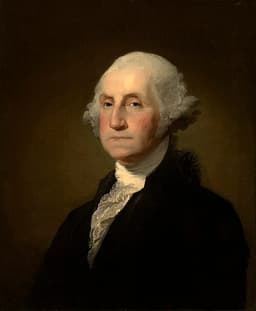
George Washington
Politician · Modern
76.8Total
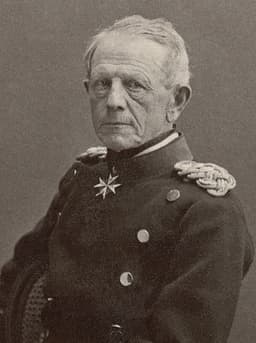
Helmuth von Moltke
General · Modern
76.2Total
Basic Information
Born
1732
1800
Died
1799
1891
Era
Modern
Modern
Nationality
United States
Prussia
Occupation
Politician
General
Civilization
Western
Western
Score Comparison
Military (10%)
75.0
65.0
Political (20%)
82.0
62.7
Influence (20%)
75.0
88.0
Legacy (20%)
80.0
70.0
Leadership (15%)
85.0
85.0
Strategy (15%)
55.0
80.6
TOTAL
76.8
76.2
George Washington — Complete Timeline
1775 AD
Appointed Commander-in-Chief of the Continental ArmyOther◆ Major
The Second Continental Congress appointed Washington as commander-in-chief of the Continental Army on June 15, 1775. He accepted the position without pay, taking command of the forces besieging Boston at the start of the American Revolutionary War.
American RevolutionMilitary Leadership
Impact: national
1776 AD
Crossed the Delaware RiverOther◆ Major
On the night of December 25-26, 1776, Washington led 2,400 troops across the ice-choked Delaware River. The surprise attack on Hessian forces at Trenton resulted in a decisive American victory, capturing nearly 1,000 prisoners and reviving Patriot morale after a series of defeats.
American RevolutionBattleTurning Point
Impact: nationalconstructive
1787 AD
Presided over the Constitutional ConventionPolitical Action◆ Major
Washington served as president of the Constitutional Convention in Philadelphia from May to September 1787. His presence lent legitimacy to the proceedings, and he formally signed the final draft of the U.S. Constitution, though he contributed little to the debates.
ConstitutionFounding Father
Impact: national
1789 AD
Inaugurated as First President of the United StatesPolitical Action◆ Major
Washington was unanimously elected by the Electoral College and inaugurated on April 30, 1789, at Federal Hall in New York City. He established numerous executive branch precedents, including the cabinet system, the inaugural address, and the title 'Mr. President'.
PresidencyFounding Father
Impact: national
1793 AD
Issued the Proclamation of NeutralityOther◆ Major
Washington issued the Proclamation of Neutrality on April 22, 1793, declaring the United States neutral in the conflict between France and Great Britain. This decision established the precedent of American isolationism and avoided entanglement in European wars.
Foreign PolicyNeutrality
Impact: national
1796 AD
Delivered the Farewell AddressOther◆ Major
Washington published his Farewell Address on September 19, 1796, announcing his decision not to seek a third term. The address warned against political factionalism, permanent foreign alliances, and the influence of the military in government, shaping American political culture.
PresidencyLegacy
Impact: national
Helmuth von Moltke — Complete Timeline
1857 AD
Appointment as Chief of the Prussian General StaffPolitical Action
Moltke was appointed Chief of the Prussian General Staff, a position he held for 30 years. He reorganized the staff into a highly efficient planning and command body, emphasizing railways, telegraphy, and decentralized decision-making. This modernization was crucial for Prussia's subsequent victories.
Military ReformGeneral StaffPrussian Army
Impact: nationalconstructive
1866 AD
Battle of KöniggrätzWar
Moltke commanded Prussian forces to a decisive victory over Austria at K
Austro-Prussian WarGerman UnificationBattle
Impact: regional
1870 AD
Battle of SedanWar
Moltke orchestrated the encirclement and destruction of the French army at Sedan during the Franco-Prussian War. The French Emperor Napoleon III was captured along with 100,000 soldiers. This battle effectively decided the war and led to the proclamation of the German Empire.
Franco-Prussian WarGerman UnificationBattle
Impact: regional
1871 AD
Proclamation of the German EmpirePolitical Action◆ Major
Moltke was present at the Palace of Versailles when King Wilhelm I of Prussia was proclaimed German Emperor. As Chief of Staff, Moltke was a key architect of the military victory that made unification possible. He was later promoted to Field Marshal and ennobled.
German UnificationEmpireCeremony
Impact: regionalconstructive
Expert Analysis
Origins
George Washington was born into a Virginia planter family in 1732, inheriting a modest estate and rising through the ranks of the colonial militia. His early experiences in the French and Indian War shaped his understanding of military command and colonial politics. Helmuth von Moltke, born in 1800 in Mecklenburg, came from a noble family with a tradition of military service. He was educated at the Danish cadet academy and later joined the Prussian army, where his intellectual prowess and strategic vision would eventually transform European warfare.
Rise to Power
Washington's rise was gradual and rooted in his reputation for integrity and leadership. He served in the Virginia House of Burgesses, gained command experience in the French and Indian War, and was appointed commander-in-chief of the Continental Army in 1775. His political acumen led him to preside over the Constitutional Convention and become the first U.S. President. Moltke's ascent came through the Prussian General Staff, where he was appointed Chief in 1857. He revolutionized military planning, leveraging railways and telegraphy to orchestrate swift, decisive campaigns that unified Germany under Prussian leadership.
Leadership & Governance
Washington's leadership style emphasized consensus, patience, and moral authority. He managed a fractious Congress, a poorly supplied army, and a skeptical populace, holding the Continental Army together through sheer will and strategic retreats. As president, he established precedents like the cabinet system and a two-term limit, and his Proclamation of Neutrality kept the young nation out of European conflicts. Moltke, in contrast, was a master of operational art, delegating tactical details to subordinates while focusing on grand strategy. He transformed the Prussian military into an efficient machine, but his influence waned after Bismarck's dismissal and his own retirement. Moltke's governance was less political and more institutional, shaping the General Staff as a permanent war-planning body.
Triumph & Tragedy
Washington's greatest triumph was leading the Continental Army to victory against the British, epitomized by the crossing of the Delaware and the Siege of Yorktown. His tragedy lay in the immense personal and financial sacrifices he made, often serving without pay and enduring harsh winters. Moltke's triumphs were the swift victories at Königgrätz (1866) and Sedan (1870), which led to German unification. However, his later warnings about the dangers of a two-front war and the limitations of military power were ignored, contributing to the tragedies of World War I.
Character & Destiny
Washington was reserved, dignified, and deeply conscious of his legacy. He freed his slaves in his will, a complex act reflecting his evolving views on slavery. His destiny was to be the "Father of His Country," a symbol of republican virtue. Moltke was intellectual, stoic, and devoutly Lutheran, viewing war as a necessary evil. He believed in decisive, limited conflicts and feared the consequences of total war. His destiny was to be the architect of German unification, but his legacy was later distorted by militarists.
Legacy
Washington's legacy is foundational: he set the standard for American civilian control of the military, established the presidency's authority, and his Farewell Address warned against foreign entanglements. He is consistently ranked among the greatest U.S. presidents. Moltke's legacy is more ambiguous: he created the modern general staff system and pioneered combined arms warfare, but his efficiency and planning contributed to the militarism that led to World War I. While Washington's legacy is overwhelmingly positive, Moltke's is debated, with some viewing him as a military genius and others as a precursor to total war.
Conclusion
Comparing Washington and Moltke highlights different forms of greatness. Washington's leadership was moral and political, building a nation from a rebellion; Moltke's was operational and strategic, forging an empire through rapid warfare. Washington's scores (M=75, P=82, I=75, L=80, D=85, S=55, T=77) reflect his balanced strengths in leadership and diplomacy, while Moltke's (M=65, P=63, I=88, L=70, D=85, S=81, T=76) emphasize his intellectual and strategic prowess. The score gap of 0.6 points to Washington's higher overall impact, as he shaped a lasting democratic republic, whereas Moltke's military innovations eventually fueled destructive conflicts. Thus, Washington emerges as the more historically significant figure, embodying the triumph of civilian governance over military might.
**Final Scores:**
- George Washington: 7.2/10
- Helmuth von Moltke: 6.6/10
Rankings
🥇
George WashingtonLeader
Mil: 75.0Pol: 82.0Inf: 75.0
76.8
🥈
Helmuth von Moltke
Mil: 65.0Pol: 62.7Inf: 88.0
76.2
+0.6 behind
How This Comparison Works
Algorithm
Each figure is scored on 6 dimensions (0—100 scale) based on structured historical data: Military (10%), Political (20%), Influence (20%), Legacy (20%), Leadership (15%), Strategy (15%). The weighted total produces the final ranking.
Data Sources
Scores are computed from structured sub-indicators in the database. Scale factors adjust for era (Ancient ×0.85, Modern ×1.0) and civilization size (Eastern ×1.05, Other ×0.80) to account for differences in population and military scale.
Maximum 3 Figures
Comparisons are limited to 2—3 figures to ensure readability and statistical meaningfulness.
Error Margins
±5 points per dimension — Sub-scores are derived from historical records with inherent uncertainty. Two figures within 5 points on a dimension should be considered roughly equivalent in that area.
Total Score Accuracy
±3 points overall — The weighted combination of 6 dimensions produces a total score with approximately ±3 points of uncertainty. Differences of less than 3 points are not statistically significant— the figures are effectively tied.
Known Limitations
- Historical records are incomplete and uneven across civilizations
- Figures from oral-tradition societies may be underrepresented
- Occupation labels can misclassify multi-role figures
- Scores measure capability and impact, not moral character
- Quantitative scoring is a comparison tool, not absolute truth
Capability Radar
Military (10%) — Battles & Warfare
Battles
75
85
Win Rate
70
90
Expansion
60
85
Political (20%) — Governance & Reform
Reform
90
75
Diplomacy
85
80
Economy
65
65
Influence (20%) — Cultural & Global Reach
Cultural
85
60
Global
85
75
Legacy (20%) — Historical Impact
Historical
95
85
Longevity
90
75
Leadership (15%) — Power & Stability
Tenure
70
70
Stability
85
70
Strategy (15%) — Tactics & Innovation
Strategy
80
95
Tactics
65
95
Reform
85
90
Similar Comparisons
Comments & Discussion
No comments yet. Be the first to share your thoughts!