Loading...
George S. Patton vs Takeda Shingen
Takeda Shingen leads by 1.1 pts · 2 figures compared
…
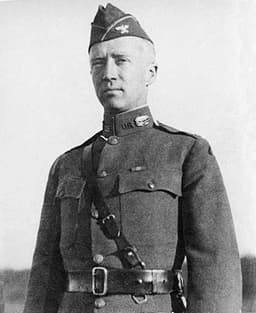
George S. Patton
General · Modern
60.7Total

Takeda Shingen
General · Modern
61.8Total
Basic Information
Born
1885
1521
Died
1945
1573
Era
Modern
Modern
Nationality
United States
Japan
Occupation
General
General
Civilization
Western
Eastern
Score Comparison
Military (10%)
79.9
74.7
Political (20%)
26.4
59.3
Influence (20%)
75.0
56.7
Legacy (20%)
72.0
55.0
Leadership (15%)
30.0
70.0
Strategy (15%)
75.0
70.0
TOTAL
60.7
61.8
George S. Patton — Complete Timeline
1943 AD
Command of II Corps in North AfricaWar◆ Major
Patton assumed command of II Corps after the U.S. defeat at Kasserine Pass. He restored discipline and led the corps to victory at El Guettar, his first major engagement against German forces in World War II.
World War IINorth AfricaCommand
Impact: regional
Liberation of SicilyWar◆ Major
Patton commanded the U.S. Seventh Army during the invasion of Sicily. His forces captured Palermo and raced to Messina, beating the British to the port. The campaign secured the island for the Allies.
World War IISicilyCampaign
Impact: regional
Slapping incident in SicilyPolitical Action◆ Major
Patton visited a field hospital and slapped a soldier diagnosed with battle fatigue, accusing him of cowardice. The incident caused a public scandal, nearly ended his career, and forced him to apologize publicly.
World War IIScandalDiscipline
Impact: nationaldestructive
1944 AD
Relief of BastogneWar
During the Battle of the Bulge, Patton rapidly turned his Third Army north and broke through German lines to relieve the besieged 101st Airborne Division at Bastogne. This action was critical to the Allied victory.
World War IIBattle of the BulgeRelief
Impact: regional
1945 AD
Crossing of the Rhine at OppenheimWar◆ Major
Patton's Third Army crossed the Rhine River at Oppenheim without aerial bombardment or a preliminary artillery barrage, achieving a surprise crossing. This allowed Allied forces to advance deep into Germany.
World War IIRhine CrossingAdvance
Impact: regional
Takeda Shingen — Complete Timeline
1547 AD
Promulgation of the Kōshū Hatto (Law Code of Kai Province)Reform◆ Major
Takeda Shingen issued the K
Legal CodeGovernanceKai Province
Impact: regionalconstructive
1550 AD
Construction of the Kōfu CastleOther
Takeda Shingen ordered the construction of K
CastleFortificationAdministration
Impact: regionalconstructive
1561 AD
Battle of Kawanakajima (Fourth)War◆ Major
Takeda Shingen fought his most famous battle against Uesugi Kenshin at the fourth Battle of Kawanakajima. The battle was a bloody stalemate with heavy losses on both sides. It cemented the rivalry between the two daimyo and is one of the most celebrated battles of the Sengoku period.
BattleRivalrySengoku Period
Impact: regional
1568 AD
Invasion of Suruga ProvinceWar◆ Major
Takeda Shingen invaded Suruga Province, the domain of his former ally Imagawa Yoshimoto. This expansionist move broke the longstanding alliance between the Takeda and Imagawa clans. It significantly increased Takeda territory and access to the sea, but also created new enemies.
InvasionExpansionAlliance Broken
Impact: regional
1573 AD
Battle of MikatagaharaWar◆ Major
Takeda Shingen defeated Tokugawa Ieyasu's forces at the Battle of Mikatagahara in Totomi Province. Shingen's superior cavalry tactics routed Ieyasu's army, forcing Ieyasu to flee. This victory brought Shingen close to the Tokugawa heartland and threatened the Oda-Tokugawa alliance.
BattleCavalryTokugawa Ieyasu
Impact: regional
Expert Analysis
Origins
George S. Patton was born on November 11, 1885, in San Gabriel, California, into a wealthy military family. His lineage included ancestors who fought in the American Revolution and Civil War. He attended the Virginia Military Institute and later West Point, graduating in 1909. Patton struggled with dyslexia but compensated with intense determination. He participated in the 1912 Olympics as a pentathlete and later served in the Pancho Villa Expedition.
Takeda Shingen was born on December 1, 1521, in Kai Province (modern Yamanashi Prefecture), as Harunobu Takeda, the first son of Takeda Nobutora, a powerful daimyo. His family ruled the region and were engaged in constant warfare during the Sengoku period. Shingen was educated in military tactics, governance, and the arts. He overthrew his father in 1541 to become the daimyo of Kai, demonstrating early ambition and ruthlessness.
Rise to Power
Patton's rise accelerated during World War I. He was assigned to the new U.S. Tank Corps and trained in France. He led the 304th Tank Brigade in the Meuse-Argonne Offensive, where he was wounded. After the war, he became a leading advocate for armored warfare. In World War II, he commanded the Western Task Force in Operation Torch (1942). His success in North Africa led to command of the II Corps after the U.S. defeat at Kasserine Pass. He restored discipline and led the corps to victory at El Guettar in March 1943.
Shingen's rise began when he exiled his father and took control of Kai. He quickly expanded his territory through strategic alliances and military campaigns. He fought the Murakami clan and later clashed with Uesugi Kenshin in the five Battles of Kawanakajima. The fourth battle in 1561 was a brutal stalemate but cemented Shingen's reputation. He also implemented the Kōshū Hatto legal code in 1547, centralizing power and improving governance.
Leadership & Governance
Patton's leadership was aggressive, demanding, and inspirational. He believed in constant offensive action and led from the front. He scored 79.9 in military but only 30.0 in leadership—a score reflecting his controversial style. He used profanity and fear to motivate troops, famously saying, "We want to get the enemy by the nose and kick him in the pants." In Sicily, he slapped a soldier diagnosed with battle fatigue, causing a scandal that nearly ended his career. His governance was weak; he focused on combat, not administration.
Shingen's leadership scored 70.0, reflecting his balanced approach. He was a skilled administrator who issued the Kōshū Hatto, which regulated land, taxes, and samurai behavior. He built Kōfu Castle as a center of power and promoted economic development through mining and trade. He was known for fair treatment of peasants and soldiers, which fostered loyalty. His military leadership combined aggressive tactics with strategic patience, as seen in his invasion of Suruga in 1568.
Triumph & Tragedy
Patton's greatest triumph was the relief of Bastogne during the Battle of the Bulge in December 1944. He turned his Third Army north in a rapid march, breaking through German lines to relieve the besieged 101st Airborne Division. He also crossed the Rhine at Oppenheim in March 1945 without artillery preparation, a daring move. His tragedy was the slapping incident in 1943, which cost him command of the U.S. Seventh Army and delayed his promotion. He was also criticized for his harsh language and occasional poor judgment.
Shingen's triumph was the Battle of Mikatagahara in 1573, where he decisively defeated Tokugawa Ieyasu using superior cavalry tactics. He also successfully expanded his domain to encompass several provinces. His tragedy was his death in 1573 from illness (possibly tuberculosis or a sniper wound) at age 53, when he was on the verge of marching toward Kyoto. He never achieved his goal of becoming shogun, and his clan declined under his successor Takeda Katsuyori.
Character & Destiny
Patton was a complex figure: a romantic who believed in reincarnation and the warrior ethos, yet a modernizer who championed tanks. His aggressive personality led to both battlefield successes and personal failures. He scored 75.0 in influence, showing his lasting impact on military culture. His character shaped his destiny—his bluntness earned him enemies, but his drive made him a legend.
Shingen was known as the "Tiger of Kai," a nickname reflecting his ferocity and cunning. He was a careful strategist who often avoided pitched battles unless advantageous. His character—patient, ruthless, and pragmatic—allowed him to build a strong state. His destiny was cut short by illness, but his legacy endured through the Takeda clan's martial traditions.
Legacy
Patton's legacy is immense in modern military thought. He is a symbol of armored warfare and aggressive leadership. His tactics influenced U.S. Army doctrine for decades. His scores: Military 79.9, Legacy 72.0. His memoirs and posthumous film "Patton" (1970) cemented his iconic status.
Shingen's legacy is more regional but significant. His Kōshū Hatto influenced later Tokugawa law. His military tactics, especially cavalry, were studied by later samurai. His scores: Military 74.7, Legacy 55.0. He remains a cultural symbol in Japan, appearing in films and video games.
Conclusion
While Shingen scored slightly higher overall (61.8 vs. 60.7), Patton's impact on global military history is greater. Patton's concepts of mobile armored warfare shaped 20th-century conflict, whereas Shingen's influence was confined to Japan's Sengoku period. Patton's legacy is more direct and widely recognized. Therefore, George S. Patton had greater historical impact.
Rankings
🥇
Takeda ShingenLeader
Mil: 74.7Pol: 59.3Inf: 56.7
61.8
🥈
George S. Patton
Mil: 79.9Pol: 26.4Inf: 75.0
60.7
+1.1 behind
How This Comparison Works
Algorithm
Each figure is scored on 6 dimensions (0—100 scale) based on structured historical data: Military (10%), Political (20%), Influence (20%), Legacy (20%), Leadership (15%), Strategy (15%). The weighted total produces the final ranking.
Data Sources
Scores are computed from structured sub-indicators in the database. Scale factors adjust for era (Ancient ×0.85, Modern ×1.0) and civilization size (Eastern ×1.05, Other ×0.80) to account for differences in population and military scale.
Maximum 3 Figures
Comparisons are limited to 2—3 figures to ensure readability and statistical meaningfulness.
Error Margins
±5 points per dimension — Sub-scores are derived from historical records with inherent uncertainty. Two figures within 5 points on a dimension should be considered roughly equivalent in that area.
Total Score Accuracy
±3 points overall — The weighted combination of 6 dimensions produces a total score with approximately ±3 points of uncertainty. Differences of less than 3 points are not statistically significant— the figures are effectively tied.
Known Limitations
- Historical records are incomplete and uneven across civilizations
- Figures from oral-tradition societies may be underrepresented
- Occupation labels can misclassify multi-role figures
- Scores measure capability and impact, not moral character
- Quantitative scoring is a comparison tool, not absolute truth
Capability Radar
Military (10%) — Battles & Warfare
Battles
85
75
Win Rate
88
70
Expansion
80
65
Political (20%) — Governance & Reform
Reform
5
65
Diplomacy
20
70
Economy
5
60
Influence (20%) — Cultural & Global Reach
Cultural
65
65
Global
65
50
Legacy (20%) — Historical Impact
Historical
70
70
Longevity
60
60
Leadership (15%) — Power & Stability
Tenure
10
60
Stability
10
55
Strategy (15%) — Tactics & Innovation
Strategy
78
80
Tactics
92
85
Reform
75
70
Similar Comparisons
Comments & Discussion
No comments yet. Be the first to share your thoughts!