Loading...
George S. Patton vs Napoleon Bonaparte
Napoleon Bonaparte leads by 10.2 pts · 2 figures compared
…
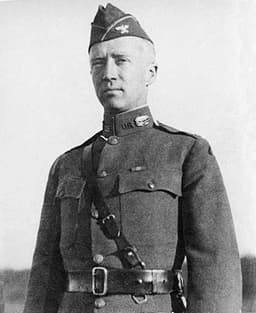
George S. Patton
General · Modern
60.7Total

Napoleon Bonaparte
General · Modern
70.9Total
Basic Information
Born
1885
1769
Died
1945
1821
Era
Modern
Modern
Nationality
United States
France
Occupation
General
General
Civilization
Western
Western
Score Comparison
Military (10%)
79.9
94.0
Political (20%)
26.4
72.0
Influence (20%)
75.0
40.0
Legacy (20%)
72.0
80.0
Leadership (15%)
30.0
78.0
Strategy (15%)
75.0
90.0
TOTAL
60.7
70.9
George S. Patton — Complete Timeline
1943 AD
Command of II Corps in North AfricaWar◆ Major
Patton assumed command of II Corps after the U.S. defeat at Kasserine Pass. He restored discipline and led the corps to victory at El Guettar, his first major engagement against German forces in World War II.
World War IINorth AfricaCommand
Impact: regional
Liberation of SicilyWar◆ Major
Patton commanded the U.S. Seventh Army during the invasion of Sicily. His forces captured Palermo and raced to Messina, beating the British to the port. The campaign secured the island for the Allies.
World War IISicilyCampaign
Impact: regional
Slapping incident in SicilyPolitical Action◆ Major
Patton visited a field hospital and slapped a soldier diagnosed with battle fatigue, accusing him of cowardice. The incident caused a public scandal, nearly ended his career, and forced him to apologize publicly.
World War IIScandalDiscipline
Impact: nationaldestructive
1944 AD
Relief of BastogneWar
During the Battle of the Bulge, Patton rapidly turned his Third Army north and broke through German lines to relieve the besieged 101st Airborne Division at Bastogne. This action was critical to the Allied victory.
World War IIBattle of the BulgeRelief
Impact: regional
1945 AD
Crossing of the Rhine at OppenheimWar◆ Major
Patton's Third Army crossed the Rhine River at Oppenheim without aerial bombardment or a preliminary artillery barrage, achieving a surprise crossing. This allowed Allied forces to advance deep into Germany.
World War IIRhine CrossingAdvance
Impact: regional
Napoleon Bonaparte — Complete Timeline
1799 AD
Coup of 18 BrumaireOther◆ Major
Napoleon Bonaparte, with support from his brother Lucien and key political figures, overthrew the Directory in a bloodless coup. He established the Consulate with himself as First Consul, effectively becoming the ruler of France. This event ended the French Revolution's most unstable period.
French RevolutionCoupRise to Power
Impact: regional
1804 AD
Promulgation of the Napoleonic CodeOther◆ Major
Napoleon enacted the Civil Code of the French, known as the Napoleonic Code, a comprehensive set of laws that replaced the fragmented feudal legal systems. The code established legal equality, protected property rights, and secularized law. It became the basis for legal systems in many European and world countries.
Legal ReformNapoleonic CodeCivil Law
Impact: globalconstructive
1805 AD
Battle of AusterlitzWar◆ Major
Napoleon's Grande Arm
Napoleonic WarsBattleDecisive Victory
Impact: global
1812 AD
Invasion of RussiaWar◆ Major
Napoleon led the Grande Arm
Napoleonic WarsInvasionDisaster
Impact: globaldestructive
1815 AD
Battle of WaterlooWar◆ Major
Napoleon's French army was defeated by the combined forces of the Duke of Wellington's Anglo-Allied army and Gebhard Leberecht von Bl
Napoleonic WarsBattleFinal Defeat
Impact: globaldestructive
Expert Analysis
Origins
George Smith Patton Jr. was born on November 11, 1885, in San Gabriel, California, into a wealthy family with a long military tradition. He attended the Virginia Military Institute and later West Point, graduating in 1909. Patton was an avid reader of military history and believed in reincarnation, often claiming to have fought in previous battles. His early career included participation in the 1912 Olympics (modern pentathlon) and service in the Punitive Expedition against Pancho Villa.
Napoleon Bonaparte was born on August 15, 1769, in Ajaccio, Corsica, to a modest noble family. He studied at military schools in mainland France, graduating from the École Militaire in 1785. Napoleon rose through the ranks during the French Revolution, quickly distinguishing himself with his artillery skills and strategic acumen. His Corsican background and revolutionary fervor shaped his ambition.
Rise to Power
Patton's rise came during World War II. He commanded the Western Task Force in Operation Torch (1942), then took over II Corps after the U.S. defeat at Kasserine Pass. His aggressive leadership restored discipline and led to victory at El Guettar in March 1943. He later commanded the Seventh Army in the invasion of Sicily, capturing Palermo and racing to Messina. His fame grew, but the slapping incident in August 1943 nearly ended his career. However, he was recalled for the Normandy invasion, commanding the Third Army in the breakout from the beachhead.
Napoleon's ascent was meteoric. He first gained fame for his role in the Siege of Toulon (1793), where he devised a plan to capture the port. Promoted to brigadier general, he later commanded the Army of Italy in 1796, achieving stunning victories against the Austrians. In 1799, he participated in the Coup of 18 Brumaire, overthrowing the Directory and becoming First Consul. By 1804, he crowned himself Emperor of the French.
Leadership & Governance
Patton was a tactical commander known for his aggressive, mobile warfare style. He emphasized speed, surprise, and relentless pursuit. His speech to the Third Army on the eve of D-Day exemplifies his motivational approach: "No bastard ever won a war by dying for his country. He won it by making the other poor dumb bastard die for his country." Patton's leadership score of 30.0 reflects his lack of political skill and his controversial personal conduct.
Napoleon was both a military commander and a statesman. He centralized the French government, reformed the education system, and established the Napoleonic Code, which influenced legal systems worldwide. His political score of 72.0 indicates his ability to govern, though his authoritarian rule led to conflicts. He created the Grande Armée, which revolutionized warfare with corps organization and rapid movement.
Triumph & Tragedy
Patton's greatest triumph was the relief of Bastogne during the Battle of the Bulge in December 1944. He turned his Third Army north in a rapid maneuver, breaking through German lines to relieve the besieged 101st Airborne Division. His crossing of the Rhine at Oppenheim in March 1945 was another success. His tragedy was the slapping incident, which damaged his reputation and likely cost him command of an army group. He died in a car accident in December 1945, just months after the war ended.
Napoleon's triumphs include the Battle of Austerlitz (1805), where he defeated the combined Russian and Austrian armies, and the Napoleonic Code. His invasion of Russia in 1812 was his greatest tragedy: the Grande Armée of over 600,000 men was destroyed by the Russian winter and scorched-earth tactics, with only about 100,000 returning. His final defeat at Waterloo in 1815 led to his exile and death on Saint Helena.
Character & Destiny
Patton was flamboyant, confrontational, and deeply superstitious. He believed in his own destiny and often clashed with superiors, including General Dwight Eisenhower. His aggressive nature led to his greatest victories but also his downfall. He scored 75.0 in strategy, indicating his tactical brilliance, but his leadership score of 30.0 highlights his inability to manage his own temperament.
Napoleon was ambitious, charismatic, and a workaholic. He had a genius for strategy (90.0) but was overconfident, leading to his disastrous Russian campaign. His political skill (72.0) allowed him to build an empire, but his refusal to compromise led to his eventual downfall. Historians note that his character—both visionary and autocratic—shaped his destiny.
Legacy
Patton's legacy is as a master of armored warfare. His tactics influenced U.S. military doctrine for decades. He is remembered as a symbol of American military aggression and effectiveness. His scores: military 79.9, influence 75.0, legacy 72.0. He remains a controversial figure due to the slapping incident, but his role in defeating Nazi Germany is undisputed.
Napoleon's legacy is vast: he reshaped Europe through conquest and reform. The Napoleonic Code influenced civil law in many countries. His military innovations were studied by future generals. His scores: military 94.0, political 72.0, influence 40.0 (lower due to his eventual defeat), legacy 80.0. He is remembered as one of the greatest military commanders in history.
Conclusion
By the numbers, Napoleon Bonaparte (total score 70.9) surpasses George S. Patton (total score 60.7) by 10.2 points. Napoleon's impact on military strategy, law, and governance was global and enduring. Patton, while a brilliant tactical commander, operated within a larger Allied framework and his influence was more limited. Napoleon's failures were grander, but his successes reshaped Europe. Therefore, Napoleon Bonaparte had greater historical impact.
Rankings
🥇
Napoleon BonaparteLeader
Mil: 94.0Pol: 72.0Inf: 40.0
70.9
🥈
George S. Patton
Mil: 79.9Pol: 26.4Inf: 75.0
60.7
+10.2 behind
How This Comparison Works
Algorithm
Each figure is scored on 6 dimensions (0—100 scale) based on structured historical data: Military (10%), Political (20%), Influence (20%), Legacy (20%), Leadership (15%), Strategy (15%). The weighted total produces the final ranking.
Data Sources
Scores are computed from structured sub-indicators in the database. Scale factors adjust for era (Ancient ×0.85, Modern ×1.0) and civilization size (Eastern ×1.05, Other ×0.80) to account for differences in population and military scale.
Maximum 3 Figures
Comparisons are limited to 2—3 figures to ensure readability and statistical meaningfulness.
Error Margins
±5 points per dimension — Sub-scores are derived from historical records with inherent uncertainty. Two figures within 5 points on a dimension should be considered roughly equivalent in that area.
Total Score Accuracy
±3 points overall — The weighted combination of 6 dimensions produces a total score with approximately ±3 points of uncertainty. Differences of less than 3 points are not statistically significant— the figures are effectively tied.
Known Limitations
- Historical records are incomplete and uneven across civilizations
- Figures from oral-tradition societies may be underrepresented
- Occupation labels can misclassify multi-role figures
- Scores measure capability and impact, not moral character
- Quantitative scoring is a comparison tool, not absolute truth
Capability Radar
Military (10%) — Battles & Warfare
Battles
85
95
Win Rate
88
90
Expansion
80
95
Political (20%) — Governance & Reform
Reform
5
95
Diplomacy
20
80
Economy
5
85
Influence (20%) — Cultural & Global Reach
Cultural
65
85
Global
65
90
Legacy (20%) — Historical Impact
Historical
70
95
Longevity
60
90
Leadership (15%) — Power & Stability
Tenure
10
85
Stability
10
70
Strategy (15%) — Tactics & Innovation
Strategy
78
95
Tactics
92
98
Reform
75
92
Similar Comparisons
Comments & Discussion
No comments yet. Be the first to share your thoughts!