Loading...
George S. Patton vs Julius Caesar
Julius Caesar leads by 22.1 pts · 2 figures compared
…
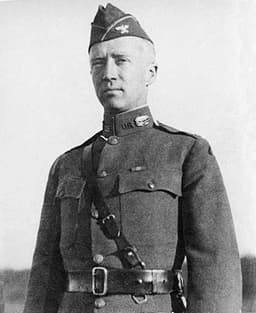
George S. Patton
General · Modern
60.7Total

Julius Caesar
General · Ancient
82.8Total
Basic Information
Born
1885
-100
Died
1945
-44
Era
Modern
Ancient
Nationality
United States
Roman Republic
Occupation
General
General
Civilization
Western
Western
Score Comparison
Military (10%)
79.9
88.0
Political (20%)
26.4
78.0
Influence (20%)
75.0
85.0
Legacy (20%)
72.0
82.0
Leadership (15%)
30.0
80.0
Strategy (15%)
75.0
85.0
TOTAL
60.7
82.8
George S. Patton — Complete Timeline
1943 AD
Command of II Corps in North AfricaWar◆ Major
Patton assumed command of II Corps after the U.S. defeat at Kasserine Pass. He restored discipline and led the corps to victory at El Guettar, his first major engagement against German forces in World War II.
World War IINorth AfricaCommand
Impact: regional
Liberation of SicilyWar◆ Major
Patton commanded the U.S. Seventh Army during the invasion of Sicily. His forces captured Palermo and raced to Messina, beating the British to the port. The campaign secured the island for the Allies.
World War IISicilyCampaign
Impact: regional
Slapping incident in SicilyPolitical Action◆ Major
Patton visited a field hospital and slapped a soldier diagnosed with battle fatigue, accusing him of cowardice. The incident caused a public scandal, nearly ended his career, and forced him to apologize publicly.
World War IIScandalDiscipline
Impact: nationaldestructive
1944 AD
Relief of BastogneWar
During the Battle of the Bulge, Patton rapidly turned his Third Army north and broke through German lines to relieve the besieged 101st Airborne Division at Bastogne. This action was critical to the Allied victory.
World War IIBattle of the BulgeRelief
Impact: regional
1945 AD
Crossing of the Rhine at OppenheimWar◆ Major
Patton's Third Army crossed the Rhine River at Oppenheim without aerial bombardment or a preliminary artillery barrage, achieving a surprise crossing. This allowed Allied forces to advance deep into Germany.
World War IIRhine CrossingAdvance
Impact: regional
Julius Caesar — Complete Timeline
58 BC
Gallic WarsWar◆ Major
Caesar, as proconsul of Gaul, launched a series of campaigns that conquered all of Gaul (modern France, Belgium, and parts of Switzerland). He fought numerous battles, including against the Helvetii, the Belgae, and the Gallic chieftain Vercingetorix. The wars brought immense wealth and a loyal army to Caesar.
Gallic WarsConquestRoman Expansion
Impact: regional
49 BC
Crossing the RubiconPolitical Action◆ Major
Caesar led Legio XIII across the Rubicon River into Italy, defying the Roman Senate's order to disband his army. This act triggered a civil war against Pompey and the Optimates, ultimately leading to Caesar's dictatorship and the end of the Roman Republic.
Roman Civil WarEnd of RepublicPower Struggle
Impact: global
48 BC
Battle of PharsalusWar◆ Major
Caesar's outnumbered army defeated the larger forces of Pompey the Great at Pharsalus in Greece. Caesar's tactical use of a reserve line to counter Pompey's cavalry charge proved decisive. Pompey fled to Egypt, where he was assassinated, leaving Caesar as the undisputed master of the Roman world.
Roman Civil WarBattleDecisive Victory
Impact: regional
44 BC
Appointment as Dictator for LifePolitical Action◆ Major
The Roman Senate appointed Caesar dictator perpetuo (dictator for life), granting him unprecedented personal power. This move concentrated military, legislative, and judicial authority in one person, effectively ending the Roman Republic's traditional system of checks and balances and alarming many senators.
DictatorshipEnd of RepublicPower Consolidation
Impact: regionaldestructive
Assassination on the Ides of MarchPolitical Action◆ Major
A group of Roman senators, led by Marcus Junius Brutus and Gaius Cassius Longinus, stabbed Caesar to death at a meeting of the Senate in the Theatre of Pompey. The assassination was intended to restore the Republic, but instead triggered another civil war that led to the rise of the Roman Empire.
AssassinationRoman PoliticsEnd of Republic
Impact: globaldestructive
Expert Analysis
Origins
George Smith Patton Jr. was born on November 11, 1885, in San Gabriel, California, into a wealthy military family with a long tradition of service. He attended the Virginia Military Institute and later West Point, graduating in 1909. Patton's early career included participation in the 1912 Stockholm Olympics (modern pentathlon) and service in the Punitive Expedition against Pancho Villa. His formative experiences emphasized cavalry tactics and aggressive personal leadership.
Gaius Julius Caesar was born on July 12, 100 BCE, into the patrician Julian clan in Rome. His family claimed descent from the goddess Venus. Caesar received a privileged education in rhetoric, philosophy, and military arts. His early life was marked by political turmoil: he fled Rome during Sulla's proscriptions and served in the military in Asia. These experiences forged his ambition and strategic acumen.
Rise to Power
Patton's rise came during World War II. After commanding the Western Task Force in the invasion of North Africa (Operation Torch, November 1942), he assumed command of II Corps following the U.S. defeat at Kasserine Pass in March 1943. He restored discipline and led the corps to victory at El Guettar. His reputation grew with the successful invasion of Sicily (July 1943), where his Seventh Army captured Palermo and raced to Messina. However, the slapping incident in August 1943 nearly ended his career. He was sidelined until given command of the Third Army in January 1944, which he led across France and into Germany.
Caesar's political ascent began with election as military tribune and later quaestor. He formed the First Triumvirate with Pompey and Crassus in 60 BCE, securing the governorship of Gaul. His conquest of Gaul (58-50 BCE) made him immensely popular and wealthy. The Senate ordered him to disband his army, but he crossed the Rubicon River in 49 BCE, igniting a civil war. He defeated Pompey at Pharsalus in 48 BCE and subsequently consolidated power, becoming dictator for life in 44 BCE.
Leadership & Governance
Patton's leadership was aggressive and personal. He believed in leading from the front, often visiting frontline units. He was a strict disciplinarian, demanding proper uniforms and saluting, which he credited with restoring morale to II Corps. His command style emphasized speed and audacity, as seen in the relief of Bastogne during the Battle of the Bulge (December 1944), where he turned his Third Army 90 degrees in 48 hours. Politically, Patton was out of his depth; his public comments caused friction with allies and superiors.
Caesar combined military genius with political skill. He implemented reforms including land redistribution to veterans, calendar reform (Julian calendar), and granting citizenship to provincials. He centralized power but maintained popular support through public works and grain subsidies. His leadership style was inclusive yet autocratic: he promoted talented men regardless of birth, but his concentration of power alienated the Senate. Caesar's political score of 78.0 reflects his ability to govern, while Patton's 59.5 shows his limitations.
Triumph & Tragedy
Patton's greatest triumph was the relief of Bastogne, a turning point in the Battle of the Bulge. His Third Army covered over 100 miles in harsh winter conditions to break the German encirclement. Another success was the crossing of the Rhine at Oppenheim on March 22, 1945, a surprise assault without preliminary bombardment that captured 19,000 German prisoners. His tragedy was the slapping incident, which cost him command of the Seventh Army and nearly ended his career. He also died in a car accident on December 21, 1945, just months after the war.
Caesar's greatest triumph was the conquest of Gaul, which added a vast territory to Rome and demonstrated his military brilliance. His victory at Pharsalus against Pompey's larger army cemented his dominance. His tragedy was his assassination on the Ides of March (March 15, 44 BCE), which plunged Rome into another civil war. He failed to secure his legacy by grooming a successor or reforming the Republic sufficiently to survive his death.
Character & Destiny
Patton was impulsive, charismatic, and fiercely competitive. He believed in reincarnation and saw himself as a warrior from past lives. His temper and outspokenness often created problems, yet his troops admired his courage. He scored 77.8 in leadership, reflecting his ability to inspire, but his strategic score of 77.2 shows he was more a brilliant tactician than a grand strategist.
Caesar was calculating, ambitious, and intellectually superior. He wrote commentaries on his campaigns, blending self-promotion with historical record. His clemency toward defeated enemies was a political tool, but his refusal to disband his army led to his downfall. His strategic score of 88.0 and political score of 78.0 show a well-rounded genius. His destiny was shaped by his overreach: the title "dictator for life" provoked his assassination.
Legacy
Patton's legacy is that of a master of armored warfare. His methods influenced modern military doctrine, particularly in rapid exploitation. He is remembered as a warrior archetype, though his controversial incidents are often overlooked. His total score of 71.9 reflects a significant but limited impact, primarily in military tactics.
Caesar's legacy is foundational: his name became synonymous with imperial rule (Kaiser, Tsar). The Julian calendar lasted 1,600 years. His conquests spread Roman culture across Europe. His political reforms set precedents for centralized governance. His total score of 83.3 reflects his transformative impact on Western civilization.
Conclusion
Julius Caesar had greater impact than George S. Patton. Caesar's total score of 83.3 surpasses Patton's 71.9 by 11.4 points. While Patton was a brilliant tank commander who excelled in World War II, his influence was confined to military tactics and a brief historical moment. Caesar, however, reshaped the political and cultural landscape of Europe for centuries. His military conquests, political reforms, and enduring legacy in language and governance place him among the most influential figures in history. Patton was a master of war; Caesar was a maker of history.
Rankings
🥇
Julius CaesarLeader
Mil: 88.0Pol: 78.0Inf: 85.0
82.8
🥈
George S. Patton
Mil: 79.9Pol: 26.4Inf: 75.0
60.7
+22.1 behind
How This Comparison Works
Algorithm
Each figure is scored on 6 dimensions (0—100 scale) based on structured historical data: Military (10%), Political (20%), Influence (20%), Legacy (20%), Leadership (15%), Strategy (15%). The weighted total produces the final ranking.
Data Sources
Scores are computed from structured sub-indicators in the database. Scale factors adjust for era (Ancient ×0.85, Modern ×1.0) and civilization size (Eastern ×1.05, Other ×0.80) to account for differences in population and military scale.
Maximum 3 Figures
Comparisons are limited to 2—3 figures to ensure readability and statistical meaningfulness.
Error Margins
±5 points per dimension — Sub-scores are derived from historical records with inherent uncertainty. Two figures within 5 points on a dimension should be considered roughly equivalent in that area.
Total Score Accuracy
±3 points overall — The weighted combination of 6 dimensions produces a total score with approximately ±3 points of uncertainty. Differences of less than 3 points are not statistically significant— the figures are effectively tied.
Known Limitations
- Historical records are incomplete and uneven across civilizations
- Figures from oral-tradition societies may be underrepresented
- Occupation labels can misclassify multi-role figures
- Scores measure capability and impact, not moral character
- Quantitative scoring is a comparison tool, not absolute truth
Capability Radar
Military (10%) — Battles & Warfare
Battles
85
95
Win Rate
88
92
Expansion
80
97
Political (20%) — Governance & Reform
Reform
5
90
Diplomacy
20
85
Economy
5
82
Influence (20%) — Cultural & Global Reach
Cultural
65
88
Global
65
94
Legacy (20%) — Historical Impact
Historical
70
95
Longevity
60
96
Leadership (15%) — Power & Stability
Tenure
10
75
Stability
10
60
Strategy (15%) — Tactics & Innovation
Strategy
78
94
Tactics
92
96
Reform
75
88
Similar Comparisons
Comments & Discussion
No comments yet. Be the first to share your thoughts!