Loading...
This comparison has not been analyzed yet.
One-time AI generation (~1 minute). Scores and timeline are already available below.
George Monck vs Netaji Palkar
George Monck leads by 10.0 pts · 2 figures compared
…
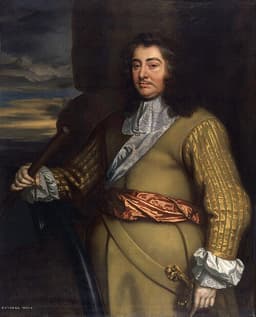
George Monck
General · Modern
55.2Total
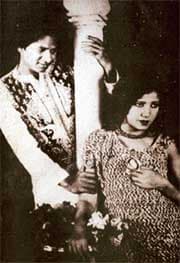
Netaji Palkar
General · Modern
45.2Total
Basic Information
Born
1608
1620
Died
1670
1681
Era
Modern
Modern
Nationality
England
India
Occupation
General
General
Civilization
Western
Indian
Score Comparison
Military (10%)
30.0
30.0
Political (20%)
45.0
32.2
Influence (20%)
59.0
51.8
Legacy (20%)
52.0
43.3
Leadership (15%)
78.0
50.7
Strategy (15%)
60.0
60.0
TOTAL
55.2
45.2
George Monck — Complete Timeline
1650 AD
Battle of DunbarWar◆ Major
George Monck commanded a parliamentary army at the Battle of Dunbar, defeating a Scottish force loyal to Charles II. The victory secured English control over Scotland and demonstrated Monck's military effectiveness.
BattleEnglish Civil WarScotland
Impact: regional
1660 AD
March on LondonPolitical Action
George Monck marched his army from Scotland to London, where he forced the Rump Parliament to readmit excluded members and call for new elections. This action paved the way for the Restoration of the monarchy.
RestorationPolitical ActionMonarchy
Impact: national
Restoration of Charles IIPolitical Action
Monck facilitated the return of Charles II from exile, negotiating the terms of the Restoration. He was appointed Captain-General of the army and created Duke of Albemarle for his role in restoring the monarchy.
RestorationCharles IIMonarchy
Impact: nationalconstructive
Netaji Palkar — Complete Timeline
1659 AD
Appointed as Senapati of the Maratha forcesPolitical Action◆ Major
Netaji Palkar was appointed as the Senapati (commander-in-chief) of the Maratha army under Shivaji. He led Maratha forces in numerous campaigns against the Mughal Empire and the Bijapur Sultanate.
MarathaAppointmentMilitary
Impact: regionalconstructive
1661 AD
Battle of UmberkhindWar◆ Major
Netaji Palkar led Maratha forces in the Battle of Umberkhind, where they used guerrilla tactics to defeat a larger Mughal army under Kartalab Khan. This victory secured Maratha control over the Konkan region.
BattleMarathaGuerrilla
Impact: regionalconstructive
1665 AD
Defection to the Mughal EmpirePolitical Action◆ Major
After the Treaty of Purandar, Netaji Palkar defected to the Mughal Empire and converted to Islam, taking the name Muhammad Quli Khan. He served as a Mughal general against the Marathas for several years.
DefectionConversionMughal
Impact: regionaldestructive
1676 AD
Return to the Maratha foldPolitical Action
Netaji Palkar returned to the Maratha side after being pardoned by Shivaji. He was reinstated as a Maratha commander and participated in campaigns in the Carnatic region.
ReturnMarathaPardon
Impact: regionalconstructive
This comparison has not been analyzed yet.
One-time AI generation (~1 minute). Scores and timeline are already available below.
Rankings
🥇
George MonckLeader
Mil: 30.0Pol: 45.0Inf: 59.0
55.2
🥈
Netaji Palkar
Mil: 30.0Pol: 32.2Inf: 51.8
45.2
+10.0 behind
How This Comparison Works
Algorithm
Each figure is scored on 6 dimensions (0—100 scale) based on structured historical data: Military (10%), Political (20%), Influence (20%), Legacy (20%), Leadership (15%), Strategy (15%). The weighted total produces the final ranking.
Data Sources
Scores are computed from structured sub-indicators in the database. Scale factors adjust for era (Ancient ×0.85, Modern ×1.0) and civilization size (Eastern ×1.05, Other ×0.80) to account for differences in population and military scale.
Maximum 3 Figures
Comparisons are limited to 2—3 figures to ensure readability and statistical meaningfulness.
Error Margins
±5 points per dimension — Sub-scores are derived from historical records with inherent uncertainty. Two figures within 5 points on a dimension should be considered roughly equivalent in that area.
Total Score Accuracy
±3 points overall — The weighted combination of 6 dimensions produces a total score with approximately ±3 points of uncertainty. Differences of less than 3 points are not statistically significant— the figures are effectively tied.
Known Limitations
- Historical records are incomplete and uneven across civilizations
- Figures from oral-tradition societies may be underrepresented
- Occupation labels can misclassify multi-role figures
- Scores measure capability and impact, not moral character
- Quantitative scoring is a comparison tool, not absolute truth
Capability Radar
Military (10%) — Battles & Warfare
Battles
45
45
Win Rate
55
40
Expansion
20
35
Political (20%) — Governance & Reform
Reform
55
10
Diplomacy
70
25
Economy
40
15
Influence (20%) — Cultural & Global Reach
Cultural
30
25
Global
35
15
Legacy (20%) — Historical Impact
Historical
60
30
Longevity
40
20
Leadership (15%) — Power & Stability
Tenure
65
30
Stability
75
20
Strategy (15%) — Tactics & Innovation
Strategy
60
45
Tactics
50
50
Reform
30
20
Similar Comparisons
Comments & Discussion
No comments yet. Be the first to share your thoughts!