Loading...
Abd al-Karim Qasim vs George Monck
Abd al-Karim Qasim leads by 1.1 pts · 2 figures compared
…

Abd al-Karim Qasim
General · Modern
56.3Total
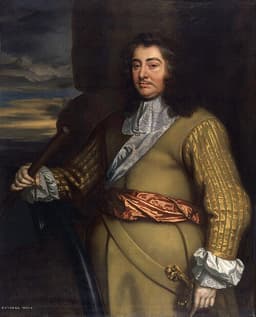
George Monck
General · Modern
55.2Total
Basic Information
Born
1914
1608
Died
1963
1670
Era
Modern
Modern
Nationality
Iraq
England
Occupation
General
General
Civilization
Middle Eastern
Western
Score Comparison
Military (10%)
45.0
30.0
Political (20%)
68.0
45.0
Influence (20%)
56.4
59.0
Legacy (20%)
46.7
52.0
Leadership (15%)
65.7
78.0
Strategy (15%)
60.0
60.0
TOTAL
56.3
55.2
Abd al-Karim Qasim — Complete Timeline
1958 AD
14 July RevolutionPolitical Action
Qasim, leading the Free Officers movement, orchestrated a military coup that overthrew King Faisal II and the Hashemite monarchy. The royal family was executed, and Iraq was declared a republic with Qasim as Prime Minister.
CoupRepublicIraq
Impact: national
1959 AD
Withdrawal from the Baghdad PactPolitical Action◆ Major
Qasim withdrew Iraq from the Baghdad Pact, shifting the country's foreign policy away from Western alignment. He pursued a neutralist stance and improved relations with the Soviet Union, altering the regional balance of power.
Foreign PolicyCold WarNeutralism
Impact: regional
1961 AD
Kuwait crisisPolitical Action◆ Major
Qasim claimed sovereignty over Kuwait shortly after its independence from Britain, leading to a military standoff. British forces intervened to protect Kuwait, and Qasim's claim was widely condemned, isolating Iraq diplomatically.
Territorial DisputeKuwaitIsolation
Impact: regionaldestructive
1963 AD
Overthrow and executionPolitical Action
Qasim was overthrown in a Ba'athist coup led by Abdul Salam Arif and Ahmed Hassan al-Bakr. After a brief trial, he was executed by firing squad. His death ended the first republican government of Iraq and ushered in Ba'athist rule.
CoupExecutionBa'ath Party
Impact: nationaltragic
George Monck — Complete Timeline
1650 AD
Battle of DunbarWar◆ Major
George Monck commanded a parliamentary army at the Battle of Dunbar, defeating a Scottish force loyal to Charles II. The victory secured English control over Scotland and demonstrated Monck's military effectiveness.
BattleEnglish Civil WarScotland
Impact: regional
1660 AD
March on LondonPolitical Action
George Monck marched his army from Scotland to London, where he forced the Rump Parliament to readmit excluded members and call for new elections. This action paved the way for the Restoration of the monarchy.
RestorationPolitical ActionMonarchy
Impact: national
Restoration of Charles IIPolitical Action
Monck facilitated the return of Charles II from exile, negotiating the terms of the Restoration. He was appointed Captain-General of the army and created Duke of Albemarle for his role in restoring the monarchy.
RestorationCharles IIMonarchy
Impact: nationalconstructive
Expert Analysis
Origins
**Abd al-Karim Qasim** was born in 1914 in Baghdad, Iraq, into a modest Sunni Muslim family. His father was a carpenter, and his mother was a Shia Kurd. He graduated from the Iraqi Military Academy in 1934 and later attended the Staff College in Baghdad. His early career included service in the Anglo-Iraqi War of 1941 and the 1948 Arab-Israeli War, where he gained combat experience.
**George Monck** was born in 1608 in Devon, England, into a gentry family. He served as a soldier in the Dutch and English armies, fighting in the Wars of the Three Kingdoms. Initially a Royalist, he was captured by Parliamentarians and later switched sides. By 1650, he commanded a regiment in Cromwell's army.
Rise to Power
**Qasim** rose to prominence as the leader of the Free Officers, a secret military organization inspired by Egypt's 1952 revolution. On July 14, 1958, he orchestrated the 14 July Revolution, a swift coup that overthrew King Faisal II and the Hashemite monarchy. The coup resulted in the deaths of the royal family and Prime Minister Nuri al-Said. Qasim became Prime Minister and de facto ruler of Iraq, holding both military and political power.
**Monck** gained recognition for his military skill during the Cromwellian conquest of Scotland. He commanded the parliamentary army at the Battle of Dunbar in 1650, defeating a Scottish force loyal to Charles II. After Cromwell's death, political instability ensued. In 1660, Monck marched his army from Scotland to London, where he forced the Rump Parliament to readmit excluded members and call for new elections. This paved the way for the Restoration.
Leadership & Governance
**Qasim** pursued a neutralist foreign policy, withdrawing Iraq from the pro-Western Baghdad Pact in 1959. He improved relations with the Soviet Union and China, receiving economic and military aid. Domestically, he enacted land reforms, limiting land ownership and redistributing land to peasants. He also granted women's rights, including a progressive personal status law. However, his rule was authoritarian; he suppressed political opposition, including Kurdish uprisings and communist groups. His leadership style was cautious and indecisive, often failing to consolidate power.
**Monck** was pragmatic and loyal to the parliamentary cause until he saw the need for stability. As Captain-General under Charles II, he helped demobilize the army and restore royal authority. He was created Duke of Albemarle and served as a key advisor. His governance was focused on order and reconciliation, avoiding extreme Puritan or Royalist policies.
Triumph & Tragedy
**Qasim's greatest success** was overthrowing the monarchy and establishing a republic, ending centuries of Hashemite rule. He also successfully navigated the Kuwait crisis in 1961, though he failed to annex Kuwait after British intervention. His greatest failure was his inability to build a stable political system. His regime became increasingly isolated, and he alienated key allies. In 1963, he was overthrown by a Ba'athist coup led by Abdul Salam Arif and executed by firing squad. His death marked the end of his reforms.
**Monck's greatest success** was engineering the Restoration of Charles II in 1660, ending the republican experiment and restoring monarchy. This ensured political stability and prevented another civil war. His greatest failure was his earlier role in the Cromwellian regime, which he later helped dismantle. He died in 1670, honored as a national hero.
Character & Destiny
**Qasim** was known for his austerity and dedication to Iraqi independence. He was a nationalist but lacked charisma and political acumen. His indecisiveness and failure to build alliances led to his downfall. Historians note his score of 68.0 in political skills, but his leadership score of 65.7 was undermined by poor judgment.
**Monck** was a calculating opportunist, willing to switch sides to achieve stability. His loyalty was to order rather than ideology. His leadership score of 78.0 reflects his ability to command respect and execute decisive actions. He died peacefully, having achieved his goals.
Legacy
**Qasim** is remembered as a revolutionary who ended the monarchy but failed to establish a durable republic. His land reforms and women's rights had lasting effects, but his legacy is overshadowed by the subsequent decades of instability. His influence score of 56.4 reflects his impact on Iraqi politics, but his legacy score is 46.7.
**Monck** is remembered as the architect of the Restoration, which shaped English constitutional development. His actions helped establish the principle that the monarchy would rule with Parliament. His legacy score of 52.0 is higher due to the enduring nature of the Restoration settlement.
Conclusion
While Qasim scored higher overall (56.3 vs. 55.2), Monck's impact was more lasting. Qasim's revolution was dramatic but short-lived, whereas Monck's restoration provided stability for centuries. Monck's leadership score of 78.0 and legacy score of 52.0 indicate a more effective and enduring contribution. Qasim's political score of 68.0 is higher, but his inability to secure his own regime limits his overall impact. Therefore, George Monck had a greater long-term historical impact.
Rankings
🥇
Abd al-Karim QasimLeader
Mil: 45.0Pol: 68.0Inf: 56.4
56.3
🥈
George Monck
Mil: 30.0Pol: 45.0Inf: 59.0
55.2
+1.1 behind
How This Comparison Works
Algorithm
Each figure is scored on 6 dimensions (0—100 scale) based on structured historical data: Military (10%), Political (20%), Influence (20%), Legacy (20%), Leadership (15%), Strategy (15%). The weighted total produces the final ranking.
Data Sources
Scores are computed from structured sub-indicators in the database. Scale factors adjust for era (Ancient ×0.85, Modern ×1.0) and civilization size (Eastern ×1.05, Other ×0.80) to account for differences in population and military scale.
Maximum 3 Figures
Comparisons are limited to 2—3 figures to ensure readability and statistical meaningfulness.
Error Margins
±5 points per dimension — Sub-scores are derived from historical records with inherent uncertainty. Two figures within 5 points on a dimension should be considered roughly equivalent in that area.
Total Score Accuracy
±3 points overall — The weighted combination of 6 dimensions produces a total score with approximately ±3 points of uncertainty. Differences of less than 3 points are not statistically significant— the figures are effectively tied.
Known Limitations
- Historical records are incomplete and uneven across civilizations
- Figures from oral-tradition societies may be underrepresented
- Occupation labels can misclassify multi-role figures
- Scores measure capability and impact, not moral character
- Quantitative scoring is a comparison tool, not absolute truth
Capability Radar
Military (10%) — Battles & Warfare
Battles
30
45
Win Rate
35
55
Expansion
10
20
Political (20%) — Governance & Reform
Reform
60
55
Diplomacy
40
70
Economy
50
40
Influence (20%) — Cultural & Global Reach
Cultural
30
30
Global
20
35
Legacy (20%) — Historical Impact
Historical
45
60
Longevity
25
40
Leadership (15%) — Power & Stability
Tenure
45
65
Stability
20
75
Strategy (15%) — Tactics & Innovation
Strategy
30
60
Tactics
25
50
Reform
40
30
Similar Comparisons
Comments & Discussion
No comments yet. Be the first to share your thoughts!