Loading...
Colin Campbell vs George Monck
George Monck leads by 7.4 pts · 2 figures compared
…
Colin Campbell
General · Modern
47.8Total
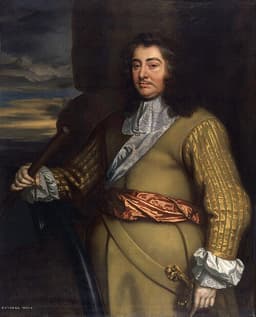
George Monck
General · Modern
55.2Total
Basic Information
Born
1792
1608
Died
1863
1670
Era
Modern
Modern
Nationality
United Kingdom
England
Occupation
General
General
Civilization
Western
Western
Score Comparison
Military (10%)
55.0
30.0
Political (20%)
30.8
45.0
Influence (20%)
52.5
59.0
Legacy (20%)
46.7
52.0
Leadership (15%)
50.7
78.0
Strategy (15%)
52.5
60.0
TOTAL
47.8
55.2
Colin Campbell — Complete Timeline
1857 AD
Relief of LucknowWar
Campbell commanded the British relief force at Lucknow during the Indian Rebellion. His forces fought through rebel-held streets to relieve the besieged British garrison. The relief was a major turning point in the rebellion.
Indian RebellionSiegeRelief
Impact: regionalconstructive
Battle of CawnporeWar◆ Major
Campbell's forces defeated the rebel forces at Cawnpore, recapturing the city. The victory secured British control of the region and allowed the relief of Lucknow to proceed.
Indian RebellionBattleRecapture
Impact: regionalconstructive
Commander-in-Chief, IndiaPolitical Action◆ Major
Campbell was appointed Commander-in-Chief of the British forces in India during the rebellion. He oversaw the suppression of the uprising and the reorganization of the British Indian Army after the war.
Indian RebellionCommandMilitary
Impact: regional
George Monck — Complete Timeline
1650 AD
Battle of DunbarWar◆ Major
George Monck commanded a parliamentary army at the Battle of Dunbar, defeating a Scottish force loyal to Charles II. The victory secured English control over Scotland and demonstrated Monck's military effectiveness.
BattleEnglish Civil WarScotland
Impact: regional
1660 AD
March on LondonPolitical Action
George Monck marched his army from Scotland to London, where he forced the Rump Parliament to readmit excluded members and call for new elections. This action paved the way for the Restoration of the monarchy.
RestorationPolitical ActionMonarchy
Impact: national
Restoration of Charles IIPolitical Action
Monck facilitated the return of Charles II from exile, negotiating the terms of the Restoration. He was appointed Captain-General of the army and created Duke of Albemarle for his role in restoring the monarchy.
RestorationCharles IIMonarchy
Impact: nationalconstructive
Expert Analysis
Origins
Colin Campbell, born in 1792 in Glasgow, Scotland, entered the British Army in 1807. He served in the Peninsular War and the War of 1812, gaining experience in colonial warfare. His early career included service in the West Indies and China. Campbell's background was that of a professional soldier, shaped by the British imperial system.
George Monck, born in 1608 in Devon, England, began his military career as a volunteer in the Dutch army. He later fought for King Charles I in the Irish Rebellion and the English Civil War. Captured by Parliamentarians, he eventually switched sides and served under Oliver Cromwell. Monck's early life was marked by the turbulence of the British Civil Wars.
Rise to Power
Campbell's rise came during the Indian Rebellion of 1857. He was appointed Commander-in-Chief of the British forces in India in July 1857, replacing General Anson. His key turning point was the Relief of Lucknow in November 1857, where he commanded 4,600 troops against 50,000 rebels. The success made him a national hero in Britain.
Monck's rise was more political. In 1659, after Cromwell's death, England was in chaos. Monck commanded the English army in Scotland. In January 1660, he marched south with 6,000 troops, reaching London in February. He forced the Rump Parliament to readmit excluded members, leading to new elections and the Restoration of Charles II in May 1660.
Leadership & Governance
Campbell's leadership was characterized by cautious but effective military strategy. At Lucknow, he chose to evacuate the garrison rather than hold the city, a decision criticized but pragmatic. He scored 50.7 in Leadership and 52.5 in Strategy. His governance in India focused on suppressing the rebellion and reorganizing the army, but he had little political role.
Monck's leadership was decisive and politically astute. He scored 78.0 in Leadership and 60.0 in Strategy. His march on London was a masterstroke of timing and negotiation. He governed as Captain-General of the army and Duke of Albemarle under Charles II, helping to stabilize the monarchy. Monck's political score of 45.0 reflects his key role in the Restoration.
Triumph & Tragedy
Campbell's greatest triumph was the Relief of Lucknow, securing British control in India. His forces fought through rebel-held streets to relieve the besieged garrison, a feat of courage. However, his failure to prevent the massacre at Cawnpore earlier in the rebellion tarnished his legacy. His military score of 55.0 reflects solid but not exceptional performance.
Monck's greatest triumph was the Restoration of Charles II, ending the Interregnum and restoring the monarchy. He negotiated terms that limited royal power, ensuring a constitutional framework. His tragedy was his earlier role in suppressing the Irish and Scottish, including the Battle of Dunbar in 1650, where his forces killed 3,000 Scots. His military score of 30.0 is low, reflecting his limited battlefield success.
Character & Destiny
Campbell was known for his discipline and attention to detail. He was cautious, sometimes overly so, but respected by his troops. His destiny was tied to the British Empire's response to rebellion. He died in 1863 as a Field Marshal, having served his country faithfully. His character was that of a competent administrator-soldier.
Monck was pragmatic and secretive, often keeping his own counsel. He switched sides during the Civil War, but his ultimate loyalty was to stability. His destiny was to be the kingmaker. He died in 1670, having helped shape England's constitutional monarchy. His character was that of a political survivor.
Legacy
Campbell's legacy is mixed. He is remembered for the Relief of Lucknow, but his overall impact on India was limited. He scored 46.7 in Legacy. His reforms in the Indian Army were soon overshadowed. Today, he is a footnote in British imperial history.
Monck's legacy is profound. He scored 52.0 in Legacy, reflecting his role in the Restoration. His actions ensured the return of the monarchy and the eventual Glorious Revolution. He is a key figure in English constitutional history. His influence score of 59.0 reflects his lasting impact on British politics.
Conclusion
George Monck had greater impact than Colin Campbell. Monck's total score is 55.2 to Campbell's 47.8. Monck's political and leadership scores are significantly higher. While Campbell was a competent general, his influence was confined to a single rebellion. Monck's actions reshaped the British state, establishing the conditions for modern constitutional monarchy. In the long term, Monck's legacy endures in the institutions of government, while Campbell's is a memory of empire.
Rankings
🥇
George MonckLeader
Mil: 30.0Pol: 45.0Inf: 59.0
55.2
🥈
Colin Campbell
Mil: 55.0Pol: 30.8Inf: 52.5
47.8
+7.4 behind
How This Comparison Works
Algorithm
Each figure is scored on 6 dimensions (0—100 scale) based on structured historical data: Military (10%), Political (20%), Influence (20%), Legacy (20%), Leadership (15%), Strategy (15%). The weighted total produces the final ranking.
Data Sources
Scores are computed from structured sub-indicators in the database. Scale factors adjust for era (Ancient ×0.85, Modern ×1.0) and civilization size (Eastern ×1.05, Other ×0.80) to account for differences in population and military scale.
Maximum 3 Figures
Comparisons are limited to 2—3 figures to ensure readability and statistical meaningfulness.
Error Margins
±5 points per dimension — Sub-scores are derived from historical records with inherent uncertainty. Two figures within 5 points on a dimension should be considered roughly equivalent in that area.
Total Score Accuracy
±3 points overall — The weighted combination of 6 dimensions produces a total score with approximately ±3 points of uncertainty. Differences of less than 3 points are not statistically significant— the figures are effectively tied.
Known Limitations
- Historical records are incomplete and uneven across civilizations
- Figures from oral-tradition societies may be underrepresented
- Occupation labels can misclassify multi-role figures
- Scores measure capability and impact, not moral character
- Quantitative scoring is a comparison tool, not absolute truth
Capability Radar
Military (10%) — Battles & Warfare
Battles
55
45
Win Rate
60
55
Expansion
20
20
Political (20%) — Governance & Reform
Reform
10
55
Diplomacy
25
70
Economy
10
40
Influence (20%) — Cultural & Global Reach
Cultural
20
30
Global
25
35
Legacy (20%) — Historical Impact
Historical
40
60
Longevity
30
40
Leadership (15%) — Power & Stability
Tenure
20
65
Stability
30
75
Strategy (15%) — Tactics & Innovation
Strategy
60
60
Tactics
65
50
Reform
30
30
Similar Comparisons
Comments & Discussion
No comments yet. Be the first to share your thoughts!