Loading...
George I of Great Britain vs Vasili IV of Russia
George I of Great Britain leads by 13.8 pts · 2 figures compared
…
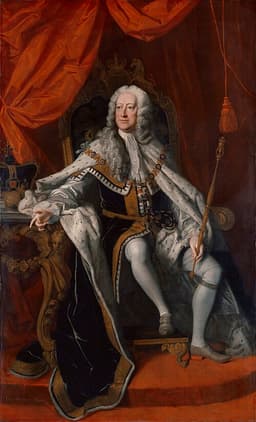
George I of Great Britain
Emperor · Modern
52.2Total
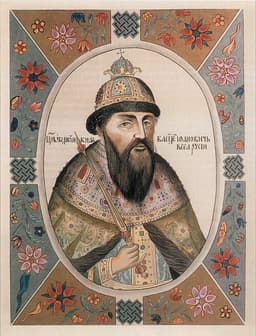
Vasili IV of Russia
Emperor · Modern
38.4Total
Basic Information
Born
1660
1552
Died
1727
1612
Era
Modern
Modern
Nationality
United Kingdom
Russia
Occupation
Emperor
Emperor
Civilization
Western
Western
Score Comparison
Military (10%)
21.2
25.9
Political (20%)
68.0
27.9
Influence (20%)
53.3
47.9
Legacy (20%)
45.0
36.7
Leadership (15%)
72.0
45.0
Strategy (15%)
45.0
36.8
TOTAL
52.2
38.4
George I of Great Britain — Complete Timeline
1714 AD
Accession to the British ThronePolitical Action◆ Major
George I became king of Great Britain and Ireland following the death of Queen Anne. He was the first Hanoverian monarch, succeeding under the Act of Settlement 1701. His accession established the House of Hanover on the British throne.
AccessionHanoverian DynastySuccession
Impact: national
1715 AD
Jacobite Rising of 1715War◆ Major
George I faced a Jacobite rebellion aimed at restoring the Stuart claimant James Francis Edward Stuart. The rebellion was suppressed by government forces at the Battle of Preston and the Battle of Sheriffmuir. This defeat secured George's throne.
Jacobite RebellionCivil WarStuart Claimant
Impact: national
1717 AD
Development of Cabinet GovernmentPolitical Action
George I ceased attending Cabinet meetings due to his limited English and lack of interest. This led to the development of the cabinet system under a chief minister, Sir Robert Walpole, who became the first de facto Prime Minister. This shift strengthened parliamentary governance.
Cabinet GovernmentPrime MinisterConstitutional Evolution
Impact: nationalconstructive
1727 AD
Death in HanoverOther
George I died of a stroke while traveling to Hanover. He was buried in the Leineschloss church in Hanover. His death passed the throne to his son George II. His reign established the Hanoverian dynasty in Britain.
DeathHanoverSuccession
Impact: national
Vasili IV of Russia — Complete Timeline
1606 AD
Elected Tsar of RussiaPolitical Action◆ Major
Vasili IV was elected Tsar by a hastily assembled Zemsky Sobor after the overthrow and murder of False Dmitry I. His election ended the brief reign of the first pretender but failed to stabilize Russia, as the country descended into the Time of Troubles.
ElectionTsarTime of Troubles
Impact: national
1607 AD
Defeated the Bolotnikov RebellionWar◆ Major
Vasili IV's forces, led by Prince Mikhail Skopin-Shuisky, defeated the rebel army of Ivan Bolotnikov near Moscow. The rebellion, which combined Cossacks, peasants, and nobles, threatened the capital but was crushed, though it weakened the tsar's authority.
RebellionBolotnikovCivil War
Impact: nationaldestructive
1609 AD
Signed the Treaty of Vyborg with SwedenPolitical Action◆ Major
Vasili IV signed the Treaty of Vyborg, ceding the fortress of Korela to Sweden in exchange for military aid against the Polish-Lithuanian Commonwealth and False Dmitry II. The treaty brought Swedish intervention into the Time of Troubles but failed to secure his throne.
TreatySwedenTime of Troubles
Impact: regionaldestructive
1610 AD
Deposed and forcibly tonsured as a monkPolitical Action◆ Major
Vasili IV was deposed by a coalition of boyars and forced to become a monk, ending his reign. He was later handed over to the Polish-Lithuanian Commonwealth and died in captivity in 1612, the last Rurikid tsar to rule Russia.
DepositionMonkCaptivity
Impact: nationaltragic
Expert Analysis
Origins
George I (1660–1727) was born in Hanover, Germany, as the son of Ernest Augustus, Duke of Brunswick-Lüneburg, and Sophia of the Palatinate, a granddaughter of James I of England. His upbringing was in the Lutheran tradition, and he received military training, serving in the Nine Years' War against France. He inherited the Electorate of Hanover in 1698. Vasili IV (1552–1612) was born into the Shuisky family, a prominent boyar clan in Russia. His early life was marked by service under Ivan the Terrible and later during the Time of Troubles. He was educated in courtly traditions but lacked the legitimacy of a direct royal lineage.
Rise to Power
George I's accession to the British throne in 1714 was a result of the Act of Settlement 1701, which ensured a Protestant succession. He became king at age 54, succeeding Queen Anne. His coronation was peaceful, but he faced immediate challenges from Jacobites. Vasili IV rose to power after the murder of False Dmitry I in 1606. He was elected tsar by a hastily assembled Zemsky Sobor, but his reign was contested from the start. His main rival was False Dmitry II, and he lacked broad support among the boyars.
Leadership & Governance
George I's leadership was defined by his absence from Cabinet meetings due to his limited English and disinterest. This inadvertently led to the development of the cabinet system under a prime minister, notably Robert Walpole, who effectively governed. George I's political score of 68.0 reflects his impact on constitutional governance. In contrast, Vasili IV's political score of 27.9 shows his ineffectiveness. He ruled during the Time of Troubles, facing rebellions and foreign intervention. His governance was authoritarian but weak, unable to stabilize Russia.
Triumph & Tragedy
George I's greatest success was consolidating the Hanoverian dynasty and fostering the cabinet system, which became a cornerstone of British governance. His failure was the Jacobite Rising of 1715, which he suppressed but which highlighted ongoing Stuart claims. Vasili IV's triumph was defeating the Bolotnikov Rebellion in 1607, which temporarily secured Moscow. His tragedy was his deposition in 1610 and death in Polish captivity in 1612, marking the end of the Rurikid dynasty. His military score of 25.9 is slightly above George I's 21.2, but his overall score of 38.4 is significantly lower.
Character & Destiny
George I was pragmatic and reserved, prioritizing Hanoverian interests. His character shaped British governance by default. Vasili IV was ambitious but indecisive, leading to his downfall. Historical assessments note his inability to unite the boyars or resist Polish interference. George I's leadership score of 72.0 contrasts with Vasili IV's 45.0, reflecting their different fates.
Legacy
George I's legacy is the cabinet government and the Hanoverian dynasty, which lasted until 1901. His influence score of 53.3 is higher than Vasili IV's 47.9. Vasili IV is remembered as the last Rurikid tsar, a symbol of the Time of Troubles. His legacy is minimal, as the Romanovs soon took power.
Conclusion
George I had a greater impact than Vasili IV. His total score of 52.2 versus 38.4 reflects his lasting influence on British constitutional development. While Vasili IV's reign was a tragic failure, George I's unintentional reforms shaped modern governance. Clear stance: George I's contributions outweigh Vasili IV's turbulent and ineffective rule.
Rankings
🥇
George I of Great BritainLeader
Mil: 21.2Pol: 68.0Inf: 53.3
52.2
🥈
Vasili IV of Russia
Mil: 25.9Pol: 27.9Inf: 47.9
38.4
+13.8 behind
How This Comparison Works
Algorithm
Each figure is scored on 6 dimensions (0—100 scale) based on structured historical data: Military (10%), Political (20%), Influence (20%), Legacy (20%), Leadership (15%), Strategy (15%). The weighted total produces the final ranking.
Data Sources
Scores are computed from structured sub-indicators in the database. Scale factors adjust for era (Ancient ×0.85, Modern ×1.0) and civilization size (Eastern ×1.05, Other ×0.80) to account for differences in population and military scale.
Maximum 3 Figures
Comparisons are limited to 2—3 figures to ensure readability and statistical meaningfulness.
Error Margins
±5 points per dimension — Sub-scores are derived from historical records with inherent uncertainty. Two figures within 5 points on a dimension should be considered roughly equivalent in that area.
Total Score Accuracy
±3 points overall — The weighted combination of 6 dimensions produces a total score with approximately ±3 points of uncertainty. Differences of less than 3 points are not statistically significant— the figures are effectively tied.
Known Limitations
- Historical records are incomplete and uneven across civilizations
- Figures from oral-tradition societies may be underrepresented
- Occupation labels can misclassify multi-role figures
- Scores measure capability and impact, not moral character
- Quantitative scoring is a comparison tool, not absolute truth
Capability Radar
Military (10%) — Battles & Warfare
Battles
10
20
Win Rate
10
15
Expansion
10
5
Political (20%) — Governance & Reform
Reform
40
10
Diplomacy
50
15
Economy
40
10
Influence (20%) — Cultural & Global Reach
Cultural
20
15
Global
30
10
Legacy (20%) — Historical Impact
Historical
40
20
Longevity
30
10
Leadership (15%) — Power & Stability
Tenure
60
30
Stability
50
5
Strategy (15%) — Tactics & Innovation
Strategy
10
15
Tactics
10
20
Reform
10
10
Similar Comparisons
Comments & Discussion
No comments yet. Be the first to share your thoughts!