Loading...
George I of Great Britain vs Julius Caesar
Julius Caesar leads by 30.6 pts · 2 figures compared
…
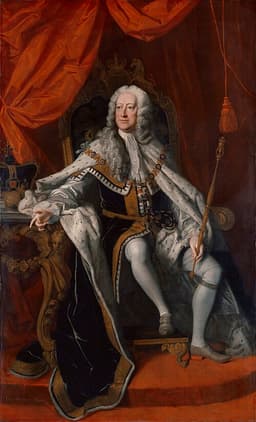
George I of Great Britain
Emperor · Modern
52.2Total

Julius Caesar
General · Ancient
82.8Total
Basic Information
Born
1660
-100
Died
1727
-44
Era
Modern
Ancient
Nationality
United Kingdom
Roman Republic
Occupation
Emperor
General
Civilization
Western
Western
Score Comparison
Military (10%)
21.2
88.0
Political (20%)
68.0
78.0
Influence (20%)
53.3
85.0
Legacy (20%)
45.0
82.0
Leadership (15%)
72.0
80.0
Strategy (15%)
45.0
85.0
TOTAL
52.2
82.8
George I of Great Britain — Complete Timeline
1714 AD
Accession to the British ThronePolitical Action◆ Major
George I became king of Great Britain and Ireland following the death of Queen Anne. He was the first Hanoverian monarch, succeeding under the Act of Settlement 1701. His accession established the House of Hanover on the British throne.
AccessionHanoverian DynastySuccession
Impact: national
1715 AD
Jacobite Rising of 1715War◆ Major
George I faced a Jacobite rebellion aimed at restoring the Stuart claimant James Francis Edward Stuart. The rebellion was suppressed by government forces at the Battle of Preston and the Battle of Sheriffmuir. This defeat secured George's throne.
Jacobite RebellionCivil WarStuart Claimant
Impact: national
1717 AD
Development of Cabinet GovernmentPolitical Action
George I ceased attending Cabinet meetings due to his limited English and lack of interest. This led to the development of the cabinet system under a chief minister, Sir Robert Walpole, who became the first de facto Prime Minister. This shift strengthened parliamentary governance.
Cabinet GovernmentPrime MinisterConstitutional Evolution
Impact: nationalconstructive
1727 AD
Death in HanoverOther
George I died of a stroke while traveling to Hanover. He was buried in the Leineschloss church in Hanover. His death passed the throne to his son George II. His reign established the Hanoverian dynasty in Britain.
DeathHanoverSuccession
Impact: national
Julius Caesar — Complete Timeline
58 BC
Gallic WarsWar◆ Major
Caesar, as proconsul of Gaul, launched a series of campaigns that conquered all of Gaul (modern France, Belgium, and parts of Switzerland). He fought numerous battles, including against the Helvetii, the Belgae, and the Gallic chieftain Vercingetorix. The wars brought immense wealth and a loyal army to Caesar.
Gallic WarsConquestRoman Expansion
Impact: regional
49 BC
Crossing the RubiconPolitical Action◆ Major
Caesar led Legio XIII across the Rubicon River into Italy, defying the Roman Senate's order to disband his army. This act triggered a civil war against Pompey and the Optimates, ultimately leading to Caesar's dictatorship and the end of the Roman Republic.
Roman Civil WarEnd of RepublicPower Struggle
Impact: global
48 BC
Battle of PharsalusWar◆ Major
Caesar's outnumbered army defeated the larger forces of Pompey the Great at Pharsalus in Greece. Caesar's tactical use of a reserve line to counter Pompey's cavalry charge proved decisive. Pompey fled to Egypt, where he was assassinated, leaving Caesar as the undisputed master of the Roman world.
Roman Civil WarBattleDecisive Victory
Impact: regional
44 BC
Appointment as Dictator for LifePolitical Action◆ Major
The Roman Senate appointed Caesar dictator perpetuo (dictator for life), granting him unprecedented personal power. This move concentrated military, legislative, and judicial authority in one person, effectively ending the Roman Republic's traditional system of checks and balances and alarming many senators.
DictatorshipEnd of RepublicPower Consolidation
Impact: regionaldestructive
Assassination on the Ides of MarchPolitical Action◆ Major
A group of Roman senators, led by Marcus Junius Brutus and Gaius Cassius Longinus, stabbed Caesar to death at a meeting of the Senate in the Theatre of Pompey. The assassination was intended to restore the Republic, but instead triggered another civil war that led to the rise of the Roman Empire.
AssassinationRoman PoliticsEnd of Republic
Impact: globaldestructive
Expert Analysis
Origins
George I was born on May 28, 1660, in Hanover, Germany, into the House of Hanover. He was the son of Ernest Augustus, Elector of Hanover, and Sophia of the Palatinate, a granddaughter of James I of England. George grew up in the German court, speaking French and German, with little exposure to English culture. His early life was shaped by the politics of the Holy Roman Empire and the succession disputes of the British throne. In contrast, Gaius Julius Caesar was born on July 12, 100 BCE, in Rome into the patrician Julian clan. His family claimed descent from the goddess Venus. Caesar's early education was in rhetoric and military arts, and he was influenced by the political turmoil of the late Republic, including the Social War and the civil wars of Marius and Sulla. His father died when he was 16, and he married Cornelia, the daughter of a prominent Marian, which put him at odds with the dictator Sulla.
Rise to Power
George I's rise to power was largely dynastic. He became Elector of Hanover in 1698 after his father's death. His mother Sophia was designated heir to the British throne by the Act of Settlement 1701, which excluded Catholics. When Queen Anne died in 1714, Sophia had predeceased her, so George became king at age 54. He faced immediate opposition from Jacobites supporting the Stuart claimant. His accession was relatively smooth due to the Whig support. Julius Caesar's rise was through military and political ambition. He served as a military tribune, then quaestor in Spain. He formed the First Triumvirate with Pompey and Crassus in 60 BCE, securing the consulship in 59 BCE. His proconsulship in Gaul from 58-50 BCE allowed him to conquer all of Gaul, amassing wealth and a loyal army. His political enemies in the Senate, led by Cato and Pompey, tried to strip him of command, leading to his crossing of the Rubicon in 49 BCE, igniting a civil war. By 45 BCE, he had defeated all rivals and was appointed dictator for life.
Leadership & Governance
George I's leadership style was hands-off, especially in domestic affairs. He spoke no English and relied on ministers like Robert Walpole, who effectively became the first prime minister. George's absence from cabinet meetings from 1717 onward allowed the cabinet system to develop, where ministers acted collectively under a chief minister. His governance was marked by the Whig supremacy and the stabilization of the Hanoverian dynasty. In contrast, Caesar was a hands-on, autocratic leader. He centralized power, reformed the calendar (Julian calendar), initiated land reforms, extended citizenship to provincials, and reduced debt. He packed the Senate with his supporters and held multiple offices, including dictator perpetuo. His reforms were aimed at addressing the Republic's systemic issues but concentrated power in his hands, leading to fears of monarchy.
Triumph & Tragedy
George I's greatest triumph was securing the Hanoverian succession and suppressing the Jacobite rising of 1715, which ensured the Protestant line. His support for the Whigs led to stable government. His tragedy was his alienation from his son, the future George II, and his lack of connection with his British subjects. He died in Hanover in 1727, leaving a legacy of a constitutional monarchy. Caesar's triumphs include the conquest of Gaul, which expanded Roman territory and wealth, and his victory in the civil war. His military scores are 88.0, far above George's 21.2. His tragedy was his assassination on the Ides of March 44 BCE, which plunged Rome into another civil war. His reforms were largely undone or adapted by his successor Augustus.
Character & Destiny
George I was pragmatic and reserved, preferring the comforts of Hanover. His limited English and disinterest in British politics shaped his destiny as a figurehead, allowing the cabinet system to flourish. He was not a charismatic leader. Caesar was ambitious, charismatic, and ruthless. His crossing of the Rubicon was a decisive act that sealed his fate. His character led him to seek absolute power, which ultimately caused his downfall. Historians note his clemency to enemies but also his authoritarian tendencies.
Legacy
George I's legacy is the establishment of the Hanoverian dynasty and the development of cabinet government, which evolved into the modern British parliamentary system. His political score of 68.0 reflects his role in shaping governance. Caesar's legacy is immense: he transformed the Roman Republic into an empire, with his name becoming synonymous with dictatorship. His influence on language (Caesar as a title), the Julian calendar, and military strategy endures. His total score is 82.8, compared to George's 52.2.
Conclusion
Julius Caesar had a greater impact on world history than George I. Caesar's military conquests, political reforms, and role in the Republic's transformation shaped the course of Western civilization. George I's contributions were significant but confined to British constitutional development. The score gap of 30.6 points reflects this: Caesar scored 82.8 overall, while George scored 52.2. While George's development of cabinet government was a key step in democratic governance, Caesar's actions defined an era.
Rankings
🥇
Julius CaesarLeader
Mil: 88.0Pol: 78.0Inf: 85.0
82.8
🥈
George I of Great Britain
Mil: 21.2Pol: 68.0Inf: 53.3
52.2
+30.6 behind
How This Comparison Works
Algorithm
Each figure is scored on 6 dimensions (0—100 scale) based on structured historical data: Military (10%), Political (20%), Influence (20%), Legacy (20%), Leadership (15%), Strategy (15%). The weighted total produces the final ranking.
Data Sources
Scores are computed from structured sub-indicators in the database. Scale factors adjust for era (Ancient ×0.85, Modern ×1.0) and civilization size (Eastern ×1.05, Other ×0.80) to account for differences in population and military scale.
Maximum 3 Figures
Comparisons are limited to 2—3 figures to ensure readability and statistical meaningfulness.
Error Margins
±5 points per dimension — Sub-scores are derived from historical records with inherent uncertainty. Two figures within 5 points on a dimension should be considered roughly equivalent in that area.
Total Score Accuracy
±3 points overall — The weighted combination of 6 dimensions produces a total score with approximately ±3 points of uncertainty. Differences of less than 3 points are not statistically significant— the figures are effectively tied.
Known Limitations
- Historical records are incomplete and uneven across civilizations
- Figures from oral-tradition societies may be underrepresented
- Occupation labels can misclassify multi-role figures
- Scores measure capability and impact, not moral character
- Quantitative scoring is a comparison tool, not absolute truth
Capability Radar
Military (10%) — Battles & Warfare
Battles
10
95
Win Rate
10
92
Expansion
10
97
Political (20%) — Governance & Reform
Reform
40
90
Diplomacy
50
85
Economy
40
82
Influence (20%) — Cultural & Global Reach
Cultural
20
88
Global
30
94
Legacy (20%) — Historical Impact
Historical
40
95
Longevity
30
96
Leadership (15%) — Power & Stability
Tenure
60
75
Stability
50
60
Strategy (15%) — Tactics & Innovation
Strategy
10
94
Tactics
10
96
Reform
10
88
Similar Comparisons
Comments & Discussion
No comments yet. Be the first to share your thoughts!