Loading...
George Cadle Price vs Woodrow Wilson
George Cadle Price leads by 3.3 pts · 2 figures compared
…

George Cadle Price
Politician · Modern
58.2Total
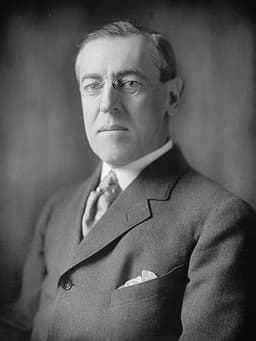
Woodrow Wilson
Politician · Modern
54.9Total
Basic Information
Born
1919
1856
Died
2011
1924
Era
Modern
Modern
Nationality
Belize
United States
Occupation
Politician
Politician
Civilization
Other
Western
Score Comparison
Military (10%)
38.9
48.2
Political (20%)
72.0
55.0
Influence (20%)
58.3
55.0
Legacy (20%)
52.0
52.0
Leadership (15%)
78.0
72.0
Strategy (15%)
42.5
42.5
TOTAL
58.2
54.9
George Cadle Price — Complete Timeline
1950 AD
Founded People's United PartyPolitical Action◆ Major
Price co-founded the People's United Party (PUP) in 1950, which became the leading force for Belizean independence. The party advocated for self-government and social reforms.
Political PartyBelizePUP
Impact: nationalconstructive
1960 AD
Advocated for Pacifism and Non-ViolencePolitical Action◆ Major
Price promoted non-violent resistance and diplomacy in Belize's independence movement, rejecting armed struggle. His pacifist approach influenced the peaceful transition to sovereignty.
PacifismIndependenceBelize
Impact: nationalprogressive
1981 AD
Led Belize to IndependencePolitical Action
George Cadle Price, as premier, negotiated Belize's independence from the United Kingdom on September 21, 1981. He became the first prime minister of the newly independent nation, earning the title 'Father of the Nation'.
IndependenceBelizeDecolonization
Impact: nationalconstructive
Served as Prime Minister Multiple TermsPolitical Action◆ Major
Price served as prime minister from 1981 to 1984 and again from 1989 to 1993. His leadership shaped Belize's early post-independence policies and regional relations.
Prime MinisterBelizePUP
Impact: nationalconstructive
1991 AD
Resolved Guatemalan Territorial ClaimPolitical Action◆ Major
Price's government signed an agreement with Guatemala to recognize Belize's independence, ending decades of territorial claims. This paved the way for Belize's full sovereignty.
GuatemalaTerritorial DisputeDiplomacy
Impact: regionalconstructive
Woodrow Wilson — Complete Timeline
1913 AD
Federal Reserve ActPolitical Action◆ Major
Wilson signed the Federal Reserve Act, creating the Federal Reserve System to regulate the US banking system and monetary policy. This established a central bank to manage economic stability.
Federal ReserveBanking ReformEconomic Policy
Impact: nationalconstructive
Segregation of the Federal GovernmentPolitical Action◆ Major
Wilson allowed his cabinet members to segregate federal government offices, reversing post-Reconstruction integration. This policy increased racial discrimination in federal employment and was criticized by civil rights leaders.
SegregationCivil RightsRacial Discrimination
Impact: nationaldestructive
1917 AD
US Entry into World War IWar
Wilson asked Congress to declare war on Germany after unrestricted submarine warfare and the Zimmermann Telegram. US entry shifted the balance of power, leading to the Allied victory in 1918.
World War IUS Foreign PolicyWar Declaration
Impact: global
1918 AD
Fourteen Points SpeechPolitical Action◆ Major
Wilson delivered the Fourteen Points speech outlining his vision for post-war peace, including self-determination, open diplomacy, and the creation of a League of Nations. This shaped the Treaty of Versailles negotiations.
Fourteen PointsWorld War IPeace Plan
Impact: globalconstructive
1919 AD
Treaty of Versailles and League of NationsPolitical Action◆ Major
Wilson participated in the Paris Peace Conference and helped draft the Treaty of Versailles, which included the League of Nations covenant. The US Senate rejected the treaty, and the US never joined the League.
Treaty of VersaillesLeague of NationsDiplomacy
Impact: global
Expert Analysis
Origins
George Cadle Price was born on January 15, 1919, in Belize City, British Honduras (now Belize), into a middle-class family of mixed ancestry. His father, a businessman, and his mother, a teacher, instilled in him a sense of civic duty. Price attended St. John's College, a Jesuit school, which shaped his pacifist and democratic ideals. Woodrow Wilson was born on December 28, 1856, in Staunton, Virginia, to a Presbyterian minister and a devout mother. He grew up in the South during the Civil War and Reconstruction, experiences that influenced his moralistic worldview. Wilson earned a PhD in political science from Johns Hopkins University, becoming a scholar of government before entering politics.
Rise to Power
Price co-founded the People's United Party (PUP) in 1950, advocating for self-government and independence from Britain. He became the first Premier of Belize in 1964 after constitutional reforms, and his party won successive elections. Price's peaceful diplomacy and grassroots organizing built a broad coalition. Wilson rose through academia, becoming president of Princeton University in 1902. He entered politics as Governor of New Jersey in 1911, gaining a reputation as a progressive reformer. In 1912, he won the presidency as a Democrat, defeating the divided Republican Party. His rise was swift, leveraging his intellectual appeal.
Leadership & Governance
Price's leadership was inclusive and non-confrontational. He focused on nation-building, promoting multiculturalism and negotiating with Guatemala over territorial claims. His government invested in education and infrastructure. Price scored 78.0 in leadership and 72.0 in politics, reflecting his ability to unify a small, diverse country. Wilson, with a leadership score of 72.0, governed through moral persuasion and legislative skill. He pushed through the Federal Reserve Act, the Clayton Antitrust Act, and the creation of the Federal Trade Commission. However, his administration segregated federal offices, a stark contradiction to his rhetoric of democracy. Wilson's governance was top-down and often inflexible, leading to opposition from both progressives and conservatives.
Triumph & Tragedy
Price's greatest triumph was leading Belize to independence on September 21, 1981, without violence. He also resolved the long-standing Guatemalan claim, securing Belize's sovereignty. His tragedy was economic stagnation in the 1980s, leading to electoral defeat. He returned to power in 1989 but faced challenges from neoliberal reforms. Wilson's triumph was his role in ending World War I and shaping the Treaty of Versailles, including the League of Nations. He won the Nobel Peace Prize in 1919. His tragedy was the Senate's rejection of the League, partly due to his unwillingness to compromise, and the subsequent rise of isolationism. Additionally, his segregation policies damaged race relations for decades.
Character & Destiny
Price was characterized by humility, patience, and a pacifist ethos. He believed in dialogue over force, which shaped Belize's peaceful transition. His destiny was to be the "Father of the Nation," a revered figure despite political setbacks. Wilson was idealistic, stubborn, and self-righteous. He saw himself as a moral leader for the world, but his rigidity led to failures like the League fight. His health deteriorated after a stroke in 1919, limiting his effectiveness. Historians note his progressive domestic achievements yet condemn his racial policies. Price's character earned him lasting respect; Wilson's complex legacy includes both visionary internationalism and regressive domestic actions.
Legacy
Price's legacy is the independent, stable, and democratic nation of Belize. His pacifist approach set a precedent for small-state diplomacy. The PUP remains a major party, and Price is memorialized as a national hero. His influence score of 58.3 reflects his impact on Central America. Wilson's legacy is more global: the Federal Reserve, the League of Nations (precursor to the UN), and the idea of self-determination. However, his segregationist policies tarnish his reputation. Wilson's influence score of 55.0 is slightly lower, partly due to this mixed record. In the U.S., he is ranked as an above-average president, but his racism has led to recent reevaluations.
Conclusion
George Cadle Price achieved a total score of 58.2 against Wilson's 54.9, a 3.3-point gap that reflects Price's more consistent and principled leadership. While Wilson reshaped international relations and domestic banking, his failures in race relations and the League of Nations undermine his effectiveness. Price, though operating on a smaller stage, successfully delivered independence without bloodshed and built a functioning democracy. In terms of impact relative to context, Price's legacy is unambiguously positive, whereas Wilson's is deeply contested. Therefore, George Cadle Price had a greater impact as a leader who achieved his core goals with minimal harm.
Rankings
🥇
George Cadle PriceLeader
Mil: 38.9Pol: 72.0Inf: 58.3
58.2
🥈
Woodrow Wilson
Mil: 48.2Pol: 55.0Inf: 55.0
54.9
+3.3 behind
How This Comparison Works
Algorithm
Each figure is scored on 6 dimensions (0—100 scale) based on structured historical data: Military (10%), Political (20%), Influence (20%), Legacy (20%), Leadership (15%), Strategy (15%). The weighted total produces the final ranking.
Data Sources
Scores are computed from structured sub-indicators in the database. Scale factors adjust for era (Ancient ×0.85, Modern ×1.0) and civilization size (Eastern ×1.05, Other ×0.80) to account for differences in population and military scale.
Maximum 3 Figures
Comparisons are limited to 2—3 figures to ensure readability and statistical meaningfulness.
Error Margins
±5 points per dimension — Sub-scores are derived from historical records with inherent uncertainty. Two figures within 5 points on a dimension should be considered roughly equivalent in that area.
Total Score Accuracy
±3 points overall — The weighted combination of 6 dimensions produces a total score with approximately ±3 points of uncertainty. Differences of less than 3 points are not statistically significant— the figures are effectively tied.
Known Limitations
- Historical records are incomplete and uneven across civilizations
- Figures from oral-tradition societies may be underrepresented
- Occupation labels can misclassify multi-role figures
- Scores measure capability and impact, not moral character
- Quantitative scoring is a comparison tool, not absolute truth
Capability Radar
Military (10%) — Battles & Warfare
Battles
20
31
Win Rate
26
33
Expansion
27
35
Political (20%) — Governance & Reform
Reform
80
75
Diplomacy
85
70
Economy
60
55
Influence (20%) — Cultural & Global Reach
Cultural
60
55
Global
50
65
Legacy (20%) — Historical Impact
Historical
70
70
Longevity
55
60
Leadership (15%) — Power & Stability
Tenure
85
60
Stability
75
50
Strategy (15%) — Tactics & Innovation
Strategy
30
41
Tactics
35
42
Reform
36
41
Similar Comparisons
Comments & Discussion
No comments yet. Be the first to share your thoughts!