Loading...
Bernardino Rivadavia vs Woodrow Wilson
Woodrow Wilson leads by 1.1 pts · 2 figures compared
…

Bernardino Rivadavia
Politician · Modern
53.8Total
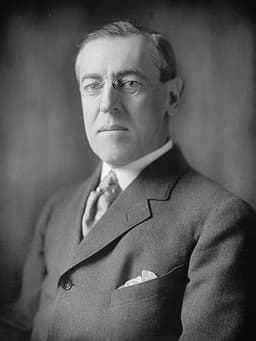
Woodrow Wilson
Politician · Modern
54.9Total
Basic Information
Born
1780
1856
Died
1845
1924
Era
Modern
Modern
Nationality
Argentina
United States
Occupation
Politician
Politician
Civilization
Western
Western
Score Comparison
Military (10%)
50.0
48.2
Political (20%)
68.0
55.0
Influence (20%)
53.3
55.0
Legacy (20%)
46.7
52.0
Leadership (15%)
62.2
72.0
Strategy (15%)
42.9
42.5
TOTAL
53.8
54.9
Bernardino Rivadavia — Complete Timeline
1825 AD
Signed the Treaty of Friendship, Commerce, and Navigation with BritainPolitical Action◆ Major
Rivadavia signed a treaty with the United Kingdom granting British merchants favorable trade terms and recognizing British claims. The treaty was criticized for favoring British economic interests over local development.
TradeBritainEconomic Policy
Impact: national
1826 AD
Enacted the Law of Public EducationReform◆ Major
Rivadavia's government passed a law establishing a system of public primary education, creating schools in each province. The reform aimed to promote literacy and secular education, but was only partially implemented due to political instability.
EducationReformSecularism
Impact: nationalprogressive
Appointed First President of the United Provinces of the Río de la PlataPolitical Action
Rivadavia became the first President of the United Provinces of the R
PresidencyConstitutionArgentina
Impact: nationalconstructive
1827 AD
Resigned as PresidentPolitical Action◆ Major
Facing defeat in the Cisplatine War and opposition from federalist caudillos, Rivadavia resigned the presidency. His resignation led to the dissolution of the central government and the return of provincial autonomy.
ResignationPolitical CrisisFederalism
Impact: nationaltragic
Woodrow Wilson — Complete Timeline
1913 AD
Federal Reserve ActPolitical Action◆ Major
Wilson signed the Federal Reserve Act, creating the Federal Reserve System to regulate the US banking system and monetary policy. This established a central bank to manage economic stability.
Federal ReserveBanking ReformEconomic Policy
Impact: nationalconstructive
Segregation of the Federal GovernmentPolitical Action◆ Major
Wilson allowed his cabinet members to segregate federal government offices, reversing post-Reconstruction integration. This policy increased racial discrimination in federal employment and was criticized by civil rights leaders.
SegregationCivil RightsRacial Discrimination
Impact: nationaldestructive
1917 AD
US Entry into World War IWar
Wilson asked Congress to declare war on Germany after unrestricted submarine warfare and the Zimmermann Telegram. US entry shifted the balance of power, leading to the Allied victory in 1918.
World War IUS Foreign PolicyWar Declaration
Impact: global
1918 AD
Fourteen Points SpeechPolitical Action◆ Major
Wilson delivered the Fourteen Points speech outlining his vision for post-war peace, including self-determination, open diplomacy, and the creation of a League of Nations. This shaped the Treaty of Versailles negotiations.
Fourteen PointsWorld War IPeace Plan
Impact: globalconstructive
1919 AD
Treaty of Versailles and League of NationsPolitical Action◆ Major
Wilson participated in the Paris Peace Conference and helped draft the Treaty of Versailles, which included the League of Nations covenant. The US Senate rejected the treaty, and the US never joined the League.
Treaty of VersaillesLeague of NationsDiplomacy
Impact: global
Expert Analysis
Origins
Bernardino Rivadavia was born on May 20, 1780, in Buenos Aires, then part of the Spanish Viceroyalty of the Río de la Plata. His father, Benito Rivadavia, was a wealthy Spanish lawyer, and his mother, María Josefa de Rivadavia, came from a prominent local family. Rivadavia studied at the Real Colegio de San Carlos, where he was exposed to Enlightenment ideas. He later worked in commerce and law, but his political career began during the May Revolution of 1810, which ousted the Spanish viceroy.
Woodrow Wilson was born on December 28, 1856, in Staunton, Virginia, to a Presbyterian minister father, Joseph Ruggles Wilson, and Janet Woodrow Wilson. Growing up in the South during the Civil War and Reconstruction, Wilson was deeply influenced by his religious upbringing and the political turmoil of the era. He studied at Princeton University (then the College of New Jersey), the University of Virginia Law School, and earned a PhD in political science from Johns Hopkins University in 1886. His academic work focused on government and political reform.
Rise to Power
Rivadavia rose to prominence as a leading figure in the United Provinces after the 1810 revolution. He served as a diplomat in Europe (1814-1820), securing loans and recognition. In 1821, he became a minister under Governor Martín Rodríguez of Buenos Aires, implementing reforms in banking, education, and land use. His political influence grew, and in 1826, he was appointed the first President of the United Provinces of the Río de la Plata under the new constitution. His presidency faced opposition from federalist caudillos like Juan Manuel de Rosas.
Wilson's rise was academic and political. He became president of Princeton University in 1902, where he implemented educational reforms, though his tenure ended controversially. In 1910, he was elected Governor of New Jersey as a Democrat, gaining a reputation as a progressive reformer. In 1912, he won the presidency with a split Republican vote, securing 42% of the popular vote. His first term focused on domestic reforms like the Federal Reserve Act (1913) and the Clayton Antitrust Act (1914).
Leadership & Governance
Rivadavia's leadership was centralized and reformist. He enacted the Law of Public Education (1826), establishing free primary schools across provinces. He created the University of Buenos Aires and reformed the legal system. However, his governance style was authoritarian, ignoring federalist demands. He signed the Treaty of Friendship, Commerce, and Navigation with Britain (1825), granting favorable trade terms, which boosted commerce but angered nationalists. His military strategy scored 42.9, reflecting poor management of the Cisplatine War (1825-1828) against Brazil, which drained resources.
Wilson's leadership scored 72.0, reflecting his ability to guide the US through WWI and pass major reforms. He signed the Federal Reserve Act (1913), creating the central banking system, and the Keating-Owen Child Labor Act (1916). His governance style was idealistic and moralistic, as seen in his Fourteen Points (1918) advocating self-determination. However, he allowed segregation of federal offices, reversing integration and harming African Americans. His political score of 55.0 reflects both his achievements and failures in coalition-building.
Triumph & Tragedy
Rivadavia's greatest triumph was establishing the framework for a unified Argentine state, including public education and legal reforms. His presidency created the first national constitution and government structure. However, his greatest failure was the Cisplatine War, which Argentina lost, leading to economic crisis and his resignation in 1827. The war cost lives and territory, and his resignation led to the dissolution of the national government and the rise of Rosas.
Wilson's triumphs include guiding the US to victory in WWI and founding the League of Nations, winning the Nobel Peace Prize in 1919. Domestically, the Federal Reserve Act stabilized banking. His tragedies include the US Senate's rejection of the Treaty of Versailles (1919-1920), which kept the US out of the League, and his stroke in 1919, which left him incapacitated. His segregationist policies tarnished his legacy, increasing racial division in government.
Character & Destiny
Rivadavia was an idealist and reformer, but his character was inflexible and authoritarian. He alienated federalists and caudillos by centralizing power, leading to his downfall. His decision to resign rather than compromise reflected a principled but rigid personality. Historians note his vision outran his political skills; he scored 62.2 in leadership but 42.9 in strategy.
Wilson was a moralistic intellectual, believing in the power of ideas to shape policy. His stubbornness was evident in his fight for the League of Nations, where he refused to compromise with Senate opponents. His health decline affected his judgment. His character combined high ideals with racial prejudices, as seen in his segregation policies. His leadership score of 72.0 shows his ability to inspire, but his political score of 55.0 reflects his difficulty in building lasting coalitions.
Legacy
Rivadavia's legacy is mixed. He is remembered as a founding father of Argentina, but his presidency was short-lived. His reforms influenced later nation-building, but his failures contributed to decades of civil war. He scored 46.7 in legacy, as his direct impact was limited, but his ideas endured in Argentine liberalism.
Wilson's legacy is vast. The Federal Reserve System still governs US banking. His vision of international cooperation prefigured the United Nations. However, his segregationist policies left a stain. His legacy score of 52.0 reflects his global influence and controversial domestic record.
Conclusion
While Rivadavia laid the foundations for Argentina's state, Wilson's impact was more global and enduring. Wilson's leadership score (72.0 vs 62.2) and total score (54.9 vs 53.8) edge out Rivadavia. Wilson's creation of the Federal Reserve and his role in shaping the post-WWI order had lasting consequences for the US and the world. Rivadavia's reforms were significant but limited by his short tenure and the disintegration of his government. Thus, Woodrow Wilson had greater impact, despite his flaws.
Rankings
🥇
Woodrow WilsonLeader
Mil: 48.2Pol: 55.0Inf: 55.0
54.9
🥈
Bernardino Rivadavia
Mil: 50.0Pol: 68.0Inf: 53.3
53.8
+1.1 behind
How This Comparison Works
Algorithm
Each figure is scored on 6 dimensions (0—100 scale) based on structured historical data: Military (10%), Political (20%), Influence (20%), Legacy (20%), Leadership (15%), Strategy (15%). The weighted total produces the final ranking.
Data Sources
Scores are computed from structured sub-indicators in the database. Scale factors adjust for era (Ancient ×0.85, Modern ×1.0) and civilization size (Eastern ×1.05, Other ×0.80) to account for differences in population and military scale.
Maximum 3 Figures
Comparisons are limited to 2—3 figures to ensure readability and statistical meaningfulness.
Error Margins
±5 points per dimension — Sub-scores are derived from historical records with inherent uncertainty. Two figures within 5 points on a dimension should be considered roughly equivalent in that area.
Total Score Accuracy
±3 points overall — The weighted combination of 6 dimensions produces a total score with approximately ±3 points of uncertainty. Differences of less than 3 points are not statistically significant— the figures are effectively tied.
Known Limitations
- Historical records are incomplete and uneven across civilizations
- Figures from oral-tradition societies may be underrepresented
- Occupation labels can misclassify multi-role figures
- Scores measure capability and impact, not moral character
- Quantitative scoring is a comparison tool, not absolute truth
Capability Radar
Military (10%) — Battles & Warfare
Battles
29
31
Win Rate
33
33
Expansion
33
35
Political (20%) — Governance & Reform
Reform
65
75
Diplomacy
45
70
Economy
55
55
Influence (20%) — Cultural & Global Reach
Cultural
40
55
Global
20
65
Legacy (20%) — Historical Impact
Historical
50
70
Longevity
30
60
Leadership (15%) — Power & Stability
Tenure
40
60
Stability
20
50
Strategy (15%) — Tactics & Innovation
Strategy
39
41
Tactics
40
42
Reform
45
41
Similar Comparisons
Comments & Discussion
No comments yet. Be the first to share your thoughts!