Loading...
Dasho Tshering Wangchuk vs Woodrow Wilson
Woodrow Wilson leads by 10.4 pts · 2 figures compared
…

Dasho Tshering Wangchuk
Politician · Modern
44.5Total
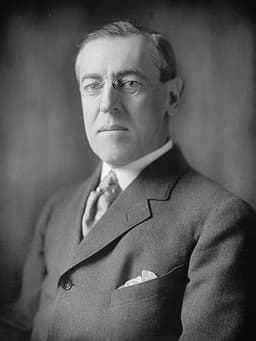
Woodrow Wilson
Politician · Modern
54.9Total
Basic Information
Born
1950
1856
Died
—
1924
Era
Modern
Modern
Nationality
Bhutan
United States
Occupation
Politician
Politician
Civilization
Indian
Western
Score Comparison
Military (10%)
41.2
48.2
Political (20%)
30.8
55.0
Influence (20%)
46.3
55.0
Legacy (20%)
37.5
52.0
Leadership (15%)
58.8
72.0
Strategy (15%)
60.0
42.5
TOTAL
44.5
54.9
Dasho Tshering Wangchuk — Complete Timeline
2003 AD
Appointed as Chief Justice of BhutanPolitical Action
Dasho Tshering Wangchuk was appointed Chief Justice of the Royal Court of Justice of Bhutan in 2003. He served as the head of the judiciary, overseeing legal reforms and the modernization of Bhutan's court system.
JudiciaryLegal Reform
Impact: nationalconstructive
2005 AD
Presided Over Constitutional Drafting ProcessPolitical Action◆ Major
As Chief Justice, Wangchuk was involved in the drafting of Bhutan's first written constitution, which was adopted in 2008. He ensured the judiciary's independence and the rule of law were enshrined.
ConstitutionLegal Framework
Impact: nationalconstructive
2008 AD
Served as Interim Head of GovernmentPolitical Action◆ Major
Following the first democratic elections in 2008, Dasho Tshering Wangchuk served as the interim head of government (Chief Advisor) during the transition period. He oversaw the handover of power from the monarchy to the elected government.
TransitionDemocracy
Impact: nationalconstructive
Woodrow Wilson — Complete Timeline
1913 AD
Federal Reserve ActPolitical Action◆ Major
Wilson signed the Federal Reserve Act, creating the Federal Reserve System to regulate the US banking system and monetary policy. This established a central bank to manage economic stability.
Federal ReserveBanking ReformEconomic Policy
Impact: nationalconstructive
Segregation of the Federal GovernmentPolitical Action◆ Major
Wilson allowed his cabinet members to segregate federal government offices, reversing post-Reconstruction integration. This policy increased racial discrimination in federal employment and was criticized by civil rights leaders.
SegregationCivil RightsRacial Discrimination
Impact: nationaldestructive
1917 AD
US Entry into World War IWar
Wilson asked Congress to declare war on Germany after unrestricted submarine warfare and the Zimmermann Telegram. US entry shifted the balance of power, leading to the Allied victory in 1918.
World War IUS Foreign PolicyWar Declaration
Impact: global
1918 AD
Fourteen Points SpeechPolitical Action◆ Major
Wilson delivered the Fourteen Points speech outlining his vision for post-war peace, including self-determination, open diplomacy, and the creation of a League of Nations. This shaped the Treaty of Versailles negotiations.
Fourteen PointsWorld War IPeace Plan
Impact: globalconstructive
1919 AD
Treaty of Versailles and League of NationsPolitical Action◆ Major
Wilson participated in the Paris Peace Conference and helped draft the Treaty of Versailles, which included the League of Nations covenant. The US Senate rejected the treaty, and the US never joined the League.
Treaty of VersaillesLeague of NationsDiplomacy
Impact: global
Expert Analysis
Origins
Dasho Tshering Wangchuk was born in Bhutan in the mid-20th century, though exact birth year is not widely recorded. He pursued legal education and rose through the judiciary, embodying Bhutan's gradual modernization under the monarchy. Woodrow Wilson was born in Staunton, Virginia, in 1856, the son of a Presbyterian minister. He earned a PhD in political science from Johns Hopkins University and became a professor and president of Princeton University before entering politics.
Rise to Power
Wangchuk's rise came through the judiciary. He was appointed Chief Justice of the Royal Court of Justice of Bhutan in 2003, overseeing the legal system during a period of democratic transition. His pivotal role came in 2008 when he served as interim head of government (Chief Advisor) after Bhutan's first democratic elections, ensuring a peaceful transfer of power. Wilson rose through academia and then as Governor of New Jersey (1911-1913), where his progressive reforms caught national attention. He won the 1912 presidential election as a Democrat, benefiting from a split in the Republican Party, and took office in 1913.
Leadership & Governance
Wangchuk's leadership style was judicial and procedural. As Chief Justice, he presided over the drafting of Bhutan's first written constitution, adopted in 2008, ensuring the judiciary's independence. His interim governance focused on stability and legal continuity. Wilson's governance was activist and visionary. He signed the Federal Reserve Act in 1913, creating the U.S. central banking system, and advocated for antitrust legislation. However, his administration also implemented segregation of the federal government, reversing post-Reconstruction integration, a policy that increased racial discrimination. In foreign policy, Wilson took the U.S. into World War I in 1917 and later championed the League of Nations.
Triumph & Tragedy
Wangchuk's greatest triumph was his role in Bhutan's peaceful democratic transition and constitutional adoption, scoring 58.8 in leadership for his measured approach. His tragedy lies in limited global recognition; his influence score of 46.3 reflects a local rather than international impact. Wilson's triumphs include the Federal Reserve System, which remains central to U.S. economy, and his Fourteen Points vision for post-war peace, earning him the 1919 Nobel Peace Prize. His tragedy was the U.S. Senate's rejection of the Treaty of Versailles and the League of Nations, partly due to his refusal to compromise, and his legacy of racial segregation. Wilson's military score of 48.2 reflects his war leadership, though his strategy score of 42.5 indicates mixed outcomes.
Character & Destiny
Wangchuk was a careful, legalistic figure who prioritized institutional integrity over personal ambition. His destiny was to be a transitional leader in a nation moving from absolute monarchy to constitutional democracy. Wilson was idealistic and principled, but also stubborn and unwilling to compromise, which led to the failure of the League of Nations. His character shaped his fate: his vision for a new world order was undercut by his inability to negotiate with Senate opponents. Wilson's political score of 55.0 reflects his domestic successes, but his total score of 54.9 is modest due to his foreign policy setbacks.
Legacy
Wangchuk's legacy is tied to Bhutan's constitution and democratic institutions, which continue to function. He scored 37.5 in legacy, significant for a small nation but limited globally. Wilson's legacy is vast: the Federal Reserve, the modern presidency's role in global affairs, and the ideal of international cooperation through institutions like the United Nations. However, his segregation policies tarnish his record. Wilson's influence score of 55.0 and legacy of 52.0 reflect his enduring impact on U.S. and world history, despite controversies.
Conclusion
While Dasho Tshering Wangchuk played a crucial role in Bhutan's democratic transition, Woodrow Wilson had a far greater impact on global history. Wilson's total score of 54.9 dwarfs Wangchuk's 44.5, reflecting his influence on international relations, economic policy, and the trajectory of the United States. Wangchuk's achievements are notable for a small Himalayan kingdom, but Wilson's actions shaped the 20th century. The clear position is that Woodrow Wilson had greater impact, even accounting for his failures.
Rankings
🥇
Woodrow WilsonLeader
Mil: 48.2Pol: 55.0Inf: 55.0
54.9
🥈
Dasho Tshering Wangchuk
Mil: 41.2Pol: 30.8Inf: 46.3
44.5
+10.4 behind
How This Comparison Works
Algorithm
Each figure is scored on 6 dimensions (0—100 scale) based on structured historical data: Military (10%), Political (20%), Influence (20%), Legacy (20%), Leadership (15%), Strategy (15%). The weighted total produces the final ranking.
Data Sources
Scores are computed from structured sub-indicators in the database. Scale factors adjust for era (Ancient ×0.85, Modern ×1.0) and civilization size (Eastern ×1.05, Other ×0.80) to account for differences in population and military scale.
Maximum 3 Figures
Comparisons are limited to 2—3 figures to ensure readability and statistical meaningfulness.
Error Margins
±5 points per dimension — Sub-scores are derived from historical records with inherent uncertainty. Two figures within 5 points on a dimension should be considered roughly equivalent in that area.
Total Score Accuracy
±3 points overall — The weighted combination of 6 dimensions produces a total score with approximately ±3 points of uncertainty. Differences of less than 3 points are not statistically significant— the figures are effectively tied.
Known Limitations
- Historical records are incomplete and uneven across civilizations
- Figures from oral-tradition societies may be underrepresented
- Occupation labels can misclassify multi-role figures
- Scores measure capability and impact, not moral character
- Quantitative scoring is a comparison tool, not absolute truth
Capability Radar
Military (10%) — Battles & Warfare
Battles
43
31
Win Rate
47
33
Expansion
50
35
Political (20%) — Governance & Reform
Reform
25
75
Diplomacy
20
70
Economy
15
55
Influence (20%) — Cultural & Global Reach
Cultural
10
55
Global
5
65
Legacy (20%) — Historical Impact
Historical
15
70
Longevity
10
60
Leadership (15%) — Power & Stability
Tenure
30
60
Stability
25
50
Strategy (15%) — Tactics & Innovation
Strategy
55
41
Tactics
55
42
Reform
59
41
Similar Comparisons
Comments & Discussion
No comments yet. Be the first to share your thoughts!