Loading...
Gaston Doumergue vs Julius Caesar
Julius Caesar leads by 30.4 pts · 2 figures compared
…
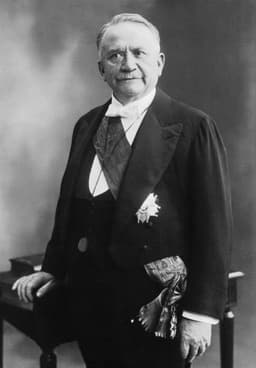
Gaston Doumergue
Politician · Modern
52.4Total

Julius Caesar
General · Ancient
82.8Total
Basic Information
Born
1863
-100
Died
1937
-44
Era
Modern
Ancient
Nationality
France
Roman Republic
Occupation
Politician
General
Civilization
Western
Western
Score Comparison
Military (10%)
48.7
88.0
Political (20%)
45.0
78.0
Influence (20%)
54.9
85.0
Legacy (20%)
47.5
82.0
Leadership (15%)
72.0
80.0
Strategy (15%)
44.3
85.0
TOTAL
52.4
82.8
Gaston Doumergue — Complete Timeline
1913 AD
Served as Prime MinisterPolitical Action◆ Major
Doumergue served as Prime Minister from December 1913 to June 1914. His government passed the three-year military service law, extending conscription to prepare for the looming war with Germany.
Prime MinisterMilitary Service
Impact: national
1924 AD
Elected President of FrancePolitical Action◆ Major
Gaston Doumergue was elected President of the French Republic, serving from 1924 to 1931. He was a popular figure who maintained a largely ceremonial role, helping to stabilize the Third Republic.
Presidency
Impact: nationalconstructive
1934 AD
Returned as Prime Minister during CrisisPolitical Action◆ Major
Doumergue was recalled as Prime Minister in February 1934 following the Stavisky affair riots. He formed a national unity government to restore order and confidence, serving until November 1934.
Prime MinisterCrisis Government
Impact: nationalconstructive
Julius Caesar — Complete Timeline
58 BC
Gallic WarsWar◆ Major
Caesar, as proconsul of Gaul, launched a series of campaigns that conquered all of Gaul (modern France, Belgium, and parts of Switzerland). He fought numerous battles, including against the Helvetii, the Belgae, and the Gallic chieftain Vercingetorix. The wars brought immense wealth and a loyal army to Caesar.
Gallic WarsConquestRoman Expansion
Impact: regional
49 BC
Crossing the RubiconPolitical Action◆ Major
Caesar led Legio XIII across the Rubicon River into Italy, defying the Roman Senate's order to disband his army. This act triggered a civil war against Pompey and the Optimates, ultimately leading to Caesar's dictatorship and the end of the Roman Republic.
Roman Civil WarEnd of RepublicPower Struggle
Impact: global
48 BC
Battle of PharsalusWar◆ Major
Caesar's outnumbered army defeated the larger forces of Pompey the Great at Pharsalus in Greece. Caesar's tactical use of a reserve line to counter Pompey's cavalry charge proved decisive. Pompey fled to Egypt, where he was assassinated, leaving Caesar as the undisputed master of the Roman world.
Roman Civil WarBattleDecisive Victory
Impact: regional
44 BC
Appointment as Dictator for LifePolitical Action◆ Major
The Roman Senate appointed Caesar dictator perpetuo (dictator for life), granting him unprecedented personal power. This move concentrated military, legislative, and judicial authority in one person, effectively ending the Roman Republic's traditional system of checks and balances and alarming many senators.
DictatorshipEnd of RepublicPower Consolidation
Impact: regionaldestructive
Assassination on the Ides of MarchPolitical Action◆ Major
A group of Roman senators, led by Marcus Junius Brutus and Gaius Cassius Longinus, stabbed Caesar to death at a meeting of the Senate in the Theatre of Pompey. The assassination was intended to restore the Republic, but instead triggered another civil war that led to the rise of the Roman Empire.
AssassinationRoman PoliticsEnd of Republic
Impact: globaldestructive
Expert Analysis
gaston-doumergue-vs-julius-caesar
# The Crossing and the Calm: Julius Caesar and Gaston Doumergue
On a January morning in 49 BCE, a Roman general stood at the banks of a small river in northern Italy, the Rubicon. He knew that crossing it with his legions would mean civil war, the end of the Republic he had served, and quite possibly his own death. He crossed anyway. Nineteen centuries later, in February 1934, a retired French politician in his seventies was summoned from his country home to Paris. Rioters had stormed the National Assembly, the government had collapsed, and France teetered on the edge of chaos. Gaston Doumergue accepted the call, formed a national unity cabinet, and within months restored order. Two men, both called to lead in times of fracture. One shattered his world; the other patched it back together.
Origins
Julius Caesar was born into the chaos of the late Roman Republic, a world of senatorial feuds, slave revolts, and the dying gasps of an aristocratic system that could no longer govern a Mediterranean empire. His family, the Julii, claimed descent from the goddess Venus, but they were not among the ruling elite. Young Caesar learned early that in Rome, power came from two things: military glory and the loyalty of the masses. He watched his uncle Marius, a populist general, fight his rival Sulla with armies of loyal veterans. The lesson was indelible: in a republic unmoored from its traditions, the man who commanded legions could command everything.
Gaston Doumergue was born in 1863 in Aigues-Vives, a small village in southern France. His world was the Third Republic, a fragile democracy born from the ashes of the Franco-Prussian War. His father was a winegrower, his family solidly provincial. Doumergue studied law, entered politics, and climbed slowly through the ranks of the Radical Party. He was, by temperament and era, a conciliator. France had been through monarchy, empire, and revolution; the lesson of his time was that stability required compromise, not conquest.
Rise to Power
Caesar’s path was a masterclass in calculated risk. He borrowed fortunes to fund public spectacles, bought allies, and served as governor of a province where he could wage war without Senate approval. His conquest of Gaul from 58 to 50 BCE was not merely a military campaign—it was a political engine. Each victory brought him wealth, loyal soldiers, and fame that eclipsed his rivals in Rome. When the Senate ordered him to disband his army and return as a private citizen—vulnerable to prosecution—he chose war. The crossing of the Rubicon was not a desperate gamble; it was the logical endpoint of a career built on the premise that the Republic’s old rules no longer applied.
Doumergue rose differently. He became Prime Minister in 1913, just months before the outbreak of World War I. His major achievement was pushing through a three-year military service law, strengthening France against Germany. But he lost power in 1914 and spent a decade in the political wilderness. In 1924, he was elected President of France—a largely ceremonial role. He was, by all accounts, a popular figure: genial, modest, with a smile and a pipe that became his trademark. He presided over the Roaring Twenties, a time of relative peace and prosperity. His real test came a decade later, when France’s democracy itself seemed to crack.
Leadership & Governance
Caesar governed as he conquered: decisively, ruthlessly, and with an eye toward permanence. As dictator, he reformed the calendar, granted citizenship to provincials, launched public works, and centralized authority in his own hands. He pardoned many former enemies, but he also packed the Senate with his supporters and accepted the title “dictator for life.” His military genius was undeniable—at Alesia, he trapped and starved a Gallic army twice the size of his own—but his political wisdom was compromised by ambition. He believed that only he could save Rome, and he may have been right. But he failed to understand that the Republic’s elite would rather destroy him than accept a king.
Doumergue’s leadership was the opposite: modest, temporary, and aimed at restoration. When he returned as Prime Minister in 1934, he did not seek new powers. He formed a government of national unity, bringing together conservatives, socialists, and radicals. His strategy was to calm the streets, restore confidence in parliament, and then step aside. He proposed some constitutional reforms to strengthen the executive, but they were defeated. He did not fight for them. In June 1934, after just four months, he resigned. He had done what he was asked to do: stabilize the ship, not steer it to new shores.
Triumph & Tragedy
Caesar’s greatest triumph was his conquest of Gaul, a feat that brought Rome a vast province and made him the most powerful man in the Mediterranean. His most devastating failure was his inability to secure his own survival. On the Ides of March, 44 BCE, a conspiracy of senators—many of them men he had pardoned—stabbed him to death in the Senate chamber. He fell at the foot of a statue of his rival Pompey, bleeding out on the floor of the institution he had tried to reshape. His last words, according to legend, were to his friend Brutus: “You too, my child?”
Doumergue’s triumph was his presidency, a seven-year term in which he was genuinely beloved by the French people. In an era of rising extremism—Mussolini in Italy, Hitler in Germany—Doumergue embodied a quiet, republican decency. His tragedy was that his efforts were temporary. The national unity government he formed in 1934 held for only a few months. The political divisions he papered over would deepen, and within a decade, France would fall to Nazi Germany. He lived long enough to see that collapse, dying in 1937 with the storm gathering.
Character & Destiny
Caesar’s character was a blend of brilliance and blindness. He was generous to his soldiers, charming to his allies, and merciless to his enemies. He believed in his own destiny—he had, after all, been told by fortune-tellers to “beware the Ides of March,” and he ignored them. His arrogance was not petty vanity; it was the conviction that he alone understood what Rome needed. That conviction made him great, and it killed him.
Doumergue’s character was shaped by a different reality. He was a man of the Third Republic, a system that valued consensus over charisma. He did not believe he was destined for greatness; he believed in doing his duty and going home. When the crisis of 1934 passed, he left. He did not try to remake France in his image. He knew that the Republic’s survival depended on leaders who did not think they were indispensable.
Legacy
Caesar’s legacy is monumental. His name became a title—Kaiser, Tsar—and his reforms laid the foundation for the Roman Empire that would endure for centuries. He is remembered as a military genius, a political revolutionary, and a warning about the price of ambition. His assassination did not restore the Republic; it unleashed a civil war that ended it forever.
Doumergue’s legacy is quieter. He is remembered, if at all, as a steady hand in troubled times, a president who smiled and smoked his pipe while Europe burned. His name does not adorn empires. But in a century that produced dictators who promised to save their nations and destroyed them instead, Doumergue’s modesty looks less like weakness and more like wisdom.
Conclusion
Caesar crossed the Rubicon and changed the world. Doumergue crossed the threshold of his country home and saved his government. Both were called to lead in moments when the old order was breaking. One chose to break it further; the other chose to mend it. The historian cannot say which was braver, only that the world needs both kinds of courage—the kind that builds empires, and the kind that knows when to leave.
Rankings
🥇
Julius CaesarLeader
Mil: 88.0Pol: 78.0Inf: 85.0
82.8
🥈
Gaston Doumergue
Mil: 48.7Pol: 45.0Inf: 54.9
52.4
+30.4 behind
How This Comparison Works
Algorithm
Each figure is scored on 6 dimensions (0—100 scale) based on structured historical data: Military (10%), Political (20%), Influence (20%), Legacy (20%), Leadership (15%), Strategy (15%). The weighted total produces the final ranking.
Data Sources
Scores are computed from structured sub-indicators in the database. Scale factors adjust for era (Ancient ×0.85, Modern ×1.0) and civilization size (Eastern ×1.05, Other ×0.80) to account for differences in population and military scale.
Maximum 3 Figures
Comparisons are limited to 2—3 figures to ensure readability and statistical meaningfulness.
Error Margins
±5 points per dimension — Sub-scores are derived from historical records with inherent uncertainty. Two figures within 5 points on a dimension should be considered roughly equivalent in that area.
Total Score Accuracy
±3 points overall — The weighted combination of 6 dimensions produces a total score with approximately ±3 points of uncertainty. Differences of less than 3 points are not statistically significant— the figures are effectively tied.
Known Limitations
- Historical records are incomplete and uneven across civilizations
- Figures from oral-tradition societies may be underrepresented
- Occupation labels can misclassify multi-role figures
- Scores measure capability and impact, not moral character
- Quantitative scoring is a comparison tool, not absolute truth
Capability Radar
Military (10%) — Battles & Warfare
Battles
31
95
Win Rate
34
92
Expansion
33
97
Political (20%) — Governance & Reform
Reform
55
90
Diplomacy
60
85
Economy
50
82
Influence (20%) — Cultural & Global Reach
Cultural
30
88
Global
30
94
Legacy (20%) — Historical Impact
Historical
40
95
Longevity
35
96
Leadership (15%) — Power & Stability
Tenure
65
75
Stability
60
60
Strategy (15%) — Tactics & Innovation
Strategy
40
94
Tactics
41
96
Reform
46
88
Similar Comparisons
Comments & Discussion
JuliusCensor6/17/2026
Calling Caesar a leader worth comparing to Doumergue is like comparing a tsunami to a garden rake. Caesar crossed the Rubicon knowing he was starting a decade-long civil war that would end the Republic. Doumergue was a placeholder PM so old he needed a cane to stand, who did nothing but hold the center together until the real crisis passed. One changed history forever, the other is a trivia answer. Laughable. Really.
虎威老兵6/17/2026
两个根本不是同一种领袖。凯撒跨越卢比孔河时是在赌命,是真正的转折点。杜梅尔格在1934年只是被当成临时拼图,他既没有野心也没有军队,更别说建立新体制。法兰西第三共和国的危机,本质上是一个衰老的议会制走到尽头,而他只是给病床铺了张床单,不是救人,是遮丑。历史对比不能这么耍流氓。
CohortOfOne6/17/2026
Statistically, this comparison is absurd. Caesar commanded over 40,000 legionaries at the Rubicon and faced forces that could annihilate him. His crossing had a 50%+ chance of ending in his death. Doumergue? He formed a cabinet that lasted 7 months, did nothing radical, and resigned when it was convenient. One act changed the course of Western civilization; the other was a footnote in a collapsing republic. Data doesn't support a tie.
老书虫话本6/17/2026
从古典史角度看,凯撒跨河前的犹豫是他一生中最严肃的时刻,他是在推翻自己的共和国,背弃一切传统。而杜梅尔格是被请回去当救火队长,他的合法性来自那个摇摇欲坠的制度本身。一个是制度的终结者,一个是制度的补丁。拿来做并排比较就像把荷马史诗和乡村记账本放在一个书架上——不是不行,但得提醒读者这不是同一类书。
IronSceptic6/17/2026
Revisionist take: Doumergue actually refused to declare martial law, unlike Caesar who essentially declared war on his own government. Doumergue's cabinet included socialists and radicals — he sought consensus, not conquest. The man moderated France's most dangerous moment since the Commune without a single soldier crossing a river. Meanwhile Caesar's 'crossing' is romanticized murder dressed as destiny. I know which I'd rather have in a crisis.