Loading...
Gaspard de Coligny vs Osorio Marquis
Gaspard de Coligny leads by 2.6 pts · 2 figures compared
…
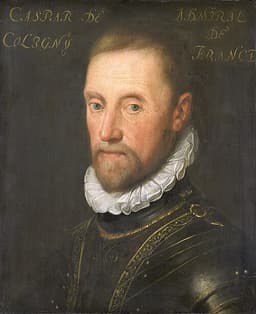
Gaspard de Coligny
General · Modern
58.3Total
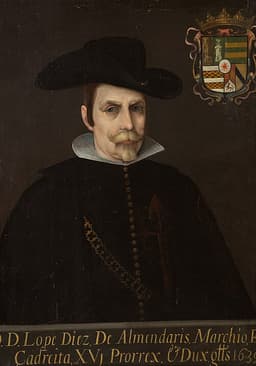
Osorio Marquis
General · Modern
55.7Total
Basic Information
Born
1519
1808
Died
1572
1879
Era
Modern
Modern
Nationality
France
Brazil
Occupation
General
General
Civilization
Western
Western
Score Comparison
Military (10%)
47.5
67.5
Political (20%)
68.0
43.7
Influence (20%)
62.0
59.0
Legacy (20%)
52.0
47.5
Leadership (15%)
65.7
64.5
Strategy (15%)
50.0
60.7
TOTAL
58.3
55.7
Gaspard de Coligny — Complete Timeline
1567 AD
Battle of Saint-DenisWar◆ Major
Gaspard de Coligny commanded Huguenot forces at the Battle of Saint-Denis against the royal army. The battle was indecisive, but the Huguenots failed to capture Paris. Coligny's leadership solidified his position as a key Huguenot military commander.
BattleWars of ReligionHuguenots
Impact: national
1570 AD
Peace of Saint-Germain-en-LayePolitical Action◆ Major
Coligny negotiated the Peace of Saint-Germain-en-Laye, which granted Huguenots limited religious freedom and control of several fortified towns. The peace allowed Coligny to return to court and gain influence over King Charles IX.
Peace TreatyReligious TolerationHuguenots
Impact: nationalconstructive
1572 AD
Assassination attempt on ColignyOther◆ Major
An assassination attempt was made on Gaspard de Coligny in Paris, allegedly ordered by Catherine de Medici and the Guise family. He was shot but survived. This attack set the stage for the St. Bartholomew's Day Massacre two days later.
Assassination AttemptSt. Bartholomew's DayHuguenots
Impact: nationaldestructive
St. Bartholomew's Day MassacreOther
Gaspard de Coligny was killed during the St. Bartholomew's Day Massacre, when Catholic mobs murdered Huguenots in Paris. His body was mutilated and thrown from a window. His death marked a turning point in the Wars of Religion.
MassacreDeathWars of Religion
Impact: nationaltragic
Osorio Marquis — Complete Timeline
1865 AD
Battle of YatayWar◆ Major
Osorio commanded the Brazilian cavalry in the Battle of Yatay, a key engagement in the Paraguayan War. His cavalry charge routed the Paraguayan forces, leading to a decisive Allied victory and the capture of many prisoners.
Paraguayan WarBattleCavalry Charge
Impact: regional
Appointed Commander of the Brazilian CavalryPolitical Action◆ Major
Osorio was appointed commander of the Brazilian cavalry forces in the Paraguayan War. He reorganized and trained the cavalry, making it an effective fighting force. His leadership was crucial in several battles.
Military CommandCavalryParaguayan War
Impact: regionalconstructive
1866 AD
Battle of TuyutíWar◆ Major
Osorio led the Brazilian cavalry in the Battle of Tuyut
Paraguayan WarBattleCavalry
Impact: regional
1868 AD
Battle of AvahyWar◆ Major
Osorio commanded the Brazilian cavalry in the Battle of Avahy during the Paraguayan War. His charge broke the Paraguayan lines, contributing to a decisive Allied victory. This battle demonstrated his tactical skill and leadership.
Paraguayan WarCavalry ChargeBattle
Impact: regional
Expert Analysis
Origins
Gaspard de Coligny was born in 1519 in Châtillon-sur-Loing, France, into a noble family with strong military traditions. His father, Gaspard I de Coligny, served as Marshal of France. Educated at the court of Francis I, Coligny initially pursued a military career, fighting in the Italian Wars. He converted to Protestantism around 1555, becoming a leading figure among the Huguenots.
Osorio Marquis, born Manuel Luís Osório in 1808 in Rio Grande do Sul, Brazil, came from a family of ranchers. He joined the Brazilian army at age 14, serving in the Cisplatine War. His early experience with cavalry on the southern frontier shaped his military style. He fought in the Ragamuffin War and the Platine War, steadily rising through the ranks.
Rise to Power
Coligny's rise came through his military service and political connections. He was appointed Admiral of France in 1552 after distinguished service in the Italian Wars. His conversion to Protestantism made him a natural leader of the Huguenot faction during the French Wars of Religion. By 1562, he was the de facto military commander of the Huguenots, leading campaigns at Dreux (1562) and Saint-Denis (1567). His negotiation of the Peace of Saint-Germain-en-Laye in 1570 marked his peak political influence, securing limited toleration for Protestants.
Osorio's rise was more gradual, driven by battlefield performance. He distinguished himself in the Ragamuffin War (1835-1845), earning promotion to colonel. His leadership in the Platine War (1851-1852) against Argentina brought him national recognition. In 1864, with the outbreak of the Paraguayan War, he was appointed commander of the Brazilian cavalry, tasked with reorganizing and training the force. His decisive charges at Yatay (1865), Tuyutí (1866), and Avahy (1868) made him a national hero.
Leadership & Governance
Coligny's leadership style combined political negotiation with military command. He advocated for religious coexistence and used diplomacy to secure Huguenot rights. As a governor, he implemented reforms in the admiralty and promoted colonization efforts, including a failed settlement in Brazil. His military approach emphasized defensive fortifications and strategic withdrawals, avoiding pitched battles when possible. However, his political maneuvering often put him at odds with the crown, and his influence waned after the Peace of Saint-Germain-en-Laye.
Osorio was a hands-on cavalry commander, known for leading charges from the front. He emphasized mobility, discipline, and shock tactics. His reforms of the Brazilian cavalry included improved training, equipment, and unit organization. Politically, he was less involved, serving as a senator after the war but never wielding major influence. His governance was limited to military administration, where he scored 64.5 in leadership compared to Coligny's 65.7.
Triumph & Tragedy
Coligny's greatest triumph was the Peace of Saint-Germain-en-Laye (1570), which granted Huguenots freedom of worship. His greatest failure was his inability to prevent the St. Bartholomew's Day Massacre in 1572, where he was assassinated along with thousands of Protestants. His death sparked a renewed cycle of violence, undermining the peace he had worked for. He scored 62.0 in influence but only 47.5 in military.
Osorio's greatest triumph was the Battle of Tuyutí (1866), where his cavalry charge repelled a major Paraguayan assault, securing a decisive victory. His failure came at the Battle of Curupayty (1866), where his cavalry was unable to break through Paraguayan defenses, leading to heavy losses. He died in 1879, honored as a national hero, but his legacy is confined to military history. He scored 67.5 in military but only 43.7 in political.
Character & Destiny
Coligny was resolute and principled, often prioritizing religious conviction over political expediency. His steadfastness made him a symbol for Huguenots but also a target for Catholic extremists. His assassination was a direct result of his uncompromising stance and the volatile religious climate. Historians assess him as a tragic figure whose ideals exceeded his political power.
Osorio was bold and charismatic, a leader who inspired loyalty through personal courage. His aggressive tactics sometimes led to unnecessary casualties, but his cavalry charges were instrumental in Brazil's victory. His destiny was shaped by the Paraguayan War, which defined his career and legacy. He is remembered as the "Father of the Brazilian Cavalry."
Legacy
Coligny's legacy is tied to the Huguenot cause and the St. Bartholomew's Day Massacre. His efforts for religious toleration influenced later French policies, and his death became a symbol of religious persecution. However, his military achievements are overshadowed by his assassination. He scored 52.0 in legacy.
Osorio's legacy is more straightforward: he transformed Brazilian cavalry tactics and remains a revered military figure in Brazil. Many streets, cities, and military units bear his name. His legacy score is 47.5, reflecting a more limited but enduring impact.
Conclusion
While Coligny had greater political influence and a broader historical impact through his role in religious wars, Osorio was the more effective military commander. Coligny's total score of 58.3 edges Osorio's 55.7, but his legacy is marred by failure. Osorio's focused military achievements, though narrower, were more successful. Ultimately, Coligny's impact on European history is greater due to the significance of the French Wars of Religion, but Osorio's tactical prowess in the Paraguayan War makes him the superior general. Coligny takes the lead overall, but Osorio wins on military grounds.
Rankings
🥇
Gaspard de ColignyLeader
Mil: 47.5Pol: 68.0Inf: 62.0
58.3
🥈
Osorio Marquis
Mil: 67.5Pol: 43.7Inf: 59.0
55.7
+2.6 behind
How This Comparison Works
Algorithm
Each figure is scored on 6 dimensions (0—100 scale) based on structured historical data: Military (10%), Political (20%), Influence (20%), Legacy (20%), Leadership (15%), Strategy (15%). The weighted total produces the final ranking.
Data Sources
Scores are computed from structured sub-indicators in the database. Scale factors adjust for era (Ancient ×0.85, Modern ×1.0) and civilization size (Eastern ×1.05, Other ×0.80) to account for differences in population and military scale.
Maximum 3 Figures
Comparisons are limited to 2—3 figures to ensure readability and statistical meaningfulness.
Error Margins
±5 points per dimension — Sub-scores are derived from historical records with inherent uncertainty. Two figures within 5 points on a dimension should be considered roughly equivalent in that area.
Total Score Accuracy
±3 points overall — The weighted combination of 6 dimensions produces a total score with approximately ±3 points of uncertainty. Differences of less than 3 points are not statistically significant— the figures are effectively tied.
Known Limitations
- Historical records are incomplete and uneven across civilizations
- Figures from oral-tradition societies may be underrepresented
- Occupation labels can misclassify multi-role figures
- Scores measure capability and impact, not moral character
- Quantitative scoring is a comparison tool, not absolute truth
Capability Radar
Military (10%) — Battles & Warfare
Battles
55
60
Win Rate
50
65
Expansion
30
55
Political (20%) — Governance & Reform
Reform
50
30
Diplomacy
55
35
Economy
30
25
Influence (20%) — Cultural & Global Reach
Cultural
45
40
Global
55
35
Legacy (20%) — Historical Impact
Historical
70
45
Longevity
60
30
Leadership (15%) — Power & Stability
Tenure
45
40
Stability
20
30
Strategy (15%) — Tactics & Innovation
Strategy
65
60
Tactics
60
70
Reform
40
50
Similar Comparisons
Comments & Discussion
No comments yet. Be the first to share your thoughts!