Loading...
Galerius vs Tuoba Gui
Tuoba Gui leads by 5.8 pts · 2 figures compared
…
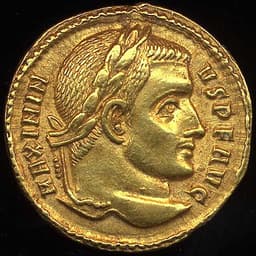
Galerius
Emperor · Ancient
55.7Total

Tuoba Gui
Emperor · Ancient
61.5Total
Basic Information
Born
250
371
Died
311
409
Era
Ancient
Ancient
Nationality
Roman Empire
Northern Wei
Occupation
Emperor
Emperor
Civilization
Western
Eastern
Score Comparison
Military (10%)
63.3
72.0
Political (20%)
62.7
72.0
Influence (20%)
55.7
58.3
Legacy (20%)
48.3
56.0
Leadership (15%)
48.8
53.2
Strategy (15%)
66.3
69.1
TOTAL
55.7
61.5
Galerius — Complete Timeline
297 AD
Persian CampaignWar◆ Major
Galerius led a Roman army against the Sassanid Empire, suffering an initial defeat near Carrhae. He later regrouped and won a decisive victory, capturing the Persian king Narseh's family and forcing a favorable peace treaty.
Sassanid WarMilitary Campaign
Impact: regional
303 AD
Great Persecution of ChristiansPolitical Action◆ Major
Galerius was a primary instigator of Diocletian's Great Persecution, which sought to suppress Christianity through destruction of churches, confiscation of property, and execution of clergy. The persecution lasted until 311.
ChristianityPersecutionTetrarchy
Impact: nationaldestructive
311 AD
Edict of TolerationReform
Galerius, on his deathbed, issued an edict ending the persecution of Christians in the Roman Empire. The edict granted Christians the right to practice their religion and rebuild their churches, marking a major shift in imperial policy.
ChristianityReligious PolicyTetrarchy
Impact: globalprogressive
Tuoba Gui — Complete Timeline
386 AD
Foundation of the Northern Wei dynastyPolitical Action◆ Major
Tuoba Gui declared himself Prince of Dai, later Emperor Daowu of Northern Wei, founding the Northern Wei dynasty. He united the Tuoba Xianbei tribes and established a capital at Shengle (modern Inner Mongolia), beginning a dynasty that would rule northern China for nearly 150 years.
Dynasty FoundationNorthern Wei
Impact: regionalconstructive
395 AD
Battle of Canhe SlopeWar◆ Major
Tuoba Gui defeated the Later Yan army at the Battle of Canhe Slope. The victory was decisive, with massive casualties on the Later Yan side. This battle broke the power of Later Yan and allowed Northern Wei to expand into central Hebei.
BattleNorthern Wei Expansion
Impact: regionaldestructive
398 AD
Conquest of the Later Yan capitalWar◆ Major
Tuoba Gui captured the Later Yan capital of Zhongshan (modern Dingzhou, Hebei). He annexed the Later Yan territories and moved the Northern Wei capital to Pingcheng (modern Datong), establishing a strong base for further conquests.
ConquestNorthern Wei Expansion
Impact: regionaldestructive
400 AD
Implementation of the 'equal-field' land systemReform◆ Major
Tuoba Gui introduced the 'equal-field' (juntian) land system, distributing land to peasants based on the number of able-bodied laborers. This reform increased agricultural productivity, stabilized tax revenues, and reduced the power of landed aristocrats.
Land ReformEconomic Policy
Impact: regionalconstructive
409 AD
Assassination of Tuoba GuiPolitical Action◆ Major
Tuoba Gui was assassinated by his son Tuoba Shao in a palace coup. The assassination stemmed from Tuoba Gui's increasingly erratic and paranoid behavior in his later years. His death led to a succession crisis, but his son Tuoba Si eventually took the throne.
AssassinationSuccession Crisis
Impact: regionaltragic
Expert Analysis
Origins
Galerius was born around 250 AD in the Roman Empire, likely in the Balkans, to a humble family. He rose through the military ranks, serving under Emperor Aurelian and Probus, and later became a trusted general under Diocletian. His early life was marked by military service and a lack of formal education, but he proved adept at warfare.
Tuoba Gui (also known as Emperor Daowu) was born in 371 AD into the Tuoba clan of the Xianbei people, who were nomadic tribes in northern China. His father was Tuoba Shiyijian, a chieftain, but Tuoba Gui's early life was turbulent: his father was assassinated when he was young, and he was raised in exile among the Later Yan court. This experience shaped his later ruthlessness and ambition.
Rise to Power
Galerius's rise came through military success. In 293 AD, Diocletian appointed him as Caesar (junior emperor) of the Eastern Roman Empire, as part of the Tetrarchy. His key turning point was the Persian campaign: after an initial defeat at Carrhae in 296 AD, he regrouped and decisively defeated the Sassanid king Narseh in 298 AD, capturing the royal harem and securing a favorable peace. This victory cemented his position.
Tuoba Gui's rise began in 386 AD when he proclaimed himself Prince of Dai, reviving his clan's former title. He united the Tuoba tribes and gradually expanded his territory. In 395 AD, he defeated the Later Yan at the Battle of Canhe Slope, a massacre that killed over 100,000 Later Yan troops. He then captured the Later Yan capital Zhongshan in 397 AD, forcing the Later Yan to flee. By 398 AD, he declared himself Emperor Daowu of Northern Wei, founding a dynasty.
Leadership & Governance
Galerius ruled as a tetrarch, sharing power with Diocletian and later with his co-emperors. He was a harsh administrator, known for enforcing Diocletian's economic reforms, such as the Edict on Maximum Prices. His governance was authoritarian and militaristic. In contrast, Tuoba Gui implemented the 'equal-field' land system, distributing land to peasants based on able-bodied laborers, which boosted agricultural productivity and tax revenue. He also moved the capital to Pingcheng (modern Datong) and built a centralized bureaucracy, blending Xianbei and Chinese practices.
Triumph & Tragedy
Galerius's greatest triumph was the Persian victory, which secured the eastern frontier and brought prestige. He also issued the Edict of Toleration in 311 AD on his deathbed, ending the Great Persecution of Christians. However, his tragedy was his role in the Great Persecution itself, which began in 303 AD under Diocletian; Galerius was a primary instigator, ordering the destruction of churches and execution of Christians. The persecution failed to eradicate Christianity and damaged his legacy.
Tuoba Gui's triumphs include founding the Northern Wei dynasty, which would rule northern China for over a century, and his military victories that unified the region. His 'equal-field' system was a major reform. However, his tragedy was his later paranoia: he became increasingly erratic, executing officials and family members, which led to his assassination by his own son Tuoba Shao in 409 AD. His death plunged the dynasty into a succession crisis.
Character & Destiny
Galerius was pragmatic and ruthless, but also capable of strategic flexibility (e.g., ending persecution when politically expedient). His deathbed edict suggests a last-minute attempt to secure his legacy. Tuoba Gui was ambitious and innovative, but his character flaws—paranoia and cruelty—led to his downfall. Historians note that his early resilience gave way to instability.
Legacy
Galerius's legacy is mixed: the Edict of Toleration paved the way for Constantine's Edict of Milan and the eventual Christianization of Rome, but his persecution tarnished his name. He scored 48.3 in Legacy. Tuoba Gui's legacy is more enduring: the Northern Wei dynasty he founded Sinicized the Xianbei and laid the groundwork for the Sui and Tang dynasties. His 'equal-field' system influenced Chinese land policy for centuries. He scored 56.0 in Legacy.
Conclusion
Tuoba Gui had a greater impact on history than Galerius. His military score (72.0) and political score (72.0) exceed Galerius's (63.3 and 62.7 respectively). While Galerius's edict was important, it was a deathbed reversal, whereas Tuoba Gui's dynasty shaped Chinese history for centuries. The total score gap of 5.8 points (61.5 vs 55.7) reflects this. Tuoba Gui's reforms and conquests created a lasting empire, while Galerius's persecution failed and his toleration was reactive. Therefore, Tuoba Gui stands as the more consequential figure.
Rankings
🥇
Tuoba GuiLeader
Mil: 72.0Pol: 72.0Inf: 58.3
61.5
🥈
Galerius
Mil: 63.3Pol: 62.7Inf: 55.7
55.7
+5.8 behind
How This Comparison Works
Algorithm
Each figure is scored on 6 dimensions (0—100 scale) based on structured historical data: Military (10%), Political (20%), Influence (20%), Legacy (20%), Leadership (15%), Strategy (15%). The weighted total produces the final ranking.
Data Sources
Scores are computed from structured sub-indicators in the database. Scale factors adjust for era (Ancient ×0.85, Modern ×1.0) and civilization size (Eastern ×1.05, Other ×0.80) to account for differences in population and military scale.
Maximum 3 Figures
Comparisons are limited to 2—3 figures to ensure readability and statistical meaningfulness.
Error Margins
±5 points per dimension — Sub-scores are derived from historical records with inherent uncertainty. Two figures within 5 points on a dimension should be considered roughly equivalent in that area.
Total Score Accuracy
±3 points overall — The weighted combination of 6 dimensions produces a total score with approximately ±3 points of uncertainty. Differences of less than 3 points are not statistically significant— the figures are effectively tied.
Known Limitations
- Historical records are incomplete and uneven across civilizations
- Figures from oral-tradition societies may be underrepresented
- Occupation labels can misclassify multi-role figures
- Scores measure capability and impact, not moral character
- Quantitative scoring is a comparison tool, not absolute truth
Capability Radar
Military (10%) — Battles & Warfare
Battles
65
75
Win Rate
70
80
Expansion
55
85
Political (20%) — Governance & Reform
Reform
65
72
Diplomacy
55
68
Economy
50
60
Influence (20%) — Cultural & Global Reach
Cultural
40
65
Global
55
55
Legacy (20%) — Historical Impact
Historical
60
70
Longevity
50
60
Leadership (15%) — Power & Stability
Tenure
60
65
Stability
45
55
Strategy (15%) — Tactics & Innovation
Strategy
65
82
Tactics
60
78
Reform
50
70
Similar Comparisons
Comments & Discussion
No comments yet. Be the first to share your thoughts!