Loading...
Galerius vs Napoleon Bonaparte
Napoleon Bonaparte leads by 15.2 pts · 2 figures compared
…
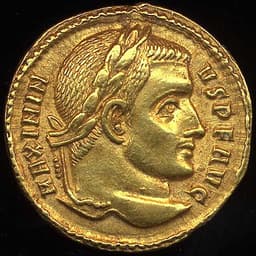
Galerius
Emperor · Ancient
55.7Total

Napoleon Bonaparte
General · Modern
70.9Total
Basic Information
Born
250
1769
Died
311
1821
Era
Ancient
Modern
Nationality
Roman Empire
France
Occupation
Emperor
General
Civilization
Western
Western
Score Comparison
Military (10%)
63.3
94.0
Political (20%)
62.7
72.0
Influence (20%)
55.7
40.0
Legacy (20%)
48.3
80.0
Leadership (15%)
48.8
78.0
Strategy (15%)
66.3
90.0
TOTAL
55.7
70.9
Galerius — Complete Timeline
297 AD
Persian CampaignWar◆ Major
Galerius led a Roman army against the Sassanid Empire, suffering an initial defeat near Carrhae. He later regrouped and won a decisive victory, capturing the Persian king Narseh's family and forcing a favorable peace treaty.
Sassanid WarMilitary Campaign
Impact: regional
303 AD
Great Persecution of ChristiansPolitical Action◆ Major
Galerius was a primary instigator of Diocletian's Great Persecution, which sought to suppress Christianity through destruction of churches, confiscation of property, and execution of clergy. The persecution lasted until 311.
ChristianityPersecutionTetrarchy
Impact: nationaldestructive
311 AD
Edict of TolerationReform
Galerius, on his deathbed, issued an edict ending the persecution of Christians in the Roman Empire. The edict granted Christians the right to practice their religion and rebuild their churches, marking a major shift in imperial policy.
ChristianityReligious PolicyTetrarchy
Impact: globalprogressive
Napoleon Bonaparte — Complete Timeline
1799 AD
Coup of 18 BrumaireOther◆ Major
Napoleon Bonaparte, with support from his brother Lucien and key political figures, overthrew the Directory in a bloodless coup. He established the Consulate with himself as First Consul, effectively becoming the ruler of France. This event ended the French Revolution's most unstable period.
French RevolutionCoupRise to Power
Impact: regional
1804 AD
Promulgation of the Napoleonic CodeOther◆ Major
Napoleon enacted the Civil Code of the French, known as the Napoleonic Code, a comprehensive set of laws that replaced the fragmented feudal legal systems. The code established legal equality, protected property rights, and secularized law. It became the basis for legal systems in many European and world countries.
Legal ReformNapoleonic CodeCivil Law
Impact: globalconstructive
1805 AD
Battle of AusterlitzWar◆ Major
Napoleon's Grande Arm
Napoleonic WarsBattleDecisive Victory
Impact: global
1812 AD
Invasion of RussiaWar◆ Major
Napoleon led the Grande Arm
Napoleonic WarsInvasionDisaster
Impact: globaldestructive
1815 AD
Battle of WaterlooWar◆ Major
Napoleon's French army was defeated by the combined forces of the Duke of Wellington's Anglo-Allied army and Gebhard Leberecht von Bl
Napoleonic WarsBattleFinal Defeat
Impact: globaldestructive
Expert Analysis
galerius-vs-napoleon-bonaparte
# The Conqueror and the Convert: Napoleon and Galerius
In the summer of 1815, Napoleon Bonaparte stood on the rain-soaked fields of Waterloo, watching his imperial dream dissolve into mud and blood. Ninety-three years earlier, in the spring of 311, the Roman Emperor Galerius lay dying in his palace in Nicomedia, his body consumed by a mysterious, agonizing illness that contemporaries whispered was divine punishment. One man had conquered Europe, the other had persecuted Christians—yet both, in their final acts, reshaped the world in ways they never intended. What drives a man to build an empire, and what drives him to tear down the walls he himself erected?
Origins
Napoleon was born in 1769 on the island of Corsica, a land recently purchased by France from Genoa. His family was minor nobility, but their status was precarious, their loyalties divided between Corsican independence and French rule. The young Napoleon grew up speaking Italian, not French, and carried a chip on his shoulder that would never quite disappear. He was small, intense, and fiercely ambitious, channeling his energy into military academies where he excelled in mathematics and artillery.
Galerius, born around 250, came from a very different world. He was a peasant’s son from Dacia, a rugged frontier province along the Danube. His rise came not through education but through brute competence in the Roman army, where he distinguished himself as a soldier of exceptional courage. Where Napoleon was a product of the Enlightenment—rational, systematic, and hungry for glory—Galerius was a creature of the late Roman Empire, where survival depended on loyalty to the emperor and the gods.
Rise to Power
Napoleon’s ascent was meteoric. In 1793, at just twenty-four, he captured Toulon from British forces, earning a promotion to brigadier general. By 1796, he commanded the Army of Italy and stunned Europe with a campaign of breathtaking speed and brilliance. He crossed the Alps, defeated the Austrians, and dictated peace terms that made him a national hero. His coup of 18 Brumaire in 1799 placed him at the head of France as First Consul, and by 1804, he crowned himself Emperor.
Galerius rose more slowly, through decades of service. His first major command came during the Persian Campaign of 297, where he initially suffered a humiliating defeat near Carrhae. The Roman Emperor Diocletian reportedly made Galerius walk behind his chariot in disgrace—a story that, true or not, captures the brutal dynamics of Roman power. Galerius regrouped, crushed the Sassanids, and won back favor. In 293, Diocletian appointed him Caesar, junior emperor of the Eastern provinces. He became Augustus in 305, ruling a vast but divided empire.
Leadership & Governance
Napoleon governed as a modernizer. His Napoleonic Code, enacted in 1804, streamlined French law, abolished feudal privileges, and enshrined principles of meritocracy and property rights. He built roads, schools, and a centralized bureaucracy. But his rule was also autocratic: he suppressed dissent, controlled the press, and placed family members on European thrones. His military genius was unmatched—his campaigns from Austerlitz in 1805 to Jena in 1806 are still studied in war colleges—but his political wisdom faltered when he invaded Russia in 1812.
Galerius governed as a traditional Roman autocrat, but with a darker edge. He was the primary instigator of the Great Persecution of Christians, which began in 303 under Diocletian. Churches were destroyed, scriptures burned, and believers tortured or executed. Galerius believed Christianity threatened the old gods and the unity of the empire. Yet his persecution failed—Christianity only grew stronger. On his deathbed in 311, he issued the Edict of Toleration, granting Christians the right to worship openly. It was a stunning reversal, born of desperation or pragmatism, and it paved the way for Constantine’s conversion two years later.
Triumph & Tragedy
Napoleon’s greatest triumph was Austerlitz in 1805, where he crushed a combined Russian and Austrian army, ending the Third Coalition. His greatest tragedy was the Russian campaign of 1812, where he lost over 400,000 men to winter, hunger, and guerrilla attacks. He was exiled to Elba in 1814, escaped, ruled for a Hundred Days, and met final defeat at Waterloo in 1815.
Galerius’s triumph was his victory over the Persians, which secured the eastern frontier for a generation. His tragedy was the Great Persecution itself—a brutal policy that stained his reign, failed in its purpose, and forced him to recant on his deathbed. He died in 311, hated by Christians and mistrusted by pagans.
Character & Destiny
Napoleon was driven by an insatiable hunger for glory. “Impossible is a word to be found only in the dictionary of fools,” he once said. His confidence bordered on arrogance, his ambition on megalomania. He trusted his own genius above all else, and that trust ultimately destroyed him.
Galerius was driven by fear—fear of change, fear of the gods, fear of losing control. He was a conservative who tried to preserve the old order through violence, only to realize too late that the old order was already dead. His deathbed edict was an act of surrender, not enlightenment.
Legacy
Napoleon’s legacy is enormous. He reshaped Europe’s borders, spread nationalist ideals, and modernized legal systems across the continent. The Napoleonic Code remains the foundation of civil law in many countries. Yet he also left a trail of destruction and a template for modern dictatorship.
Galerius’s legacy is quieter but equally profound. By ending the persecution, he allowed Christianity to emerge from the shadows. Without his Edict of Toleration, there might have been no Constantine, no Christian Roman Empire, no medieval Christendom. He is remembered as a persecutor who repented—a flawed, tragic figure whose final act changed history.
Conclusion
Napoleon and Galerius never met, never could have met. One was a child of the French Revolution, the other a soldier of the late Roman Empire. Yet both faced the same fundamental question: when power is absolute, how do you use it? Napoleon chose conquest and glory, and fell from a height few have reached. Galerius chose persecution and control, and found that even an emperor cannot command belief. In the end, it was not their strength but their weakness—Napoleon’s hubris, Galerius’s fear—that defined them. Their stories remind us that history’s greatest figures are not gods but men, struggling with forces they can neither fully understand nor control.
Rankings
🥇
Napoleon BonaparteLeader
Mil: 94.0Pol: 72.0Inf: 40.0
70.9
🥈
Galerius
Mil: 63.3Pol: 62.7Inf: 55.7
55.7
+15.2 behind
How This Comparison Works
Algorithm
Each figure is scored on 6 dimensions (0—100 scale) based on structured historical data: Military (10%), Political (20%), Influence (20%), Legacy (20%), Leadership (15%), Strategy (15%). The weighted total produces the final ranking.
Data Sources
Scores are computed from structured sub-indicators in the database. Scale factors adjust for era (Ancient ×0.85, Modern ×1.0) and civilization size (Eastern ×1.05, Other ×0.80) to account for differences in population and military scale.
Maximum 3 Figures
Comparisons are limited to 2—3 figures to ensure readability and statistical meaningfulness.
Error Margins
±5 points per dimension — Sub-scores are derived from historical records with inherent uncertainty. Two figures within 5 points on a dimension should be considered roughly equivalent in that area.
Total Score Accuracy
±3 points overall — The weighted combination of 6 dimensions produces a total score with approximately ±3 points of uncertainty. Differences of less than 3 points are not statistically significant— the figures are effectively tied.
Known Limitations
- Historical records are incomplete and uneven across civilizations
- Figures from oral-tradition societies may be underrepresented
- Occupation labels can misclassify multi-role figures
- Scores measure capability and impact, not moral character
- Quantitative scoring is a comparison tool, not absolute truth
Capability Radar
Military (10%) — Battles & Warfare
Battles
65
95
Win Rate
70
90
Expansion
55
95
Political (20%) — Governance & Reform
Reform
65
95
Diplomacy
55
80
Economy
50
85
Influence (20%) — Cultural & Global Reach
Cultural
40
85
Global
55
90
Legacy (20%) — Historical Impact
Historical
60
95
Longevity
50
90
Leadership (15%) — Power & Stability
Tenure
60
85
Stability
45
70
Strategy (15%) — Tactics & Innovation
Strategy
65
95
Tactics
60
98
Reform
50
92
Similar Comparisons
Comments & Discussion
EmperorEnder6/17/2026
Napoleon was a strategic genius who rewrote the rulebook of warfare; Galerius was a blunt instrument of Roman expansion. Waterloo wasn’t just a defeat—it was a masterclass in allies’ betrayal vs. his own hubris. Galerius’s Edict of Toleration was less a change of heart than a deathbed PR stunt. Napoleon’s legacy lives in codes and cannon; Galerius’s in footnotes for persecuting Christians. One commands armies still studied; the other is a trivia answer.
佩剑教皇6/17/2026
拿坡仑是个被小个子野心撑爆的天才,而伽列里乌斯只是个暴烈的农民兵,靠杀伐上位。他临死前居然赦免基督徒?别傻了——那不过是屁股遇火才想起灭火。拿坡仑用法典拔高文明,用滑铁卢教训世人盟友有多不可靠;伽列里乌斯只会烧教堂、喂狮子。一个改写战争历史,一个被历史碾成灰,高下立判。
NapStatSkeptic6/17/2026
You’re all romanticizing Napoleon’s “genius” while ignoring his body count: nearly 1 million dead in his wars. Galerius’s persecution didn’t even scratch Christian numbers—maybe 3,000 martyrs max, per Gibbon. And his Edict? It was pragmatic, not pious: he needed stability after 8 years of failed empire-wide bans. Napoleon’s “reforms” like the Code were self-serving power consolidations, not altruistic enlightenment. Both were narcissists with different cathedrals.
青史碎纸机6/17/2026
别把拿坡仑吹成战神了——他那套战术翻来覆去就两招:炮兵分裂敌方,骑兵包抄残兵。威灵顿在滑铁卢看穿他了,等援军到位就反杀。伽列里乌斯更荒唐,打了十三年基督徒还是越抓越多,说明帝国镇压政策早烂透了。这两人骨子里都是家暴男:一个抽欧洲脸,一个摔基督教锁链。最后都变成历史笑柄,谁赢?