Loading...
Galerius vs Julius Caesar
Julius Caesar leads by 27.1 pts · 2 figures compared
…
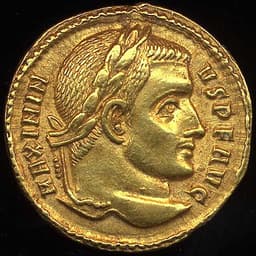
Galerius
Emperor · Ancient
55.7Total

Julius Caesar
General · Ancient
82.8Total
Basic Information
Born
250
-100
Died
311
-44
Era
Ancient
Ancient
Nationality
Roman Empire
Roman Republic
Occupation
Emperor
General
Civilization
Western
Western
Score Comparison
Military (10%)
63.3
88.0
Political (20%)
62.7
78.0
Influence (20%)
55.7
85.0
Legacy (20%)
48.3
82.0
Leadership (15%)
48.8
80.0
Strategy (15%)
66.3
85.0
TOTAL
55.7
82.8
Galerius — Complete Timeline
297 AD
Persian CampaignWar◆ Major
Galerius led a Roman army against the Sassanid Empire, suffering an initial defeat near Carrhae. He later regrouped and won a decisive victory, capturing the Persian king Narseh's family and forcing a favorable peace treaty.
Sassanid WarMilitary Campaign
Impact: regional
303 AD
Great Persecution of ChristiansPolitical Action◆ Major
Galerius was a primary instigator of Diocletian's Great Persecution, which sought to suppress Christianity through destruction of churches, confiscation of property, and execution of clergy. The persecution lasted until 311.
ChristianityPersecutionTetrarchy
Impact: nationaldestructive
311 AD
Edict of TolerationReform
Galerius, on his deathbed, issued an edict ending the persecution of Christians in the Roman Empire. The edict granted Christians the right to practice their religion and rebuild their churches, marking a major shift in imperial policy.
ChristianityReligious PolicyTetrarchy
Impact: globalprogressive
Julius Caesar — Complete Timeline
58 BC
Gallic WarsWar◆ Major
Caesar, as proconsul of Gaul, launched a series of campaigns that conquered all of Gaul (modern France, Belgium, and parts of Switzerland). He fought numerous battles, including against the Helvetii, the Belgae, and the Gallic chieftain Vercingetorix. The wars brought immense wealth and a loyal army to Caesar.
Gallic WarsConquestRoman Expansion
Impact: regional
49 BC
Crossing the RubiconPolitical Action◆ Major
Caesar led Legio XIII across the Rubicon River into Italy, defying the Roman Senate's order to disband his army. This act triggered a civil war against Pompey and the Optimates, ultimately leading to Caesar's dictatorship and the end of the Roman Republic.
Roman Civil WarEnd of RepublicPower Struggle
Impact: global
48 BC
Battle of PharsalusWar◆ Major
Caesar's outnumbered army defeated the larger forces of Pompey the Great at Pharsalus in Greece. Caesar's tactical use of a reserve line to counter Pompey's cavalry charge proved decisive. Pompey fled to Egypt, where he was assassinated, leaving Caesar as the undisputed master of the Roman world.
Roman Civil WarBattleDecisive Victory
Impact: regional
44 BC
Appointment as Dictator for LifePolitical Action◆ Major
The Roman Senate appointed Caesar dictator perpetuo (dictator for life), granting him unprecedented personal power. This move concentrated military, legislative, and judicial authority in one person, effectively ending the Roman Republic's traditional system of checks and balances and alarming many senators.
DictatorshipEnd of RepublicPower Consolidation
Impact: regionaldestructive
Assassination on the Ides of MarchPolitical Action◆ Major
A group of Roman senators, led by Marcus Junius Brutus and Gaius Cassius Longinus, stabbed Caesar to death at a meeting of the Senate in the Theatre of Pompey. The assassination was intended to restore the Republic, but instead triggered another civil war that led to the rise of the Roman Empire.
AssassinationRoman PoliticsEnd of Republic
Impact: globaldestructive
Expert Analysis
galerius-vs-julius-caesar
# The Dictator and the Dying Emperor
On the Ides of March, 44 BCE, Julius Caesar fell beneath twenty-three dagger strokes in the Senate chamber of Rome. Two centuries later, in the spring of 311 CE, the Emperor Galerius lay in his palace, his body ravaged by a slow, putrid disease—some said divine punishment. From his deathbed, he dictated an edict that legalized Christianity, the very faith he had spent years trying to destroy. One man was killed for seizing too much power; the other surrendered his last weapon as he slipped into oblivion. Both were Roman rulers. Both faced history's judgment. Yet their paths, and their legacies, could not have been more different.
Origins
Julius Caesar was born into the patrician Julian clan, one of Rome's oldest families, but his branch had fallen into relative obscurity. The Rome of his youth was a dying Republic, torn by civil wars between populists and oligarchs. Caesar grew up amid the violence of Marius and Sulla, learning early that survival meant ambition, and ambition meant risk. He was a gambler by nature, a man who borrowed fortunes he could not repay and charmed crowds with his charisma.
Galerius, by contrast, was born a century later, around 250 CE, in the Balkans—a region of rough soldiers and frontier warriors. His father was a herdsman, his mother a woman who reportedly despised Christianity with a superstitious hatred. The Roman Empire of Galerius's youth was a different beast: battered by invasions, economic collapse, and usurper emperors. To rise, a man needed not charm but brute competence. Galerius became a soldier, and a brutal one.
Rise to Power
Caesar climbed the political ladder of the Republic with breathtaking speed: quaestor, aedile, praetor, and finally consul in 59 BCE. But his true rise came through military command. In Gaul, from 58 to 50 BCE, he conquered a territory larger than Italy itself, amassing a veteran army loyal to him alone. When the Senate ordered him to disband, he crossed the Rubicon River in 49 BCE, igniting a civil war. "The die is cast," he reportedly said. Within four years, he was dictator for life.
Galerius rose through the Tetrarchy, a system created by Emperor Diocletian in 293 CE to stabilize the Empire by dividing rule among four men. Galerius became Caesar, then Augustus, of the eastern provinces. His path was less about personal charisma than about surviving court intrigue and proving himself in battle. In 297 CE, he led a campaign against the Sassanid Persians—and at first, he failed. Near Carrhae, his army was routed. Humiliated, he crawled before Diocletian's chariot, begging for a second chance. He got it, and this time, he crushed the Persians, capturing their treasury and even the king's harem.
Leadership & Governance
Caesar governed through sheer force of personality and relentless reform. He granted citizenship to Gauls, reformed the calendar (giving us the Julian calendar), initiated massive public works, and centralized power in his own hands. His military genius was undeniable: at Alesia in 52 BCE, he besieged a Gallic stronghold while simultaneously defeating a relief army, a feat of engineering and tactical brilliance. Yet his political wisdom was flawed. He pardoned enemies who would later kill him, and he accepted divine honors that inflamed republican sentiment.
Galerius governed through fear and orthodoxy. A military emperor of the old school, he spent most of his reign on the Danube frontier, fighting barbarians. His political score of 67.4 reflects a man who ruled by decree rather than persuasion. His greatest reform—the Edict of Toleration in 311 CE—was not a change of heart but a deathbed admission of failure. After years of persecuting Christians, destroying their churches, and executing their leaders, he realized the faith would not die. His edict granted Christians the right to exist, but it was a concession, not a conversion.
Triumph & Tragedy
Caesar's greatest moment was his triumph over Gaul—a conquest that brought immense wealth and glory to Rome and made him the most powerful man in the Mediterranean. His tragedy was the Ides of March: assassinated by senators he had spared, men who called themselves liberators but plunged Rome into another generation of civil war. His final words, according to legend, were "Et tu, Brute?"—a cry of betrayal.
Galerius's greatest triumph was the Persian campaign of 297–298 CE. After his initial defeat, he regrouped, marched through Armenia, and caught the Persian king Shapur I off guard. The victory was total, and it secured Rome's eastern frontier for decades. His tragedy was his final illness, described by the Christian historian Lactantius as a slow rotting of his genitals and bowels—a death so horrifying that it became a morality tale. On his deathbed, he issued the edict that contradicted everything he had fought for.
Character & Destiny
Caesar was audacious, generous, and ruthless. He gambled with his life and his country's future, and he won until he lost. His personality drove him to cross the Rubicon, to accept dictatorship, to ignore warnings of conspiracy. History gave him a dramatic end because he lived a dramatic life.
Galerius was stubborn, cruel, and pragmatic. He persecuted Christians for nearly a decade, burning scriptures and executing bishops, because he believed traditional Roman gods demanded it. But when his body failed, his ideology failed too. He died issuing mercy because he had no strength left for cruelty. His destiny was to be a footnote—the persecutor who, at the last moment, opened the door for Constantine's embrace of Christianity.
Legacy
Caesar's legacy is immeasurable. His name became synonymous with imperial power—"Kaiser" and "Tsar" derive from it. His writings, especially his *Commentaries on the Gallic War*, remain classics of military literature. His death ended the Republic and, indirectly, created the Empire. He is remembered as a genius and a tyrant, a reformer and a destroyer.
Galerius is remembered by few. His edict of 311 CE is a milestone for religious freedom, but it was Constantine, not Galerius, who issued the Edict of Milan two years later and who converted to Christianity. Galerius's legacy score of 67.9 reflects a man history has largely forgotten—a harsh emperor who, in his final agony, did one good thing.
Conclusion
Two men, two Romes, two deaths. Caesar died at the height of his power, cut down by those he trusted, his ambition a warning for all time. Galerius died in a sickbed, his body rotting, his persecution a failure, his final edict a surrender. One was murdered because he wanted too much; the other died because he had achieved too little. Yet together, they frame the arc of the ancient world: the Republic that fell to a single man's ambition, and the Empire that survived by learning, at last, to tolerate the faith it could not crush.
Rankings
🥇
Julius CaesarLeader
Mil: 88.0Pol: 78.0Inf: 85.0
82.8
🥈
Galerius
Mil: 63.3Pol: 62.7Inf: 55.7
55.7
+27.1 behind
How This Comparison Works
Algorithm
Each figure is scored on 6 dimensions (0—100 scale) based on structured historical data: Military (10%), Political (20%), Influence (20%), Legacy (20%), Leadership (15%), Strategy (15%). The weighted total produces the final ranking.
Data Sources
Scores are computed from structured sub-indicators in the database. Scale factors adjust for era (Ancient ×0.85, Modern ×1.0) and civilization size (Eastern ×1.05, Other ×0.80) to account for differences in population and military scale.
Maximum 3 Figures
Comparisons are limited to 2—3 figures to ensure readability and statistical meaningfulness.
Error Margins
±5 points per dimension — Sub-scores are derived from historical records with inherent uncertainty. Two figures within 5 points on a dimension should be considered roughly equivalent in that area.
Total Score Accuracy
±3 points overall — The weighted combination of 6 dimensions produces a total score with approximately ±3 points of uncertainty. Differences of less than 3 points are not statistically significant— the figures are effectively tied.
Known Limitations
- Historical records are incomplete and uneven across civilizations
- Figures from oral-tradition societies may be underrepresented
- Occupation labels can misclassify multi-role figures
- Scores measure capability and impact, not moral character
- Quantitative scoring is a comparison tool, not absolute truth
Capability Radar
Military (10%) — Battles & Warfare
Battles
65
95
Win Rate
70
92
Expansion
55
97
Political (20%) — Governance & Reform
Reform
65
90
Diplomacy
55
85
Economy
50
82
Influence (20%) — Cultural & Global Reach
Cultural
40
88
Global
55
94
Legacy (20%) — Historical Impact
Historical
60
95
Longevity
50
96
Leadership (15%) — Power & Stability
Tenure
60
75
Stability
45
60
Strategy (15%) — Tactics & Innovation
Strategy
65
94
Tactics
60
96
Reform
50
88
Similar Comparisons
Comments & Discussion
No comments yet. Be the first to share your thoughts!