Loading...
Galerius vs Rudradaman I
Galerius leads by 4.3 pts · 2 figures compared
…
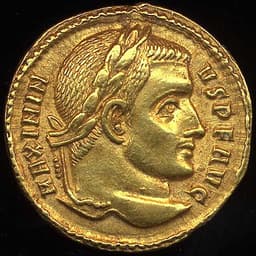
Galerius
Emperor · Ancient
55.7Total

Rudradaman I
Emperor · Ancient
51.4Total
Basic Information
Born
250
109
Died
311
150
Era
Ancient
Ancient
Nationality
Roman Empire
India
Occupation
Emperor
Emperor
Civilization
Western
Indian
Score Comparison
Military (10%)
63.3
50.0
Political (20%)
62.7
68.0
Influence (20%)
55.7
51.8
Legacy (20%)
48.3
45.0
Leadership (15%)
48.8
40.0
Strategy (15%)
66.3
60.0
TOTAL
55.7
51.4
Galerius — Complete Timeline
297 AD
Persian CampaignWar◆ Major
Galerius led a Roman army against the Sassanid Empire, suffering an initial defeat near Carrhae. He later regrouped and won a decisive victory, capturing the Persian king Narseh's family and forcing a favorable peace treaty.
Sassanid WarMilitary Campaign
Impact: regional
303 AD
Great Persecution of ChristiansPolitical Action◆ Major
Galerius was a primary instigator of Diocletian's Great Persecution, which sought to suppress Christianity through destruction of churches, confiscation of property, and execution of clergy. The persecution lasted until 311.
ChristianityPersecutionTetrarchy
Impact: nationaldestructive
311 AD
Edict of TolerationReform
Galerius, on his deathbed, issued an edict ending the persecution of Christians in the Roman Empire. The edict granted Christians the right to practice their religion and rebuild their churches, marking a major shift in imperial policy.
ChristianityReligious PolicyTetrarchy
Impact: globalprogressive
Rudradaman I — Complete Timeline
135 AD
Expanded Shaka TerritoryWar◆ Major
Rudradaman I expanded the Western Kshatrapa kingdom by conquering territories in Gujarat, Malwa, and parts of Rajasthan. He brought several regions under Shaka control, strengthening their position in western India.
ConquestExpansionShaka
Impact: regional
140 AD
Repaired the Sudarshana Lake DamReform◆ Major
Rudradaman I ordered the repair of the Sudarshana Lake dam in the Kathiawar peninsula, which had been damaged by a storm. The project involved reinforcing the embankment and restoring irrigation to the region, benefiting agriculture.
IrrigationPublic WorksAgriculture
Impact: regionalconstructive
145 AD
Defeated the SatavahanasWar◆ Major
Rudradaman I fought against the Satavahana king Vashishtiputra Satakarni, defeating him in battle. However, he spared his life due to a marital alliance, as Satakarni was his son-in-law.
WarSatavahanaAlliance
Impact: regional
150 AD
Commissioned the Junagadh Rock InscriptionCultural◆ Major
Rudradaman I commissioned the Junagadh rock inscription, which records his repair of the Sudarshana Lake dam and details his reign. The inscription is notable for being one of the earliest long Sanskrit inscriptions in India.
InscriptionSanskritHistorical Record
Impact: regionalconstructive
Expert Analysis
Origins
Galerius was born around 250 AD in the Roman Empire, likely in the province of Illyria. His father was a farmer, and his mother was a woman of modest means. Galerius initially served as a soldier, rising through the ranks due to his military prowess. He was later adopted by Emperor Diocletian and became a key figure in the Tetrarchy, the system of four co-emperors ruling the Roman Empire.
Rudradaman I was a Shaka ruler of the Western Kshatrapas in India, reigning from approximately 130 to 150 AD. He was born into the Kardamaka dynasty, which ruled parts of western and central India. His early life is not well-documented, but he likely received training in administration and military affairs, as was customary for princes of his time.
Rise to Power
Galerius rose to prominence through his military career. He was appointed Caesar (junior emperor) by Diocletian in 293 AD, tasked with defending the Danube frontier. His major breakthrough came in 298 AD when he led a campaign against the Sassanid Empire. After an initial defeat near Carrhae, he regrouped and won a decisive victory, capturing the Sassanid capital Ctesiphon. This victory solidified his position and led to his elevation to Augustus (senior emperor) in 305 AD after Diocletian's abdication.
Rudradaman I ascended to power as the ruler of the Western Kshatrapas, likely inheriting the throne from his father or predecessor. He expanded his territory through military campaigns, defeating the Satavahana king Vashishtiputra Satakarni around 150 AD. Despite defeating him, Rudradaman spared his life due to a marital alliance, demonstrating political acumen. His conquests extended his rule over Gujarat, Malwa, and parts of Rajasthan.
Leadership & Governance
Galerius's leadership was marked by his role in the Great Persecution of Christians (303-311 AD). As a primary instigator, he enforced Diocletian's edicts that ordered the destruction of churches, confiscation of scriptures, and execution of clergy. However, on his deathbed in 311 AD, he issued the Edict of Toleration, ending the persecution and granting Christians the right to practice their faith. This contradictory action reflects his pragmatic approach to governance. His military leadership scored 63.3, while his political score was 62.7.
Rudradaman I's governance focused on infrastructure and record-keeping. He repaired the Sudarshana Lake dam in the Kathiawar peninsula after it was damaged by a storm, reinforcing the embankment and ensuring water supply for irrigation. He also commissioned the Junagadh rock inscription, which details his reign and achievements. This inscription is a key historical source for the period. His political score was 68.0, reflecting his administrative skills, while his leadership score was 40.0, indicating less emphasis on military command.
Triumph & Tragedy
Galerius's greatest triumph was his victory over the Sassanids in 298 AD, which secured the eastern frontier of the Roman Empire and brought a favorable peace treaty. However, his greatest failure was the Great Persecution, which alienated a large segment of the population and ultimately failed to suppress Christianity. The Persecution resulted in the deaths of thousands, but the faith continued to grow. His total score of 55.7 reflects these mixed outcomes.
Rudradaman I's triumph was the successful repair of the Sudarshana Lake dam, a major engineering feat that benefited agriculture and demonstrated his commitment to public works. His defeat of the Satavahanas also expanded his kingdom. However, his failure lies in his relative obscurity; his achievements did not lead to a lasting dynasty or significant cultural impact. His total score of 51.4 is slightly lower than Galerius's.
Character & Destiny
Galerius was a ruthless and ambitious ruler, willing to enforce harsh policies to maintain order. His decision to issue the Edict of Toleration on his deathbed suggests a pragmatic shift or perhaps a change of heart, but it came too late to alter his legacy as a persecutor. His character, shaped by his military background, led him to prioritize stability over tolerance.
Rudradaman I appears as a capable administrator and builder, but his military and political ambitions were limited compared to contemporary rulers. His decision to spare the Satavahana king indicates a diplomatic streak, but his reign lacked the transformative impact of more aggressive empires.
Legacy
Galerius's legacy is complex. He is remembered as a persecutor of Christians, but his Edict of Toleration paved the way for the eventual legalization of Christianity under Constantine. His military campaigns against Persia secured the eastern borders for a time. His influence score of 55.7 reflects his role in the Tetrarchy and the persecution.
Rudradaman I's legacy is tied to the Junagadh inscription, which provides valuable historical data about the Shaka period. His repair of the Sudarshana Lake dam is a notable achievement in Indian engineering. However, his kingdom did not survive long after his death, and his impact on Indian history is minor compared to major empires like the Mauryas or Guptas. His legacy score is 45.0.
Conclusion
Galerius had a greater impact on world history due to his role in the Christian persecution and the subsequent Edict of Toleration, which influenced the religious landscape of the Roman Empire and beyond. While Rudradaman I's administrative achievements are noteworthy, they did not alter the course of history as significantly. Galerius's total score of 55.7 versus Rudradaman's 51.4 reflects this difference. Galerius's actions directly affected the trajectory of Christianity, a major world religion, whereas Rudradaman's contributions were more localized and less enduring.
Rankings
🥇
GaleriusLeader
Mil: 63.3Pol: 62.7Inf: 55.7
55.7
🥈
Rudradaman I
Mil: 50.0Pol: 68.0Inf: 51.8
51.4
+4.3 behind
How This Comparison Works
Algorithm
Each figure is scored on 6 dimensions (0—100 scale) based on structured historical data: Military (10%), Political (20%), Influence (20%), Legacy (20%), Leadership (15%), Strategy (15%). The weighted total produces the final ranking.
Data Sources
Scores are computed from structured sub-indicators in the database. Scale factors adjust for era (Ancient ×0.85, Modern ×1.0) and civilization size (Eastern ×1.05, Other ×0.80) to account for differences in population and military scale.
Maximum 3 Figures
Comparisons are limited to 2—3 figures to ensure readability and statistical meaningfulness.
Error Margins
±5 points per dimension — Sub-scores are derived from historical records with inherent uncertainty. Two figures within 5 points on a dimension should be considered roughly equivalent in that area.
Total Score Accuracy
±3 points overall — The weighted combination of 6 dimensions produces a total score with approximately ±3 points of uncertainty. Differences of less than 3 points are not statistically significant— the figures are effectively tied.
Known Limitations
- Historical records are incomplete and uneven across civilizations
- Figures from oral-tradition societies may be underrepresented
- Occupation labels can misclassify multi-role figures
- Scores measure capability and impact, not moral character
- Quantitative scoring is a comparison tool, not absolute truth
Capability Radar
Military (10%) — Battles & Warfare
Battles
65
40
Win Rate
70
45
Expansion
55
45
Political (20%) — Governance & Reform
Reform
65
55
Diplomacy
55
50
Economy
50
60
Influence (20%) — Cultural & Global Reach
Cultural
40
40
Global
55
30
Legacy (20%) — Historical Impact
Historical
60
50
Longevity
50
40
Leadership (15%) — Power & Stability
Tenure
60
60
Stability
45
55
Strategy (15%) — Tactics & Innovation
Strategy
65
50
Tactics
60
50
Reform
50
30
Similar Comparisons
Comments & Discussion
No comments yet. Be the first to share your thoughts!