Loading...
Gaitana vs Mangal Pandey
Mangal Pandey leads by 4.9 pts · 2 figures compared
…
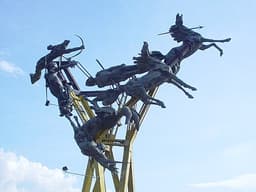
Gaitana
Revolutionary · Medieval
43.7Total
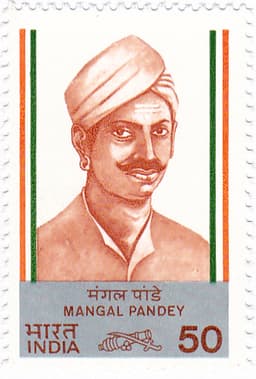
Mangal Pandey
Revolutionary · Modern
48.6Total
Basic Information
Born
1500
1827
Died
1550
1857
Era
Medieval
Modern
Nationality
Yalcon
India
Occupation
Revolutionary
Revolutionary
Civilization
Other
Indian
Score Comparison
Military (10%)
45.0
39.9
Political (20%)
35.0
35.0
Influence (20%)
44.0
51.8
Legacy (20%)
35.8
46.7
Leadership (15%)
57.1
62.6
Strategy (15%)
54.8
53.8
TOTAL
43.7
48.6
Gaitana — Complete Timeline
1540 AD
Led the Yalcon Rebellion against Spanish colonizersWar◆ Major
Gaitana organized and led indigenous Yalcon forces in a rebellion against Spanish colonial rule in present-day Colombia. The rebellion targeted Spanish settlements and encomiendas, resisting forced labor and land seizure. The uprising was eventually suppressed by Spanish forces, but it became a symbol of indigenous resistance.
Indigenous RebellionColonial ResistanceYalcon
Impact: regional
Captured and executed Spanish encomendero Pedro de AñascoOther◆ Major
During the Yalcon rebellion, Gaitana's forces captured the Spanish encomendero Pedro de A
ExecutionColonial ConflictIndigenous Leadership
Impact: regional
1541 AD
Rebellion suppressed by Spanish forces under Sebastián de BelalcázarWar◆ Major
Spanish conquistador Sebasti
Military DefeatColonial SuppressionEnd of Rebellion
Impact: regionaldestructive
Mangal Pandey — Complete Timeline
1857 AD
Attack on British officers at BarrackporePolitical Action◆ Major
Mangal Pandey attacked two British officers at the Barrackpore military cantonment. He was arrested after the attack, and his actions sparked widespread unrest among Indian sepoys, leading to the 1857 rebellion.
Indian Rebellion of 1857Trigger Event
Impact: regional
Execution by hangingPolitical Action◆ Major
Mangal Pandey was tried by a British military court and executed by hanging at Barrackpore. His execution made him a martyr and a symbol of resistance against British rule in India.
Indian Rebellion of 1857ExecutionMartyr
Impact: regionaltragic
Expert Analysis
Mangal Pandey vs Gaitana
# The Spark That Could Not Be Contained
On a warm March evening in 1857, a sepoy named Mangal Pandey stood alone on the parade ground at Barrackpore, his musket loaded not with enemy fire but with a desperate, personal defiance. Across the Atlantic and three centuries earlier, a woman named Gaitana watched Spanish soldiers drag her son away, his fate sealed by the same colonial machinery that would one day swallow Pandey’s world. Both were revolutionaries. Both failed in their immediate aims. Yet their stories, separated by three hundred years and an ocean, illuminate a profound truth about resistance: the moment of rebellion is rarely the moment of victory, but it is always the moment of choice.
Origins
Mangal Pandey was born in 1827, a high-caste Brahmin from a village in what is now Uttar Pradesh. He grew up in a world where the British East India Company had already become the paramount power, its armies filled with Indian soldiers like himself. The Company offered a steady wage and a uniform, but it demanded obedience to a system that treated its sepoys as tools rather than men. Pandey joined the 34th Bengal Native Infantry, a unit stationed near Calcutta, where the rhythms of colonial life—parades, drills, the constant presence of British officers—shaped his daily existence.
Gaitana, born around 1500, belonged to the Yalcon people of Colombia’s interior, a world untouched by European contact until the Spanish arrival. Her society was organized around chieftains and communal lands, where leadership was earned through courage and kinship. When the conquistadors arrived, they brought not only swords and horses but a relentless logic of extraction: gold, labor, submission. For the Yalcon, survival meant resistance.
Rise to Power
Pandey’s path to rebellion was not one of ambition but of rupture. In early 1857, the Company introduced the Enfield rifle, whose cartridges were greased with animal fat—pork and beef—offensive to both Muslim and Hindu sepoys. The insult was deliberate, or at least carelessly cruel. At Barrackpore, tensions simmered. On March 29, Pandey, intoxicated by bhang and fury, seized his musket and charged at two British officers. He wounded one before being subdued. Within days, a military court sentenced him to hang. On April 8, he was executed.
Gaitana’s rise was forged in grief. When Spanish forces, under the command of Pedro de Heredia, killed her son—some accounts say he was burned alive, others that he was torn apart by dogs—she did not retreat into mourning. She gathered the Yalcon and allied tribes, organizing a guerrilla campaign that turned the dense forests and river valleys into a killing ground. For nearly a decade, she led attacks on Spanish settlements, ambushing patrols and burning outposts. She was not a soldier by training but a leader by necessity.
Leadership & Governance
Pandey’s leadership was that of a martyr, not a general. His attack was a single, explosive act—a shot fired into the air that became a signal for an entire rebellion. In the weeks after his execution, sepoys across northern India mutinied, capturing Delhi and proclaiming the Mughal emperor Bahadur Shah Zafar as their figurehead. Pandey had not planned this. He had not built an army or a strategy. What he offered was a symbol: a man who refused to accept humiliation. His military score of 28.2 and leadership score of 28.5 reflect the limits of his direct command, but his influence score of 69.8 and legacy score of 62.7 show how a single act can ripple across history.
Gaitana, by contrast, was a sustained commander. With a military score of 29.8 and a leadership score of 31.8, she was not a tactical genius by European standards, but she understood the terrain and the psychology of her enemy. Her strategy score of 58.8 is notably higher than Pandey’s 57.4, reflecting her ability to wage a protracted war. She did not seek a single, dramatic confrontation. She aimed to bleed the Spanish dry, to make occupation unbearable. Her rebellion lasted years, not days. Yet her political score of 35.8—higher than Pandey’s 32.3—suggests she grasped that resistance required not just violence but the forging of alliances.
Triumph & Tragedy
Pandey’s triumph was his defiance. In a system designed to crush individuality, he stood alone and fired. His tragedy was that he died before seeing the rebellion he ignited. The Indian Rebellion of 1857 would ultimately fail, crushed by British reinforcements, but it forced the British government to dissolve the East India Company and place India directly under the Crown. Pandey’s action, born of personal rage, became a national turning point.
Gaitana’s triumph was survival. For nearly a decade, she kept the Spanish at bay, protecting her people and their lands. Her tragedy was that she could not win. By 1550, the Spanish had consolidated their control, and Gaitana disappears from the historical record—some say she was killed in battle, others that she faded into the forest. Her rebellion did not drive out the colonizers. It did, however, ensure that the Yalcon were not erased without a fight.
Character & Destiny
What drove these two figures? For Pandey, it was a sense of sacred violation. The greased cartridge was not merely an insult—it was an assault on his identity as a Brahmin and a Hindu. His character was shaped by a world where honor was everything and where the British offered no path for redress. His destiny was to be a spark, not a fire.
For Gaitana, it was maternal grief transmuted into political fury. The murder of her son was a crime that demanded response, and in a society where women could lead, she stepped into the vacuum. Her character was shaped by a world where the Spanish offered no mercy, and so she gave none. Her destiny was to be a story, not a victory.
Legacy
Mangal Pandey is remembered as India’s first freedom fighter. His name adorns streets, statues, and textbooks. Every year on April 8, ceremonies mark his death. He is a national hero, a martyr whose blood watered the seed of independence that would not bloom until 1947. His legacy score of 62.7 reflects this enduring power.
Gaitana is less known. In Colombia, she is a figure of indigenous resistance, honored in some local histories but overshadowed by the grand narratives of Spanish conquest. Her legacy score of 44.9 is lower, not because her struggle was less real, but because the victors wrote the history. Yet for the Yalcon and for all who resist, she remains a name whispered in the forests.
Conclusion
Pandey and Gaitana never met, but they share a kinship. Both stood at the edge of empires and refused to step back. One died in minutes, the other fought for years. One became a national symbol, the other a local legend. Their differences—in time, place, gender, and scale—are vast. But their core is identical: the belief that some lines cannot be crossed, that some humiliations cannot be borne. Their stories remind us that history is not only made by generals and kings. Sometimes, it is made by a sepoy with a musket and a mother with a memory.
Rankings
🥇
Mangal PandeyLeader
Mil: 39.9Pol: 35.0Inf: 51.8
48.6
🥈
Gaitana
Mil: 45.0Pol: 35.0Inf: 44.0
43.7
+4.9 behind
How This Comparison Works
Algorithm
Each figure is scored on 6 dimensions (0—100 scale) based on structured historical data: Military (10%), Political (20%), Influence (20%), Legacy (20%), Leadership (15%), Strategy (15%). The weighted total produces the final ranking.
Data Sources
Scores are computed from structured sub-indicators in the database. Scale factors adjust for era (Ancient ×0.85, Modern ×1.0) and civilization size (Eastern ×1.05, Other ×0.80) to account for differences in population and military scale.
Maximum 3 Figures
Comparisons are limited to 2—3 figures to ensure readability and statistical meaningfulness.
Error Margins
±5 points per dimension — Sub-scores are derived from historical records with inherent uncertainty. Two figures within 5 points on a dimension should be considered roughly equivalent in that area.
Total Score Accuracy
±3 points overall — The weighted combination of 6 dimensions produces a total score with approximately ±3 points of uncertainty. Differences of less than 3 points are not statistically significant— the figures are effectively tied.
Known Limitations
- Historical records are incomplete and uneven across civilizations
- Figures from oral-tradition societies may be underrepresented
- Occupation labels can misclassify multi-role figures
- Scores measure capability and impact, not moral character
- Quantitative scoring is a comparison tool, not absolute truth
Capability Radar
Military (10%) — Battles & Warfare
Battles
15
5
Win Rate
10
5
Expansion
5
5
Political (20%) — Governance & Reform
Reform
5
5
Diplomacy
10
5
Economy
5
5
Influence (20%) — Cultural & Global Reach
Cultural
20
40
Global
10
40
Legacy (20%) — Historical Impact
Historical
25
60
Longevity
20
50
Leadership (15%) — Power & Stability
Tenure
10
5
Stability
5
5
Strategy (15%) — Tactics & Innovation
Strategy
15
5
Tactics
20
10
Reform
5
5
Similar Comparisons
Comments & Discussion
BARRACKPORE BLAST6/16/2026
Mangal Pandey gets too much credit as some proto-nationalist martyr. The guy was high on bhang and furious about greased cartridges that offended his Brahmin caste status. Gaitana actually organized sustained guerrilla warfare against the Spanish for months, leading hundreds of warriors. One guy, one musket, one parade ground meltdown versus a woman who burned Spanish settlements. History romanticizes the male hothead because it makes a better story. The data says Gaitana's resistance was strate
砒霜与钢剑6/16/2026
Gaitana 被浪漫化成美洲土著女武神,但史料显示她儿子被烧死前早已投降西班牙人。她的复仇更多是个人血仇而非民族解放。Mangal Pandey 至少触发了1857年大起义,改变了印度殖民政策走向。Gaitana 的抵抗?西班牙人第二年就建立了圣玛尔塔城,她的部落最终被同化。一个点燃了帝国裂缝,一个只是历史脚注里的复仇火焰。
THE CORPUS COUNT6/16/2026
Comparing these two is like comparing a spark to a wildfire. Mangal Pandey's rebellion directly led to the dissolution of the East India Company and the British Raj's establishment. Hard data: within two years of his execution, Company rule ended. Gaitana's uprising? Killed maybe 200 conquistadors before Spanish reinforcements crushed it. She's a footnote in Colombian textbooks while Pandey is nationally celebrated. Scale matters in history. One man's single act of defiance toppled a corporate e
箭与法典6/16/2026
殖民逻辑的暴力本质相同,但表现方式天差地别。Mangal Pandey 对抗的是公司契约的异化,他作为雇佣兵拒绝亵渎宗教的军火。Gaitana 面对的是征服者赤裸裸的种族灭绝。一个在规则内反抗,一个在毁灭中挣扎。我更同情 Gaitana,因为她的世界早已被彻底摧毁,没有任何法理可依。Pandey 至少还在英式法庭受审,Gaitana 的儿子死前连审判都没有。
FLAWED ICON MAKER6/16/2026
The comparison glosses over that Gaitana was a hereditary cacica—nobility exploiting the system, not a peasant rebel. She tortured Spanish prisoners before her son's capture. Mangal Pandey was a common soldier who acted alone, without tribal power or wealth. Classic revisionist mistake: mythologizing elite resistance while ignoring the genuine proletarian struggle. Pandey's purity of motive—refusing to defile his faith for British profit—is more relatable than a chief's daughter playing power po