Loading...
Gaitana vs Li Zicheng
Gaitana leads by 0.2 pts · 2 figures compared
…

Gaitana
Revolutionary · Medieval
43.7Total
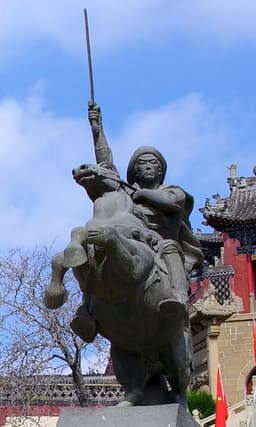
Li Zicheng
Revolutionary · Modern
43.5Total
Basic Information
Born
1500
1606
Died
1550
1645
Era
Medieval
Modern
Nationality
Yalcon
China
Occupation
Revolutionary
Revolutionary
Civilization
Other
Eastern
Score Comparison
Military (10%)
45.0
50.0
Political (20%)
35.0
27.9
Influence (20%)
44.0
52.5
Legacy (20%)
35.8
44.2
Leadership (15%)
57.1
39.0
Strategy (15%)
54.8
43.3
TOTAL
43.7
43.5
Gaitana — Complete Timeline
1540 AD
Led the Yalcon Rebellion against Spanish colonizersWar◆ Major
Gaitana organized and led indigenous Yalcon forces in a rebellion against Spanish colonial rule in present-day Colombia. The rebellion targeted Spanish settlements and encomiendas, resisting forced labor and land seizure. The uprising was eventually suppressed by Spanish forces, but it became a symbol of indigenous resistance.
Indigenous RebellionColonial ResistanceYalcon
Impact: regional
Captured and executed Spanish encomendero Pedro de AñascoOther◆ Major
During the Yalcon rebellion, Gaitana's forces captured the Spanish encomendero Pedro de A
ExecutionColonial ConflictIndigenous Leadership
Impact: regional
1541 AD
Rebellion suppressed by Spanish forces under Sebastián de BelalcázarWar◆ Major
Spanish conquistador Sebasti
Military DefeatColonial SuppressionEnd of Rebellion
Impact: regionaldestructive
Li Zicheng — Complete Timeline
1644 AD
Captured Beijing and Ended the Ming DynastyWar
Li Zicheng led his rebel army to capture Beijing. The Chongzhen Emperor committed suicide, ending the Ming dynasty. Li Zicheng proclaimed the Shun dynasty and briefly ruled from the Forbidden City before being defeated by Qing forces.
Ming-Qing TransitionRebellionBeijing
Impact: globaldestructive
Defeated at the Battle of Shanhai PassWar◆ Major
Li Zicheng's army was defeated by the combined forces of Wu Sangui and the Manchus at the Battle of Shanhai Pass. The defeat forced him to abandon Beijing and retreat westward, effectively ending his control over northern China.
Ming-Qing TransitionBattleDefeat
Impact: globaltragic
Proclaimed the Shun DynastyPolitical Action◆ Major
After capturing Beijing, Li Zicheng formally proclaimed the establishment of the Shun dynasty in Xi'an. He adopted the title of emperor and began implementing his own administrative policies, though his rule was short-lived.
Shun DynastyProclamationRebellion
Impact: nationalconstructive
1645 AD
Killed in Jiugong MountainWar◆ Major
Li Zicheng was killed by a local militia while fleeing through Jiugong Mountain in Hubei province. His death marked the end of the Shun dynasty and the collapse of his rebellion, though some accounts claim he survived and became a monk.
Shun DynastyDeathRebellion
Impact: nationaltragic
Expert Analysis
Li Zicheng vs Gaitana
### The Rebel’s Mirror
In the spring of 1644, Li Zicheng rode into Beijing not as a conqueror but as a liberator. The Ming capital fell without a siege; the emperor hanged himself on Coal Hill, and the peasant who had once been a postal clerk now sat on the Dragon Throne. Half a world away and a century earlier, in the mist-shrouded valleys of what is now Colombia, a Yalcon woman named Gaitana watched Spanish soldiers drag her son away. She did not mourn quietly. She gathered her people, sharpened their spears, and lit the fuse of a rebellion that would burn for years. Both were revolutionaries. Both faced empires at their zenith. But one seized a throne and lost it in weeks; the other never wanted a crown, yet her name became a symbol of defiance that outlasted the empire that killed her.
### Origins
Li Zicheng was born in 1606 in Shaanxi province, a region battered by drought, famine, and official corruption. His father was a poor farmer; Li himself worked as a postal courier—a low-level government job—until the Ming bureaucracy collapsed and he was laid off. Desperate, he joined a bandit group, then a rebel army. His era was one of systemic decay: the Ming dynasty was choking on its own taxes, eunuch power, and peasant uprisings. Li’s world was a powder keg.
Gaitana’s origins are less documented, but her people, the Yalcon, lived in the tropical lowlands of the Cauca River valley. They were not a centralized state but a network of villages, skilled in warfare and resistant to outside control. The Spanish had arrived in the 1530s, bringing iron, horses, and a brutal system of *encomienda* that forced indigenous labor. Gaitana was likely a *cacica*—a female chief—a role that existed in some pre-Columbian societies. Her son was taken by the conquistador Pedro de Heredia’s nephew, Alonso de Heredia, as a hostage or slave. When she demanded his return, Alonso mocked her. He had the boy killed. Gaitana’s grief became a war cry.
### Rise to Power
Li Zicheng rose through the ranks of a massive rebellion that had been simmering for a decade. His key turning point came in 1643 when he captured Xi’an, the ancient capital, and proclaimed himself the “King of the Shun.” He issued land reforms, canceled taxes, and promised a new order. The Ming army, demoralized and unpaid, melted away. By early 1644, he marched on Beijing with 200,000 men. The city’s gates opened without a fight. In April, the Chongzhen Emperor struck a bell to summon his ministers—no one came. He walked to the hill behind the Forbidden City, wrote a final note blaming his officials, and hanged himself.
Gaitana’s rise was more local and more personal. After her son’s death, she traveled from village to village, rallying the Yalcon and their neighbors. She was not a general in the European sense; she was a symbol, a woman wronged by the invaders. Her strategy was guerrilla warfare: ambushes, poisoned arrows, and attacks on Spanish supply lines. In 1539, she led a coalition that besieged the Spanish fort at San Juan de Rodas. The Spanish chroniclers, terrified and impressed, wrote that she “fought like a man.” Her rebellion never aimed to capture a capital—it aimed to make the Spanish pay for every inch of earth.
### Leadership & Governance
Li Zicheng was a brilliant military tactician but a disastrous ruler. Once in Beijing, he lost control of his army. His soldiers looted, tortured Ming officials for hidden gold, and alienated the very people who had welcomed them. He failed to secure the loyalty of Wu Sangui, the Ming general guarding the Great Wall. Instead of negotiating, Li seized Wu’s father and concubine. Wu, enraged, opened the gates at Shanhai Pass to the Manchus. Li’s political wisdom was zero: he thought conquest was enough. He had no plan for governing a vast empire.
Gaitana never had to govern. Her leadership was purely military and symbolic. She kept her coalition together through personal charisma and shared grievance. She understood that her people’s strength lay in mobility and knowledge of the terrain. The Spanish could win battles, but they could not win the war of attrition she waged. Her strategy score (58.8) is nearly identical to Li’s (59.6), but hers was defensive, aimed at survival, not conquest.
### Triumph & Tragedy
Li Zicheng’s greatest moment was April 1644: Beijing, the Ming throne, the end of a dynasty. His tragedy came just one month later, at the Battle of Shanhai Pass. The Manchu cavalry, fresh and disciplined, smashed his exhausted army. He fled back to Beijing, proclaimed himself emperor in a hasty ceremony, then burned the palace and ran. He spent the next year on the run, hunted by Ming loyalists and Manchus alike. In 1645, near Jiugong Mountain in Hubei, a local militia—peasants like his own former followers—ambushed and killed him. He was 39.
Gaitana’s triumph was the rebellion itself. She forced the Spanish to divert resources, to negotiate, to fear the forests. But by 1550, the Spanish had crushed most resistance in the Cauca region. She was killed, likely in battle or captured and executed. Her tragedy was that she could not stop the tide. The Yalcon were eventually subdued, enslaved, or absorbed. Yet she died fighting, not fleeing.
### Character & Destiny
Li Zicheng’s personality was a mix of charisma and paranoia. He trusted his lieutenants but not his enemies. He was generous to the poor but ruthless to the rich. His fatal flaw was overconfidence: he believed that capturing the capital meant winning the empire. He did not understand that legitimacy requires more than force. His destiny was shaped by the Ming collapse, but his own decisions—the looting, the mistreatment of Wu Sangui—sealed his doom.
Gaitana’s character was forged in grief. She was not a power-seeker; she was a mother who became a warrior. Her destiny was shaped by the Spanish invasion, but her response was pure will. She had no illusions about victory. She fought because the alternative—silence—was unbearable. Her legacy is not a dynasty but a name: in Colombia today, “Gaitana” is a symbol of indigenous resistance.
### Legacy
Li Zicheng’s legacy is ambiguous. In China, he is remembered as a peasant hero who overthrew a corrupt dynasty, but also as a failure who opened the door to the Manchus. His Shun dynasty lasted less than a year. His influence score (74.3) reflects his role in history’s hinge, but his leadership score (33.8) is brutally low. He is a cautionary tale: revolution is easier than governance.
Gaitana’s legacy is more enduring. Her total score (43.8) is lower than Li’s (54.9), but her influence (55.4) and strategy (58.8) are high for a local leader. She is remembered in Colombian oral history, in statues, in schoolbooks. She represents the indigenous voice that refused to be silenced. The Spanish empire is gone; the Yalcon are gone. But Gaitana’s name still burns.
### Conclusion
Li Zicheng and Gaitana faced the same question: what do you do when your world is crushed by a power you cannot match? Li chose to seize the throne. Gaitana chose to burn the forest. One ended with an empire in ashes, the other with a memory in stone. Their scores tell part of the story, but the deeper truth is about scale and meaning. Li Zicheng’s tragedy was that he almost won everything and lost it all. Gaitana’s triumph was that she never wanted everything—she wanted justice, and she made the world remember her name. In the end, which is the greater legacy? That is a question every rebel must answer for themselves.
Rankings
🥇
GaitanaLeader
Mil: 45.0Pol: 35.0Inf: 44.0
43.7
🥈
Li Zicheng
Mil: 50.0Pol: 27.9Inf: 52.5
43.5
+0.2 behind
How This Comparison Works
Algorithm
Each figure is scored on 6 dimensions (0—100 scale) based on structured historical data: Military (10%), Political (20%), Influence (20%), Legacy (20%), Leadership (15%), Strategy (15%). The weighted total produces the final ranking.
Data Sources
Scores are computed from structured sub-indicators in the database. Scale factors adjust for era (Ancient ×0.85, Modern ×1.0) and civilization size (Eastern ×1.05, Other ×0.80) to account for differences in population and military scale.
Maximum 3 Figures
Comparisons are limited to 2—3 figures to ensure readability and statistical meaningfulness.
Error Margins
±5 points per dimension — Sub-scores are derived from historical records with inherent uncertainty. Two figures within 5 points on a dimension should be considered roughly equivalent in that area.
Total Score Accuracy
±3 points overall — The weighted combination of 6 dimensions produces a total score with approximately ±3 points of uncertainty. Differences of less than 3 points are not statistically significant— the figures are effectively tied.
Known Limitations
- Historical records are incomplete and uneven across civilizations
- Figures from oral-tradition societies may be underrepresented
- Occupation labels can misclassify multi-role figures
- Scores measure capability and impact, not moral character
- Quantitative scoring is a comparison tool, not absolute truth
Capability Radar
Military (10%) — Battles & Warfare
Battles
15
55
Win Rate
10
60
Expansion
5
65
Political (20%) — Governance & Reform
Reform
5
15
Diplomacy
10
20
Economy
5
10
Influence (20%) — Cultural & Global Reach
Cultural
20
40
Global
10
35
Legacy (20%) — Historical Impact
Historical
25
55
Longevity
20
30
Leadership (15%) — Power & Stability
Tenure
10
20
Stability
5
5
Strategy (15%) — Tactics & Innovation
Strategy
15
55
Tactics
20
50
Reform
5
30
Similar Comparisons
Comments & Discussion
HorsemanofHistory6/16/2026
Li Zicheng was a tactical fool who looted Beijing before building a stable administration. His 42-day reign proves that seizing a capital doesn’t equal winning a war—he lost to Manchu cavalry because he never secured supply lines or allied with Ming loyalists. Gaitana at least understood guerrilla attrition; Li just thought a throne meant victory.
目盲数据6/16/2026
这个对比根本不在同一量级——李自成用数月攻破京城,盖塔娜对抗西班牙人长达十年。说两人都是“革命者”?数据上盖塔娜的叛乱覆盖了数百平方公里,持续得更久,李自成的统治满打满算才六周。别用浪漫化的“反抗精神”骗自己。
SpearPointScholar6/16/2026
Gaitana’s rebellion lacked a single decisive battle or centralized leadership—it was a fragmented uprising of Yalcon villages. Li Zicheng, by contrast, commanded a unified army that toppled a dynasty with 200,000 troops. Comparing them ignores scale: one led a localized resistance, the other orchestrated a civilizational shift in China.
篡史者6/16/2026
西方叙事总把殖民地起义捧成英雄史诗,盖塔娜就是个例子——她的事迹被夸大到模糊了史实。李自成才是真正的历史人物:他终结了明王朝,影响波及朝鲜和蒙古。盖塔娜的“传奇”多半是十九世纪民族主义者编的,别拿童话比正史。