Loading...
Gabriel Garcia Moreno vs Martin Torrijos
Martin Torrijos leads by 1.8 pts · 2 figures compared
…
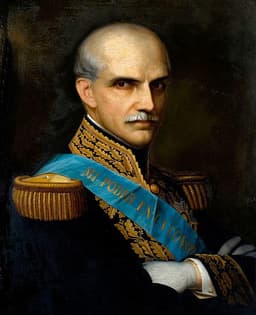
Gabriel Garcia Moreno
Politician · Modern
49.3Total
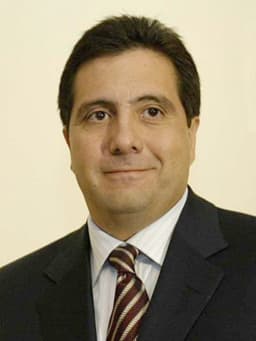
Martin Torrijos
Politician · Modern
51.1Total
Basic Information
Born
1821
1963
Died
1875
—
Era
Modern
Modern
Nationality
Ecuador
Panama
Occupation
Politician
Politician
Civilization
Western
Western
Score Comparison
Military (10%)
21.2
49.7
Political (20%)
62.7
68.0
Influence (20%)
54.9
49.4
Legacy (20%)
47.5
39.2
Leadership (15%)
53.2
65.0
Strategy (15%)
42.3
40.3
TOTAL
49.3
51.1
Gabriel Garcia Moreno — Complete Timeline
1861 AD
Modernization of InfrastructureReform
García Moreno initiated major infrastructure projects, including the construction of roads, bridges, and the Quito-Guayaquil railway. These projects aimed to integrate Ecuador's regions and boost economic development, though they were financed through heavy borrowing.
InfrastructureRailwayDevelopment
Impact: nationalconstructive
Presidency of EcuadorPolitical Action◆ Major
García Moreno was elected President of Ecuador in 1861, serving until 1865 and again from 1869 to 1875. His administrations were characterized by authoritarian rule, centralization of power, and a strong alliance with the Catholic Church.
PresidencyAuthoritarianismCatholicism
Impact: national
1862 AD
Concordat with the VaticanPolitical Action◆ Major
García Moreno signed a concordat with the Vatican in 1862, granting the Catholic Church control over education and religious affairs in Ecuador. This agreement strengthened church-state ties and made Ecuador a confessional state, aligning with his conservative ideology.
Church-State RelationsConcordatCatholicism
Impact: national
1869 AD
Suppression of Liberal OppositionPolitical Action◆ Major
After returning to power in 1869, Garc
RepressionAuthoritarianismConstitution
Impact: nationaldestructive
1875 AD
Assassination of Gabriel García MorenoPolitical Action
García Moreno was assassinated on August 6, 1875, on the steps of the presidential palace in Quito. His death was carried out by liberal opponents, ending his conservative regime and plunging Ecuador into a period of political instability.
AssassinationPolitical ViolenceEnd of Regime
Impact: nationaltragic
Martin Torrijos — Complete Timeline
2004 AD
Elected President of PanamaPolitical Action◆ Major
Martin Torrijos, son of former military leader Omar Torrijos, won the 2004 presidential election as the candidate of the Democratic Revolutionary Party (PRD). His victory marked the return of the PRD to power after a decade out of office.
ElectionPRDDynasty
Impact: national
Presidency (2004-2009)Political Action◆ Major
Torrijos's presidency was marked by economic growth, social reforms, and the initiation of the canal expansion. He also pursued anti-corruption measures and improved relations with the United States. He left office with relatively high approval ratings.
PresidencyReformGrowth
Impact: nationalconstructive
2006 AD
Panama Canal Expansion ProjectPolitical Action
Torrijos proposed and secured approval for a major expansion of the Panama Canal through a national referendum in 2006. The project aimed to build a third set of locks to accommodate larger ships, significantly increasing the canal's capacity and economic impact.
CanalInfrastructureReferendum
Impact: globalconstructive
Expert Analysis
Origins
Gabriel Garcia Moreno was born in Guayaquil, Ecuador, on December 24, 1821, into a wealthy, devout Catholic family. His father was a Spanish merchant, and his mother instilled strong religious values. He studied law at the University of Quito, graduating in 1844. Early exposure to the chaos of post-independence Ecuador—marked by caudillo rivalries and secularist reforms—shaped his belief that order and faith were inseparable. In contrast, Martin Torrijos was born in Panama City on July 18, 1963, the son of General Omar Torrijos, the populist military ruler who negotiated the Panama Canal treaties. He grew up in a political household, but his father died in a plane crash in 1981 when Martin was 18. He studied economics at Texas A&M and later at the University of Chicago, institutions known for free-market thinking. His background was less ideological than his father's, leaning toward technocratic governance.
Rise to Power
Moreno entered politics in the 1840s, serving as mayor of Quito and later as senator. His rise was fueled by his alliance with the Conservative Party and his vocal opposition to liberal president José María Urbina. After a period of exile, he returned to lead a revolt in 1859, defeating liberal forces and becoming president in 1861. He secured power through military force and a new constitution that centralized authority. Torrijos, by contrast, rose through the Democratic Revolutionary Party (PRD), founded by his father. He served as deputy minister of government under President Ernesto Pérez Balladares in the 1990s, then ran for president in 1999 but lost. He won in 2004 on a platform of social investment and canal expansion. His victory was aided by his father's enduring popularity and a fragmented opposition.
Leadership & Governance
Moreno governed as a Catholic theocrat. He signed a concordat with the Vatican in 1862, making the Church the sole authority in education and religious life. He suppressed liberal dissent through censorship, exile, and execution. He modernized infrastructure—building roads, bridges, and the Quito-Guayaquil railway—but these projects were financed through forced loans and foreign debt. His political score of 62.7 reflects his ability to consolidate power, but his military score of 21.2 indicates his lack of martial prowess. Torrijos governed as a social democrat. He expanded the Panama Canal, a $5.25 billion project approved by referendum in 2006. He also introduced the “100 to 70” pension reform, lowering the retirement age for workers, and expanded healthcare coverage. His leadership score of 65.0 reflects his coalition-building, but his strategy score of 40.3 shows limitations in long-term planning beyond the canal.
Triumph & Tragedy
Moreno’s greatest triumph was the preservation of Catholic influence in Ecuador at a time when liberal secularism was spreading across Latin America. He also modernized the country’s infrastructure, linking the highlands to the coast. However, his greatest failure was creating a repressive state that alienated many Ecuadorians. He imposed a new constitution in 1869 that effectively made him a dictator. His assassination in 1875—on the steps of the presidential palace—was carried out by liberal opponents, a direct consequence of his authoritarian methods. Torrijos’s triumph was the successful launch of the canal expansion, which doubled the waterway’s capacity and boosted Panama’s economy. He also maintained steady economic growth of over 7% annually during his term. But his failure was his inability to fully address poverty and inequality; the benefits of the canal expansion were slow to reach the poor. His legacy score of 39.2 reflects the limited lasting impact of his social reforms.
Character & Destiny
Moreno was a devout, uncompromising leader who saw himself as a defender of Christendom. His character was shaped by a rigid worldview: order, faith, and authority were paramount. This made him effective at imposing his will but blind to the legitimacy of liberal opposition. His destiny was sealed by his refusal to negotiate, leading to his violent death. Torrijos was more pragmatic and technocratic. He lacked his father’s charisma but was seen as competent and honest. His character inclined him toward consensus-building, which helped pass the canal referendum but also led to indecision on other reforms. His destiny was to complete a project that had been his father’s dream, but he failed to emerge from his father’s shadow.
Legacy
Moreno’s legacy is mixed. He is venerated by Catholic traditionalists but reviled by liberals. His concordat remained in force until 1906, and his centralization of power set a precedent for later authoritarian regimes. His total score of 49.3 reflects a leader whose impact was profound but narrowly focused. Torrijos’s legacy is tied to the canal expansion, which opened in 2016 and now accounts for a significant portion of Panama’s GDP. His social reforms were modest, and his party lost power in 2009. His total score of 51.1 is slightly higher, but his influence is more geographically and temporally bounded.
Conclusion
Martin Torrijos had a greater overall impact than Gabriel Garcia Moreno. While Moreno’s theocratic vision shaped Ecuador’s 19th-century trajectory, Torrijos’s canal expansion transformed Panama’s economy for the 21st century. Torrijos’s higher total score (51.1 vs. 49.3) reflects his more effective leadership and political skill, but the gap is narrow. However, Torrijos’s legacy is more tangible: a working canal that generates billions annually. Moreno’s legacy, by contrast, is largely ideological and contested. In terms of enduring, measurable impact, Torrijos wins.
Rankings
🥇
Martin TorrijosLeader
Mil: 49.7Pol: 68.0Inf: 49.4
51.1
🥈
Gabriel Garcia Moreno
Mil: 21.2Pol: 62.7Inf: 54.9
49.3
+1.8 behind
How This Comparison Works
Algorithm
Each figure is scored on 6 dimensions (0—100 scale) based on structured historical data: Military (10%), Political (20%), Influence (20%), Legacy (20%), Leadership (15%), Strategy (15%). The weighted total produces the final ranking.
Data Sources
Scores are computed from structured sub-indicators in the database. Scale factors adjust for era (Ancient ×0.85, Modern ×1.0) and civilization size (Eastern ×1.05, Other ×0.80) to account for differences in population and military scale.
Maximum 3 Figures
Comparisons are limited to 2—3 figures to ensure readability and statistical meaningfulness.
Error Margins
±5 points per dimension — Sub-scores are derived from historical records with inherent uncertainty. Two figures within 5 points on a dimension should be considered roughly equivalent in that area.
Total Score Accuracy
±3 points overall — The weighted combination of 6 dimensions produces a total score with approximately ±3 points of uncertainty. Differences of less than 3 points are not statistically significant— the figures are effectively tied.
Known Limitations
- Historical records are incomplete and uneven across civilizations
- Figures from oral-tradition societies may be underrepresented
- Occupation labels can misclassify multi-role figures
- Scores measure capability and impact, not moral character
- Quantitative scoring is a comparison tool, not absolute truth
Capability Radar
Military (10%) — Battles & Warfare
Battles
20
30
Win Rate
25
32
Expansion
15
33
Political (20%) — Governance & Reform
Reform
70
40
Diplomacy
40
45
Economy
60
50
Influence (20%) — Cultural & Global Reach
Cultural
40
15
Global
30
20
Legacy (20%) — Historical Impact
Historical
50
20
Longevity
35
15
Leadership (15%) — Power & Stability
Tenure
55
35
Stability
45
45
Strategy (15%) — Tactics & Innovation
Strategy
20
35
Tactics
15
39
Reform
30
41
Similar Comparisons
Comments & Discussion
No comments yet. Be the first to share your thoughts!