Loading...
Martin Torrijos vs Maximilien Robespierre
Maximilien Robespierre leads by 12.1 pts · 2 figures compared
…
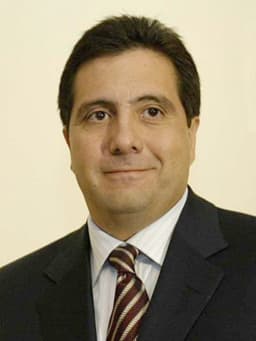
Martin Torrijos
Politician · Modern
51.1Total
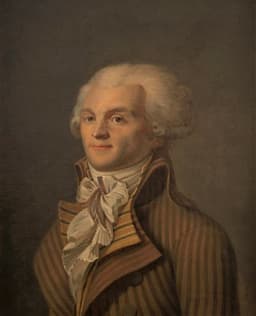
Maximilien Robespierre
Politician · Modern
63.2Total
Basic Information
Born
1963
1758
Died
—
1794
Era
Modern
Modern
Nationality
Panama
France
Occupation
Politician
Politician
Civilization
Western
Western
Score Comparison
Military (10%)
49.7
11.7
Political (20%)
68.0
68.0
Influence (20%)
49.4
82.0
Legacy (20%)
39.2
72.0
Leadership (15%)
65.0
67.0
Strategy (15%)
40.3
32.7
TOTAL
51.1
63.2
Martin Torrijos — Complete Timeline
2004 AD
Elected President of PanamaPolitical Action◆ Major
Martin Torrijos, son of former military leader Omar Torrijos, won the 2004 presidential election as the candidate of the Democratic Revolutionary Party (PRD). His victory marked the return of the PRD to power after a decade out of office.
ElectionPRDDynasty
Impact: national
Presidency (2004-2009)Political Action◆ Major
Torrijos's presidency was marked by economic growth, social reforms, and the initiation of the canal expansion. He also pursued anti-corruption measures and improved relations with the United States. He left office with relatively high approval ratings.
PresidencyReformGrowth
Impact: nationalconstructive
2006 AD
Panama Canal Expansion ProjectPolitical Action
Torrijos proposed and secured approval for a major expansion of the Panama Canal through a national referendum in 2006. The project aimed to build a third set of locks to accommodate larger ships, significantly increasing the canal's capacity and economic impact.
CanalInfrastructureReferendum
Impact: globalconstructive
Maximilien Robespierre — Complete Timeline
1789 AD
Election to the Estates-GeneralPolitical Action◆ Major
Robespierre was elected as a deputy of the Third Estate for Artois to the Estates-General. He quickly became a leading voice for radical reforms, advocating for universal male suffrage and the rights of the common people.
French RevolutionEstates-GeneralThird Estate
Impact: nationalprogressive
1793 AD
Establishment of the Reign of TerrorPolitical Action
As a leading member of the Committee of Public Safety, Robespierre oversaw the Reign of Terror, a period of mass executions of perceived enemies of the revolution. Over 16,000 people were guillotined, including former allies like Danton.
Reign of TerrorCommittee of Public SafetyGuillotine
Impact: nationaldestructive
1794 AD
Abolition of Slavery in French ColoniesReform◆ Major
Robespierre and the National Convention voted to abolish slavery in all French colonies, a landmark decree influenced by the Haitian Revolution. This was the first abolition of slavery by a major European power, though later reversed by Napoleon.
AbolitionSlaveryFrench Colonies
Impact: globalprogressive
Cult of the Supreme BeingCultural◆ Major
Robespierre inaugurated the Cult of the Supreme Being as a state religion, replacing Catholicism and atheism. The festival in Paris promoted deism and civic virtue, but was criticized as an attempt to impose his personal beliefs.
ReligionDeismFrench Revolution
Impact: national
Execution of Maximilien RobespierrePolitical Action
Robespierre was arrested and executed by guillotine without trial after the Thermidorian Reaction. His death ended the Reign of Terror and marked a conservative turn in the French Revolution.
Thermidorian ReactionExecutionEnd of Terror
Impact: nationaltragic
Expert Analysis
Origins
Martin Torrijos was born in 1963 in Panama City, the son of Omar Torrijos, a military ruler who negotiated the Torrijos-Carter Treaties. He studied economics at Texas A&M and later at the Instituto de Estudios Superiores de Administración in Caracas. His father's death in 1981 shaped his political ambitions, but he initially worked in banking and consulting before entering politics.
Maximilien Robespierre was born in 1758 in Arras, France, to a lawyer father who abandoned the family. He studied at the Collège Louis-le-Grand in Paris on a scholarship, earning a law degree. He became a lawyer in Arras, known for defending poor clients. His Enlightenment readings, especially Rousseau, shaped his radical ideals.
Rise to Power
Torrijos rose through the Democratic Revolutionary Party (PRD), founded by his father. He served as Deputy Minister of Government and Justice in 1994-1996 under President Ernesto Pérez Balladares. In 2004, he won the presidency with 47.4% of the vote, campaigning on social programs and canal expansion. His key ally was his party's base; opponents included the opposition Panameñista Party.
Robespierre entered politics in 1789 when elected to the Estates-General as a deputy for the Third Estate. He gained fame for his speeches against the monarchy and for universal suffrage. By 1793, he dominated the Jacobin Club and the Committee of Public Safety. His allies included Saint-Just and Couthon; opponents included the Girondins and Danton. The turning point was the insurrection of August 10, 1792, which led to the fall of the monarchy.
Leadership & Governance
Torrijos governed as a centrist reformer. He implemented a conditional cash transfer program (Red de Oportunidades) that reduced extreme poverty from 16.6% to 11.8% (2004-2008). He also passed a fiscal responsibility law and a transparency law. His biggest project was the Panama Canal expansion, approved by a referendum in 2006 with 76.8% support. He secured financing and oversaw the start of construction in 2007. His leadership style was pragmatic and consensus-building.
Robespierre governed as a radical revolutionary. He advocated for the Rights of Man, abolition of slavery (1794), and price controls on bread. As head of the Committee of Public Safety, he oversaw the Reign of Terror (1793-1794), which executed about 16,000 people. He pushed through the Law of Suspects and the Law of 22 Prairial, which streamlined executions. He also established the Cult of the Supreme Being. His leadership was ideological and uncompromising.
Triumph & Tragedy
Torrijos's greatest success was the canal expansion, which increased Panama's GDP growth to 12.1% in 2007. His social programs reduced poverty and child labor. His tragedy was failing to win re-election; his party lost in 2009 as voters sought change. Also, the canal expansion faced cost overruns and delays after his term.
Robespierre's greatest success was abolishing slavery in French colonies and establishing universal male suffrage. His tragedy was the Reign of Terror, which turned public opinion against him. He was executed by guillotine on July 28, 1794, after the Thermidorian Reaction. His fall was swift, as he lost support of the National Convention.
Character & Destiny
Torrijos was cautious and technocratic. He avoided the authoritarianism of his father, focusing on economic reforms. His character led to steady but incremental change. He scored 65.0 in leadership, reflecting his ability to manage a complex project.
Robespierre was dogmatic and paranoid. He believed in virtue and terror as inseparable. His inflexibility led to his isolation and downfall. Historians note his 'incorruptibility' but also his fanaticism. He scored 67.0 in leadership but 32.7 in strategy, indicating poor tactical decisions.
Legacy
Torrijos's legacy is the expanded Panama Canal, which handles 6% of world trade. The canal expansion was completed in 2016 and remains a vital economic asset. His social programs influenced later governments. However, his personal legacy is overshadowed by his father's.
Robespierre's legacy is profound. He is a symbol of revolutionary idealism and terror. The French Revolution's principles of liberty, equality, and fraternity spread globally. He scored 72.0 in legacy vs Torrijos's 39.2. His ideas influenced Marxism and modern democracy, but his methods are criticized.
Conclusion
Robespierre had greater impact (total score 63.2 vs 51.1). His ideas shaped political movements for centuries, while Torrijos's achievements are more localized. Robespierre's influence on democracy and human rights surpasses Torrijos's canal project. However, Torrijos's practical improvements in Panama are tangible. Ultimately, the revolutionary's ideas changed the world more than the reformer's infrastructure.
Rankings
🥇
Maximilien RobespierreLeader
Mil: 11.7Pol: 68.0Inf: 82.0
63.2
🥈
Martin Torrijos
Mil: 49.7Pol: 68.0Inf: 49.4
51.1
+12.1 behind
How This Comparison Works
Algorithm
Each figure is scored on 6 dimensions (0—100 scale) based on structured historical data: Military (10%), Political (20%), Influence (20%), Legacy (20%), Leadership (15%), Strategy (15%). The weighted total produces the final ranking.
Data Sources
Scores are computed from structured sub-indicators in the database. Scale factors adjust for era (Ancient ×0.85, Modern ×1.0) and civilization size (Eastern ×1.05, Other ×0.80) to account for differences in population and military scale.
Maximum 3 Figures
Comparisons are limited to 2—3 figures to ensure readability and statistical meaningfulness.
Error Margins
±5 points per dimension — Sub-scores are derived from historical records with inherent uncertainty. Two figures within 5 points on a dimension should be considered roughly equivalent in that area.
Total Score Accuracy
±3 points overall — The weighted combination of 6 dimensions produces a total score with approximately ±3 points of uncertainty. Differences of less than 3 points are not statistically significant— the figures are effectively tied.
Known Limitations
- Historical records are incomplete and uneven across civilizations
- Figures from oral-tradition societies may be underrepresented
- Occupation labels can misclassify multi-role figures
- Scores measure capability and impact, not moral character
- Quantitative scoring is a comparison tool, not absolute truth
Capability Radar
Military (10%) — Battles & Warfare
Battles
30
22
Win Rate
32
24
Expansion
33
28
Political (20%) — Governance & Reform
Reform
40
85
Diplomacy
45
40
Economy
50
30
Influence (20%) — Cultural & Global Reach
Cultural
15
70
Global
20
70
Legacy (20%) — Historical Impact
Historical
20
85
Longevity
15
75
Leadership (15%) — Power & Stability
Tenure
35
60
Stability
45
10
Strategy (15%) — Tactics & Innovation
Strategy
35
29
Tactics
39
34
Reform
41
40
Similar Comparisons
Comments & Discussion
No comments yet. Be the first to share your thoughts!