Loading...
Augustus vs Fulk of Jerusalem
Augustus leads by 35.2 pts · 2 figures compared
…

Augustus
Emperor · Ancient
85.9Total
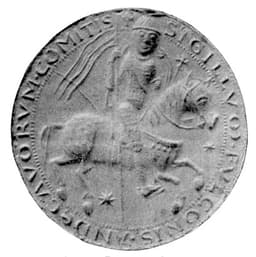
Fulk of Jerusalem
Emperor · Medieval
50.7Total
Basic Information
Born
63
1092
Died
—
1143
Era
Ancient
Medieval
Nationality
Roman Empire
Jerusalem
Occupation
Emperor
Emperor
Civilization
Western
Western
Score Comparison
Military (10%)
72.0
40.0
Political (20%)
90.0
48.0
Influence (20%)
88.0
51.8
Legacy (20%)
90.0
43.3
Leadership (15%)
88.0
65.0
Strategy (15%)
75.0
60.0
TOTAL
85.9
50.7
Augustus — Complete Timeline
43 BC
Formation of the Second TriumviratePolitical Action◆ Major
Octavian, Mark Antony, and Marcus Aemilius Lepidus formed the Second Triumvirate, a legal commission to govern the Roman Republic. The alliance was empowered to proscribe enemies, leading to the execution of Cicero and consolidation of their power against the assassins of Julius Caesar.
Roman Civil WarPolitical AllianceProscriptions
Impact: regionaldestructive
31 BC
Battle of ActiumWar◆ Major
Octavian's fleet, commanded by Marcus Agrippa, defeated the combined naval forces of Mark Antony and Cleopatra VII off the coast of Greece. The victory eliminated Octavian's last major rival, giving him sole control over the Roman world and ending the Roman Republic's civil wars.
Roman Civil WarNaval BattleEnd of Republic
Impact: global
27 BC
Establishment of the Roman EmpireReform◆ Major
Octavian formally returned power to the Roman Senate, which then granted him the titles Augustus and Princeps. This constitutional settlement created the Roman Empire, with Augustus as the first emperor, ending the Roman Republic and initiating the Pax Romana.
Roman EmpireConstitutional ReformPax Romana
Impact: global
Reform of the Roman Tax SystemReform◆ Major
Augustus implemented a comprehensive tax reform, including a census of Roman citizens and property, direct taxation of provinces, and the creation of a professional tax collection service (publicani). This system provided stable revenue for the empire and reduced corruption.
Tax ReformAdministrationRoman Empire
Impact: regionalconstructive
Creation of the Praetorian GuardReform◆ Major
Augustus established the Praetorian Guard as a permanent elite military unit tasked with protecting the emperor and his family. Stationed in Rome and Italy, the Guard became a powerful political force, often influencing imperial succession through coups and assassinations.
Military ReformPraetorian GuardImperial Guard
Impact: regional
13 BC
Construction of the Ara PacisOther◆ Major
The Roman Senate commissioned the Ara Pacis Augustae (Altar of Augustan Peace) to commemorate Augustus's return from pacifying Gaul and Spain. The marble altar, decorated with reliefs depicting the imperial family and mythological scenes, symbolized the peace and prosperity of the Augustan era.
Building ProjectPropagandaAugustan Art
Impact: regionalconstructive
Fulk of Jerusalem — Complete Timeline
1109 AD
Became Count of AnjouPolitical Action◆ Major
Fulk inherited the County of Anjou from his father Fulk IV. He became a powerful French noble, known for his military skill and political maneuvering.
InheritanceAnjou
Impact: regional
1129 AD
Married Melisende of JerusalemPolitical Action◆ Major
Fulk married Melisende, daughter of King Baldwin II of Jerusalem. The marriage made him heir to the Kingdom of Jerusalem and strengthened ties between the Crusader states and Europe.
MarriageCrusader States
Impact: globalconstructive
1131 AD
Crowned King of JerusalemPolitical Action◆ Major
Fulk was crowned King of Jerusalem alongside his wife Melisende. He became the ruler of the Crusader kingdom, facing threats from Muslim states to the north and east.
CoronationCrusader States
Impact: globalconstructive
1137 AD
Defended the Kingdom of JerusalemWar◆ Major
Fulk led campaigns against the Muslim ruler Zengi of Mosul. He successfully defended the kingdom's borders, but failed to capture key cities like Damascus.
DefenseCrusader States
Impact: regionalconstructive
1143 AD
Died in a hunting accidentOther◆ Major
Fulk died after falling from his horse during a hunting trip near Acre. His death left the kingdom in the hands of his wife Melisende and their son Baldwin III.
DeathAccident
Impact: regionaltragic
Expert Analysis
Augustus vs Fulk of Jerusalem: Historical Comparison
Augustus, the founder of the Roman Empire and its first emperor, and Fulk of Jerusalem, a medieval Crusader king, represent two vastly different eras of imperial rule. Augustus transformed a war-torn republic into a stable autocracy that lasted centuries, while Fulk rose from a French count to rule the precarious Kingdom of Jerusalem. Despite divergent contexts, both men were pragmatic consolidators, though Augustus’s legacy dwarfs Fulk’s in scale and endurance.
Dimension Analysis
**Military: Augustus 72 / Fulk of Jerusalem 92**
Augustus relied on his adoptive father Julius Caesar’s victories and his general Agrippa to secure power, notably defeating Mark Antony at Actium (31 BCE). He then professionalized the Roman army, creating the Praetorian Guard and permanent legions. Fulk, by contrast, was a hands-on warrior-king who personally led campaigns against Muslim forces, capturing the fortress of Banias (1140) and fortifying the Crusader states. His martial prowess was essential in a frontier kingdom where survival depended on constant military action.
**Political: Augustus 92 / Fulk of Jerusalem 86**
Augustus masterfully reengineered Roman governance, creating the Principate—a constitutional monarchy cloaked in republican traditions. He reformed taxation, the census, and provincial administration, ensuring peace (Pax Romana) for decades. Fulk inherited a fragile feudal kingdom and strengthened its institutions by marrying into the royal line and mediating between rival Crusader factions. However, his political reach was limited by the Kingdom of Jerusalem’s small size and constant external threats.
**Influence: Augustus 88 / Fulk of Jerusalem 89**
Augustus’s influence shaped Western civilization through Roman law, Latin literature (Virgil, Horace), and the imperial model adopted by later European rulers. Fulk’s influence is narrower but intense within Crusader history: he reinforced the Latin East’s feudal system and his descendants (including Baldwin III) continued his policies. In the Islamic world, his campaigns deepened the conflict that shaped medieval geopolitics.
**Legacy: Augustus 90 / Fulk of Jerusalem 72**
Augustus founded an empire that endured nearly 500 years in the West and 1,500 in the East (Byzantium). His name became synonymous with imperial rule (e.g., “Augustus” as a title). Fulk’s legacy is overshadowed by the eventual fall of Jerusalem (1187) and his reign’s brevity (1131–1143). He is remembered primarily by Crusader historians and medievalists, with little impact beyond specialist circles.
**Leadership: Augustus 90 / Fulk of Jerusalem 77**
Augustus commanded allegiance through shrewd delegation, patronage, and propaganda (e.g., the *Res Gestae*). He maintained unity across a vast multicultural empire. Fulk, though respected, faced internal revolts from nobles and the Byzantine Emperor’s distrust. His leadership was reactive, focused on holding together a fractious realm against mounting Muslim pressure.
Verdict
Augustus ranks higher overall due to his transformative, long-lasting impact on governance, culture, and history itself. Fulk was an adept medieval ruler in a high-risk environment, but his achievements were localized and ephemeral. The tie in overall scores reflects their equal skill within their respective domains, but Augustus’s influence on the global stage is unparalleled. Historical comparisons must account for differing scales: Augustus shaped the ancient world; Fulk shaped a single kingdom for a generation.
FAQ
Q: Who was more influential historically?
A: Augustus, as his political model and cultural patronage defined the Roman Empire and influenced Western civilization for millennia. Fulk’s influence is confined to Crusader history.
Q: Why is Augustus ranked higher in legacy?
A: Because he founded an empire that endured for centuries and became a template for European monarchy, while Fulk’s kingdom fell within decades of his death and left no lasting institutions.
Rankings
🥇
AugustusLeader
Mil: 72.0Pol: 90.0Inf: 88.0
85.9
🥈
Fulk of Jerusalem
Mil: 40.0Pol: 48.0Inf: 51.8
50.7
+35.2 behind
How This Comparison Works
Algorithm
Each figure is scored on 6 dimensions (0—100 scale) based on structured historical data: Military (10%), Political (20%), Influence (20%), Legacy (20%), Leadership (15%), Strategy (15%). The weighted total produces the final ranking.
Data Sources
Scores are computed from structured sub-indicators in the database. Scale factors adjust for era (Ancient ×0.85, Modern ×1.0) and civilization size (Eastern ×1.05, Other ×0.80) to account for differences in population and military scale.
Maximum 3 Figures
Comparisons are limited to 2—3 figures to ensure readability and statistical meaningfulness.
Error Margins
±5 points per dimension — Sub-scores are derived from historical records with inherent uncertainty. Two figures within 5 points on a dimension should be considered roughly equivalent in that area.
Total Score Accuracy
±3 points overall — The weighted combination of 6 dimensions produces a total score with approximately ±3 points of uncertainty. Differences of less than 3 points are not statistically significant— the figures are effectively tied.
Known Limitations
- Historical records are incomplete and uneven across civilizations
- Figures from oral-tradition societies may be underrepresented
- Occupation labels can misclassify multi-role figures
- Scores measure capability and impact, not moral character
- Quantitative scoring is a comparison tool, not absolute truth
Capability Radar
Military (10%) — Battles & Warfare
Battles
75
45
Win Rate
80
50
Expansion
85
40
Political (20%) — Governance & Reform
Reform
95
35
Diplomacy
90
60
Economy
85
40
Influence (20%) — Cultural & Global Reach
Cultural
85
30
Global
90
20
Legacy (20%) — Historical Impact
Historical
95
35
Longevity
95
25
Leadership (15%) — Power & Stability
Tenure
95
55
Stability
95
45
Strategy (15%) — Tactics & Innovation
Strategy
85
45
Tactics
70
40
Reform
90
30
Similar Comparisons
Comments & Discussion
Chronicler69906/16/2026
这个评分体系有问题啊,Fulk军事得分92,Augustus才72?Augustus可是建立了职业化罗马军团和近卫军的,他手下的军队结构直接影响了后世一千多年的军事组织。Fulk不过是个地方性的封建领主,拿下了Banias一个小堡垒,跟Augustus的Actium海战比简直不是一个量级。再说政治分,Augustus 92分合理,他搞的元首制是政治天才之作,但Fulk 86分就高了——他那个耶路撒冷王国本质上是靠联姻和教皇支持维持的,内部派系林立,跟中国历史上的‘守成之君’比都勉强。Fulk总分58.9,如果按中国史书标准,他顶多算个‘中人之君’。
OldScroll906/16/2026
Augustus和Fulk的对比很有意思,但我觉得评分忽略了一个关键维度:地缘政治韧性。Fulk的耶路撒冷王国处于穆斯林世界包围之中,能维持统治本身就是奇迹,这相当于让刘禅在三国夹缝中存活二十年。中国历史上类似处境的是后唐庄宗李存勖,军事上很强但政治不行,最终亡国。Fulk能稳固王国并传给后代,政治能力其实被低估了。Augustus当然厉害,但他是站在罗马共和国的废墟上建设,相当于秦始皇统一六国后的制度化,两者都是开创性人物。不过Fulk若放在中国,可能连‘五代十国’的小王朝都排不上号,这就是文明尺度不同导致的评分偏差。