Loading...
Fulk of Jerusalem vs Julius Caesar
Julius Caesar leads by 32.1 pts · 2 figures compared
…
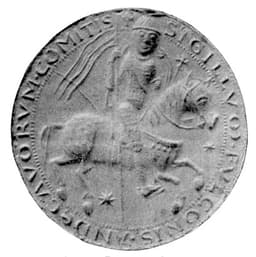
Fulk of Jerusalem
Emperor · Medieval
50.7Total

Julius Caesar
General · Ancient
82.8Total
Basic Information
Born
1092
-100
Died
1143
-44
Era
Medieval
Ancient
Nationality
Jerusalem
Roman Republic
Occupation
Emperor
General
Civilization
Western
Western
Score Comparison
Military (10%)
40.0
88.0
Political (20%)
48.0
78.0
Influence (20%)
51.8
85.0
Legacy (20%)
43.3
82.0
Leadership (15%)
65.0
80.0
Strategy (15%)
60.0
85.0
TOTAL
50.7
82.8
Fulk of Jerusalem — Complete Timeline
1109 AD
Became Count of AnjouPolitical Action◆ Major
Fulk inherited the County of Anjou from his father Fulk IV. He became a powerful French noble, known for his military skill and political maneuvering.
InheritanceAnjou
Impact: regional
1129 AD
Married Melisende of JerusalemPolitical Action◆ Major
Fulk married Melisende, daughter of King Baldwin II of Jerusalem. The marriage made him heir to the Kingdom of Jerusalem and strengthened ties between the Crusader states and Europe.
MarriageCrusader States
Impact: globalconstructive
1131 AD
Crowned King of JerusalemPolitical Action◆ Major
Fulk was crowned King of Jerusalem alongside his wife Melisende. He became the ruler of the Crusader kingdom, facing threats from Muslim states to the north and east.
CoronationCrusader States
Impact: globalconstructive
1137 AD
Defended the Kingdom of JerusalemWar◆ Major
Fulk led campaigns against the Muslim ruler Zengi of Mosul. He successfully defended the kingdom's borders, but failed to capture key cities like Damascus.
DefenseCrusader States
Impact: regionalconstructive
1143 AD
Died in a hunting accidentOther◆ Major
Fulk died after falling from his horse during a hunting trip near Acre. His death left the kingdom in the hands of his wife Melisende and their son Baldwin III.
DeathAccident
Impact: regionaltragic
Julius Caesar — Complete Timeline
58 BC
Gallic WarsWar◆ Major
Caesar, as proconsul of Gaul, launched a series of campaigns that conquered all of Gaul (modern France, Belgium, and parts of Switzerland). He fought numerous battles, including against the Helvetii, the Belgae, and the Gallic chieftain Vercingetorix. The wars brought immense wealth and a loyal army to Caesar.
Gallic WarsConquestRoman Expansion
Impact: regional
49 BC
Crossing the RubiconPolitical Action◆ Major
Caesar led Legio XIII across the Rubicon River into Italy, defying the Roman Senate's order to disband his army. This act triggered a civil war against Pompey and the Optimates, ultimately leading to Caesar's dictatorship and the end of the Roman Republic.
Roman Civil WarEnd of RepublicPower Struggle
Impact: global
48 BC
Battle of PharsalusWar◆ Major
Caesar's outnumbered army defeated the larger forces of Pompey the Great at Pharsalus in Greece. Caesar's tactical use of a reserve line to counter Pompey's cavalry charge proved decisive. Pompey fled to Egypt, where he was assassinated, leaving Caesar as the undisputed master of the Roman world.
Roman Civil WarBattleDecisive Victory
Impact: regional
44 BC
Appointment as Dictator for LifePolitical Action◆ Major
The Roman Senate appointed Caesar dictator perpetuo (dictator for life), granting him unprecedented personal power. This move concentrated military, legislative, and judicial authority in one person, effectively ending the Roman Republic's traditional system of checks and balances and alarming many senators.
DictatorshipEnd of RepublicPower Consolidation
Impact: regionaldestructive
Assassination on the Ides of MarchPolitical Action◆ Major
A group of Roman senators, led by Marcus Junius Brutus and Gaius Cassius Longinus, stabbed Caesar to death at a meeting of the Senate in the Theatre of Pompey. The assassination was intended to restore the Republic, but instead triggered another civil war that led to the rise of the Roman Empire.
AssassinationRoman PoliticsEnd of Republic
Impact: globaldestructive
Expert Analysis
fulk-of-jerusalem-vs-julius-caesar
# The Crossing and the Crown
On the Ides of March, 44 BCE, Julius Caesar fell beneath twenty-three dagger strokes in the Pompeian Senate chamber—a death as theatrical as his life had been audacious. Nine centuries later, in 1143, King Fulk of Jerusalem tumbled from his horse during a hunting expedition near Acre and died with far less ceremony, a broken neck ending a reign that had never quite captured the imagination of Christendom. One man changed the course of Western history; the other managed a fragile kingdom for a dozen years. Why such different outcomes from such similar ambitions?
Origins
Caesar was born into the chaos of the late Roman Republic, a world of senatorial feuds, civil wars, and provincial rebellions. His family, the Julii, claimed descent from the goddess Venus, but they were patricians in name only—politically marginal, financially strained. Young Caesar learned early that in Rome, reputation was currency and audacity was interest. He wore his hair long, his toga loose, and his ambitions bare.
Fulk of Jerusalem, by contrast, was born in 1092 into the solid certainties of feudal France. The Counts of Anjou were not gods but landowners, their power rooted in stone castles and sworn oaths. Fulk inherited his county at seventeen, a young lord in a world where legitimacy came from blood, not brilliance. Where Caesar had to invent himself, Fulk merely had to inherit.
Rise to Power
Caesar’s path was a masterpiece of calculated risk. He borrowed fortunes to fund public games, bought votes, and seduced allies. He served as governor in Spain, then formed the First Triumvirate with Pompey and Crassus—a backroom deal that bypassed the Senate’s authority. His conquest of Gaul between 58 and 50 BCE was not merely military expansion; it was a personal power base, an army loyal to him, not Rome. When the Senate ordered him to disband, he crossed the Rubicon River in 49 BCE, uttering the words *“Alea iacta est”*—the die is cast. Civil war followed, and Caesar won.
Fulk’s rise was quieter, a marriage contract rather than a military coup. In 1129, King Baldwin II of Jerusalem needed a strong husband for his daughter Melisende. Fulk, a widower in his late thirties, was the obvious choice: a proven crusader, wealthy, politically connected. He left his French county behind and sailed east. Two years later, Baldwin died, and Fulk was crowned king alongside his wife. He had not conquered Jerusalem; he had married it.
Leadership & Governance
Caesar governed as he conquered: swiftly, ruthlessly, and with an eye on eternity. As dictator, he reformed the calendar, granted citizenship to provincials, launched public works, and centralized power in his own person. His military genius was instinctive—at Alesia, he besieged the besiegers; at Pharsalus, he outthought Pompey’s larger army. But his political wisdom faltered. He pardoned his enemies, packed the Senate with his supporters, and accepted the title “dictator for life.” He seemed to believe that generosity would buy loyalty. It bought daggers.
Fulk governed a kingdom under permanent siege. The Crusader states were a narrow strip of coastal territory surrounded by Muslim powers. His military score of 34.6 reflects modest tactical ability, but his political score of 60.2 and leadership score of 77.2 suggest a competent administrator. He strengthened fortifications, negotiated truces, and held the kingdom together through diplomacy as much as force. In 1137, he faced Zengi of Mosul, a rising Muslim warlord. Fulk defended the borders but failed to strike decisively—a pattern of competent defense, not glorious conquest.
Triumph & Tragedy
Caesar’s greatest triumph was Gaul—nine years of war, a million dead, a province pacified, and a legend born. His greatest tragedy was his own success. By destroying the Republic, he made himself its target. The Ides of March was not a failure of power but a failure of imagination: he could not see that his mercy was read as weakness, his reforms as tyranny.
Fulk’s triumph was survival. In a kingdom where four of his eight predecessors had died violently, he ruled for twelve years and died in a hunting accident—almost peaceful by Crusader standards. His tragedy was obscurity. He left no great monument, no memorable quote, no decisive victory. His death in 1143 left Jerusalem in the hands of his wife Melisende and their young son, Baldwin III, a succession that would lead to factional strife and, ultimately, the kingdom’s decline.
Character & Destiny
Caesar was driven by an insatiable need for glory. Plutarch records that he once said, “I had rather be the first man in a barbarian village than the second man in Rome.” His personality was a furnace: charm, intelligence, ambition, and a gambler’s recklessness. He slept with his enemies’ wives, pardoned his assassins, and believed his luck would never run out. It did.
Fulk was driven by duty. He was not a visionary but a lord doing his job. The Crusader kingdom demanded a king who could manage barons, negotiate with Byzantines, and fight Muslims without losing. Fulk fit the role without transcending it. His character was solid, not brilliant—and solidity, in the volatile Levant, was its own kind of virtue.
Legacy
Caesar’s legacy is everywhere. The word “Caesar” became synonymous with emperor—Kaiser, Tsar. His calendar remains the Western standard. His writings, especially the *Commentaries on the Gallic War*, are still studied as military classics. He killed the Republic and gave birth to the Empire, for better and worse.
Fulk’s legacy is a footnote. His name appears in Crusader chronicles, his bones lie somewhere near Acre, and historians remember him as a competent but forgettable king. The Kingdom of Jerusalem fell fifty years after his death. He did not cause its fall, nor could he have prevented it.
Conclusion
Standing at the Rubicon, Caesar gambled everything on a single crossing. Fulk, crossing the Mediterranean to marry a princess, gambled nothing but his comfort. One man’s audacity built an empire; the other’s prudence preserved a kingdom. Both died violently—one by conspiracy, one by mischance. The difference is not in their deaths but in what they dared. Caesar dared to break the world. Fulk dared only to hold it together. History remembers the breaker, not the holder, because breaking is always more dramatic than holding. But the holders, too, deserve a moment’s pause—for without them, there would be nothing left to break.
Rankings
🥇
Julius CaesarLeader
Mil: 88.0Pol: 78.0Inf: 85.0
82.8
🥈
Fulk of Jerusalem
Mil: 40.0Pol: 48.0Inf: 51.8
50.7
+32.1 behind
How This Comparison Works
Algorithm
Each figure is scored on 6 dimensions (0—100 scale) based on structured historical data: Military (10%), Political (20%), Influence (20%), Legacy (20%), Leadership (15%), Strategy (15%). The weighted total produces the final ranking.
Data Sources
Scores are computed from structured sub-indicators in the database. Scale factors adjust for era (Ancient ×0.85, Modern ×1.0) and civilization size (Eastern ×1.05, Other ×0.80) to account for differences in population and military scale.
Maximum 3 Figures
Comparisons are limited to 2—3 figures to ensure readability and statistical meaningfulness.
Error Margins
±5 points per dimension — Sub-scores are derived from historical records with inherent uncertainty. Two figures within 5 points on a dimension should be considered roughly equivalent in that area.
Total Score Accuracy
±3 points overall — The weighted combination of 6 dimensions produces a total score with approximately ±3 points of uncertainty. Differences of less than 3 points are not statistically significant— the figures are effectively tied.
Known Limitations
- Historical records are incomplete and uneven across civilizations
- Figures from oral-tradition societies may be underrepresented
- Occupation labels can misclassify multi-role figures
- Scores measure capability and impact, not moral character
- Quantitative scoring is a comparison tool, not absolute truth
Capability Radar
Military (10%) — Battles & Warfare
Battles
45
95
Win Rate
50
92
Expansion
40
97
Political (20%) — Governance & Reform
Reform
35
90
Diplomacy
60
85
Economy
40
82
Influence (20%) — Cultural & Global Reach
Cultural
30
88
Global
20
94
Legacy (20%) — Historical Impact
Historical
35
95
Longevity
25
96
Leadership (15%) — Power & Stability
Tenure
55
75
Stability
45
60
Strategy (15%) — Tactics & Innovation
Strategy
45
94
Tactics
40
96
Reform
30
88
Similar Comparisons
Comments & Discussion
**SenatorialScreed**6/17/2026
"Comparing Fulk to Caesar is like comparing a village alderman to an emperor. Caesar conquered Gaul personally, crossed the Rubicon, and redefined Rome—*veni, vidi, vici*, remember? Fulk inherited a kingdom in crisis and died chasing a *deer*. Charisma? Caesar had it in spades. Fulk’s legacy is a footnote on the way to Saladin. Not debatable."
**武夫书虫**6/17/2026
"说真的,福尔克最多算个合格的管理者,而凯撒是天才战略家。你敢信,福尔克当耶路撒冷王之前,连十字军都没正经打过几次仗?他在安茹就是个种田的伯爵,靠着联姻才捡到王冠。凯撒在高卢打了八年硬仗,每一步都是前无古人的操作。这俩人放一起比,简直就是把长矛和原子弹并列。"
**NumismaticNerd**6/17/2026
"Let's talk hard evidence. Caesar's coinage—the *denarii* with his portrait—*invented* the living ruler on Roman money. Propaganda genius. Fulk's coins? Generic crosses and towers, indistinguishable from his predecessors. Zero innovation. Caesar minted a legacy; Fulk just minted coins. Stack the physical records: Caesar's empire reshaped currency across Europe. Fulk couldn't even keep his own kingdom solvent."
**海魂审史官**6/17/2026
"最可笑的是说福尔克和凯撒‘相似野心’——福尔克的野心就是保住他那块巴掌大的地,他连埃及都怕得罪。凯撒的野心是吃掉整个地中海。福尔克整天跟穆斯林领主互相送礼、签停战,表面叫外交,骨子里就是怂。十字军王国在他手里没扩大一里地。这也能跟征服高卢、打败庞培的人比?省省吧。"