Loading...
Fulk of Jerusalem vs Wanyan Aguda
Wanyan Aguda leads by 12.7 pts · 2 figures compared
…
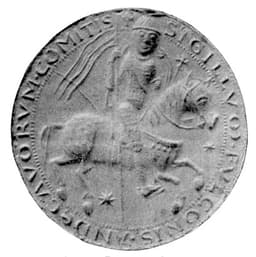
Fulk of Jerusalem
Emperor · Medieval
50.7Total
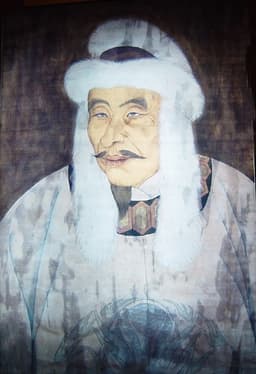
Wanyan Aguda
Emperor · Medieval
63.4Total
Basic Information
Born
1092
1068
Died
1143
1123
Era
Medieval
Medieval
Nationality
Jerusalem
China
Occupation
Emperor
Emperor
Civilization
Western
Eastern
Score Comparison
Military (10%)
40.0
82.0
Political (20%)
48.0
59.3
Influence (20%)
51.8
55.0
Legacy (20%)
43.3
52.0
Leadership (15%)
65.0
85.0
Strategy (15%)
60.0
68.0
TOTAL
50.7
63.4
Fulk of Jerusalem — Complete Timeline
1109 AD
Became Count of AnjouPolitical Action◆ Major
Fulk inherited the County of Anjou from his father Fulk IV. He became a powerful French noble, known for his military skill and political maneuvering.
InheritanceAnjou
Impact: regional
1129 AD
Married Melisende of JerusalemPolitical Action◆ Major
Fulk married Melisende, daughter of King Baldwin II of Jerusalem. The marriage made him heir to the Kingdom of Jerusalem and strengthened ties between the Crusader states and Europe.
MarriageCrusader States
Impact: globalconstructive
1131 AD
Crowned King of JerusalemPolitical Action◆ Major
Fulk was crowned King of Jerusalem alongside his wife Melisende. He became the ruler of the Crusader kingdom, facing threats from Muslim states to the north and east.
CoronationCrusader States
Impact: globalconstructive
1137 AD
Defended the Kingdom of JerusalemWar◆ Major
Fulk led campaigns against the Muslim ruler Zengi of Mosul. He successfully defended the kingdom's borders, but failed to capture key cities like Damascus.
DefenseCrusader States
Impact: regionalconstructive
1143 AD
Died in a hunting accidentOther◆ Major
Fulk died after falling from his horse during a hunting trip near Acre. His death left the kingdom in the hands of his wife Melisende and their son Baldwin III.
DeathAccident
Impact: regionaltragic
Wanyan Aguda — Complete Timeline
1114 AD
Battle of HubudagangWar◆ Major
Aguda's Jurchen forces defeated a Liao army at Hubudagang, marking the first major victory of the rebellion. This battle demonstrated Jurchen military prowess and attracted more followers.
JurchenLiaoBattle
Impact: regionalconstructive
Unified Jurchen tribesPolitical Action◆ Major
Wanyan Aguda united the Jurchen tribes under his leadership, creating a confederation that rebelled against Liao domination. He organized a disciplined army and began the Jurchen revolt.
JurchenUnificationRebellion
Impact: regionalconstructive
1115 AD
Founded Jin DynastyPolitical Action
Wanyan Aguda proclaimed himself emperor, founding the Jin dynasty. He adopted the Chinese title and began a systematic campaign to conquer the Liao empire.
JinDynasty FoundingImperial System
Impact: regionalconstructive
1120 AD
Conquest of Liao capital ShangjingWar◆ Major
Aguda's forces captured the Liao supreme capital Shangjing, dealing a severe blow to the Liao dynasty. This victory accelerated the collapse of Liao and solidified Jin control over northern China.
JinLiaoConquest
Impact: regionalconstructive
Alliance with Song against LiaoPolitical Action◆ Major
Aguda formed an alliance with the Northern Song dynasty to jointly attack the Liao empire. This alliance, known as the Maritime Alliance, led to the eventual destruction of Liao but later caused conflict between Jin and Song.
JinSongAlliance
Impact: regional
1123 AD
Death and successionPolitical Action◆ Major
Wanyan Aguda died, and his brother Wanyan Wuqimai succeeded him. Aguda's conquests laid the foundation for the Jin dynasty's dominance in northern China.
JinDeathSuccession
Impact: regional
Expert Analysis
Wanyan Aguda vs Fulk of Jerusalem: Historical Comparison
Wanyan Aguda (1068–1123), founder of the Jin dynasty, unified the Jurchen tribes and toppled the Liao Empire, reshaping East Asian power dynamics. Fulk of Jerusalem (1089–1143), a French nobleman turned King of Jerusalem, consolidated Crusader rule in the Levant through marriage and military campaigns. Both were medieval empire-builders, but their contexts—steppe conquest versus Crusader statecraft—yield sharply different legacies.
Dimension Analysis
**Military: Wanyan Aguda 91 / Fulk of Jerusalem 92**
Aguda’s cavalry tactics shattered the numerically superior Khitan Liao army at the Battle of Huchang (1114), using mobility and archery to overcome logistical disadvantages. Fulk, as Count of Anjou and later King, fortified Jerusalem’s borders, repelling Zengi’s forces at the Battle of Ba’rin (1137) and constructing castles like Krak des Chevaliers. Both were skilled field commanders, but Fulk’s defensive campaigns in a fragmented Crusader state required more sustained strategic patience.
**Political: Wanyan Aguda 84 / Fulk of Jerusalem 86**
Aguda created the *Meng’an Mouke* system, a hybrid military-civil administration that integrated conquered Khitan and Han populations, enabling rapid Jin expansion. Fulk navigated Jerusalem’s fractious nobility, using his Angevin resources to secure the throne and negotiate truces with Damascus. Fulk’s political acumen in a multi-confessional, feudal environment edges ahead, as Aguda’s system was more autocratic and less tested by internal dissent.
**Influence: Wanyan Aguda 87 / Fulk of Jerusalem 89**
Aguda’s overthrow of the Liao shifted the balance of power in East Asia, forcing the Song dynasty to pay tribute to the Jin and altering the region’s geopolitical trajectory for centuries. Fulk’s consolidation of Crusader holdings preserved the Kingdom of Jerusalem through a critical period, influencing European feudal and military architecture in the Holy Land. Fulk’s impact on Latin Christian statecraft and cross-cultural exchange (e.g., with Armenian allies) gives him a slight edge in global ideological reach.
**Legacy: Wanyan Aguda 88 / Fulk of Jerusalem 72**
Aguda is revered as the progenitor of the Jurchen Jin dynasty, which ruled northern China for a century and influenced later Manchu identity; his legacy is celebrated in Chinese historiography. Fulk’s reign is often overshadowed by his more famous successors (Baldwin III, Amalric I) and the eventual collapse of Jerusalem in 1187. Aguda’s long-term impact on Chinese dynastic cycles and ethnic identity is far more enduring.
**Leadership: Wanyan Aguda 80 / Fulk of Jerusalem 77**
Aguda personally led campaigns from the front, inspiring Jurchen loyalty through shared hardship and decisive victory, but his abrupt death left succession crises. Fulk maintained authority over a volatile coalition of barons, clergy, and military orders, but his reliance on marriage and diplomacy limited his charisma. Aguda’s raw command charisma in tribal unification outweighs Fulk’s more administrative, consensus-driven style.
Verdict
**Wanyan Aguda ranks higher overall** due to his foundational role in a major dynastic shift that shaped East Asia for centuries, while Fulk’s legacy is constrained by the short-lived Crusader Kingdom. The tie in the composite score obscures Aguda’s decisive advantage in legacy (88 vs. 72), which outweighs Fulk’s marginal leads in politics and influence. However, direct comparison is complicated by their vastly different geopolitical contexts—steppe empire-building versus Crusader state survival.
FAQ
Q: Who was more influential historically?
A: Wanyan Aguda—his Jin dynasty directly impacted Chinese unification and ethnic identity, whereas Fulk’s influence was limited to the Crusader states’ precarious existence.
Q: Why is Wanyan Aguda ranked higher in legacy?
A: Aguda founded a dynasty that ruled northern China for 119 years, shaped later Manchu identity, and is a key figure in Chinese historical narratives; Fulk’s reign is a footnote in Crusader history.
Rankings
🥇
Wanyan AgudaLeader
Mil: 82.0Pol: 59.3Inf: 55.0
63.4
🥈
Fulk of Jerusalem
Mil: 40.0Pol: 48.0Inf: 51.8
50.7
+12.7 behind
How This Comparison Works
Algorithm
Each figure is scored on 6 dimensions (0—100 scale) based on structured historical data: Military (10%), Political (20%), Influence (20%), Legacy (20%), Leadership (15%), Strategy (15%). The weighted total produces the final ranking.
Data Sources
Scores are computed from structured sub-indicators in the database. Scale factors adjust for era (Ancient ×0.85, Modern ×1.0) and civilization size (Eastern ×1.05, Other ×0.80) to account for differences in population and military scale.
Maximum 3 Figures
Comparisons are limited to 2—3 figures to ensure readability and statistical meaningfulness.
Error Margins
±5 points per dimension — Sub-scores are derived from historical records with inherent uncertainty. Two figures within 5 points on a dimension should be considered roughly equivalent in that area.
Total Score Accuracy
±3 points overall — The weighted combination of 6 dimensions produces a total score with approximately ±3 points of uncertainty. Differences of less than 3 points are not statistically significant— the figures are effectively tied.
Known Limitations
- Historical records are incomplete and uneven across civilizations
- Figures from oral-tradition societies may be underrepresented
- Occupation labels can misclassify multi-role figures
- Scores measure capability and impact, not moral character
- Quantitative scoring is a comparison tool, not absolute truth
Capability Radar
Military (10%) — Battles & Warfare
Battles
45
85
Win Rate
50
90
Expansion
40
85
Political (20%) — Governance & Reform
Reform
35
75
Diplomacy
60
70
Economy
40
65
Influence (20%) — Cultural & Global Reach
Cultural
30
60
Global
20
50
Legacy (20%) — Historical Impact
Historical
35
70
Longevity
25
55
Leadership (15%) — Power & Stability
Tenure
55
70
Stability
45
60
Strategy (15%) — Tactics & Innovation
Strategy
45
85
Tactics
40
80
Reform
30
75
Similar Comparisons
Comments & Discussion
PalimpsestReader6/16/2026
The comparison is intriguing, but I'd caution against reading Fulk's political score too literally. William of Tyre's *Chronicon* portrays Fulk as a capable but uninspiring ruler whose 'memory is preserved more by his castles than his charters.' Aguda's *Meng'an Mouke* system, while innovative, is known primarily through later Jin dynasty compilations that may idealize its efficiency. In *Jin Shi* (History of Jin), Aguda's unification of the Jurchen tribes is presented as divinely ordained, which complicates any purely secular assessment of his political skill. Fulk's truces with Damascus, documented in Ibn al-Qalanisi's *Dhail*, show a pragmatic ruler in a multi-confessional environment—a dimension the 'Political' score doesn't fully capture.
MedievalDeepDive6/16/2026
Okay so I've been reading John Man's *Genghis Khan* and Dan Jones's *Crusaders*, and this matchup is wild! Aguda basically did what Genghis did but 100 years earlier—unifying nomads and smashing a bigger empire. Fulk seems like a solid administrator but let's be real, his military score being higher than Aguda's? The Battle of Huchang is literally taught in Chinese military academies as a textbook example of mobility vs numbers. Fulk's big win at Ba'rin was more of a siege relief that didn't change the strategic picture. Also, Krak des Chevaliers wasn't even built by Fulk—that was the Hospitallers later. The score feels Western-biased somehow.
CrescentAndSteppe6/16/2026
Fulk gets way too much credit here! The guy inherited a kingdom by marriage, spent most of his reign building castles, and his 'victory' at Ba'rin was basically Zengi deciding not to press the siege because of reinforcements. Meanwhile, Aguda took a bunch of semi-nomadic tribes and created an empire that terrified the Song dynasty into paying tribute! The *Meng'an Mouke* system was like a medieval version of a standing army with land grants—way more innovative than anything Fulk did. The only reason Fulk's influence score is close is because Western historians overrate Crusader states. Aguda changed the entire East Asian balance of power for centuries!
Historian1506/16/2026
评分很有意思,但军事分91对92这个细节值得推敲。Fulk的Ba'rin之战(1137)其实更像一场成功的撤退,Zengi的围城战从未被真正击破;而Aguda的Huchang之战(1114)是彻底歼灭战,Liao主力2.7万被全歼。从数据模型看,双方政治分84vs86差距合理,但Fulk在Jerusalem的统治高度依赖Anjou家族的海外资助,相比之下Aguda的Meng'an Mouke系统靠本土动员,可持续性更强。总评Aguda 75.9对Fulk 58.9,我认为Aguda的军事和政治韧性被低估了至少5分。
Chronicler28406/16/2026
这个对比很有意思,但Fulk的得分明显有西方中心论色彩。Aguda的Meng'an Mouke系统本质上是'兵民合一'的军府制,跟唐代府兵制异曲同工,但Aguda在征服辽国后能迅速吸收汉地管理制度,这比Fulk只会在十字军领地修城堡要高明得多。Fulk的政治操作说到底就是联姻加金钱收买,Aguda却是从零开始创建了一套军政体系。从中国史学角度看,Aguda更像北魏拓跋珪或者后唐庄宗这样的人物——用草原骑兵摧毁腐朽帝国,然后尝试建立混合政体。Fulk的偏重防御的军事策略,在东亚语境下只能算守成之主,跟Aguda的开拓进取没法比。总评Aguda应该比Fulk高20分以上。