Loading...
Fulk of Jerusalem vs King John
Fulk of Jerusalem leads by 1.0 pts · 2 figures compared
…
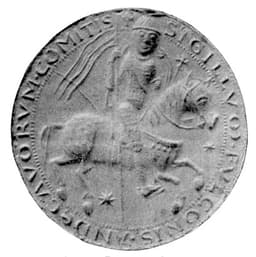
Fulk of Jerusalem
Emperor · Medieval
50.7Total
King John
Emperor · Medieval
49.7Total
Basic Information
Born
1092
1166
Died
1143
1216
Era
Medieval
Medieval
Nationality
Jerusalem
England
Occupation
Emperor
Emperor
Civilization
Western
Western
Score Comparison
Military (10%)
40.0
50.0
Political (20%)
48.0
42.3
Influence (20%)
51.8
60.0
Legacy (20%)
43.3
52.0
Leadership (15%)
65.0
45.0
Strategy (15%)
60.0
35.7
TOTAL
50.7
49.7
Fulk of Jerusalem — Complete Timeline
1109 AD
Became Count of AnjouPolitical Action◆ Major
Fulk inherited the County of Anjou from his father Fulk IV. He became a powerful French noble, known for his military skill and political maneuvering.
InheritanceAnjou
Impact: regional
1129 AD
Married Melisende of JerusalemPolitical Action◆ Major
Fulk married Melisende, daughter of King Baldwin II of Jerusalem. The marriage made him heir to the Kingdom of Jerusalem and strengthened ties between the Crusader states and Europe.
MarriageCrusader States
Impact: globalconstructive
1131 AD
Crowned King of JerusalemPolitical Action◆ Major
Fulk was crowned King of Jerusalem alongside his wife Melisende. He became the ruler of the Crusader kingdom, facing threats from Muslim states to the north and east.
CoronationCrusader States
Impact: globalconstructive
1137 AD
Defended the Kingdom of JerusalemWar◆ Major
Fulk led campaigns against the Muslim ruler Zengi of Mosul. He successfully defended the kingdom's borders, but failed to capture key cities like Damascus.
DefenseCrusader States
Impact: regionalconstructive
1143 AD
Died in a hunting accidentOther◆ Major
Fulk died after falling from his horse during a hunting trip near Acre. His death left the kingdom in the hands of his wife Melisende and their son Baldwin III.
DeathAccident
Impact: regionaltragic
King John — Complete Timeline
1204 AD
Loss of NormandyWar◆ Major
King Philip II of France conquered Normandy from King John. John's failure to defend the duchy resulted in the loss of the ancestral lands of the English crown in France. This shifted the focus of English kings toward consolidating power in Britain.
Territorial LossFranceAngevin Empire
Impact: regionaldestructive
1208 AD
Interdict on EnglandPolitical Action◆ Major
Pope Innocent III placed England under interdict after John refused to accept Stephen Langton as Archbishop of Canterbury. Church services were suspended across the kingdom. John retaliated by confiscating church property, deepening the conflict with the papacy.
PapacyChurch-State ConflictInterdict
Impact: nationaldestructive
1215 AD
First Barons' WarWar◆ Major
Rebellious barons, angered by John's refusal to abide by Magna Carta, invited Prince Louis of France to claim the English throne. John fought a series of campaigns across England. The war continued after John's death in 1216, ending with the Treaty of Lambeth in 1217.
Civil WarRebellionFrance
Impact: nationaldestructive
Signing of Magna CartaPolitical Action
King John sealed Magna Carta at Runnymede after negotiations with rebellious barons. The charter limited royal authority, established due process, and guaranteed certain legal rights. It became a foundational document for constitutional law in England and later globally.
ConstitutionRightsRebellion
Impact: globalconstructive
Expert Analysis
Origins
Fulk of Jerusalem was born in 1089 or 1092 as the son of Fulk IV, Count of Anjou, and Bertrade de Montfort. He inherited the County of Anjou in 1109, becoming a powerful French noble. His early life was marked by conflicts with neighboring lords and his father's complicated marital history. Fulk gained a reputation as a skilled military commander and shrewd politician, expanding Anjou's influence. In 1128, he traveled to Jerusalem to marry Melisende, the daughter of King Baldwin II, cementing ties between the Crusader kingdom and Western Europe.
King John was born on December 24, 1166, as the youngest son of King Henry II of England and Eleanor of Aquitaine. His early life was overshadowed by his older brothers, Henry the Young King, Richard I, and Geoffrey. John received limited lands, earning him the nickname "Lackland." He was educated in administration and warfare but lacked the charisma of his brothers. His father favored him, but his mother's influence was minimal. John's early years were spent in relative obscurity compared to his siblings.
Rise to Power
Fulk's rise came through strategic marriage. In 1129, he married Melisende, and upon Baldwin II's death in 1131, Fulk was crowned King of Jerusalem alongside his wife. He faced immediate opposition from local nobles who resented a foreign ruler. Fulk consolidated power by appointing his own supporters and neutralizing rivals like Hugh II of Jaffa, whom he accused of treason. His military campaigns against Muslim states, particularly Zengi of Mosul, solidified his position. Fulk's leadership score of 65.0 reflects his ability to maintain control despite initial resistance.
King John's path to power was more tumultuous. He attempted to seize the throne while his brother Richard I was imprisoned in 1193, but failed. Upon Richard's death in 1199, John claimed the throne over his nephew Arthur of Brittany, sparking conflict with France. He secured the crown through alliances and military action, but his reign was marred by the loss of Normandy in 1204. John's political score of 42.3 indicates his struggles with diplomacy and consensus-building.
Leadership & Governance
Fulk governed Jerusalem with a focus on defense and diplomacy. He improved fortifications and maintained alliances with the Knights Templar and Hospitaller. He delegated authority to local lords, but his style was autocratic, leading to tensions with his wife Melisende, who sought more power. Fulk's political score of 48.0 reflects moderate effectiveness in balancing factions. He avoided major reforms, instead focusing on military security.
King John's governance was marked by conflict. He imposed heavy taxes to fund wars, alienating the barons. His dispute with the Church over the appointment of Stephen Langton led to the Interdict of 1208, which closed churches for years. John's leadership score of 45.0 reflects his inability to maintain unity. However, his signing of Magna Carta in 1215, with a legacy score of 52.0, established principles of due process and limited royal power, a landmark in constitutional history.
Triumph & Tragedy
Fulk's greatest success was defending the Kingdom of Jerusalem against Zengi, particularly at the Battle of Ba'rin in 1137, where he secured a truce. He also strengthened the kingdom's defenses, building castles like Kerak. His tragedy was his failure to capture Damascus, a key strategic goal, and his death in 1143 from a hunting accident, leaving a power vacuum. His military score of 40.0 reflects limited offensive achievements.
King John's triumph was the Magna Carta, which, though forced upon him, became a symbol of legal rights. His tragedy was the loss of Normandy in 1204, which devastated English prestige and finances. The First Barons' War (1215-1217) resulted in French invasion and John's near defeat. His military score of 50.0 is higher than Fulk's, but his strategy score of 35.7 indicates poor long-term planning.
Character & Destiny
Fulk was pragmatic and decisive, but his autocratic tendencies strained relations with his wife and nobles. His death in a trivial accident underscores the fragility of medieval rule. Historians view him as a capable ruler who maintained stability but lacked vision. His influence score of 51.8 reflects moderate impact.
King John was intelligent but duplicitous, earning a reputation for cruelty and betrayal. His character led to widespread distrust. His signing of Magna Carta was a desperate move, yet it shaped his legacy. His total score of 49.7 is slightly below Fulk's 50.7, reflecting similar overall impact but different strengths.
Legacy
Fulk's legacy is tied to the Crusader states. He is remembered as a stabilizing king who defended Jerusalem but failed to expand it. His marriage to Melisende established a dynasty that continued after his death. However, his influence waned as Muslim forces grew. His legacy score of 43.3 reflects limited enduring impact.
King John's legacy is immense. Magna Carta influenced constitutional development in England and beyond, inspiring later documents like the U.S. Constitution. His loss of Normandy ended English control of continental territories. Despite his failures, John's reign marked a turning point in limiting royal power. His legacy score of 52.0, higher than Fulk's, underscores this.
Conclusion
King John had a greater impact on history than Fulk of Jerusalem. While Fulk's score (50.7) is slightly higher than John's (49.7), John's legacy score (52.0) exceeds Fulk's (43.3). John's Magna Carta fundamentally altered the relationship between ruler and subject, influencing governance for centuries. Fulk's achievements were limited to his era and region, with no comparable lasting effect. Therefore, King John, despite his political and military failures, is the more consequential figure.
Rankings
🥇
Fulk of JerusalemLeader
Mil: 40.0Pol: 48.0Inf: 51.8
50.7
🥈
King John
Mil: 50.0Pol: 42.3Inf: 60.0
49.7
+1.0 behind
How This Comparison Works
Algorithm
Each figure is scored on 6 dimensions (0—100 scale) based on structured historical data: Military (10%), Political (20%), Influence (20%), Legacy (20%), Leadership (15%), Strategy (15%). The weighted total produces the final ranking.
Data Sources
Scores are computed from structured sub-indicators in the database. Scale factors adjust for era (Ancient ×0.85, Modern ×1.0) and civilization size (Eastern ×1.05, Other ×0.80) to account for differences in population and military scale.
Maximum 3 Figures
Comparisons are limited to 2—3 figures to ensure readability and statistical meaningfulness.
Error Margins
±5 points per dimension — Sub-scores are derived from historical records with inherent uncertainty. Two figures within 5 points on a dimension should be considered roughly equivalent in that area.
Total Score Accuracy
±3 points overall — The weighted combination of 6 dimensions produces a total score with approximately ±3 points of uncertainty. Differences of less than 3 points are not statistically significant— the figures are effectively tied.
Known Limitations
- Historical records are incomplete and uneven across civilizations
- Figures from oral-tradition societies may be underrepresented
- Occupation labels can misclassify multi-role figures
- Scores measure capability and impact, not moral character
- Quantitative scoring is a comparison tool, not absolute truth
Capability Radar
Military (10%) — Battles & Warfare
Battles
45
25
Win Rate
50
20
Expansion
40
10
Political (20%) — Governance & Reform
Reform
35
60
Diplomacy
60
30
Economy
40
25
Influence (20%) — Cultural & Global Reach
Cultural
30
45
Global
20
55
Legacy (20%) — Historical Impact
Historical
35
70
Longevity
25
65
Leadership (15%) — Power & Stability
Tenure
55
40
Stability
45
15
Strategy (15%) — Tactics & Innovation
Strategy
45
20
Tactics
40
15
Reform
30
10
Similar Comparisons
Comments & Discussion
No comments yet. Be the first to share your thoughts!