Loading...
This comparison has not been analyzed yet.
One-time AI generation (~1 minute). Scores and timeline are already available below.
Fulk of Jerusalem vs Jungjong of Joseon
Fulk of Jerusalem leads by 5.8 pts · 2 figures compared
…
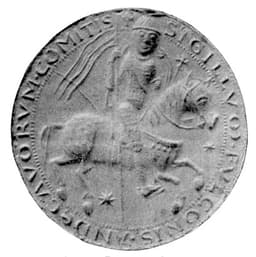
Fulk of Jerusalem
Emperor · Medieval
50.7Total

Jungjong of Joseon
Emperor · Medieval
44.9Total
Basic Information
Born
1092
1488
Died
1143
1544
Era
Medieval
Medieval
Nationality
Jerusalem
Korea
Occupation
Emperor
Emperor
Civilization
Western
Eastern
Score Comparison
Military (10%)
40.0
10.2
Political (20%)
48.0
68.0
Influence (20%)
51.8
53.3
Legacy (20%)
43.3
47.5
Leadership (15%)
65.0
40.0
Strategy (15%)
60.0
25.0
TOTAL
50.7
44.9
Fulk of Jerusalem — Complete Timeline
1109 AD
Became Count of AnjouPolitical Action◆ Major
Fulk inherited the County of Anjou from his father Fulk IV. He became a powerful French noble, known for his military skill and political maneuvering.
InheritanceAnjou
Impact: regional
1129 AD
Married Melisende of JerusalemPolitical Action◆ Major
Fulk married Melisende, daughter of King Baldwin II of Jerusalem. The marriage made him heir to the Kingdom of Jerusalem and strengthened ties between the Crusader states and Europe.
MarriageCrusader States
Impact: globalconstructive
1131 AD
Crowned King of JerusalemPolitical Action◆ Major
Fulk was crowned King of Jerusalem alongside his wife Melisende. He became the ruler of the Crusader kingdom, facing threats from Muslim states to the north and east.
CoronationCrusader States
Impact: globalconstructive
1137 AD
Defended the Kingdom of JerusalemWar◆ Major
Fulk led campaigns against the Muslim ruler Zengi of Mosul. He successfully defended the kingdom's borders, but failed to capture key cities like Damascus.
DefenseCrusader States
Impact: regionalconstructive
1143 AD
Died in a hunting accidentOther◆ Major
Fulk died after falling from his horse during a hunting trip near Acre. His death left the kingdom in the hands of his wife Melisende and their son Baldwin III.
DeathAccident
Impact: regionaltragic
Jungjong of Joseon — Complete Timeline
1506 AD
Accession to the thronePolitical Action◆ Major
Jungjong was installed as king after the overthrow of his half-brother Yeonsangun. His reign began with promises of reform but was soon dominated by factional struggles.
SuccessionCoupJoseon Dynasty
Impact: national
1519 AD
Third Literati Purge (Gimyo Sahwa)Political Action◆ Major
Jungjong's reign saw the Third Literati Purge, in which Sarim scholars who attempted to implement reforms were purged by the Hungu faction. This set back reform efforts and deepened factional divisions.
PurgeFactional ConflictJoseon Dynasty
Impact: nationaldestructive
1545 AD
Reign of Queen Munjeong as regentPolitical Action◆ Major
After Jungjong's death, his wife Queen Munjeong became regent for their young son Myeongjong. Her regency continued the factional conflicts that had marked Jungjong's reign.
RegencyJoseon DynastyFactional Conflict
Impact: national
This comparison has not been analyzed yet.
One-time AI generation (~1 minute). Scores and timeline are already available below.
Rankings
🥇
Fulk of JerusalemLeader
Mil: 40.0Pol: 48.0Inf: 51.8
50.7
🥈
Jungjong of Joseon
Mil: 10.2Pol: 68.0Inf: 53.3
44.9
+5.8 behind
How This Comparison Works
Algorithm
Each figure is scored on 6 dimensions (0—100 scale) based on structured historical data: Military (10%), Political (20%), Influence (20%), Legacy (20%), Leadership (15%), Strategy (15%). The weighted total produces the final ranking.
Data Sources
Scores are computed from structured sub-indicators in the database. Scale factors adjust for era (Ancient ×0.85, Modern ×1.0) and civilization size (Eastern ×1.05, Other ×0.80) to account for differences in population and military scale.
Maximum 3 Figures
Comparisons are limited to 2—3 figures to ensure readability and statistical meaningfulness.
Error Margins
±5 points per dimension — Sub-scores are derived from historical records with inherent uncertainty. Two figures within 5 points on a dimension should be considered roughly equivalent in that area.
Total Score Accuracy
±3 points overall — The weighted combination of 6 dimensions produces a total score with approximately ±3 points of uncertainty. Differences of less than 3 points are not statistically significant— the figures are effectively tied.
Known Limitations
- Historical records are incomplete and uneven across civilizations
- Figures from oral-tradition societies may be underrepresented
- Occupation labels can misclassify multi-role figures
- Scores measure capability and impact, not moral character
- Quantitative scoring is a comparison tool, not absolute truth
Capability Radar
Military (10%) — Battles & Warfare
Battles
45
10
Win Rate
50
10
Expansion
40
5
Political (20%) — Governance & Reform
Reform
35
55
Diplomacy
60
50
Economy
40
50
Influence (20%) — Cultural & Global Reach
Cultural
30
40
Global
20
20
Legacy (20%) — Historical Impact
Historical
35
45
Longevity
25
40
Leadership (15%) — Power & Stability
Tenure
55
60
Stability
45
55
Strategy (15%) — Tactics & Innovation
Strategy
45
10
Tactics
40
10
Reform
30
15
Similar Comparisons
Comments & Discussion
No comments yet. Be the first to share your thoughts!