Loading...
This comparison has not been analyzed yet.
One-time AI generation (~1 minute). Scores and timeline are already available below.
Fruzhin vs Joscelin I of Edessa
Fruzhin leads by 1.7 pts · 2 figures compared
…
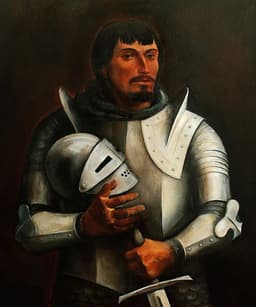
Fruzhin
Emperor · Medieval
41.8Total
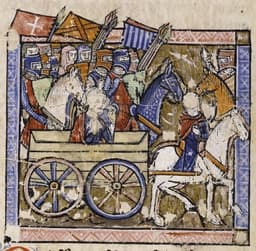
Joscelin I of Edessa
Emperor · Medieval
40.1Total
Basic Information
Born
1380
1070
Died
1460
1131
Era
Medieval
Medieval
Nationality
Bulgaria
County of Edessa
Occupation
Emperor
Emperor
Civilization
Western
Western
Score Comparison
Military (10%)
50.0
55.0
Political (20%)
29.3
26.4
Influence (20%)
49.4
47.1
Legacy (20%)
39.2
38.3
Leadership (15%)
39.0
34.6
Strategy (15%)
43.7
41.0
TOTAL
41.8
40.1
Fruzhin — Complete Timeline
1404 AD
Leadership of the Uprising of Konstantin and FruzhinWar◆ Major
Fruzhin, son of Tsar Ivan Shishman, led an anti-Ottoman uprising in Bulgaria along with his cousin Konstantin. The rebellion aimed to restore the Bulgarian Empire but was ultimately suppressed by the Ottomans.
UprisingOttoman WarsBulgarian Resistance
Impact: regionaltragic
1408 AD
Exile and service in the Kingdom of HungaryPolitical Action
After the failure of the uprising, Fruzhin fled to the Kingdom of Hungary, where he served as a military commander. He participated in campaigns against the Ottoman Empire, seeking to liberate Bulgaria.
ExileHungaryAnti-Ottoman Resistance
Impact: regional
1444 AD
Participation in the Crusade of Varna (1444)War◆ Major
Fruzhin joined the Crusade of Varna, a combined Christian effort to drive the Ottomans from the Balkans. The crusade ended in defeat at the Battle of Varna, where Fruzhin's hopes for Bulgarian liberation were dashed.
CrusadeOttoman WarsBulgarian Resistance
Impact: regionaltragic
Joscelin I of Edessa — Complete Timeline
1104 AD
Battle of HarranWar◆ Major
Joscelin I fought alongside Bohemond of Antioch at Harran against the Seljuks. The Crusader army was defeated, and Joscelin was captured, remaining a prisoner for several years, weakening the County of Edessa.
CrusadesBattleDefeatCapture
Impact: regionaltragic
1118 AD
Expansion of EdessaWar
After his release, Joscelin I expanded the County of Edessa eastward, capturing territory from the Seljuks. He seized lands around Turbessel and extended Crusader control into the Euphrates valley.
CrusadesExpansionEdessa
Impact: regionalconstructive
1125 AD
Battle of AzazWar◆ Major
Joscelin I led a coalition of Crusader forces to victory at Azaz against the Seljuk atabeg of Aleppo. The victory secured the northern frontier of the Crusader states and demonstrated Joscelin's military leadership.
CrusadesBattleVictory
Impact: regional
1131 AD
Death in BattleWar◆ Major
Joscelin I was mortally wounded while besieging a fortress near Aleppo. He died shortly after, leaving the County of Edessa to his son Joscelin II, whose weaker leadership would lead to the county's decline.
CrusadesDeathEdessa
Impact: regionaltragic
This comparison has not been analyzed yet.
One-time AI generation (~1 minute). Scores and timeline are already available below.
Rankings
🥇
FruzhinLeader
Mil: 50.0Pol: 29.3Inf: 49.4
41.8
🥈
Joscelin I of Edessa
Mil: 55.0Pol: 26.4Inf: 47.1
40.1
+1.7 behind
How This Comparison Works
Algorithm
Each figure is scored on 6 dimensions (0—100 scale) based on structured historical data: Military (10%), Political (20%), Influence (20%), Legacy (20%), Leadership (15%), Strategy (15%). The weighted total produces the final ranking.
Data Sources
Scores are computed from structured sub-indicators in the database. Scale factors adjust for era (Ancient ×0.85, Modern ×1.0) and civilization size (Eastern ×1.05, Other ×0.80) to account for differences in population and military scale.
Maximum 3 Figures
Comparisons are limited to 2—3 figures to ensure readability and statistical meaningfulness.
Error Margins
±5 points per dimension — Sub-scores are derived from historical records with inherent uncertainty. Two figures within 5 points on a dimension should be considered roughly equivalent in that area.
Total Score Accuracy
±3 points overall — The weighted combination of 6 dimensions produces a total score with approximately ±3 points of uncertainty. Differences of less than 3 points are not statistically significant— the figures are effectively tied.
Known Limitations
- Historical records are incomplete and uneven across civilizations
- Figures from oral-tradition societies may be underrepresented
- Occupation labels can misclassify multi-role figures
- Scores measure capability and impact, not moral character
- Quantitative scoring is a comparison tool, not absolute truth
Capability Radar
Military (10%) — Battles & Warfare
Battles
20
35
Win Rate
15
30
Expansion
10
40
Political (20%) — Governance & Reform
Reform
10
10
Diplomacy
20
25
Economy
10
15
Influence (20%) — Cultural & Global Reach
Cultural
15
15
Global
10
5
Legacy (20%) — Historical Impact
Historical
20
20
Longevity
15
10
Leadership (15%) — Power & Stability
Tenure
15
30
Stability
10
10
Strategy (15%) — Tactics & Innovation
Strategy
20
20
Tactics
25
25
Reform
10
5
Similar Comparisons
Comments & Discussion
No comments yet. Be the first to share your thoughts!