Loading...
Joscelin I of Edessa vs Osman I
Osman I leads by 16.0 pts · 2 figures compared
…
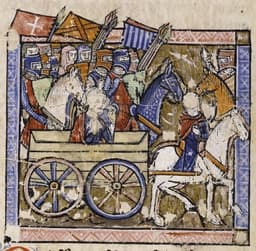
Joscelin I of Edessa
Emperor · Medieval
40.1Total
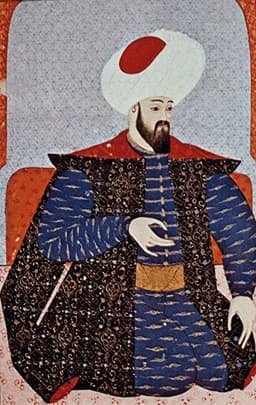
Osman I
Emperor · Medieval
56.1Total
Basic Information
Born
1070
1258
Died
1131
1326
Era
Medieval
Medieval
Nationality
County of Edessa
Ottoman Empire
Occupation
Emperor
Emperor
Civilization
Western
Middle Eastern
Score Comparison
Military (10%)
55.0
20.0
Political (20%)
26.4
45.1
Influence (20%)
47.1
65.0
Legacy (20%)
38.3
68.0
Leadership (15%)
34.6
65.0
Strategy (15%)
41.0
43.3
TOTAL
40.1
56.1
Joscelin I of Edessa — Complete Timeline
1104 AD
Battle of HarranWar◆ Major
Joscelin I fought alongside Bohemond of Antioch at Harran against the Seljuks. The Crusader army was defeated, and Joscelin was captured, remaining a prisoner for several years, weakening the County of Edessa.
CrusadesBattleDefeatCapture
Impact: regionaltragic
1118 AD
Expansion of EdessaWar
After his release, Joscelin I expanded the County of Edessa eastward, capturing territory from the Seljuks. He seized lands around Turbessel and extended Crusader control into the Euphrates valley.
CrusadesExpansionEdessa
Impact: regionalconstructive
1125 AD
Battle of AzazWar◆ Major
Joscelin I led a coalition of Crusader forces to victory at Azaz against the Seljuk atabeg of Aleppo. The victory secured the northern frontier of the Crusader states and demonstrated Joscelin's military leadership.
CrusadesBattleVictory
Impact: regional
1131 AD
Death in BattleWar◆ Major
Joscelin I was mortally wounded while besieging a fortress near Aleppo. He died shortly after, leaving the County of Edessa to his son Joscelin II, whose weaker leadership would lead to the county's decline.
CrusadesDeathEdessa
Impact: regionaltragic
Osman I — Complete Timeline
1299 AD
Foundation of the Ottoman BeylikPolitical Action
Osman I declared independence from the Seljuk Sultanate of Rum, establishing his own beylik (principality) in northwestern Anatolia. This act is traditionally considered the founding of the Ottoman state, which would later grow into a vast empire.
FoundationOttoman EmpireIndependence
Impact: globalconstructive
1302 AD
Battle of BapheusWar◆ Major
Osman I led his forces to victory against a Byzantine army at Bapheus near Nicomedia. This battle established Osman's reputation as a ghazi warrior and marked the beginning of Ottoman expansion into Byzantine territory in northwestern Anatolia.
BattleByzantineGhazi
Impact: regional
1308 AD
Alliance with the Byzantine EmperorPolitical Action
Osman I formed a temporary alliance with the Byzantine emperor Andronikos II against the Catalan Company. This pragmatic relationship allowed Osman to gain resources and recognition while expanding his territory.
AllianceByzantineDiplomacy
1326 AD
Siege of BursaWar◆ Major
Osman I initiated the siege of the Byzantine city of Bursa, though it was captured by his son Orhan after Osman's death. The conquest of Bursa provided the Ottomans with their first major urban center and capital.
SiegeBursaCapital
Impact: regional
Expert Analysis
Origins
Joscelin I of Edessa was born around 1072 into the House of Courtenay, a French noble family. His early life was shaped by the Crusader movement; he arrived in the Holy Land during the early 12th century and became a vassal of the Principality of Antioch. His background as a knight from the French aristocracy gave him military training but little political acumen.
Osman I was born around 1258 in the town of Söğüt in northwestern Anatolia. He was the son of Ertuğrul, a tribal leader of the Kayı clan of Oghuz Turks. Osman's upbringing was in a frontier environment, where he learned tribal leadership and the ghazi tradition of holy war against the Byzantines. His early life lacked formal education but provided practical experience in raiding and alliance-building.
Rise to Power
Joscelin I rose to prominence through service to Baldwin II of Edessa. After being captured at the Battle of Harran in 1104, where he fought alongside Bohemond of Antioch, he remained a prisoner until 1108. His release came after a ransom, and he gradually rebuilt his power base. In 1119, he became Count of Edessa after Baldwin II became King of Jerusalem. His rise was marked by personal bravery but also by constant warfare with Muslim neighbors.
Osman I's rise began around 1299 when he declared independence from the Seljuk Sultanate of Rum, establishing his own beylik. The Battle of Bapheus in 1302 was a turning point: his victory over a Byzantine army near Nicomedia established his reputation as a ghazi leader. He then expanded his territory through raids and alliances, including a temporary pact with Byzantine Emperor Andronikos II against the Catalan Company. By his death, he had built a small but resilient principality.
Leadership & Governance
Joscelin I ruled Edessa as a military commander rather than an administrator. He focused on expanding his county through force, capturing lands around Turbessel and extending his influence eastward. His leadership style was aggressive but lacked political foresight; he often alienated potential allies. For example, his conflict with the Byzantine Empire weakened his position. Joscelin's governance was feudal and decentralized, relying on vassals who were often unreliable.
Osman I was a pragmatic leader who combined military prowess with political diplomacy. He organized his beylik around the ghazi ethos, attracting warriors and settlers. He established a rudimentary administrative system and minted coins to legitimize his rule. Osman's leadership was inclusive: he welcomed Christians and Muslims alike, as long as they accepted his authority. His decision to besiege Bursa, though he did not live to capture it, showed strategic long-term planning.
Triumph & Tragedy
Joscelin I's greatest triumph was the Battle of Azaz in 1125, where he led a coalition of Crusader forces to defeat the Seljuk atabeg of Aleppo, securing the northern frontier of the Crusader states. However, his greatest failure was his inability to consolidate his gains. He was mortally wounded in 1131 while besieging a fortress near Aleppo, leaving his son Joscelin II a weakened realm that fell to Zengi in 1144.
Osman I's triumph was founding a dynasty that would last for six centuries. His victory at Bapheus and his expansion of territory laid the foundation for the Ottoman Empire. His tragedy was dying before Bursa fell; he never saw his greatest ambition realized. Yet his legacy endured through his son Orhan, who captured Bursa and made it the Ottoman capital.
Character & Destiny
Joscelin I was rash and impulsive, scoring 34.6 in leadership and 26.4 in political skills. His courage on the battlefield was counterbalanced by poor strategic judgment. He often overextended his forces and failed to secure alliances. His death in a minor siege epitomized his reckless nature.
Osman I was patient and diplomatic, scoring 65.0 in leadership and 45.1 in political skills. He understood the importance of building institutions and alliances. His character was shaped by the frontier environment, where flexibility was key. His destiny was to create a state that would grow into an empire.
Legacy
Joscelin I's legacy is limited: he is remembered as a Crusader count who briefly expanded Edessa but ultimately failed. His score of 38.3 in legacy reflects the ephemeral nature of his achievements. The County of Edessa fell 13 years after his death, and his name is known mainly to Crusade historians.
Osman I's legacy is immense: he is the founder of the Ottoman Empire, which lasted until 1922. His score of 68.0 in legacy is among the highest for medieval rulers. The Ottoman state, institutions, and legal code trace their origins to his reign. He is revered as the father of a dynasty that shaped world history.
Conclusion
Osman I had greater impact than Joscelin I. With a total score of 56.1 against Joscelin's 40.1, Osman's political and strategic achievements dwarf those of the Crusader count. While Joscelin fought bravely, his failures outweighed his successes. Osman built a state that endured for centuries, while Joscelin's Edessa collapsed within a generation. The founder of the Ottoman dynasty clearly surpasses the rash count of Edessa in historical significance.
Rankings
🥇
Osman ILeader
Mil: 20.0Pol: 45.1Inf: 65.0
56.1
🥈
Joscelin I of Edessa
Mil: 55.0Pol: 26.4Inf: 47.1
40.1
+16.0 behind
How This Comparison Works
Algorithm
Each figure is scored on 6 dimensions (0—100 scale) based on structured historical data: Military (10%), Political (20%), Influence (20%), Legacy (20%), Leadership (15%), Strategy (15%). The weighted total produces the final ranking.
Data Sources
Scores are computed from structured sub-indicators in the database. Scale factors adjust for era (Ancient ×0.85, Modern ×1.0) and civilization size (Eastern ×1.05, Other ×0.80) to account for differences in population and military scale.
Maximum 3 Figures
Comparisons are limited to 2—3 figures to ensure readability and statistical meaningfulness.
Error Margins
±5 points per dimension — Sub-scores are derived from historical records with inherent uncertainty. Two figures within 5 points on a dimension should be considered roughly equivalent in that area.
Total Score Accuracy
±3 points overall — The weighted combination of 6 dimensions produces a total score with approximately ±3 points of uncertainty. Differences of less than 3 points are not statistically significant— the figures are effectively tied.
Known Limitations
- Historical records are incomplete and uneven across civilizations
- Figures from oral-tradition societies may be underrepresented
- Occupation labels can misclassify multi-role figures
- Scores measure capability and impact, not moral character
- Quantitative scoring is a comparison tool, not absolute truth
Capability Radar
Military (10%) — Battles & Warfare
Battles
35
35
Win Rate
30
40
Expansion
40
50
Political (20%) — Governance & Reform
Reform
10
40
Diplomacy
25
50
Economy
15
35
Influence (20%) — Cultural & Global Reach
Cultural
15
60
Global
5
65
Legacy (20%) — Historical Impact
Historical
20
70
Longevity
10
80
Leadership (15%) — Power & Stability
Tenure
30
55
Stability
10
45
Strategy (15%) — Tactics & Innovation
Strategy
20
45
Tactics
25
30
Reform
5
30
Similar Comparisons
Comments & Discussion
No comments yet. Be the first to share your thoughts!