Loading...
Frederick the Great vs Jean-Jacques Dessalines
Jean-Jacques Dessalines leads by 3.5 pts · 2 figures compared
…
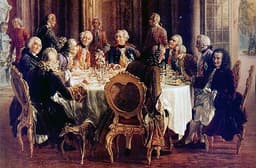
Frederick the Great
Emperor · Modern
68.1Total
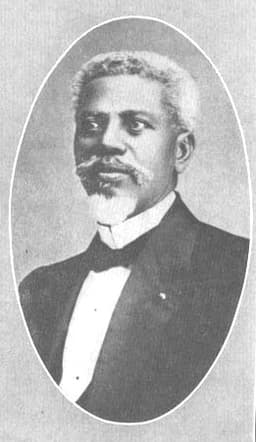
Jean-Jacques Dessalines
Emperor · Modern
71.6Total
Basic Information
Born
1712
1758
Died
1786
1806
Era
Modern
Modern
Nationality
Prussia
Haiti
Occupation
Emperor
Emperor
Civilization
Western
Western
Score Comparison
Military (10%)
90.0
78.0
Political (20%)
75.0
68.0
Influence (20%)
55.0
82.0
Legacy (20%)
52.0
72.0
Leadership (15%)
82.0
55.3
Strategy (15%)
88.0
68.1
TOTAL
68.1
71.6
Frederick the Great — Complete Timeline
1723 AD
General Directory EstablishedReform◆ Major
Frederick the Great reorganized the Prussian government by establishing the General Directory, a centralized administrative body. This reform improved tax collection, military logistics, and state efficiency, strengthening Prussia's fiscal and military capacity.
AdministrationReformState Building
Impact: nationalconstructive
1757 AD
Battle of RossbachWar◆ Major
Frederick the Great's Prussian army defeated a larger Franco-Imperial force at Rossbach during the Seven Years' War. The victory showcased Prussian military discipline and Frederick's tactical genius, securing his reputation as a leading commander.
Seven Years' WarBattleMilitary Tactics
Impact: regional
Battle of LeuthenWar◆ Major
Frederick the Great led Prussian forces to a decisive victory over the Austrian army at Leuthen. The battle, fought in Silesia, demonstrated Frederick's use of oblique order tactics and helped Prussia retain control of Silesia during the Seven Years' War.
Seven Years' WarBattleSilesia
Impact: regional
1763 AD
Treaty of Hubertusburg SignedPolitical Action
Frederick the Great signed the Treaty of Hubertusburg with Austria, ending the Seven Years' War. The treaty confirmed Prussian possession of Silesia and established Prussia as a major European power, despite near-defeat earlier in the war.
TreatySeven Years' WarPrussia
Impact: regionalconstructive
1772 AD
First Partition of PolandPolitical Action◆ Major
Frederick the Great orchestrated the First Partition of Poland alongside Russia and Austria. Prussia gained West Prussia, connecting its territories and gaining control of the Vistula River trade, at the expense of Polish sovereignty.
PartitionPolandTerritorial Expansion
Impact: regionaldestructive
Jean-Jacques Dessalines — Complete Timeline
1803 AD
Battle of VertièresWar
Dessalines led Haitian forces to a decisive victory over the French army at Verti
BattleIndependenceFrench Defeat
Impact: globalconstructive
1804 AD
Haitian Independence DeclarationPolitical Action
Dessalines declared Haiti's independence, renaming the country from Saint-Domingue. He issued the Haitian Declaration of Independence, establishing the first black republic and the second independent nation in the Americas.
IndependenceRepublicAbolition
Impact: globalprogressive
Coronation as Emperor Jacques IPolitical Action◆ Major
Dessalines crowned himself Emperor Jacques I of Haiti, establishing an authoritarian regime. He centralized power, imposed forced labor to rebuild the economy, and executed former white colonists.
CoronationAuthoritarianismEmpire
Impact: nationaldestructive
1806 AD
Assassination of DessalinesPolitical Action◆ Major
Dessalines was ambushed and killed by rebels at Pont-Rouge near Port-au-Prince. His authoritarian rule and economic policies had alienated elites, leading to his overthrow and Haiti's division into two states.
AssassinationRebellionPolitical Division
Impact: nationaltragic
Expert Analysis
Origins
Frederick the Great was born on January 24, 1712, in Berlin, the son of King Frederick William I of Prussia and Sophia Dorothea of Hanover. His father, the "Soldier King," imposed a strict military education, but Frederick preferred French literature, music, and philosophy. This clash led to a traumatic episode in 1730 when Frederick attempted to flee to England with his friend Hans Hermann von Katte; his father had Katte executed before Frederick's eyes. This experience shaped Frederick's later pragmatism and distrust.
Jean-Jacques Dessalines was born around 1758 in West Africa, possibly in present-day Ghana or Togo, and was enslaved and transported to the French colony of Saint-Domingue (Haiti). He worked as a field slave on the Duclos plantation near Grande-Rivière-du-Nord. Unlike Frederick, Dessalines had no formal education; his early life was defined by brutality and resistance. He rose through the ranks of the Haitian Revolution under Toussaint Louverture, learning warfare in the crucible of rebellion.
Rise to Power
Frederick became King of Prussia upon his father's death in 1740. Immediately, he launched the First Silesian War (1740-1742), seizing the wealthy province of Silesia from Austria. His military victories at Mollwitz (1741) and Chotusitz (1742) forced Austria to cede Silesia in the Treaty of Berlin. In the Seven Years' War (1756-1763), Frederick faced a coalition of Austria, France, Russia, and Sweden. Despite near defeat, his strategic brilliance at Rossbach (1757) and Leuthen (1757) saved Prussia. The Treaty of Hubertusburg (1763) confirmed Prussian possession of Silesia, establishing Prussia as a great power.
Dessalines rose through the ranks of the Haitian Revolution. After Toussaint Louverture was captured by the French in 1802, Dessalines took command of the rebel forces. He allied with Alexandre Pétion and Henri Christophe, and in the Battle of Vertières (November 18, 1803), he decisively defeated the French army under General Donatien de Rochambeau. On January 1, 1804, Dessalines declared Haiti's independence, becoming the first ruler of the first black republic. He later crowned himself Emperor Jacques I in October 1804.
Leadership & Governance
Frederick ruled as an "enlightened despot," implementing reforms while maintaining absolute control. He established the General Directory in 1723 (as crown prince, later expanded as king) to centralize administration, promoted religious tolerance (allowing Catholics and Jews in Protestant Prussia), and reformed the legal system, abolishing torture. He also promoted agriculture and industry, draining swamps and introducing crop rotation. However, he maintained a rigid social hierarchy, with the Junker nobility dominating the officer corps. His governance was efficient but authoritarian.
Dessalines established an authoritarian regime after independence. He centralized power, imposed forced labor to rebuild the devastated economy, and confiscated land from white colonists. His 1805 constitution declared all Haitians as "black" regardless of skin color, a radical move to unify the population. However, his rule alienated the mulatto elite, who resented his land reforms and autocratic style. He executed thousands of remaining white French settlers in the 1804 massacre, a brutal act that secured his reputation as a fearsome leader but also isolated Haiti internationally.
Triumph & Tragedy
Frederick's greatest triumph was surviving the Seven Years' War and securing Silesia, which doubled Prussia's population and territory. His military reforms, including the use of oblique order tactics, influenced European warfare for decades. His tragedy was the devastation of Prussia: the war killed 500,000 Prussians (one-third of the population) and left the economy in ruins. His later years were marked by diplomatic isolation and a rigid, aging state.
Dessalines' triumph was liberating Haiti, a feat unmatched in history. He defeated three European powers (France, Spain, Britain) and established the first black republic. His tragedy was his authoritarian rule and assassination on October 17, 1806, at Pont-Rouge. His forced labor system and massacres created deep class and color divisions that plagued Haiti for centuries. He scored 78.0 in military but only 55.3 in leadership, reflecting his inability to transition from revolutionary to peacetime ruler.
Character & Destiny
Frederick was disciplined, intellectually curious, and pragmatic. He wrote extensively, composed music, and corresponded with Voltaire. His character was shaped by his traumatic youth, leading to a stoic and sometimes cynical outlook. He believed in duty above all, famously saying, "I am the first servant of the state." His destiny was to transform a small, poor kingdom into a European power, a goal he achieved through relentless effort.
Dessalines was fierce, uncompromising, and deeply suspicious of whites and mulattoes. His experience of slavery and war made him ruthless; he once ordered the execution of 1,000 French prisoners after Vertières. His character was forged in brutality, and he saw authoritarianism as necessary for survival. His destiny was to be the founding father of Haiti, but his methods sowed the seeds of future instability. He scored 82.0 in influence, reflecting his symbolic power, but his legacy is contested.
Legacy
Frederick's legacy is immense: he established Prussia as a great power, setting the stage for German unification under Bismarck. His military tactics were studied by Napoleon and Moltke. His administrative reforms created an efficient state bureaucracy. He also promoted Enlightenment ideals, though within an absolutist framework. He scored 52.0 in legacy, lower than Dessalines, perhaps because his impact was more regional.
Dessalines' legacy is foundational for Haiti and the African diaspora. He is revered as the "Father of the Nation" and a symbol of black liberation. His 1805 constitution's radical anti-colonial stance inspired later movements. However, his authoritarianism and economic policies contributed to Haiti's impoverishment and political instability. He scored 72.0 in legacy, reflecting his global symbolic importance but mixed practical outcomes.
Conclusion
In comparing Frederick the Great (total score 68.1) and Jean-Jacques Dessalines (total score 71.6), the data suggests Dessalines had a greater overall impact, particularly in influence and legacy. Frederick's military and political achievements were remarkable, but they operated within the existing European state system. Dessalines' creation of the first black republic was a transformative event in world history, challenging colonialism and slavery at their core. While Frederick's reforms modernized Prussia, Dessalines' revolution reshaped global ideas of freedom. Therefore, despite Frederick's tactical genius, Dessalines' broader historical significance gives him the edge.
Rankings
🥇
Jean-Jacques DessalinesLeader
Mil: 78.0Pol: 68.0Inf: 82.0
71.6
🥈
Frederick the Great
Mil: 90.0Pol: 75.0Inf: 55.0
68.1
+3.5 behind
How This Comparison Works
Algorithm
Each figure is scored on 6 dimensions (0—100 scale) based on structured historical data: Military (10%), Political (20%), Influence (20%), Legacy (20%), Leadership (15%), Strategy (15%). The weighted total produces the final ranking.
Data Sources
Scores are computed from structured sub-indicators in the database. Scale factors adjust for era (Ancient ×0.85, Modern ×1.0) and civilization size (Eastern ×1.05, Other ×0.80) to account for differences in population and military scale.
Maximum 3 Figures
Comparisons are limited to 2—3 figures to ensure readability and statistical meaningfulness.
Error Margins
±5 points per dimension — Sub-scores are derived from historical records with inherent uncertainty. Two figures within 5 points on a dimension should be considered roughly equivalent in that area.
Total Score Accuracy
±3 points overall — The weighted combination of 6 dimensions produces a total score with approximately ±3 points of uncertainty. Differences of less than 3 points are not statistically significant— the figures are effectively tied.
Known Limitations
- Historical records are incomplete and uneven across civilizations
- Figures from oral-tradition societies may be underrepresented
- Occupation labels can misclassify multi-role figures
- Scores measure capability and impact, not moral character
- Quantitative scoring is a comparison tool, not absolute truth
Capability Radar
Military (10%) — Battles & Warfare
Battles
85
85
Win Rate
80
90
Expansion
85
70
Political (20%) — Governance & Reform
Reform
90
60
Diplomacy
80
40
Economy
85
35
Influence (20%) — Cultural & Global Reach
Cultural
80
70
Global
75
70
Legacy (20%) — Historical Impact
Historical
85
85
Longevity
80
75
Leadership (15%) — Power & Stability
Tenure
85
30
Stability
75
20
Strategy (15%) — Tactics & Innovation
Strategy
90
85
Tactics
95
80
Reform
90
75
Similar Comparisons
Comments & Discussion
No comments yet. Be the first to share your thoughts!