Loading...
Jean-Jacques Dessalines vs Julius Caesar
Julius Caesar leads by 11.2 pts · 2 figures compared
…
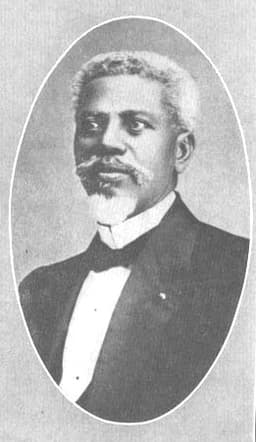
Jean-Jacques Dessalines
Emperor · Modern
71.6Total

Julius Caesar
General · Ancient
82.8Total
Basic Information
Born
1758
-100
Died
1806
-44
Era
Modern
Ancient
Nationality
Haiti
Roman Republic
Occupation
Emperor
General
Civilization
Western
Western
Score Comparison
Military (10%)
78.0
88.0
Political (20%)
68.0
78.0
Influence (20%)
82.0
85.0
Legacy (20%)
72.0
82.0
Leadership (15%)
55.3
80.0
Strategy (15%)
68.1
85.0
TOTAL
71.6
82.8
Jean-Jacques Dessalines — Complete Timeline
1803 AD
Battle of VertièresWar
Dessalines led Haitian forces to a decisive victory over the French army at Verti
BattleIndependenceFrench Defeat
Impact: globalconstructive
1804 AD
Haitian Independence DeclarationPolitical Action
Dessalines declared Haiti's independence, renaming the country from Saint-Domingue. He issued the Haitian Declaration of Independence, establishing the first black republic and the second independent nation in the Americas.
IndependenceRepublicAbolition
Impact: globalprogressive
Coronation as Emperor Jacques IPolitical Action◆ Major
Dessalines crowned himself Emperor Jacques I of Haiti, establishing an authoritarian regime. He centralized power, imposed forced labor to rebuild the economy, and executed former white colonists.
CoronationAuthoritarianismEmpire
Impact: nationaldestructive
1806 AD
Assassination of DessalinesPolitical Action◆ Major
Dessalines was ambushed and killed by rebels at Pont-Rouge near Port-au-Prince. His authoritarian rule and economic policies had alienated elites, leading to his overthrow and Haiti's division into two states.
AssassinationRebellionPolitical Division
Impact: nationaltragic
Julius Caesar — Complete Timeline
58 BC
Gallic WarsWar◆ Major
Caesar, as proconsul of Gaul, launched a series of campaigns that conquered all of Gaul (modern France, Belgium, and parts of Switzerland). He fought numerous battles, including against the Helvetii, the Belgae, and the Gallic chieftain Vercingetorix. The wars brought immense wealth and a loyal army to Caesar.
Gallic WarsConquestRoman Expansion
Impact: regional
49 BC
Crossing the RubiconPolitical Action◆ Major
Caesar led Legio XIII across the Rubicon River into Italy, defying the Roman Senate's order to disband his army. This act triggered a civil war against Pompey and the Optimates, ultimately leading to Caesar's dictatorship and the end of the Roman Republic.
Roman Civil WarEnd of RepublicPower Struggle
Impact: global
48 BC
Battle of PharsalusWar◆ Major
Caesar's outnumbered army defeated the larger forces of Pompey the Great at Pharsalus in Greece. Caesar's tactical use of a reserve line to counter Pompey's cavalry charge proved decisive. Pompey fled to Egypt, where he was assassinated, leaving Caesar as the undisputed master of the Roman world.
Roman Civil WarBattleDecisive Victory
Impact: regional
44 BC
Appointment as Dictator for LifePolitical Action◆ Major
The Roman Senate appointed Caesar dictator perpetuo (dictator for life), granting him unprecedented personal power. This move concentrated military, legislative, and judicial authority in one person, effectively ending the Roman Republic's traditional system of checks and balances and alarming many senators.
DictatorshipEnd of RepublicPower Consolidation
Impact: regionaldestructive
Assassination on the Ides of MarchPolitical Action◆ Major
A group of Roman senators, led by Marcus Junius Brutus and Gaius Cassius Longinus, stabbed Caesar to death at a meeting of the Senate in the Theatre of Pompey. The assassination was intended to restore the Republic, but instead triggered another civil war that led to the rise of the Roman Empire.
AssassinationRoman PoliticsEnd of Republic
Impact: globaldestructive
Expert Analysis
jean-jacques-dessalines-vs-julius-caesar
**The Crossing and the Crown**
On a January night in 49 BCE, a man stood at the edge of a shallow river in northern Italy. The Rubicon was little more than a stream, but Roman law made it a boundary no general could cross with an army. Julius Caesar paused, then uttered a phrase that would echo through millennia: *“The die is cast.”* He rode into history.
Half a world away and eighteen centuries later, another man stood on a hilltop in what had been Saint-Domingue. The ground beneath him was soaked with the blood of slaves and soldiers. Jean-Jacques Dessalines had just watched the last French columns march to the sea. He declared a new nation—Haiti—and crowned himself emperor. Both men seized power at the point of a sword. Both died violently. But the rivers they crossed led to vastly different destinations.
**Origins**
Caesar was born into the patrician Julian clan, one of Rome’s oldest families, but his branch had little wealth or influence. He grew up in a city of marble and intrigue, where politics was a blood sport fought in the Senate and on the battlefield. His uncle by marriage, Gaius Marius, had been a populist general who defied the aristocracy—a model Caesar would later perfect.
Dessalines was born a slave in West Africa, brought to the French colony of Saint-Domingue, and worked in the sugar fields. He never learned to read or write. His world was one of whips, boiling vats, and the constant threat of death. Where Caesar inherited a name and a network, Dessalines inherited only scars and a burning hatred of oppression. The difference in their starting points—privilege against subjugation—shaped every choice they would later make.
**Rise to Power**
Caesar’s path to supremacy was a masterclass in political calculation. He borrowed fortunes to bribe voters, formed the First Triumvirate with Pompey and Crassus, and then spent eight years conquering Gaul—killing a million people and enslaving another million. He wrote his own propaganda, the *Commentaries*, which made him a legend while he still lived. When his enemies in the Senate ordered him to disband his army, he refused. The Rubicon crossing was not a desperate gamble; it was the final, deliberate move of a man who had been planning for years.
Dessalines rose through sheer ferocity. He joined the slave revolt of 1791, fought under Toussaint Louverture, and learned guerrilla warfare in the mountains. When Toussaint was betrayed and deported by the French in 1802, Dessalines took command. He did not have Caesar’s education or oratory. He had something else: a reputation so terrifying that his own soldiers called him “the Tiger.” At the Battle of Vertières on November 18, 1803, he led a final charge against French fortifications, breaking Napoleon’s army and ending colonial rule. It was a military victory as decisive as any Caesar won—but won with far fewer resources.
**Leadership & Governance**
Caesar governed as a reformer. As dictator, he expanded Roman citizenship to provinces, reformed the calendar (giving us the Julian calendar), started public works projects, and centralized power under his own authority. He was generous to his enemies—pardoning many who had fought against him—and used clemency as a political weapon. But his reforms were never completed. He held power for only a year before the daggers found him.
Dessalines governed as a revolutionary. After independence in 1804, he faced a shattered economy, a devastated population, and the hostility of every slaveholding power in the Americas. He imposed forced labor on the plantations to revive sugar exports, built forts against a feared French invasion, and massacred the remaining white French colonists—perhaps 3,000 to 5,000 people—in a brutal act of ethnic cleansing. Where Caesar offered clemency, Dessalines offered vengeance. Where Caesar built a new order on old foundations, Dessalines tried to burn the old foundations down.
**Triumph & Tragedy**
Caesar’s greatest moment was his triumph in Rome after the civil war—four processions, endless loot, and the adoration of the crowd. His greatest failure was his assassination on the Ides of March, 44 BCE, stabbed twenty-three times by senators he had pardoned. He died because he could not imagine that his generosity would not be returned.
Dessalines’s greatest moment was the declaration of Haitian independence on January 1, 1804—the first and only nation founded by a successful slave revolt. His greatest failure was his own death, two years later, ambushed at Pont-Rouge by rebels from his own army. He died because his authoritarian methods, his land policies, and his massacres had alienated everyone—the mulatto elite, the black generals, the peasants. Caesar was killed by his peers; Dessalines was killed by his followers.
**Character & Destiny**
Caesar was audacious, brilliant, and supremely confident. He believed that his own genius could reshape the world, and in many ways it did. But his confidence blinded him to the hatred he inspired. He walked into the Senate without guards, dismissing warnings as superstition. His character was his fate.
Dessalines was ruthless, paranoid, and driven by a single, burning vision: that Haiti would never be enslaved again. He trusted no one, and in the end, no one trusted him. He built a state that could fight but could not govern. His character, forged in the crucible of slavery, made him a liberator but not a statesman.
**Legacy**
Caesar’s legacy is the Roman Empire itself. His name became a title—*Kaiser*, *Tsar*—and his reforms outlived him by centuries. He is remembered as a military genius, a writer, and the man who broke the Republic. But he also destroyed a political system that had lasted nearly five centuries, replacing it with autocracy. The debate over whether he was a hero or a tyrant is as old as his death.
Dessalines’s legacy is Haiti—poor, isolated, and struggling, but free. He is celebrated as the father of the nation, his image on every Haitian banknote, his name in every schoolbook. But his authoritarian rule set patterns of dictatorship and economic collapse that Haiti has never fully escaped. The world remembers him less than Caesar, but for Haitians, he is the man who made the impossible possible: a nation of former slaves that defeated France, Spain, and Britain.
**Conclusion**
Caesar and Dessalines both crossed lines that could not be uncrossed. One crossed a river; the other crossed an ocean of blood. Both died by violence, both changed history, and both left behind worlds they had remade—but not as they intended. Caesar gave Rome an empire; Dessalines gave Haiti a nation. The difference between them is not just time and place. It is the difference between a man who inherited power and a man who had to seize it from nothing. The first built a world that lasted a thousand years. The second built a world that had to fight to survive a single generation. And yet, in the end, both were mortal men who tried to bend history to their will—and history bent them back.
Rankings
🥇
Julius CaesarLeader
Mil: 88.0Pol: 78.0Inf: 85.0
82.8
🥈
Jean-Jacques Dessalines
Mil: 78.0Pol: 68.0Inf: 82.0
71.6
+11.2 behind
How This Comparison Works
Algorithm
Each figure is scored on 6 dimensions (0—100 scale) based on structured historical data: Military (10%), Political (20%), Influence (20%), Legacy (20%), Leadership (15%), Strategy (15%). The weighted total produces the final ranking.
Data Sources
Scores are computed from structured sub-indicators in the database. Scale factors adjust for era (Ancient ×0.85, Modern ×1.0) and civilization size (Eastern ×1.05, Other ×0.80) to account for differences in population and military scale.
Maximum 3 Figures
Comparisons are limited to 2—3 figures to ensure readability and statistical meaningfulness.
Error Margins
±5 points per dimension — Sub-scores are derived from historical records with inherent uncertainty. Two figures within 5 points on a dimension should be considered roughly equivalent in that area.
Total Score Accuracy
±3 points overall — The weighted combination of 6 dimensions produces a total score with approximately ±3 points of uncertainty. Differences of less than 3 points are not statistically significant— the figures are effectively tied.
Known Limitations
- Historical records are incomplete and uneven across civilizations
- Figures from oral-tradition societies may be underrepresented
- Occupation labels can misclassify multi-role figures
- Scores measure capability and impact, not moral character
- Quantitative scoring is a comparison tool, not absolute truth
Capability Radar
Military (10%) — Battles & Warfare
Battles
85
95
Win Rate
90
92
Expansion
70
97
Political (20%) — Governance & Reform
Reform
60
90
Diplomacy
40
85
Economy
35
82
Influence (20%) — Cultural & Global Reach
Cultural
70
88
Global
70
94
Legacy (20%) — Historical Impact
Historical
85
95
Longevity
75
96
Leadership (15%) — Power & Stability
Tenure
30
75
Stability
20
60
Strategy (15%) — Tactics & Innovation
Strategy
85
94
Tactics
80
96
Reform
75
88
Similar Comparisons
Comments & Discussion
数字掘墓人6/17/2026
你们拿罗马元老院和圣多明各的糖料种植园比?笑死我了。凯撒的“渡河”本质是一场贵族内斗,伤亡数字撑死几万人;而德萨利纳斯的革命消灭了法兰西殖民地五万军队,还让欧洲损失了最富庶的产糖区。别拿统计学当装饰品——把阿莱西亚之围和克里图-拉-比维卢姆战役对比试试?前者是工程学奇迹,后者是种族灭绝的清算。
甲胄与草鞋6/17/2026
战史角度:凯撒的《高卢战记》里那些“蛮族”跪求罗马和平的桥段,放在海地就是法国人跪求德萨利纳斯饶命。凯撒赢了阿莱西亚靠的是围城工事,德萨利纳斯打赢了整场战争靠的是把法国人饿死在港口——没有补给线,没有退路。别跟我扯什么“西方军事天才”,破坏甘蔗田的战术比任何罗马阵型都高明。
Historian3346/17/2026
Caesar’s *commentarii* are propaganda dressed as history — he wrote himself into immortality. Dessalines never wrote a word, yet his legacy speaks through every Haitian today. Caesar’s dictatorship lasted four years; Dessalines ruled for two before his assassination. But Caesar died a dictator’s death, while Dessalines was butchered by his own officers in a betrayal worthy of Shakespeare. Give me the man whose silence screams louder than any Latin prose.
Historian8176/17/2026
As a classicist, I must say this comparison is historically absurd on its face. Caesar’s rule perpetuated an empire that lasted centuries; Dessalines’ Haiti collapsed into chaos within decades. Caesar was assassinated by senators who envied his power; Dessalines was murdered by his own generals because he couldn’t hold a broken state together. We’re comparing a master builder of civilizations to a man who burned his own bridges. The Rubicon led to Rome; Dessalines’ crossing led to isolation and
Chronicler76666/17/2026
Caesar crossed the Rubicon with a single legion — around 5,000 men — gambling everything on audacity and his soldiers’ loyalty. Dessalines, on the other hand, fought an asymmetric war of attrition, using scorched earth and massed guerrilla tactics against 40,000 French veterans. Caesar’s crossing was swift; Dessalines’ struggle spanned years. Give me a general who can win a war of liberation against colonial powers any day over one who just disobeyed the Senate.