Loading...
Frederick the Great vs Qin Shi Huang
Qin Shi Huang leads by 17.1 pts · 2 figures compared
…
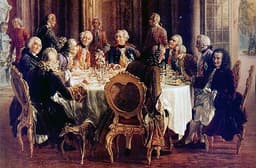
Frederick the Great
Emperor · Modern
68.1Total
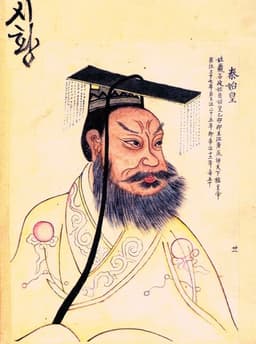
Qin Shi Huang
Emperor · Ancient
85.2Total
Basic Information
Born
1712
-259
Died
1786
-210
Era
Modern
Ancient
Nationality
Prussia
China
Occupation
Emperor
Emperor
Civilization
Western
Eastern
Score Comparison
Military (10%)
90.0
80.0
Political (20%)
75.0
90.0
Influence (20%)
55.0
85.0
Legacy (20%)
52.0
90.0
Leadership (15%)
82.0
78.0
Strategy (15%)
88.0
82.0
TOTAL
68.1
85.2
Frederick the Great — Complete Timeline
1723 AD
General Directory EstablishedReform◆ Major
Frederick the Great reorganized the Prussian government by establishing the General Directory, a centralized administrative body. This reform improved tax collection, military logistics, and state efficiency, strengthening Prussia's fiscal and military capacity.
AdministrationReformState Building
Impact: nationalconstructive
1757 AD
Battle of RossbachWar◆ Major
Frederick the Great's Prussian army defeated a larger Franco-Imperial force at Rossbach during the Seven Years' War. The victory showcased Prussian military discipline and Frederick's tactical genius, securing his reputation as a leading commander.
Seven Years' WarBattleMilitary Tactics
Impact: regional
Battle of LeuthenWar◆ Major
Frederick the Great led Prussian forces to a decisive victory over the Austrian army at Leuthen. The battle, fought in Silesia, demonstrated Frederick's use of oblique order tactics and helped Prussia retain control of Silesia during the Seven Years' War.
Seven Years' WarBattleSilesia
Impact: regional
1763 AD
Treaty of Hubertusburg SignedPolitical Action
Frederick the Great signed the Treaty of Hubertusburg with Austria, ending the Seven Years' War. The treaty confirmed Prussian possession of Silesia and established Prussia as a major European power, despite near-defeat earlier in the war.
TreatySeven Years' WarPrussia
Impact: regionalconstructive
1772 AD
First Partition of PolandPolitical Action◆ Major
Frederick the Great orchestrated the First Partition of Poland alongside Russia and Austria. Prussia gained West Prussia, connecting its territories and gaining control of the Vistula River trade, at the expense of Polish sovereignty.
PartitionPolandTerritorial Expansion
Impact: regionaldestructive
Qin Shi Huang — Complete Timeline
246 BC
Construction of the Mausoleum and Terracotta ArmyOther◆ Major
Qin Shi Huang commissioned a vast mausoleum complex near Xi'an, guarded by thousands of life-sized terracotta soldiers, horses, and chariots. The project employed hundreds of thousands of workers and reflected his obsession with immortality and imperial power.
Impact: global
230 BC
Conquest of the Six Warring StatesWar
From 230 to 221 BCE, Ying Zheng led the Qin state in a series of campaigns that conquered the Han, Zhao, Wei, Chu, Yan, and Qi states. This unified China under a single ruler for the first time, ending the Warring States period.
Impact: global
221 BC
Standardization of Writing, Currency, and MeasurementsReform◆ Major
Qin Shi Huang ordered the standardization of Chinese script, currency, and weights and measures across the unified empire. This facilitated administration, trade, and cultural integration, laying a foundation for future dynasties.
Impact: globalconstructive
Proclamation of the Qin DynastyPolitical Action
After conquering the last independent state, Ying Zheng declared himself Shi Huangdi (First Emperor), founding the Qin Dynasty. He adopted a new title to signify his supreme authority and initiated centralized imperial rule.
Impact: global
214 BC
Initiation of the Great Wall ConstructionOther◆ Major
Qin Shi Huang ordered the connection and extension of existing northern fortifications to create a unified defensive wall against nomadic Xiongnu raids. This project involved massive conscripted labor and became the precursor to the later Great Wall.
Impact: regional
213 BC
Burning of Books and Burying of ScholarsPolitical Action◆ Major
On the advice of Li Si, Qin Shi Huang ordered the burning of historical records and philosophical texts not aligned with Legalist doctrine. He also had 460 Confucian scholars buried alive to suppress dissent and consolidate ideological control.
Impact: nationaldestructive
Expert Analysis
frederick-the-great-vs-qin-shi-huang
# The Iron Hand and the Enlightened Mind
On a winter morning in 221 BC, a man in black silk stood before the ruins of a conquered kingdom and declared himself the First Emperor of all China. Two thousand years later, on a summer evening in 1740, a young king in a blue uniform took command of an army he had been forbidden to touch and marched toward a future no one could predict. Both men would reshape the world around them. Both would be called "Great." Yet the paths they walked, and the shadows they cast, could not have been more different.
Origins
Ying Zheng was born into violence. His father, a prince of Qin, had been a hostage in the state of Zhao, and the boy grew up surrounded by the treachery and warfare of the Warring States period. When he ascended the throne of Qin at thirteen, the kingdom was already the most ruthless and disciplined of the seven warring states. His mother's lover, a eunuch named Lao Ai, attempted a coup when Ying Zheng was twenty-two. The young king crushed it with such ferocity that he ordered the execution of all conspirators, including his mother's two illegitimate sons. Trust was a luxury he could never afford.
Frederick was born into privilege—and cruelty of a different kind. His father, Frederick William I, was the "Soldier King" of Prussia, a man who beat his son with a cane and paraded his military obsessions before a terrified child. Young Frederick loved music, philosophy, and French poetry. His father called him a "effeminate boy" and forced him to watch executions. At eighteen, Frederick attempted to flee to England with his lover, Hans Hermann von Katte. They were caught. Frederick was forced to watch from a window as Katte was beheaded. He fainted. He never tried to escape again.
Rise to Power
Qin Shi Huang's ascent was a matter of conquest. Between 230 and 221 BC, he unleashed the Qin war machine against the six remaining kingdoms: Han, Zhao, Wei, Chu, Yan, and Qi. Each fell in turn. The military campaigns were clinical and brutal—Qin commanders used siege warfare, cavalry tactics, and psychological terror. When the last king surrendered, Ying Zheng proclaimed himself *Shi Huangdi*—the First Emperor—and declared that his dynasty would last "ten thousand generations."
Frederick's rise was more complicated. He inherited a small, poor kingdom with a famously efficient army but no great power status. In 1740, just months after becoming king, he seized the wealthy province of Silesia from Austria, triggering the War of Austrian Succession. It was a gamble that could have destroyed Prussia. Instead, it announced Frederick as a force to be reckoned with. "If you want to be happy in this world," he later wrote, "you must be your own master."
Leadership & Governance
Qin Shi Huang governed through absolute control. He divided China into thirty-six commanderies, each governed by officials appointed by the central government—a system that would survive for two millennia. He standardized the written script so that a man from the far south could communicate with a man from the far north. He unified currency, weights, and measures. He built roads and canals. And he ordered the burning of all books that were not about medicine, agriculture, or divination, burying 460 scholars alive for opposing his rule. The First Emperor believed that history should begin with him.
Frederick governed through reason—but also through iron discipline. He reorganized the Prussian bureaucracy with the General Directory in 1723, creating a centralized administration that could fund his wars and feed his people. He abolished torture, granted religious toleration, and invited French Huguenots to settle in Prussia. He wrote philosophical treatises and corresponded with Voltaire. Yet he also doubled the size of the Prussian army, drained the treasury for military campaigns, and partitioned Poland with cold calculation. He called himself "the first servant of the state"—but the state he served was his own ambition.
Triumph & Tragedy
Qin Shi Huang's greatest triumph was unification itself. In just over a decade, he created an empire that would define the shape of China for two thousand years. His Terracotta Army, commissioned in 246 BC and buried near Xi'an, stands as a monument to his vision of eternal power. But his greatest tragedy was his obsession with immortality. He sent expeditions to find the elixir of life, swallowed mercury pills prescribed by alchemists, and died at fifty while on a tour of his empire—poisoned, some say, by the very potions meant to save him. His dynasty collapsed within four years of his death.
Frederick's greatest triumph was the Seven Years' War (1756–1763). Surrounded by Austria, Russia, France, and Sweden, Prussia seemed doomed. Frederick's army was outnumbered, his treasury empty, his generals dead. Yet at the Battles of Rossbach and Leuthen in 1757, he defeated forces twice his size through audacious maneuvers and perfect discipline. The Treaty of Hubertusburg in 1763 confirmed Prussia as a European great power. His tragedy was personal: he never recovered from his father's abuse. He lived alone, slept on a narrow camp bed, and died childless, leaving his throne to a nephew.
Character & Destiny
Qin Shi Huang was a paranoid absolutist. He slept in a different room every night to avoid assassination. He built hidden roads and secret passages. He believed that the past was a threat and the future was his alone to create. His personality drove him to crush all opposition, but it also drove him to destroy the very records that might have preserved his dynasty's legitimacy. He wanted to be remembered as a god—and instead, he became a cautionary tale.
Frederick was a cynical idealist. He wrote poetry in French, played the flute, and despised the trappings of monarchy. Yet he never hesitated to use violence when it served his purpose. His personality was a paradox: a philosopher who loved war, a reformer who maintained serfdom, a man who hated his father but became exactly what his father wanted. He once said, "I have come to the conclusion that man is a very ridiculous animal." He included himself in that judgment.
Legacy
Qin Shi Huang's legacy is the foundation of China itself. The name "China" derives from the Qin dynasty. The administrative system he created lasted until 1911. The Great Wall, though rebuilt later, began with his orders. But his legacy is also a warning: the First Emperor's tyranny alienated the very people he sought to unite, and his dynasty vanished almost as quickly as it appeared. He is remembered as both a unifier and a destroyer.
Frederick's legacy is the rise of Prussia and, ultimately, the unification of Germany. His military innovations—especially the oblique battle order—influenced Napoleon and every general who followed. His administrative reforms created a state that could survive against far larger neighbors. But his legacy is also complicated: he was a champion of Enlightenment ideals who never abolished serfdom, a military genius who left his kingdom bankrupt, a "philosopher king" who partitioned Poland with cynical pragmatism.
Conclusion
Two men, two worlds, two kinds of greatness. Qin Shi Huang built an empire through terror and uniformity, believing that only absolute control could create order. Frederick built a kingdom through reason and war, believing that only disciplined freedom could create strength. One erased the past to invent the future; the other used the past to reshape the present. Both succeeded. Both failed. And both left behind the question that haunts every ruler: What is the cost of greatness—and who pays it?
Rankings
🥇
Qin Shi HuangLeader
Mil: 80.0Pol: 90.0Inf: 85.0
85.2
🥈
Frederick the Great
Mil: 90.0Pol: 75.0Inf: 55.0
68.1
+17.1 behind
How This Comparison Works
Algorithm
Each figure is scored on 6 dimensions (0—100 scale) based on structured historical data: Military (10%), Political (20%), Influence (20%), Legacy (20%), Leadership (15%), Strategy (15%). The weighted total produces the final ranking.
Data Sources
Scores are computed from structured sub-indicators in the database. Scale factors adjust for era (Ancient ×0.85, Modern ×1.0) and civilization size (Eastern ×1.05, Other ×0.80) to account for differences in population and military scale.
Maximum 3 Figures
Comparisons are limited to 2—3 figures to ensure readability and statistical meaningfulness.
Error Margins
±5 points per dimension — Sub-scores are derived from historical records with inherent uncertainty. Two figures within 5 points on a dimension should be considered roughly equivalent in that area.
Total Score Accuracy
±3 points overall — The weighted combination of 6 dimensions produces a total score with approximately ±3 points of uncertainty. Differences of less than 3 points are not statistically significant— the figures are effectively tied.
Known Limitations
- Historical records are incomplete and uneven across civilizations
- Figures from oral-tradition societies may be underrepresented
- Occupation labels can misclassify multi-role figures
- Scores measure capability and impact, not moral character
- Quantitative scoring is a comparison tool, not absolute truth
Capability Radar
Military (10%) — Battles & Warfare
Battles
85
85
Win Rate
80
90
Expansion
85
90
Political (20%) — Governance & Reform
Reform
90
95
Diplomacy
80
75
Economy
85
90
Influence (20%) — Cultural & Global Reach
Cultural
80
95
Global
75
85
Legacy (20%) — Historical Impact
Historical
85
95
Longevity
80
95
Leadership (15%) — Power & Stability
Tenure
85
70
Stability
75
65
Strategy (15%) — Tactics & Innovation
Strategy
90
85
Tactics
95
80
Reform
90
95
Similar Comparisons
Comments & Discussion
FluteAndBlade6/17/2026
Frederick gets romanticized as the "enlightened" one, but let's be real—he inherited a finely-tuned military machine and mostly just didn't screw it up. Qin Shi Huang built an empire from scratch, unified writing, weights, and measures across a continent. Frederick played nice with Voltaire while his army stomped Silesia. The First Emperor had his flaws, but "Great" means founding, not fiddling.
铁血书童6/17/2026
说弗雷德里克开明?他在西里西亚战争里烧了上百个村庄,还自称哲学家国王。秦始皇坑儒是暴政没错,但人家至少统一了度量衡和文字,让中国两千多年没彻底散架。普鲁士国王呢,留下点长笛曲子和法语诗,军队一散就只剩个旅游胜地了。伟大?别被启蒙运动那套滤镜骗了。
WarringStatesNerd6/17/2026
The real point isn't who was nicer—it's what they built. Qin standardized chariot axles, script, and law across a landmass the size of Europe. Frederick's Prussia couldn't even keep its borders stable for a century. One created a template for imperial unity that lasted millennia; the other wrote books and fought wars that got erased by Napoleon. Scale matters in history.
墨家传人6/17/2026
你们拿弗雷德里克跟始皇帝比,就像拿池塘比大海。始皇帝修长城、开灵渠、统一六国,动用的是几十万人的系统工程。弗雷德里克那点普鲁士,放到战国连当个二等诸侯国都够呛。不是谁更文明的问题,是压根不在一个量级上对话。欧洲中心史观该歇歇了。