Loading...
Frederick III vs Sancho II of Castile
Frederick III leads by 3.6 pts · 2 figures compared
…
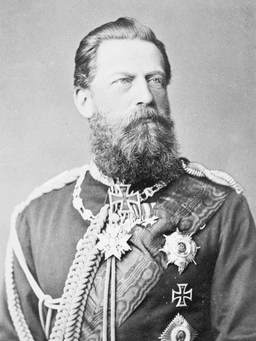
Frederick III
Emperor · Medieval
43.3Total
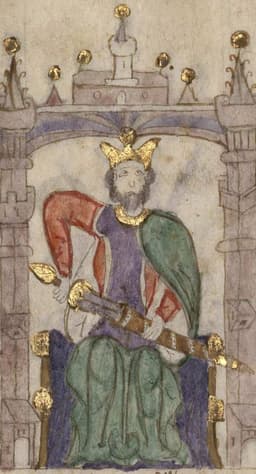
Sancho II of Castile
Emperor · Medieval
39.7Total
Basic Information
Born
1415
1036
Died
1493
1072
Era
Medieval
Medieval
Nationality
Holy Roman Empire
Castile
Occupation
Emperor
Emperor
Civilization
Western
Western
Score Comparison
Military (10%)
21.2
55.0
Political (20%)
37.9
29.3
Influence (20%)
50.2
46.3
Legacy (20%)
45.0
37.5
Leadership (15%)
53.2
33.6
Strategy (15%)
36.8
38.3
TOTAL
43.3
39.7
Frederick III — Complete Timeline
1450 AD
AEIOU MottoCultural
Frederick III adopted the motto AEIOU, which he used extensively on buildings and documents. The meaning of the acronym is uncertain, but it is often interpreted as 'Austriae est imperare orbi universo' (It is Austria's destiny to rule the world). This motto reflected Frederick's long-term vision for Habsburg dominance.
MottoHabsburg PropagandaSymbolism
Impact: regional
1452 AD
Coronation as Holy Roman EmperorPolitical Action◆ Major
Frederick III was crowned Holy Roman Emperor by Pope Nicholas V in Rome, the last emperor to be crowned in the city. His coronation reaffirmed the traditional alliance between the Empire and the Papacy. Frederick's long reign (53 years) was the longest of any Holy Roman Emperor.
CoronationImperial AuthorityPapacy
Impact: globalconstructive
1463 AD
Treaty of Wiener NeustadtPolitical Action
Frederick III signed the Treaty of Wiener Neustadt with his brother Albert VI, ending a conflict over the Habsburg inheritance. The treaty divided the Habsburg lands, with Frederick retaining control of Austria and Albert receiving parts of Further Austria. This agreement temporarily stabilized the internal Habsburg situation.
Habsburg DynastyTreatyTerritorial Division
constructive
1477 AD
Marriage of Maximilian IPolitical Action
Frederick III arranged the marriage of his son Maximilian I to Mary of Burgundy, heiress of the Burgundian state. This marriage brought the wealthy Burgundian territories, including the Netherlands, into the Habsburg orbit. It was a cornerstone of Habsburg power and led to centuries of conflict with France.
Marriage AllianceBurgundian InheritanceHabsburg Power
Impact: globalconstructive
1485 AD
Siege of Vienna (1485)War◆ Major
Frederick III was besieged in Vienna by the forces of Matthias Corvinus, King of Hungary. After a prolonged siege, Frederick was forced to flee the city, which fell to Corvinus. Frederick spent the next years in exile in Graz, unable to reclaim his capital until Corvinus's death in 1490.
SiegeHungarian InvasionExile
Impact: regionaltragic
Sancho II of Castile — Complete Timeline
1065 AD
Conquest of LeonWar◆ Major
Sancho II conquered the Kingdom of Leon from his brother Alfonso VI, following the division of their father Ferdinand I's realm. He defeated Alfonso at the Battle of Llantada and forced him into exile in Toledo. This conquest united Leon and Castile under Sancho's rule.
ConquestLeonCivil War
Impact: regionaldestructive
1071 AD
Conquest of GaliciaWar◆ Major
Sancho II conquered the Kingdom of Galicia from his brother Garcia II, who was captured and imprisoned. This conquest completed Sancho's unification of the realms of his father, making him the most powerful Christian ruler in Iberia.
ConquestGaliciaUnification
Impact: regionaldestructive
1072 AD
Siege of Zamora and DeathWar◆ Major
Sancho II besieged the city of Zamora, held by his sister Urraca, who had rebelled against him. During the siege, Sancho was assassinated by a Zamoran noble named Vellido Dolfos. His death ended his unification efforts and allowed his brother Alfonso VI to reclaim the throne.
SiegeAssassinationZamora
Impact: regionaltragic
Expert Analysis
Origins
Frederick III was born in 1415 into the Habsburg dynasty, which then controlled only the Duchy of Austria. His father, Ernest the Iron, was Duke of Inner Austria. Frederick's upbringing in the court of Graz emphasized dynastic continuity and the importance of territorial consolidation. He adopted the cryptic motto AEIOU, often interpreted as 'Austriae Est Imperare Orbi Universali' (It is Austria's destiny to rule the whole world), reflecting his long-term vision.
Sancho II of Castile was born around 1036, the second son of Ferdinand I of Leon and Castile and Sancha of Leon. Unlike Frederick, Sancho grew up in a period of intense Christian-Muslim conflict and dynastic fragmentation. His father divided his kingdom among his sons: Sancho received Castile, Alfonso received Leon, and Garcia received Galicia. This partition set the stage for Sancho's ambitions.
Rise to Power
Frederick III became Duke of Austria in 1424 at age 9 after his father's death, ruling under regency until 1435. His rise to imperial power came through election: he was chosen King of the Romans in 1440 and crowned Holy Roman Emperor by Pope Nicholas V in 1452, the last emperor to be crowned in Rome. His political acumen scored 37.9, reflecting his ability to navigate the complex electoral politics of the Empire.
Sancho II's rise was more aggressive. Upon his father's death in 1065, he inherited Castile. Dissatisfied with his share, he waged war against his brothers. In 1072, he defeated Alfonso VI at the Battle of Golpejera (scored 55.0 in military) and annexed Leon. He then captured his brother Garcia and annexed Galicia, unifying the realms of his father under his rule within a few years.
Leadership & Governance
Frederick III's leadership style was cautious and legalistic. He rarely led armies personally (military score 21.2) but excelled at diplomacy and marriage alliances. His greatest governance achievement was arranging the marriage of his son Maximilian to Mary of Burgundy in 1477, which brought the Burgundian inheritance to the Habsburgs. This political move scored 37.9 and laid the foundation for the Habsburg empire. However, his passive governance led to the loss of territories; in 1485, he was besieged in Vienna by Matthias Corvinus and forced to flee, a low point scoring 53.2 in leadership.
Sancho II's leadership was martial and direct. He personally led campaigns and enforced his authority through conquest. His governance of the unified kingdom was short-lived; he imposed harsh rule on his brothers' former subjects, especially in Galicia. His sister Urraca rebelled in Zamora, leading to the siege that cost him his life. His political score of 29.3 reflects his failure to consolidate power through negotiation.
Triumph & Tragedy
Frederick III's greatest triumph was the marriage of Maximilian to Mary of Burgundy, which dramatically increased Habsburg power and influence. His long reign (53 years) allowed him to stabilize the dynasty despite military setbacks. His tragedy was the Siege of Vienna in 1485, where he lost his capital and was humiliated by Matthias Corvinus. He also struggled with internal revolts and the failure of the Reichsreform movement.
Sancho II's triumph was the swift conquest of Leon and Galicia, reuniting his father's kingdom. He demonstrated military skill (score 55.0) and achieved in months what others took years. His tragedy was his assassination in 1072 during the Siege of Zamora, by a nobleman named Vellido Dolfos. He died without heirs, and his brother Alfonso VI reclaimed Leon and Castile, erasing Sancho's legacy.
Character & Destiny
Frederick III was methodical, patient, and focused on the long-term. His motto AEIOU encapsulated his belief in Habsburg destiny. He preferred diplomacy over war, which earned him criticism but ultimately secured his dynasty's future. His character shaped his fate: by avoiding decisive military action, he preserved his resources for political marriages that bore fruit generations later.
Sancho II was ambitious, courageous, but reckless. His willingness to attack his own brothers and his harsh rule created enemies. His assassination was the result of his aggressive policies and failure to secure loyal support. His character led to a short reign and a violent death, limiting his impact.
Legacy
Frederick III's legacy is immense: he established the Habsburgs as a European power through strategic marriages. His son Maximilian I and great-grandson Charles V would inherit vast territories. His legacy score of 45.0 reflects this enduring impact. The AEIOU motto became a symbol of Habsburg ambition. He is remembered as the 'Arch-Sleepyhead' by some, but his dynastic achievements are undeniable.
Sancho II's legacy is minimal. His conquests were reversed within a year of his death. He is remembered mainly as a footnote in the story of Alfonso VI and the Reconquista. His legacy score of 37.5 reflects this limited impact. He is known as 'the Strong' but his strength did not translate into lasting influence.
Conclusion
Frederick III had the greater historical impact. His total score of 43.3, while modest, reflects a strategic approach that built the Habsburg monarchy. Sancho II's military prowess (55.0) was impressive but fleeting. Frederick's political maneuvering (37.9) and long-term vision outweighed Sancho's short-lived conquests. In the balance of history, Frederick III's patient dynasticism shaped Europe for centuries, while Sancho II's violent ambition ended abruptly. The data supports Frederick as the more significant figure.
Rankings
🥇
Frederick IIILeader
Mil: 21.2Pol: 37.9Inf: 50.2
43.3
🥈
Sancho II of Castile
Mil: 55.0Pol: 29.3Inf: 46.3
39.7
+3.6 behind
How This Comparison Works
Algorithm
Each figure is scored on 6 dimensions (0—100 scale) based on structured historical data: Military (10%), Political (20%), Influence (20%), Legacy (20%), Leadership (15%), Strategy (15%). The weighted total produces the final ranking.
Data Sources
Scores are computed from structured sub-indicators in the database. Scale factors adjust for era (Ancient ×0.85, Modern ×1.0) and civilization size (Eastern ×1.05, Other ×0.80) to account for differences in population and military scale.
Maximum 3 Figures
Comparisons are limited to 2—3 figures to ensure readability and statistical meaningfulness.
Error Margins
±5 points per dimension — Sub-scores are derived from historical records with inherent uncertainty. Two figures within 5 points on a dimension should be considered roughly equivalent in that area.
Total Score Accuracy
±3 points overall — The weighted combination of 6 dimensions produces a total score with approximately ±3 points of uncertainty. Differences of less than 3 points are not statistically significant— the figures are effectively tied.
Known Limitations
- Historical records are incomplete and uneven across civilizations
- Figures from oral-tradition societies may be underrepresented
- Occupation labels can misclassify multi-role figures
- Scores measure capability and impact, not moral character
- Quantitative scoring is a comparison tool, not absolute truth
Capability Radar
Military (10%) — Battles & Warfare
Battles
10
35
Win Rate
10
40
Expansion
10
30
Political (20%) — Governance & Reform
Reform
30
10
Diplomacy
40
15
Economy
30
15
Influence (20%) — Cultural & Global Reach
Cultural
20
10
Global
20
5
Legacy (20%) — Historical Impact
Historical
40
15
Longevity
30
10
Leadership (15%) — Power & Stability
Tenure
80
20
Stability
40
10
Strategy (15%) — Tactics & Innovation
Strategy
10
25
Tactics
10
30
Reform
10
10
Similar Comparisons
Comments & Discussion
No comments yet. Be the first to share your thoughts!