Loading...
Frederick III vs Napoleon Bonaparte
Napoleon Bonaparte leads by 27.6 pts · 2 figures compared
…
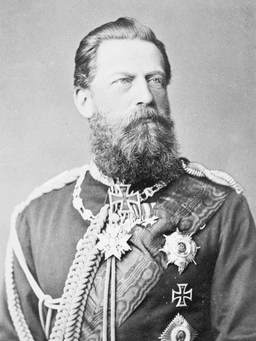
Frederick III
Emperor · Medieval
43.3Total

Napoleon Bonaparte
General · Modern
70.9Total
Basic Information
Born
1415
1769
Died
1493
1821
Era
Medieval
Modern
Nationality
Holy Roman Empire
France
Occupation
Emperor
General
Civilization
Western
Western
Score Comparison
Military (10%)
21.2
94.0
Political (20%)
37.9
72.0
Influence (20%)
50.2
40.0
Legacy (20%)
45.0
80.0
Leadership (15%)
53.2
78.0
Strategy (15%)
36.8
90.0
TOTAL
43.3
70.9
Frederick III — Complete Timeline
1450 AD
AEIOU MottoCultural
Frederick III adopted the motto AEIOU, which he used extensively on buildings and documents. The meaning of the acronym is uncertain, but it is often interpreted as 'Austriae est imperare orbi universo' (It is Austria's destiny to rule the world). This motto reflected Frederick's long-term vision for Habsburg dominance.
MottoHabsburg PropagandaSymbolism
Impact: regional
1452 AD
Coronation as Holy Roman EmperorPolitical Action◆ Major
Frederick III was crowned Holy Roman Emperor by Pope Nicholas V in Rome, the last emperor to be crowned in the city. His coronation reaffirmed the traditional alliance between the Empire and the Papacy. Frederick's long reign (53 years) was the longest of any Holy Roman Emperor.
CoronationImperial AuthorityPapacy
Impact: globalconstructive
1463 AD
Treaty of Wiener NeustadtPolitical Action
Frederick III signed the Treaty of Wiener Neustadt with his brother Albert VI, ending a conflict over the Habsburg inheritance. The treaty divided the Habsburg lands, with Frederick retaining control of Austria and Albert receiving parts of Further Austria. This agreement temporarily stabilized the internal Habsburg situation.
Habsburg DynastyTreatyTerritorial Division
constructive
1477 AD
Marriage of Maximilian IPolitical Action
Frederick III arranged the marriage of his son Maximilian I to Mary of Burgundy, heiress of the Burgundian state. This marriage brought the wealthy Burgundian territories, including the Netherlands, into the Habsburg orbit. It was a cornerstone of Habsburg power and led to centuries of conflict with France.
Marriage AllianceBurgundian InheritanceHabsburg Power
Impact: globalconstructive
1485 AD
Siege of Vienna (1485)War◆ Major
Frederick III was besieged in Vienna by the forces of Matthias Corvinus, King of Hungary. After a prolonged siege, Frederick was forced to flee the city, which fell to Corvinus. Frederick spent the next years in exile in Graz, unable to reclaim his capital until Corvinus's death in 1490.
SiegeHungarian InvasionExile
Impact: regionaltragic
Napoleon Bonaparte — Complete Timeline
1799 AD
Coup of 18 BrumaireOther◆ Major
Napoleon Bonaparte, with support from his brother Lucien and key political figures, overthrew the Directory in a bloodless coup. He established the Consulate with himself as First Consul, effectively becoming the ruler of France. This event ended the French Revolution's most unstable period.
French RevolutionCoupRise to Power
Impact: regional
1804 AD
Promulgation of the Napoleonic CodeOther◆ Major
Napoleon enacted the Civil Code of the French, known as the Napoleonic Code, a comprehensive set of laws that replaced the fragmented feudal legal systems. The code established legal equality, protected property rights, and secularized law. It became the basis for legal systems in many European and world countries.
Legal ReformNapoleonic CodeCivil Law
Impact: globalconstructive
1805 AD
Battle of AusterlitzWar◆ Major
Napoleon's Grande Arm
Napoleonic WarsBattleDecisive Victory
Impact: global
1812 AD
Invasion of RussiaWar◆ Major
Napoleon led the Grande Arm
Napoleonic WarsInvasionDisaster
Impact: globaldestructive
1815 AD
Battle of WaterlooWar◆ Major
Napoleon's French army was defeated by the combined forces of the Duke of Wellington's Anglo-Allied army and Gebhard Leberecht von Bl
Napoleonic WarsBattleFinal Defeat
Impact: globaldestructive
Expert Analysis
frederick-iii-vs-napoleon-bonaparte
# The Emperor Who Married, and the Emperor Who Conquered
On a June morning in 1815, Napoleon Bonaparte watched his Imperial Guard march up the muddy slopes of Mont-Saint-Jean, their eagles gleaming through the smoke of battle. He had staked everything on this final gamble—a crushing blow against Wellington and Blücher that would restore his empire. Four miles away, the Guard was cut down, and with them, Napoleon’s dream of European dominion. Thirty-three years earlier, in a very different kind of triumph, Holy Roman Emperor Frederick III sat in St. Peter’s Basilica in Rome, receiving the crown from Pope Nicholas V. He had not won a single battle to reach that moment. He had simply outlasted his enemies, outmaneuvered his rivals, and—most importantly—married his son to the right woman. Between these two men lies a fundamental question about power: is it won by the sword, or by the marriage bed?
Origins
Napoleon was born in 1769 on the island of Corsica, a place that had only become French the year before. His family was minor nobility, proud and impoverished. Young Napoleon spoke Italian-accented French, was mocked by his classmates at military school, and carried a burning resentment against the French aristocracy who looked down on him. The French Revolution, which erupted when he was twenty, shattered the old order and created a vacuum that a brilliant outsider could fill. He was a child of chaos, forged in revolution.
Frederick III, born in 1415, came from the opposite world. He was a Habsburg, one of Europe’s oldest and most entrenched dynasties. His father, Duke Ernest the Iron, ruled over the fragmented Duchy of Austria. Frederick grew up in a world of fixed hierarchies, inherited titles, and slow, patient diplomacy. Where Napoleon’s world was being torn apart and rebuilt, Frederick’s world was being stitched together, thread by thread, through treaties and betrothals.
Rise to Power
Napoleon rose through talent alone. At twenty-four, he recaptured Toulon from the British. At twenty-six, he put down a royalist uprising in Paris with a “whiff of grapeshot.” At twenty-seven, he took command of the French army in Italy and, in a series of lightning campaigns, defeated the Austrians and carved out a reputation that made him the most famous man in France. By 1799, he was First Consul; by 1804, Emperor. His path was a straight line of military victories, each one building on the last.
Frederick III rose through patience and survival. He became King of Germany in 1440, but his authority was nominal. The Holy Roman Empire was a patchwork of hundreds of princes, bishops, and free cities, all jealous of their independence. Frederick did not conquer them. He waited. He negotiated. He endured humiliations—like the Siege of Vienna in 1485, when King Matthias Corvinus of Hungary trapped him in his own capital and forced him to flee. Frederick did not win that war; he outlived Matthias, who died in 1490, and then reclaimed his territories without a fight.
Leadership & Governance
Napoleon governed like a general. He centralized the French state, created the Napoleonic Code—a legal system that still shapes Europe today—and appointed his brothers and marshals to thrones across the continent. He believed in merit, talent, and efficiency. “The tool that asks questions is useless,” he once said. He personally reviewed troop dispositions, dictated letters to his ministers, and intervened in every detail of his empire. His military genius was unmatched: at Austerlitz in 1805, he destroyed a combined Russian-Austrian army with a feigned retreat that remains a textbook maneuver. His Strategy score of 93 reflects this brilliance.
Frederick governed like a patriarch. He was not a warrior—his Military score is a low 30—but he was a master of dynastic politics. His greatest achievement was the marriage of his son Maximilian to Mary of Burgundy in 1477. This single union brought the wealthy Burgundian Netherlands into the Habsburg fold, transforming a minor Austrian dynasty into a European superpower. Frederick’s motto, AEIOU, which he inscribed on buildings and documents from 1450 onward, is usually interpreted as *Austriae est imperare orbi universo*—“It is Austria’s destiny to rule the world.” He did not conquer that empire; he married into it.
Triumph & Tragedy
Napoleon’s triumph was his empire at its height in 1810, when he controlled most of continental Europe from Spain to Poland. His tragedy was the invasion of Russia in 1812, where he lost half a million men to winter, starvation, and the Russian scorched-earth strategy. He never recovered. Exiled to Elba, he escaped and ruled for a Hundred Days, but Waterloo ended everything. He died in 1821 on the remote island of Saint Helena, abandoned and bitter.
Frederick III’s triumph was his coronation in Rome in 1452, the last emperor to be crowned there. His tragedy was more subtle: he was a caretaker emperor in an age of decay. The Holy Roman Empire was weakening, the Habsburgs were not yet a great power, and Frederick spent much of his reign fleeing from enemies or negotiating from weakness. Yet his patience paid off. He died in 1493, having secured the marriage that would make his grandson, Charles V, the most powerful man in Europe.
Character & Destiny
Napoleon was driven by ambition, insecurity, and a relentless need to prove himself. He once said, “I am not a man, but a thing.” He saw himself as an instrument of destiny, a force of nature. This made him irresistible in victory and reckless in defeat. He could not stop, could not compromise, could not share power. His personality demanded total control, and that demand destroyed him.
Frederick III was driven by caution, patience, and a deep sense of dynastic duty. He was known as “Frederick the Peaceful” or, less charitably, “Frederick the Lazy.” He avoided battle, avoided confrontation, and avoided risk. His personality was suited to an age when survival meant bending rather than breaking. He knew that the Habsburgs would not conquer Europe—they would inherit it, generation by generation, marriage by marriage.
Legacy
Napoleon’s legacy is monumental and contested. He is remembered as a military genius, a reformer, and a tyrant. The Napoleonic Code spread through Europe and the Americas. His wars killed millions but also shattered feudalism and spread nationalism. He is a symbol of ambition, achievement, and tragic overreach.
Frederick III’s legacy is quieter but no less profound. He laid the foundation for the Habsburg Empire that would dominate Europe for four centuries. His motto AEIOU became the family creed. He proved that in the long game of history, patience can be as powerful as conquest.
Conclusion
Napoleon and Frederick III represent two poles of historical power: the general who wins battles and the emperor who wins marriages. Napoleon’s total score of 82.4 reflects his brilliance and his destruction; Frederick’s 60.8 reflects his caution and his endurance. One burned bright and fast, the other smoldered for decades. In the end, Napoleon’s empire collapsed within a generation. Frederick’s dynasty lasted until 1918. Perhaps the deepest lesson is this: the sword cuts deep, but the marriage bed endures.
Rankings
🥇
Napoleon BonaparteLeader
Mil: 94.0Pol: 72.0Inf: 40.0
70.9
🥈
Frederick III
Mil: 21.2Pol: 37.9Inf: 50.2
43.3
+27.6 behind
How This Comparison Works
Algorithm
Each figure is scored on 6 dimensions (0—100 scale) based on structured historical data: Military (10%), Political (20%), Influence (20%), Legacy (20%), Leadership (15%), Strategy (15%). The weighted total produces the final ranking.
Data Sources
Scores are computed from structured sub-indicators in the database. Scale factors adjust for era (Ancient ×0.85, Modern ×1.0) and civilization size (Eastern ×1.05, Other ×0.80) to account for differences in population and military scale.
Maximum 3 Figures
Comparisons are limited to 2—3 figures to ensure readability and statistical meaningfulness.
Error Margins
±5 points per dimension — Sub-scores are derived from historical records with inherent uncertainty. Two figures within 5 points on a dimension should be considered roughly equivalent in that area.
Total Score Accuracy
±3 points overall — The weighted combination of 6 dimensions produces a total score with approximately ±3 points of uncertainty. Differences of less than 3 points are not statistically significant— the figures are effectively tied.
Known Limitations
- Historical records are incomplete and uneven across civilizations
- Figures from oral-tradition societies may be underrepresented
- Occupation labels can misclassify multi-role figures
- Scores measure capability and impact, not moral character
- Quantitative scoring is a comparison tool, not absolute truth
Capability Radar
Military (10%) — Battles & Warfare
Battles
10
95
Win Rate
10
90
Expansion
10
95
Political (20%) — Governance & Reform
Reform
30
95
Diplomacy
40
80
Economy
30
85
Influence (20%) — Cultural & Global Reach
Cultural
20
85
Global
20
90
Legacy (20%) — Historical Impact
Historical
40
95
Longevity
30
90
Leadership (15%) — Power & Stability
Tenure
80
85
Stability
40
70
Strategy (15%) — Tactics & Innovation
Strategy
10
95
Tactics
10
98
Reform
10
92
Similar Comparisons
Comments & Discussion
No comments yet. Be the first to share your thoughts!