Loading...
Cuauhtemoc vs Sancho II of Castile
Cuauhtemoc leads by 9.3 pts · 2 figures compared
…
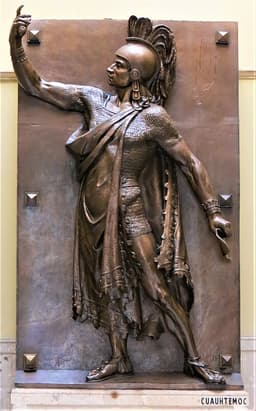
Cuauhtemoc
Emperor · Medieval
49.0Total
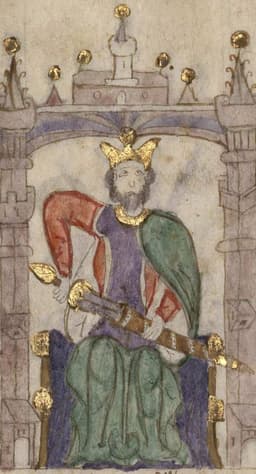
Sancho II of Castile
Emperor · Medieval
39.7Total
Basic Information
Born
1497
1036
Died
1525
1072
Era
Medieval
Medieval
Nationality
Aztec Empire
Castile
Occupation
Emperor
Emperor
Civilization
Other
Western
Score Comparison
Military (10%)
46.7
55.0
Political (20%)
30.7
29.3
Influence (20%)
56.7
46.3
Legacy (20%)
58.0
37.5
Leadership (15%)
33.6
33.6
Strategy (15%)
60.0
38.3
TOTAL
49.0
39.7
Cuauhtemoc — Complete Timeline
1440 AD
Expanded the Aztec Empire through Military CampaignsWar◆ Major
Moctezuma I launched a series of military campaigns that extended Aztec control into the Gulf Coast, Oaxaca, and Guerrero regions. He conquered cities such as Cuetlaxtlan and Coixtlahuaca, incorporating them into the tribute system.
Aztec ExpansionMilitary ConquestTribute System
Impact: regional
1450 AD
Implemented the Flower Wars (Xochiyaoyotl)War◆ Major
Moctezuma I institutionalized the Flower Wars, ritualized conflicts with Tlaxcala and other city-states. These battles were designed to capture prisoners for religious sacrifice rather than territorial conquest, reinforcing Aztec religious practices.
Ritual WarfareHuman SacrificeAztec Religion
Impact: regionaldestructive
Constructed the Aqueduct of ChapultepecCultural
Moctezuma I commissioned the construction of a stone aqueduct from Chapultepec springs to Tenochtitlan, providing fresh water to the island city. This engineering project improved public health and supported the city's growing population.
InfrastructureWater SupplyUrban Development
constructive
Sancho II of Castile — Complete Timeline
1065 AD
Conquest of LeonWar◆ Major
Sancho II conquered the Kingdom of Leon from his brother Alfonso VI, following the division of their father Ferdinand I's realm. He defeated Alfonso at the Battle of Llantada and forced him into exile in Toledo. This conquest united Leon and Castile under Sancho's rule.
ConquestLeonCivil War
Impact: regionaldestructive
1071 AD
Conquest of GaliciaWar◆ Major
Sancho II conquered the Kingdom of Galicia from his brother Garcia II, who was captured and imprisoned. This conquest completed Sancho's unification of the realms of his father, making him the most powerful Christian ruler in Iberia.
ConquestGaliciaUnification
Impact: regionaldestructive
1072 AD
Siege of Zamora and DeathWar◆ Major
Sancho II besieged the city of Zamora, held by his sister Urraca, who had rebelled against him. During the siege, Sancho was assassinated by a Zamoran noble named Vellido Dolfos. His death ended his unification efforts and allowed his brother Alfonso VI to reclaim the throne.
SiegeAssassinationZamora
Impact: regionaltragic
Expert Analysis
Origins
Cuauhtemoc (c. 1495–1525) was the last Aztec emperor, born into the nobility of Tenochtitlan. He was a nephew of Moctezuma II and received training in Aztec military and religious institutions. Little is known of his early life, but he likely participated in the Flower Wars and rose through the ranks of the Aztec military hierarchy.
Sancho II of Castile (c. 1036–1072) was the eldest son of Ferdinand I of Leon and Castile. Upon his father's death in 1065, Ferdinand divided his kingdom among his three sons: Sancho received Castile, Alfonso received Leon, and Garcia received Galicia. Sancho was raised in the turbulent context of Iberian Christian kingdoms vying for dominance over each other and against Muslim taifas.
Rise to Power
Cuauhtemoc came to power in 1520 after the death of his cousin Cuitlahuac, who had succeeded Moctezuma II. The Aztec Empire was in crisis: Tenochtitlan was under siege by Spanish forces led by Hernán Cortés, and the city was devastated by smallpox. Cuauhtemoc was chosen as tlatoani (emperor) for his military prowess and leadership during the desperate defense of the capital.
Sancho II rose to prominence by asserting his claim as the strongest of Ferdinand I's sons. In 1067, he began a campaign to reunify his father's lands. He defeated his brother Alfonso VI at the Battle of Llantada (1068) and again at Golpejera (1072), forcing Alfonso into exile. He then conquered Galicia from his brother Garcia II, capturing and imprisoning him. By 1072, Sancho had reunited the kingdoms of Castile, Leon, and Galicia under his rule.
Leadership & Governance
Cuauhtemoc's leadership was defined by his resistance against the Spanish. He organized the defense of Tenochtitlan, using the city's canal network and causeways to slow the Spanish advance. He rejected offers of surrender, inspiring his people to fight despite overwhelming odds. After the fall of the city in August 1521, he was captured and later executed in 1525 during Cortés's expedition to Honduras. His governance was limited to wartime, with no opportunity for peacetime reforms.
Sancho II's governance was focused on military consolidation. He ruled with an iron fist, demanding loyalty from his nobles and suppressing rebellions. He was known as 'the Strong' for his forceful personality. However, his reign was brief (1065–1072) and lacked significant administrative reforms. His sister Urraca's rebellion in Zamora highlighted his inability to secure family loyalty, leading to his assassination during the siege in 1072.
Triumph & Tragedy
Cuauhtemoc's greatest triumph was his courageous defense of Tenochtitlan, which delayed Spanish conquest and inflicted heavy casualties. The siege lasted 93 days, with the Aztecs using guerrilla tactics. His tragedy was the inevitable fall of the city and his subsequent execution, marking the end of the Aztec Empire.
Sancho II's triumph was reunifying his father's kingdoms in just a few years, demonstrating superior military skill (scoring 55.0 in military vs Cuauhtemoc's 46.7). His tragedy was his assassination at the peak of his power, killed by a Zamoran noble named Vellido Dolfos. His death allowed Alfonso VI to reclaim the throne and become the most powerful Christian king in Iberia.
Character & Destiny
Cuauhtemoc is remembered for his stoicism and defiance. Even under torture (his feet were burned by the Spanish to reveal gold's location), he reportedly said, 'Am I on a bed of roses?' His character was one of unyielding resistance, which sealed his tragic fate but made him a symbol of Aztec resistance.
Sancho II's character was aggressive and ambitious. His nickname 'the Strong' reflected his militaristic approach. However, his ruthlessness alienated his siblings, particularly his sister Urraca, whose rebellion led to his death. His destiny was shaped by the feudal politics of medieval Iberia, where brotherly conflict was common.
Legacy
Cuauhtemoc's legacy is profound in Mexican history. He is celebrated as a national hero, the last defender of the Aztec world. His name is invoked in modern movements for indigenous rights. He scored 58.0 in legacy, reflecting his enduring symbolic importance.
Sancho II's legacy is more limited. He is remembered as a minor figure in the Reconquista, overshadowed by his brother Alfonso VI. His unification of the three kingdoms was temporary, undone by his death. He scored 37.5 in legacy, indicating his relatively minor impact on history.
Conclusion
Cuauhtemoc had a greater impact than Sancho II. Despite Sancho's higher military score (55.0 vs 46.7), Cuauhtemoc's total score of 49.0 surpasses Sancho's 39.7. Cuauhtemoc's role as the last Aztec emperor and his symbolic resistance against European colonization resonate across centuries, while Sancho II's brief unification of Castile, Leon, and Galicia was quickly reversed. Cuauhtemoc's legacy as a symbol of indigenous resistance and his influence on Mexican national identity far outweigh Sancho II's limited historical footprint. Therefore, Cuauhtemoc emerges as the more significant historical figure.
Rankings
🥇
CuauhtemocLeader
Mil: 46.7Pol: 30.7Inf: 56.7
49.0
🥈
Sancho II of Castile
Mil: 55.0Pol: 29.3Inf: 46.3
39.7
+9.3 behind
How This Comparison Works
Algorithm
Each figure is scored on 6 dimensions (0—100 scale) based on structured historical data: Military (10%), Political (20%), Influence (20%), Legacy (20%), Leadership (15%), Strategy (15%). The weighted total produces the final ranking.
Data Sources
Scores are computed from structured sub-indicators in the database. Scale factors adjust for era (Ancient ×0.85, Modern ×1.0) and civilization size (Eastern ×1.05, Other ×0.80) to account for differences in population and military scale.
Maximum 3 Figures
Comparisons are limited to 2—3 figures to ensure readability and statistical meaningfulness.
Error Margins
±5 points per dimension — Sub-scores are derived from historical records with inherent uncertainty. Two figures within 5 points on a dimension should be considered roughly equivalent in that area.
Total Score Accuracy
±3 points overall — The weighted combination of 6 dimensions produces a total score with approximately ±3 points of uncertainty. Differences of less than 3 points are not statistically significant— the figures are effectively tied.
Known Limitations
- Historical records are incomplete and uneven across civilizations
- Figures from oral-tradition societies may be underrepresented
- Occupation labels can misclassify multi-role figures
- Scores measure capability and impact, not moral character
- Quantitative scoring is a comparison tool, not absolute truth
Capability Radar
Military (10%) — Battles & Warfare
Battles
55
35
Win Rate
30
40
Expansion
10
30
Political (20%) — Governance & Reform
Reform
10
10
Diplomacy
15
15
Economy
10
15
Influence (20%) — Cultural & Global Reach
Cultural
60
10
Global
55
5
Legacy (20%) — Historical Impact
Historical
65
15
Longevity
60
10
Leadership (15%) — Power & Stability
Tenure
20
20
Stability
10
10
Strategy (15%) — Tactics & Innovation
Strategy
55
25
Tactics
60
30
Reform
10
10
Similar Comparisons
Comments & Discussion
No comments yet. Be the first to share your thoughts!